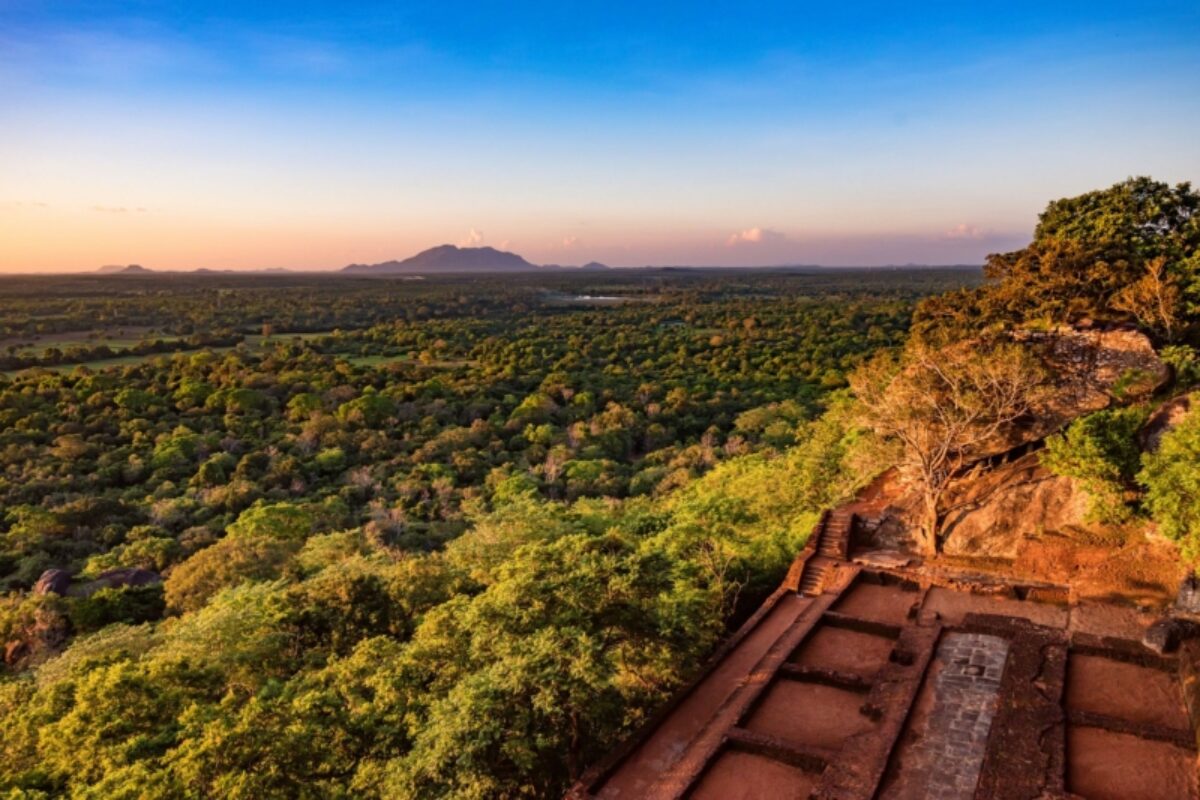
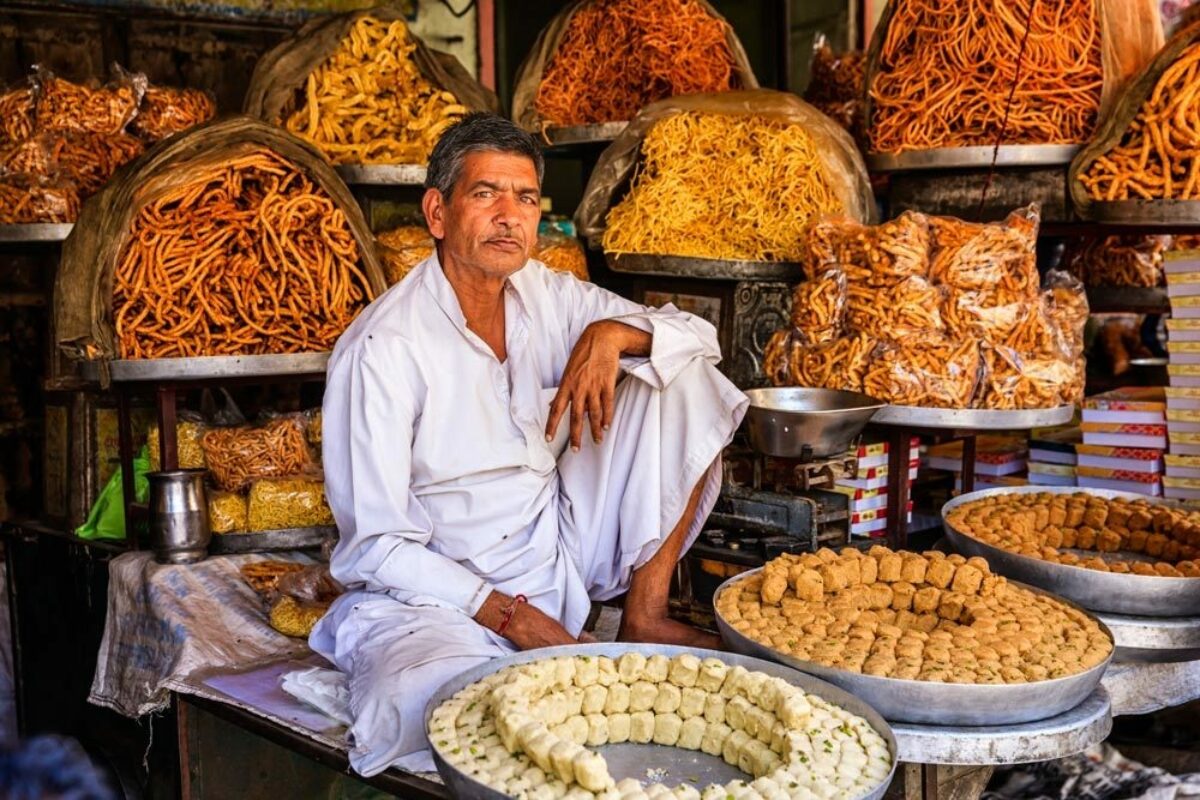
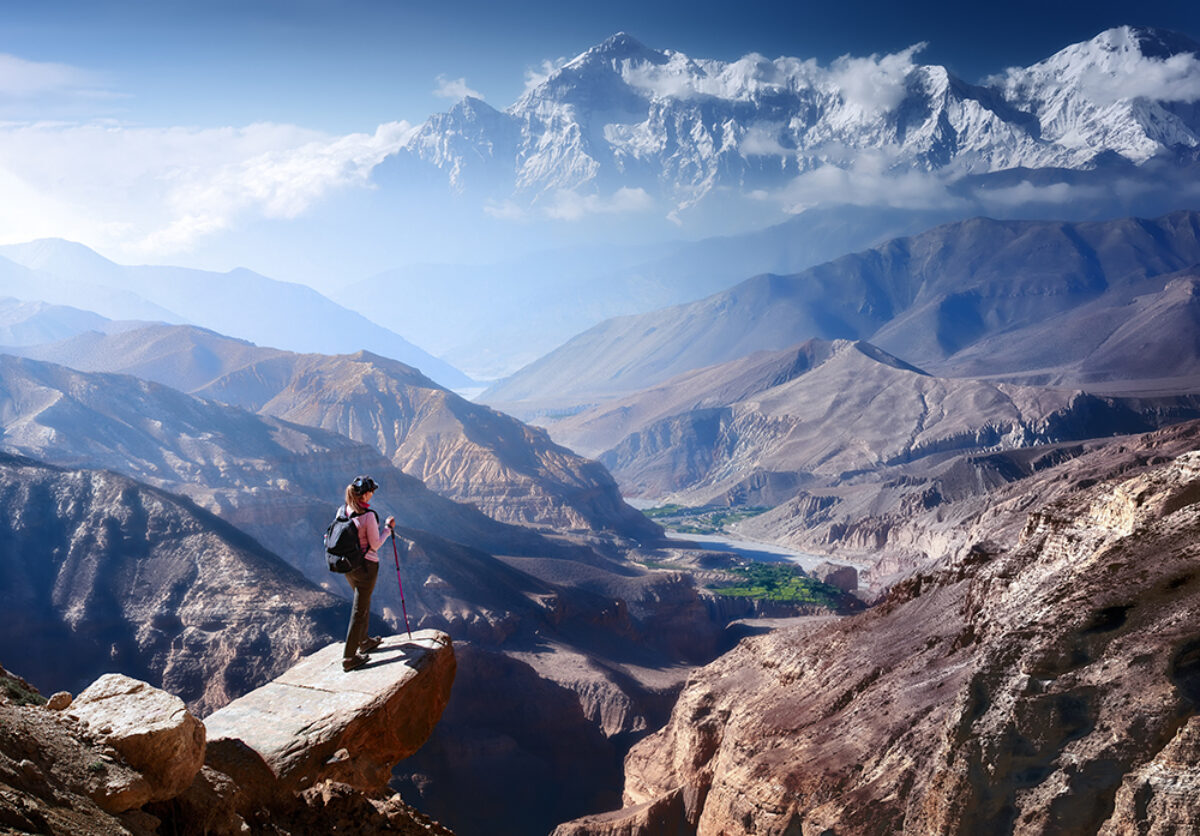
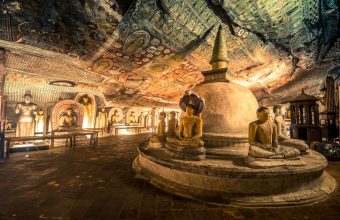
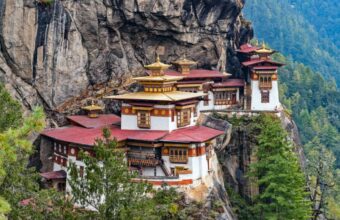
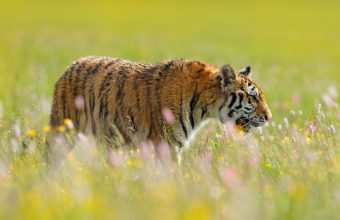
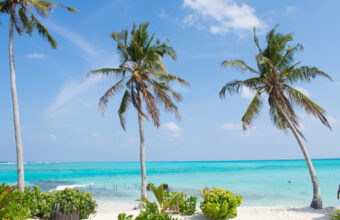
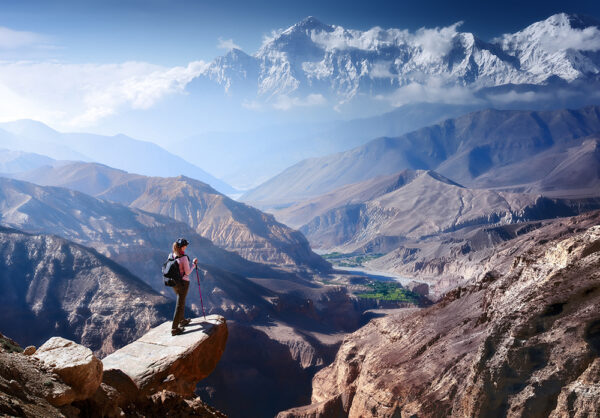
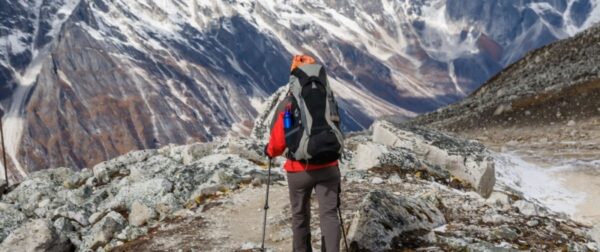
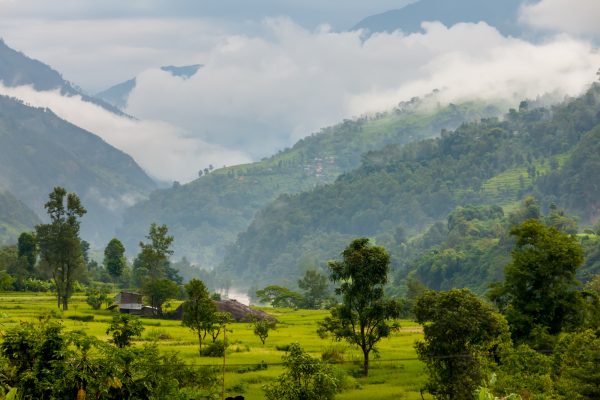
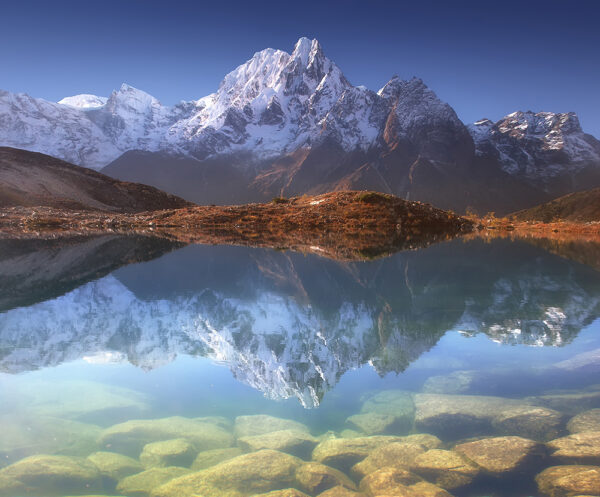
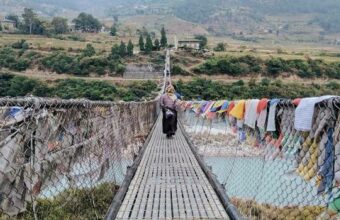
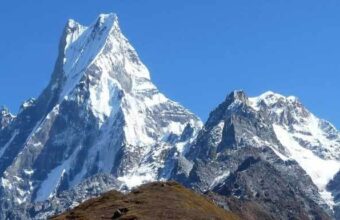
The vast peninsula separated from the Eurasian landmass by the Himalayas, is the size of Europe and home to some 1.89 billion people in six countries: India, Pakistan, Sri Lanka, Bangladesh, Nepal and Bhutan (some add the Maldives).
Over centuries, the Mughal emperors, the Rajputs, the Muslim sultanates, the Sikh empire, the British colonialists, all left their imprints on the land and the people. The result is that modern South Asia can be a bewildering patchwork to the outsider. The variety of religions and cultures in the region is staggering. More than 450 languages are spoken in India; the mountain kingdom of Bhutan, with a population of less than a million, has some two dozen languages of its own.
If it can be bewildering, it’s also exciting. The history, the geography, the arts, the cuisine and, it must be said, the rivalries, make the region endlessly fascinating.
And it’s not all about the past. The burgeoning economies of the region fuel talk of the coming Asian Century. Bangladesh now has one of the world’s fastest-growing economies. India’s pharma and telecoms industries are world-class and it has a highly developed space programme.
Yes, there is still much poverty, and some political uncertainties, but there’s also huge optimism for the future. It’s the future that makes South Asia so exciting today.
I understand there are no flights between Pokhara and Jomsom during July because of the monsoon season. Is this correct, and what does it mean for a July trip to Mustang?
Answered by: Abhi Shrestha
You're right: airlines generally suspend flights to and from Jomsom during that time of year due to the monsoon conditions. As a result, travelling to and from Jomsom by road would add approximately two additional days to the overall itinerary.
It's also worth being mindful of landslides during the monsoon. The road between Pokhara and Jomsom can occasionally be disrupted or closed by landslides, which is an important factor to consider when planning a July departure.
My wife and I are interested in trekking in Mustang, with about 5 days (27–31 July 2026). We'd love to reach Lo Manthang, but realise time is short and we also need to acclimatise to the altitude, so we wondered about combining part trekking with part 4WD. Is this too short a time to include acclimatisation? We'll be in Pokhara and would want to fly into Jomsom to save time.
Answered by: Abhi Shrestha
Thanks to road development throughout much of the Mustang region, we have been operating a combination 4WD-and-trekking itinerary for several years. Our standard itinerary is considerably longer than five days, but it can certainly be adapted into a shorter trip.
For a 5-night / 6-day journey within Mustang, it helps to allow time around it as follows: 1 night in Kathmandu on the arrival day; travel to Pokhara (about 7 hours by road or 25 minutes by flight) and 1 night there; an early-morning flight from Pokhara to Jomsom to begin the drive-and-trek; on return, either 1 night in Pokhara or a late-morning/afternoon flight on to Kathmandu the same day; and 1 night in Kathmandu before your international departure.
A preliminary outline of the Mustang portion would be:
Day 1: Morning flight from Pokhara to Jomsom (~25 mins). Drive Jomsom to Samar (~3 hours), trek via the sacred Chungsi Cave to Syangboche (~4–5 hours), then drive to Ghiling (~30 mins).
Day 2 – Monasteries and ancient villages: Drive to Dhakmar (~1.5 hours), then trek via Ghar Gompa and Lo Gekar Monastery to Charang (~4 hours).
Day 3 – Crossing Chogo La: Trek over the Chogo La pass to Lo Manthang (~4.5 hours).
Day 4 – Exploring Lo Manthang: Visit the ancient caves, monasteries, and medieval villages around Lo Manthang (on foot or by vehicle).
Day 5 – Return to Jomsom (~7 hours): Scenic drive back through Upper Mustang to Jomsom.
Day 6 – Return to Pokhara: Morning flight from Jomsom to Pokhara. Either overnight in Pokhara and return to Kathmandu the next day, or connect on to Kathmandu on a late-morning/afternoon flight the same day.
As you'll spend the first two nights at altitudes of around 3,500–3,600 metres, you should have a reasonable opportunity to acclimatise gradually. That said, altitude affects everyone differently and individual reactions can't be predicted with certainty. If you experience significant symptoms of altitude sickness, a vehicle will be on standby to take you promptly to a lower, safer altitude where recovery is usually much quicker.
I'm looking for a group tour and trying to decide between the Laya and Gangkar Puensum treks. Can you help me understand the differences? I'm thinking October or November 2026, with 18–23 days total in Bhutan being about ideal.
Answered by: Jude Turner
Both are strenuous camping treks into remote areas. The Lingshi route is better established and therefore sees more trekkers, though you're still not talking big numbers.
The Lingshi Laya trek takes you to the base camp of Bhutan's second-highest mountain, Chomolhari (7,314m), whereas Gangkar Punsum (7,550m) is the highest in Bhutan, and the highest unclimbed peak in the world.
The terrain on the Gangkar Punsum trek is wilder, and other than occasional yak herders there won't be any cultural interaction whilst on trek. On the Lingshi Laya trek you also meet nomadic yak herders, but the main difference is that you pass through traditional villages, including Laya itself, where the Layap residents wear distinctive conical hats and yak-wool robes.
Our October 2026 departure attends the Royal Highland Festival, which takes place in Laya each year and celebrates Layap cultural heritage with yak parades and milking competitions, traditional dancing and singing, five-legged races, and pole climbing. We highly recommend the Lingshi Laya trek for its combination of magnificent scenery and cultural insight.
For a second perspective: I've spent time in Bhutan but haven't done either of these treks myself. My colleague Seraphina has done both, and says that while they're different, the scenery is equally impressive on each. She particularly enjoyed the remote villages on the Lingshi trek.
The road-free version of the Annapurna Circuit is very attractive. What's the proposed itinerary to experience the best of the region while keeping off the roads as much as possible?
Answered by: Abhi Shrestha
It's no longer possible to completely avoid roads along the Annapurna Circuit. To experience the best of the region while minimising road exposure, the most rewarding itinerary is to drive to Chame, then trek the alternative trail to Manang (roughly 50% off-road), detour to Tilicho Lake, rejoin the main trail and cross the Thorung La Pass, and finish in Jomsom before flying to Pokhara.
If completely avoiding roads is a top priority, consider the Manaslu Circuit Trek instead. It offers a similar physical challenge, alpine landscapes, and cultural immersion, and is increasingly regarded as the "new Annapurna Circuit."
I understand the Manaslu Circuit is a good alternative to the Annapurna Circuit, but is it still as quiet as people say or is it getting popular?
Answered by: Abhi Shrestha
The Manaslu trek has been emerging as an excellent alternative to the Annapurna Circuit. It is getting increasingly popular but is still nothing like the Annapurna Circuit in terms of numbers. The circuit itself typically takes about 12 days to complete, including travel days. Accommodation is in simple teahouses and the first half of the route follows a road, so it's not as scenic as some other treks. For a more off‑the‑beaten‑path experience, consider adding a side trip into Tsum Valley. This extends the trek to around 20 days and offers more authentic cultural encounters and beautiful landscapes.
We're looking for something on a par with Everest or Annapurna but in India. We're looking for a challenge over 5,000m. We're drawn to Sikkim and Kashmir, but what would you suggest?
Answered by: Shikha Tripathi
Keeping all your criteria in mind, I'd actually suggest Ladakh. It offers grand landscapes, a dose of Buddhist culture, and is somewhat close to travel standards in Nepal and should live up to your expectations. While Kashmir is beautiful as well (more alpine and lush) it's a bit more complex with its permits and other things, especially for foreigners, because of it being slightly politically volatile. The better alternative in that case would be Sikkim, but my first recommendation would be Ladakh.
Do you recommend the Annapurna Circuit or are there any other treks you would recommend, such as the Manaslu Circuit?
Answered by: Madhav Prasad
The Manaslu Circuit is not just an alternative. It is really a must-do trek in Nepal if you are looking for a more authentic Himalayan experience. My recommendation is:
- Choose the Annapurna Circuit if you want a classic, well-known route with varied scenery and easier logistics
- Choose the Manaslu Circuit if you prefer fewer people, more remote trails, and a very special trekking experience
We only have 14 days total, is that enough for the New Annapurna Trekking Trails route?
Answered by: Madhav Prasad
Yes, 14 days in total (including arrival and departure in Kathmandu) is enough to complete a safe and enjoyable trek, if the itinerary is planned properly with good acclimatisation.
Can you do the Kanchenjunga basecamp trek in March?
Answered by: Abhi Shrestha
Yes, but note that early to mid-March can still be extremely cold at higher altitudes in the Kanchenjunga region. If possible, I would recommend planning the trek as late in March as feasible for less harsh conditions. A shorter version (approximately 16 days in Nepal) takes you to the North Base Camp of Mount Kanchenjunga, while a more comprehensive 21-day itinerary allows you to visit both the North and South Base Camps.
I've trekked in Nepal but am looking for something quieter but still a challenge. What do you recommend in Kashmir or Sikkim that are comparable?
Answered by: Bachan Rana
Kashmir and Sikkim both offer spectacular treks with cultural dimensions similar to what you experienced in Nepal. For Kashmir, the Kashmir Great Lakes Trek is stunning and offers incredible meadows and views although the altitude peaks around 4,200m. For Sikkim, the Goechala Trek gets you close to Kanchenjunga (8,586m) and offers amazing views and Buddhist cultural sites. This one reaches up to 4,940m.
I'm looking for a quiet, spiritual and not over crowded trek. Is the Langtang Valley a good choice?
Answered by: Abhi Shrestha
The Langtang Valley is quite a popular and well-trodden area. For your trip, the Tsum Valley Trek, an offshoot of the Manaslu region, would be a great fit. It has a blend of remote landscapes, authentic cultural encounters and fewer crowds.
Any tips for 7-10 day Nepal treks with higher quality or luxury accommodation?
Answered by: Madhav Prasad
The best known are the Yeti Mountain Home lodges on the 5 day Everest View trek, the Ker & Downey lodges on the Annapurna Luxury Lodge trek. In other areas there are some higher standard lodges; on my last trip to Upper Mustang I stayed at Red House which was very good, but you can’t find such lodges everywhere.
I have 9 days in total in Nepal, is that enough time for a good trek perhaps with a view of Everest? I like the look of Annapurna North Base Camp and Pikey Peak Trek.
Answered by: Madhav Prasad
With travel time to/from Kathmandu you won't have enough time for a longer trek. I'd recommend something shorter from Pokhara – you'd have enough time for the Poon Hill trek, a classic with great views of the Annapurna Range.
We have about 8 days and were thinking of the Annapurna/Pokara area. What would you suggest?
Answered by: Abhi Shrestha
With 8 days, the iconic and wonderfully scenic Annapurna Base Camp Trek or the slightly less-traveled Annapurna Khayer Lake Trek would both be excellent options.
I'm happy with the overall distances but my knees are rather worn – can we adjust the itineraries to reduce the amount of time climbing and descending at the start and end of the trek?
Answered by: Joni Herison
The campsites for the treks are fixed by Bhutan's tourism authority and the Department of Forestry, so adjusting trekking itineraries is not always easy. On certain days it might be possible to add an extra day or a rest day, but otherwise you'll usually need to spend the night at the designated campsite. I would advise against trekking if you have knee issues – a good alternative is to take a standard tour with lots of day hikes throughout.
Tipping in Rajasthan is customary. You should expect to tip between 10-15% in hotels and restaurants. Round-up the fare in taxis, unless you’ve hired by the day, in which case tip 50-100 rupees.
The increasing coverage of 3G and 4G mobile services and wifi in businesses means the fabled Indian internet cafe is becoming less common. Wifi is widely available in hotels, restaurants and cafes and is almost always offered free.
The easiest way to use your cellphone in Rajasthan is to purchase a local SIM card on a pay as you go contract and swap it into your phone. This avoids high roaming charges and also improves you connectivity. However, depending on where you’re travelling from, it should be possible to use your cellphone in India.
Malaria is present in Rajasthan in low levels. It is always best to consult with your doctor on any medical requirements prior to travel. They will have the most up-to-date medical information for travel to Rajasthan.
Taxis are plentiful and easy to hail on the street. If you’re planning on staying in one location for a while — or want to travel long-distance in a taxi — it can be better to book one for the entire trip. Some cities have Uber and also Ola (Indian version of Uber). You can also take local autos to travel within cities.
There are trains, buses and even flights that will take you from one city to another within the state.
Rajasthan is a vast state with many interesting places to visit. Plan to spend at least a week in Rajasthan if you want to see a few different cities and sites of interest. However, you could easily spend several months travelling around.
Visa and MasterCard credit cards will definitely work in Rajasthan’s major cities, but don’t expect villages or smaller towns to always accept them. Some vendors in bigger destinations accept American Express as well.
The best place to exchange money is in airports, city centre currency exchanges and some five star hotels. There are also ATMs everywhere that will accept international debit cards.
With 20 days you have time to do the Manaslu Circuit and the most interesting parts of the Annapurna Circuit. This time last year I was on the Manaslu Circuit again and the road now goes further up the valley so you can save a couple of days there by driving as far as Jagat. Allowing plenty of time to acclimatise by doing various side trips you can be over the Larkya La and down to Dharapani (on the Annapurna Circuit) within 10 days. You can then follow the Annapurna Circuit and get to Jomson (going slowly and again adding in an acclimatisation day or two) in nine days. From Jomson you can drive (or fly) back to Pokhara in one long day.
Add in an extra couple of days (three ideally) and you can even do the side trip to Tilcho Lake which is very impressive.
Twenty days though is not enough time to also include Tsum Valley. You would really need about 26/27 days for all three areas.
On my route I flew into Jomson, hiked up the western side of the Upper Mustang Valley and then back down the eastern side. My original intention was to then cross the Teri La pass to the villages of Nar and Phu just off the Annapurna Circuit and then join up with the Annapurna Circuit. However, we couldn't find any local guides willing to lead us over the Teri La and it later turned out that most people preferred not to cross this because of the real danger of rockfalls (a very experienced trek leader who did do it later told me it was very scary).
So instead, we joined the Annapurna Circuit at Muktinath. We then went clockwise (ie the opposite way to everyone else) over the Thorung La pass. Having already been at altitude in Upper Mustang we were well acclimatised so the pass was easy enough. We then continued down the Annapurna Circuit the opposite way to everyone else until Yak Kharka where we cut across to Tilcho Lake. We camped by the lake shore and then continued west along a little used pass over the Mesokanto La and back to Jomson to make for a neat figure eight trek.
However there's a catch and a very good reason why I wouldn't fully recommend this route: We didn't know until we were fully committed but the Mesokanto La is not a trekking pass, it's a mountaineer's pass that involves descending down two very steep glaciers and crossing some rockfall zones. You need ice axes, ropes and crampons to be safe.
I really very strongly advise against doing this pass, so instead if I were you I would simply hike down the eastern side of Upper Mustang and then meet up with the Annapurna Circuit at Muktinath and then go over the Thorung La pass and follow the Annapurna Circuit clockwise (opposite way to everyone else) as far as you wish.
Over the years I have hiked most of the trekking routes in Nepal and, crucially for your question, I also get very bad vertigo – I don't even feel comfortable going up a small step ladder!
But, I can say that for the vast majority of Nepal treks you don't need to worry too much about having a fear of heights. Generally speaking on the (non-mountaineering) routes you'll be following pathways along hillsides and valleys rather than navigating sheer drops.
The exceptions you might want to avoid are the Tsum Valley Trek which has some decidedly airy sections, a couple of very, very short bits of trail on the eastern side of the Upper Mustang Valley (but really this is only a few metres) and perhaps the section over the landslide zone on the Tilcho Lake Trail. The Manaslu Trek trail is fine but there are a couple of stretches on the way up the valley where you do start to become a little aware of the nearby drop, but it's not enough of a sensation to really put you off.
I have done all the above with vertigo, but if you have it very bad they're the only ones I'd specifically avoid. I think you'll be fine pretty much everywhere else.
Firstly it depends on when you're going: Both Upper Mustang and Dolpo are best trekked between May and October. On the other hand, the Annapurna treks are best done between October and May.
Secondly it depends on what you're looking for. The Annapurna region is the classic Nepal trekking experience: You'll get the iconic close-up mountain views, lodge/teahouse trekking is standard, it's considerably cheaper, but also much, much busier.
Upper Mustang and Dolpo are totally different. The culture and landscapes here are more Tibetan and the scenery is less in-your-face-mountains, and more stark, high-altitude desert. They're both vastly less popular than Annapurna, travel logistics are more complex and more expensive, and you'll either be camping or in basic homestays.
If you're an experienced trekker looking for something totally different, I'd recommend Upper Mustang or Dolpo over Annapurna. And of the two I'd probably recommend the eastern side of Upper Mustang. There's quite a lot of road building taking place in Dolpo right now but on the eastern side, Upper Mustang is still classic Tibet scenery and culture.
It's true that there has been significant road building in Upper Mustang over the past few years. The government intends to continue upgrading the road to make this one of the key border crossings to Tibet. These roads have a significant impact on the culture and environment of Upper Mustang and they've had a very negative impact on trekking in parts of Upper Mustang. The road, though far from busy, has regular truck traffic along it and the dust these vehicles kick up doesn't make for a pleasant trekking experience, plus the character of roadside villages has changed dramatically.
However: this only affects the western side of the river valley. On the eastern side of the valley there is currently no road construction and life carries on in much the way it has been for years. Trekking routes here are quiet and unaffected by vehicle traffic whereas the villages remain small and traditional. There are many routes you can do on the eastern side of the valley to villages, caves and monasteries and the scenery is great.
Personally, I would not pay for an Upper Mustang permit if I were only going to trek the western side, but I would certainly pay for it to trek the eastern side. In my opinion the best option is to drive up the western side of the valley to Lo Manthang and then slowly walk down the eastern side. You'd also want a few days exploring side valleys and areas to the north, east and west of Lo Manthang. If you do this then Upper Mustang is as good as it has always been.
There are lots of alternatives to the Annapurna Circuit in the Annapurna region. With eight to ten days you could combine Nar-Phu and Tilcho Lake. Getting to the Nar-Phu valleys would take about five to six days depending on where you started and how long you stayed in either Nar or Phu village. You could then scoot across to Tilcho Lake (you'd probably need to hop in a car for the short drive toward Manang village where the trail starts) for another four days trekking. This would give a great mix of traditional Tibetan villages in Nar-Phu and spectacular mountain scenery around Tilcho.
Another option is the new Annapurna North. I've not yet had the chance to walk this one myself (it's really only come onto the scene recently) but I have heard good things about it and it's certainly going to be very quiet. I'm not totally sure of the length but I think it fits with your timeframe. I know there are basic teahouses and they have set up an interesting community tourism project to ensure money gets distributed fairly between all villagers.
If you have eight days you can have a wonderful time trekking up the Langtang Valley. You won't see Everest but you will see a lot of stunning mountain scenery. You'd need a day each way for travel to/from Kathmandu then minimum of three days walking up the valley and two days down (these are long days and altitude sickness is a possibility) and then just one day up at the head of the valley.
Just make sure you don't rush and give yourself plenty of time to acclimatise.
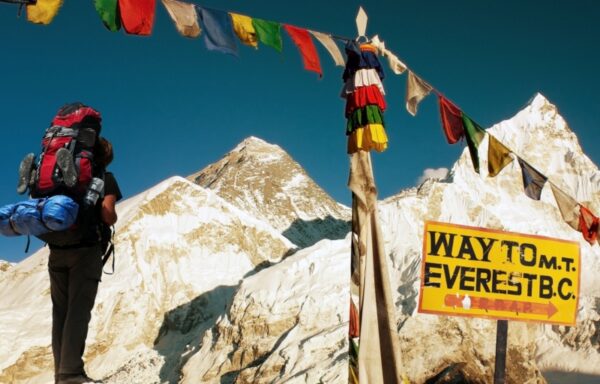
Some Nepal trekking operators market a short four or five day trek from where you might get a very distant and totally unrewarding view of Mt Everest.
On these treks you fly into Lukla and then walk to Namche (arriving there on day two), then along the trail towards Dingboche for a couple of hours from where, on clear days, you can just about see Mt Everest. You'd then walk back to Namche and then, in one long day, all the way back to Lukla for a flight back out the following day.
Take into account flight delays and you'd be lucky to do it in four days. It's technically possible, just not remotely worth it in my opinion.
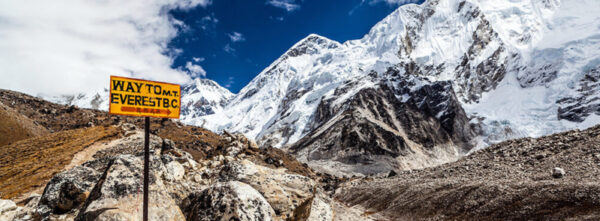
If you wanted to get up to Everest Basecamp and there were no hiccups with flights in and out of Lukla (which happens all the time) then you'd need at least ten days. This is the minimum safe amount of time to do it in and in that time frame you'd still run a real risk of altitude sickness.
If it's views of Everest you're after, there are some view points on the edge of the Kathmandu valley where you can spend the night in one of the villages there and at dawn on a clear day stand on your hotel balcony and see a distant smudge of Mt Everest.
Here's my advice: there's much more to trekking in Nepal than just seeing Everest. Please choose a route that is safe, gives you time to properly acclimatise, and doesn't rush through this magnificent country just to tick off a bucketlist item.
Although I always recommend using a guide, ending solo trekking is such a big change to the Annapurna trekking scene! I can understand why people are disappointed. I can't recommend any individual operator, but there is a list of licensed Annapurna trekking companies here.
Access to trailheads for most Annapurna treks is fairly simple and all but Nar-Phu and Tilicho Lake start and end a short bus or taxi ride from Pokhara. An ever-expanding road network is changing routes in this region and many people skip the first couple of days of the Annapurna Circuit by driving up the valley.
An equally large number finish the trek at Jomsom from where there are regular buses and jeeps back to Pokhara as well as early morning flights. However, be warned that landslides can block the road for days on end and flights are frequently cancelled due to unfavourable (ie terrifyingly strong) winds. Allow an extra day or so in your schedule.
The Annapurna Sanctuary and Circuit, the two main Annapurna treks, have numerous trekking lodges of a very high standard., some bordering on luxurious. Hot showers, wi-fi, and international menus are common.
Nar-Phu and Khopra Ridge are earthier with limited and very basic homestay style lodges which fill up quickly. These areas are best trekked on a fully organised camping expedition.
The best time to trek in the Annapurna region (except for Nar-Phu) is between October and November, and from late February to April. Between late November and early February, it’s very cold at high altitude and the Thorung La Pass will probably be impassable due to snow. The routes to Tilicho Lake will also be snowed in at this time and lodges at higher elevations closed. There’s a real avalanche risk on the Annapurna Sanctuary and Tilicho Lake routes in spring. Avoid trekking most of this area during the monsoon (June-early-Sept)
Nar-Phu is unusual because it lies in the Himalayan rain shadow, and it’s possible to trek here during the monsoon — although you should still expect some rain and obscured mountain views. From November to early March, most valley inhabitants leave for lower and warmer climes and trekking lodges will be closed. The Kang La Pass will also be buried under snow and impossible to cross in mid-winter. This pass can also be complicated in spring with late and/or melting snow and ice. April-May and September-October are great times for Nar-Phu.
All these treks require a TIMS permit (Trekkers’ Information Management System) and an Annapurna Conservation Area Permit. At the time of writing, individual permits cost R 2,000 per trekking route per entry, while group trekkers pay R 1,000 per person. Check the latest prices on the official Nepal tourism board website.
The Nar-Phu trek also needs a restricted area permit (seven days Sept-Nov/Dec-Aug US $90/75, additional days, US $10). You must be in a party of at least two trekkers and be accompanied by a guide.
Everest, Annapurna and to some extent Langtang are the favourites for first-timers. These three regions are convenient with easy access, plenty of lodges and good facilities. However, during the 'peak seasons' of mid-March to mid-May & October to November, these regions get very busy indeed.
My personal advice for someone looking for a quieter experience is to look at either the Manaslu or Kanchenjunga regions. The Manaslu Circuit trek has been hailed the "new Annapurna Circuit" and Kanchenjunga North offers some of the best views you'll get without straying into actual mountaineering. Until a decade ago trekking here used to be a full scale, high-cost camping expedition. These days there are some lodges on the routes but still far fewer trekkers, which makes them attractive if you're looking for true wilderness, unspoiled culture and quiet views.
Nothing takes away from the beauty of Everest or Annapurna, but for a different experience, Manaslu or Kanchenjunga get my vote.
Trekking in Bhutan is costlier than Nepal or India for sure, but remember that US$200 per day of your trip fee is going to fund healthcare, education and environmental protection in Bhutan. For me the feeling I get from having a stunning Himalayan valley or view to myself is really priceless. If you are happier with the social nature of teahouse trekking, then maybe it's not worth the cost for you.
Apart from the much higher costs, Bhutan sees a fraction of the trekkers who visit Nepal, so there are no crowds, no backpacker scene and no trekking lodges in Bhutan. The environment is much more pristine and the culture more intact, but the peaks are on a slightly smaller scale.
Your trekking agency will provide tents, a mattress and a sleeping bag, but I'd advise you to bring your own sleeping bag and mat for comfort and familiarity. There's not much quality gear available to rent in Bhutan.
The hardest, that's easy - the Snowman Trek. More people have summited Everest than completed this trek!
The easiest is probably the two-day Saga La Trek, which is really two half-days of walking bookended by some monastery and fortress sightseeing.
Another easy going trek, and one of my favourites, is the two-day Bumdrak hike. It's a one-nighter, staying in a luxurious fixed camp (real beds!) and the second day is all downhill, winding through lovely forests to temples and views above the famous Tiger's Nest Monastery, the country's single most famous sight.
In order to visit Bhutan you have to pay a Sustainable Development Fee of US$200 per person per day, on top of the cost of your trek (though there are currently some temporary discounts on this). Your trekking agency will then arrange all the national park and trekking permits that you need.
I'd say that Laya is my favourite region, because of the mix of great mountain scenery and rich local culture. The Layap women here wear fabulous woven bamboo hats and the men are mostly yak herders.
Bhutan is the only place where I've actually gained weight on a trek, thanks to the three meals a day (plus snacks) cooked up by trek staff. Breakfast is toast, cereal, coffee and often eggs. Dinner is a multi-dish feast of rice and vegetable curries; lunch is similar but cooked in the morning and transported in thermos dishes for a hot picnic. You'll even get French fries once or twice.
Most trekking groups stay in their own double tents. A couple of route options (including the Trans-Bhutan Trail) overnight in village homes and there are good homestays in Laya.
No, all treks (indeed all travel) in Bhutan have to be fully organised and accompanied by a guide and trekking agency staff, who will arrange everything. On my first 'solo' trek here I had a guide, cook, three other staff and nine pack horses - just for me!
There's a wide range of treks on offer in Bhutan. The 25-day Snowman Trek is one of the world's toughest treks. Less physically challenging but still adventurous treks include the popular Druk Path, or you can hike a section of the 400 km-long Trans-Bhutan Trail, which sticks to lower altitudes and offers village homestays.
Acclimatising properly is absolutely essential to a successful trek in Bhutan. Many passes are over 5,000m, and most are over 4,000m. Most treks have built-in acclimatisation days and it's essential to follow these.
Aside from the Everest region then yes, officially, you do now need an officially recognised guide to hike inside any national park/protected area in Nepal. This would include most of the main Annapurna trails.
However, enforcement of the rule in the Annapurna region has been spotty so far. There are plans (in theory at least) to start enforcing the new rule in 2024.
I would say though that a guide is just a good idea anyway because a good guide (and getting a good one is key) will enhance your trek by giving background information, offering up interesting side routes, translating when required, opening cultural doors and, of course, providing a bit more safety. Not to mention that it gives much needed jobs to local people and in the big picture it costs very little.
I have two children (now aged 13 and 10) and wouldn't hesitate to take two ten year old girls to Nepal trekking if they already have some walking experience.
If you and your children are used to hiking in mountain areas with decent height gains, they can hike in Nepal.
There's very little in the way of wilderness trekking on all the main trails as there are villages everywhere.
It would be a rare day that you'd have to gain more than about 500m in elevation gain and most days are around five hours walking (without stops).
The main difficulty lies in altitude and cold temperatures. With younger children I would be cautious about doing anything too high - say above 4,000m - just in case they don't think to tell you that they're feeling ill.
The cold is also a problem so take plenty of warm gear as lodges are unheated and at night it gets bitterly cold. In the day the temperature is normally pleasant or even warm.
As for particular treks with children then I would say the best are the Langtang Valley trek with a few days at Kanjin Gompa to explore the upper valley as this is a short trek, with beautiful scenery, decent enough lodges and only goes to 4,000m.
Annapurna Basecamp is another good - but longer - hike to a similar altitude and with better lodges. The Tamang Heritage Trail is also good as it doesn't go too high at all but there has been quite a lot of road construction there. The Rolwaling Valley is a newer, quieter trek that is a nice length and only goes to 4,000m. Lodges are still pretty basic.
And then there's Poon Hill but it doesn't really take you into the mountains and probably won't seem too exciting if you already have mountain experience.
My most important advice is – keep things light and minimal. When you’re slogging your way up to a mountain pass you will regret every extra kilo you’re carrying. The following is a list of recommended items, some of which are more essential than others.
Hiking boots
You’ll need boots. Not shoes or trail running shoes. Make sure they’re waterproof, very sturdy and above all, comfortable. Don’t buy a cheap pair. Make sure you break them in before leaving for Nepal. Whatever you do, don’t hire boots in Nepal as they probably won’t be up to scratch and will give you blisters. Nothing will ruin your trek more than blisters.
Winter jacket
A thick, warm, waterproof and breathable but lightweight jacket is another must. It needs to keep you warm as toast in sub-zero temperatures. These can be rented in Nepal but most are inferior knock-offs of respected brands. They’re okay for a one-off trip but if you’re likely to go mountain trekking again, it’s worth buying your own jacket.
Sleeping bag
It gets bitterly cold at night, even at comparatively low altitudes in winter, and the thin, gap-riddled walls of trekking lodge bedrooms provide little protection. Get the warmest yet lightest one you can afford. When a manufacturer says a sleeping bag can be used down to minus-10 degrees the reality is you won’t be comfortable in it below about plus-five. Aim for one that says it will keep you warm down to minus-20 or lower. A really good sleeping bag is expensive. Bags can be rented in Nepal but as with jackets, they’re very rarely of good quality.
Trekking Poles
If you’ve never trekked before then you might consider trekking poles as something that just old people use. Well trust us, if you don’t use them after a few days clambering up and down steep Himalayan slopes you’ll forever walk like an old person… Poles help save energy going up and take the strain off your legs on the way down. They also stop you falling and twisting ankles as much.
Water bottle
Take two of at least a litre each and refill whenever possible. Don’t rely on bottled mineral water. It’s often not available and it’s environmentally unfriendly, particularly up in the mountains where there’s little chance of recycling.
Water purification pills
Get enough to treat at least three litres of water a day. On more popular trekking routes some lodges provide pre-treated water but don’t rely on this always being available.
Thermals
Two or three thermal tops of different thickness and even a pair of thermal under-trousers are worth their weight in gold.
Fleeces
Two fleeces, one thin and one thick, are vital.
Walking trousers
Don’t try to skip around the Annapurna Circuit in a pair of jeans (yes, we’ve seen people try. And fail). Get some comfortable walking trousers. Two pairs should be sufficient for the longest treks.
T-shirts/shirts
Many people recommend specialist quick-dry shirts designed for trekking. However, we’ve used a combination of these and normal shirts and T-shirts and never noticed much difference. Don’t over pack. You probably won’t change your shirt more than once in a two-week trek!
Socks
Specialist hiking socks are supposed to reduce blisters and are worth buying. However, changing your socks frequently seems to reduce blisters as much as any clever equipment. Take at least three pairs for a two-week trek. Also pack a thick, warm pair of ski socks to keep warm when you arrive at camp.
Sandals
Most people appreciate being able to remove their boots at the end of the day and don some sandals (with or without thick ski socks, depending on how cold it is).
Hats
A sun hat is vital for hotter, lower elevations, and a winter hat or balaclava for up high.
Gloves
Take a thick warm pair of skiing gloves and a thin, cotton pair of under gloves. You won’t be able to use your camera or eat properly with thick gloves but you can with the thin ones, and they’ll keep your hands warm for a few minutes.
Sun glasses
An essential bit of kit at all elevations. The sun reflecting off the snow can quickly frazzle your eyes.
Suncream and sunblock
Slap on lots of sun cream no matter what the weather or elevation. Use total sunblock on lips, nose and ears.
Wash kit
Keep this minimal as you won’t get much chance to wash. A small lightweight travel towel isn’t a bad idea.
Torch
A head torch is a must.
Books
The evenings can be long. Bring a good book, not a tablet or Kindle as power sources can be erratic and batteries drain very fast at altitude. Don’t forget a guidebook. We recommend the Rough Guide to Nepal, which covers the country and gives details of the main treks. For specific trekking information try Lonely Planet’s Trekking in the Nepal Himalaya.
Camera
Even non-photographers will want photos of this stunning scenery.
Spare batteries
Bring spare torch, camera and phone batteries. Below a certain temperature and above a certain altitude (which vary from product to product), batteries drain very fast or don’t work at all. Above about 3,000m put the batteries in your sleeping bag at night to keep them warm and reduce drainage.
Snacks
A few biscuits and chocolate bars might give you the energy boost you need to get over that pass.
Backpack
To carry all this you’ll need a decent, comfortable trekking backpack. Don’t consider any other kind of bag. If you’re using a porter you’ll need a small backpack for your day gear and you’ll have to provide a bag for the porter to carry - a holdall is best.
Travel Insurance
You’d be utterly insane to go trekking in the Himalayas without a decent travel insurance policy. Make sure it covers trekking above a certain altitude and helicopter rescue.
Leave the gadgets at home
Don’t bother taking computers, tablets, etc. They get easily broken on the trail and the batteries probably won’t work at altitude. More importantly, most people don’t want to see fellow trekkers glued to their tablets in a lodge at night.
October to April is the dry season and, overall, this is the best time to trek in most of Nepal. But within that, the ideal trekking time is really from October to early November when the skies are crystal clear and the visibility excellent. It’s warm in the valleys and cool to cold up high. However, this is also the busiest time on the main trails, and villages can be overwhelmed with trekkers.
In general avoid the monsoon season from May to September, when many trekking routes close and paths become dangerous. However, for some regions, such as Upper Mustang and Dolpo, this is actually a good time to trek.
Yes. You’d be utterly insane to go trekking in the Himalayas without a decent travel insurance policy. Make sure it covers trekking above a certain altitude and helicopter rescue.
By and large the altitude makes trekking in Nepal a relatively challenging activity. But there are a smattering of truly beginner-friendly trekking routes. Annapurna Sanctuary is easy-to-moderate, other easier routes include Jiri/Shivalaya to Lukla, Poon Hill, Langtang Valley trek, Helambu trek, Tamang Heritage Trail and Phoksundo Lake.
For the most part the actual hiking in Nepal is easier than in many other mountain areas. The trails often follow old trade routes that have been used for centuries and these routes generally take the easiest option.
It’s not the amount of time you spend walking each day – or the altitude gains and losses – that can make trekking in Nepal hard work, but the often bitter cold and the very high altitude conditions that make the going tough.
All trekkers in Nepal must buy a TIMS (Trekkers Information Management System) card. The idea is that it allows the authorities to know where every foreign trekker is hiking and makes you easier to trace in an emergency. There are rumours that the cards will be done away with, but for now, they can be obtained quickly, cheaply and easily, in Kathmandu or Pokhara.
The most convenient place to buy the card is at the Nepal Tourism Board office in either Kathmandu or Pokhara. Bring a copy of your passport and two passport-sized photos and be prepared to disclose your trekking route, entry and exit points and emergency contact information.
At the time of writing, individual permits cost R 2,000 per trekking route per entry, while group trekkers pay R 1,000 per person. Check the latest prices on the official Nepal tourism board website.
For the main trekking areas (Everest, Annapurna and Langtang) you'll require the relevant national park permits, which can be obtained in an hour or so in Kathmandu or Pokhara. For other treks, additional permits might be needed including Restricted Area Permits. In some cases, these permits are fairly cheap and fast to obtain (the Kanchenjunga area being a case in point), but in other areas such as Upper Mustang and Inner Dolpo they are very expensive (US$ 500 per person for 10 days and a minimum of two trekkers are required to get them).
If you’re on an organised trek your trekking agency will deal with all the required paperwork while you go sightseeing in Kathmandu. Independent trekkers will have to face Nepalese bureaucracy alone but in most cases, it’s pretty painless. You will need copies of your passport and a spare passport photo.
Unfortunately, none of the permits can be obtained at home before leaving for Nepal so it’s unlikely that you will be able to get off the plane and straight on to a bus to the trailhead. Allow at least a day to get the papers in order after you arrive.
On an organised group trek, your trekking leader will be a qualified first-aider and the support staff will be carrying basic supplies for minor medical ailments. In a more serious situation, evacuation by helicopter is relatively common and trivial – provided you’ve got insurance.
Always take more cash with you than you imagine you’ll need. There are very few ATMs on any of the trekking trails (Lukla and Namche Bazar in the Everest area have the only reliable bank machines) and it’s easy to underestimate how much you’ll spend.
Banks and ATMs accept foreign cards in all larger Nepalese towns and cities. Bigger banks will change cash (dollars and euros are best). Travellers’ cheques are rarely accepted now. The best way of accessing money is from an ATM. However, it’s wise to have some emergency cash with you in US dollars or euros.
Guides and porters will expect a tip (cash) at the end of a trek. A good rule of thumb is for each member of your group to pay the equivalent of one extra day's salary to each porter and the guide for each week you trek.
On an organised group trek with a quality operator you’ll be very well fed indeed – your porters and support staff will work miracles to produce three hearty meals per day. Depending on the route and accommodation you might also eat a la carte in teahouses. Staples include dhal bhat (lentil curry and rice, Nepal’s national dish), momos (Nepalese dumplings) and thukpa (noodle soup). International dishes and beer are sometimes available at a higher price.
Commercial organised treks use a combination of camping and ‘teahouses’, or trekking lodges. Trekking lodges range from spartan to comfortable, and even luxurious. You can expect a simple but warm twin room, a shared bathroom, and a cheap but filling breakfast and evening meal. Trekking lodges are social places, with hikers gathering around the heater at night to swap stories.
A group trekking tour in Nepal with a reputable operator will typically cost between USD $800 and $2,000+ per person, depending on the trip duration, location, route and other variables.
Organised treks are generally priced on an all-inclusive basis: virtually everything from arrival to departure will be factored into the price. This should include the services of a qualified guide and support team (assistant guides, porters, cooks, etc), all accommodation (either teahouses or camping), TIMS card and any other necessary permits, three full meals per day, all ground transfers, any internal flights, and 24/7 backup support. Certain equipment, such as sleeping bags and trekking poles, may be hired at an additional cost. Insurance will not be included, but will be a mandatory requirement.
This is a good question as there are countless Nepal trekking companies and more seem to spring up every year. You might choose to book with an international travel agency or tour operator; booking with a company in your home country can offer added financial protection, at an extra cost. Note that most international operators will not be the ones actually running your trek on the ground so you're paying extra for a middle-man, which may still be a worthwhile investment if you like the extra reassurance.
If you go for a local operator, they must be registered with TAAN and they may also be registered with the Nepal Tourism Board and the Nepal Mountaineering Association (NMA). Cross check reviews on their website against 3rd party review sites, and try to pay with a credit card for financial cover.
As of April 2023, all trekkers must be accompanied by a licensed guide arranged through a government-registered trekking agency. Look for the green TAAN (Trekking Agencies' Association of Nepal) logo on their website, and check their credentials on the official website.
In April 2023 the Nepalese Tourist Board announced that guides would be mandatory for all trekkers hiking within a national park (which accounts for pretty much all the main trekking regions), except for people trekking in the Everest region. When it came down to it though the rule was not enforced due to local opposition. However, in June 2023 the tourist board again insisted on compulsory guides and increased fines for those not respecting the rules. It won’t be known how strictly the rule is enforced until the trekking season recommences after the monsoon in October 2023.
From my personal experience a guide is not only handy for route finding but serves the vital role of being a language and cultural translator and can open doors to experiences, sights and encounters that might otherwise pass you by. A good guide can also be very useful for showing interesting and little known side routes.
In our guide we classify Nepal treks on a spectrum between Easy – Moderate – Strenuous – Challenging. Anything above that enters technical mountaineering territory. The grading depends on factors such as the altitude, duration, total ascents/descents, quality of trails, and standard of accommodations.
There are a small handful of truly “easy” treks, such as the Poon Hill Trek, which don’t go beyond 4,000 metres in elevation. The Annapurna Sanctuary Trek (4,130m) is easy-moderate, Annapurna Circuit and EBC are moderate-hard.
The country’s conservative but welcoming culture makes Nepal a generally safe country for solo female travellers. You’re unlikely to encounter the sort of harassment or unwelcome attention that can blight visits to, for example, neighbouring India. Honestly, you're more likely to receive unwelcome attention from other foreign trekkers than Nepalis.
This is the most common question I get asked! By and large trekking in Nepal is a safe, well-regulated industry. Mishaps and even deaths do happen, typically in the single digits per year. But (reputable) operators employ top quality professionals and have thorough risk-management processes in place. Should something go wrong, evacuation is usually straightforward if expensive (insurance is always mandatory).
That said, you must be aware of the very real health risks, such as Acute Mountain Sickness (AMS), sun/heatstroke, hypothermia, and general stomach issues.
The golden rule with high mountain trekking is to go slowly and never ascend too high, too fast. Most experts agree that above 3,000m you shouldn’t ascend more than around 300 to 500m in a day and that you should allow for frequent rest days above 3,500m.
There are also infrequent but frustrating reports of petty theft in the busier teahouses. Don’t trek with valuables and keep a keen eye on your possessions.
Ask a question
Get answers from our independent South Asia experts.
You'll receive a reply by email. Questions and replies may be anonymised and reproduced on Horizon Guides.
§ 04
The South Asia atlas
30 picksPlaces & Experiences You Won't Find Elsewhere
Where
What
Duration: 7-8 daysDifficulty: Moderate
The Soi Yaksa Trek, also marketed as the Jomolhari Loop, is a more accessible alternative to the more famous, longer (and harder) Jomolhari Trek. The classic Jomolhari Trek is an eleven to twelve day slog that crosses two high passes, Nyile La (≈4,890 m) and Yeli La (≈4,930 m). In comparison, the Soi Yaksa Trek is just seven to eight days with a max. elevation of 4,080 m at Jangothang. Although no walk in the park, it's far more accessible and is the hike I recommend for less ambitious trekkers who want to experience Jomolhari.
That said, you still enjoy all the signature highlights that make the full Jomolhari Trek famous: Sharna Zampa, Soe Thangthangkha, the breathtaking Jangothang base camp, yak pastures, alpine valleys, and views of Jomolhari’s white pyramid.
Duration 3 daysDistance Approx 20kmDifficulty: ModerateStart/end point: Sermathang to Tarke Ghyang
Ama Yangri is the trek I often recommend when people want real Himalayan scenery but don’t have a week to spare. The peak sits at 3,771 metres and you can do the whole thing in three days from Kathmandu. The route is quiet and feels properly local, with Sherpa and Hyolmo villages in Sermathang and Tarke Ghyang. It’s close to the city but never feels busy.
For me the heart of the trek is the summit. On a good morning the view from the mountains look crystal clear. In spring and autumn you get that kind of sharp visibility about nine mornings out of ten if you start early. You can see Jugal Himal, the Langtang range, Dorje Lakpa and the rest stretching across the skyline. The best window is from around 5.30 to 9am.
The route itself isn’t technical. The climb from Base Camp feels harder because you start at 3.30am after a short night. There aren’t any tricky ridges or switchbacks; it’s just steady uphill in the dark. A fit person can manage it without trouble. What helps most is keeping the day before simple: eat, hydrate, and go to bed early. I tell people to try for 7pm. Avoid alcohol and tea or coffee, or it gets harder to settle. The rooms can be cold, which doesn’t help, but there aren’t really any special tricks that make sleep easier.
One thing people do underestimate is the temptation to skip Base Camp. Some try to go straight from Sermathang to the summit and it never works well. It’s too quick an ascent and you feel the altitude. Staying at Base Camp gives your body time to adjust and makes the morning climb safer.
The trail between Sermathang and Base Camp is long and completely without water or teahouses. It takes six to seven hours, so I always tell people to bring a simple packed lunch and about two and a half litres of water. It’s a quiet forest route and easy to drift off the main line, so having a guide makes a difference.
The teahouses are friendly but basic. Eco Yangri Lodge in Sermathang and Chyomuthang Resort at Base Camp are the usual choices. Booking ahead helps in the busy months. The road in and out is rough and slow, so I prefer private transport over local buses. Motion sickness tablets are useful.
Spring and autumn are the best seasons. Winter mornings can be very cold, down to minus five, but the views are lovely. Monsoon is muddy and slippery, so I don’t recommend it.
If you want to catch the best colours and avoid the wind, leave Base Camp at 3.30am. Bring a headlamp and be ready for a cold summit. In the Sherpa and Hyolmo villages, dress modestly and only go into monasteries or homes if someone invites you.
The Kedarkantha Trek is a beautiful hiking trail in the Garhwal Himalayas of Uttarakhand, located in the Govind Wildlife Sanctuary of the Uttarkashi district.
This trek is one of the most popular winter treks in India and is suitable for beginners and families. The trail is also well-known among nature lovers, birdwatchers, and professional trekkers. It is a really versatile trek, offering the experience of a tough climb to a peak, 360 degree panoramic views of the surrounding mountains, beautiful sunrise views, exploring dense forests, alpine lakes, Garhwali cultures, spiritual places and much more.
The trek starts from the quaint village of Sankri and passes through beautiful dense forests of deodar and rhododendron, the alpine lake of Juda ka Talab, several small streams, vast landscapes of alpine meadows, and a steep climb to the summit of Kedarkantha. After a slightly difficult climb, this beautiful trail offers trekkers breathtaking views of some of the amazing mountains and ranges of the Garhwal Himalayas, including Mount Swargarohini, Black Peak, Mount Bandarpunch, Ranglana, Gangotri and Yamunotri ranges.
I usually recommend taking 4 to 5 days to complete the trek, which covers a distance of about 20 km and a maximum height of about 12,500 ft.
I love doing this trek best in the winter and spring, especially in December and January, as the trail is completely covered with fresh snow, which is a truly breathtaking experience... like walking on the stairs to heaven. However, the trek is accessible throughout the year, except during the monsoon season due to heavy rains and landslides. Whilst there, I recommend taking the opportunity to spend some time at a spiritual place which is believed to be the meditation place of Lord Shiva and hence the peak is named "Shiva Ka Kanth" (Kedar's Kanth) where the "Kanth" means "Throat".
Built in the 17th century by Rao Raja Anirudh for his foster brother Deva as a dome-shaped memorial, this cenotaph is famous for its 84 pillars (although legend says you can’t count them all). The cenotaph has several ornate sculptures and a linga (a form of Shiva) built in the centre.
Stepwells are an architectural feature of Rajasthan and Gujarat. With water being a scarcity, stepwells were designed not only as sources of drinking water, but also places to bathe, pray and relax. Often sculpted as temples with gates, arches and pillars, there are about 50 stepwells in Bundi, but most of them are in ruins. The Raniji Ki Baori is the best known, built in the 17th century by Queen Nathavati, wife of Rao Raja Anirudh Singh. It is 46m (150ft) deep and each level has carvings of deities.
Built along the banks of the Jait Sagar Lake in the 18th century during the reign of Ummed Singh, the Sukh Mahal was home to Kipling and inspired him to write Kim. Meaning the palace of bliss, the Sukh Mahal is home to Mughal art and statues, a marble cenotaph and gardens.
The former capital of the Rathore clan lies in ruins amidst a beautiful garden filled with a fort, cenotaphs, temples, rock terraces and sculptures. Don’t miss the cenotaph of Maharaja Dhiraj Ajit Singh, which combines Jain and Buddhist architecture. This chattri also commemorates the ritual suicide of his 64 queens and concubines, who threw themselves on his funeral pyre in 1724.
Located 9km from Jodhpur, visit for the Hall of Heroes (dedicated to folkloric characters), the Temple of Gods and the many monkeys roaming around.
Located at Gangaur Ghat on the banks of Lake Pichola, this 18th-century palace belonged to the then prime minister of Mewar, Amar Chand Badwa. The Rajput architecture has been preserved and there is a museum dedicated to Mewar culture, including jewellery boxes, royal clothing and mural paintings.
A beautiful park filled with sculptures and statues, Saheliyon Ki Bari (Garden of Maidens) was created by Maharana Sangram Singh for his queen and her 48 female attendants as a refuge from court life. It’s now a popular meeting spot. Look out for the lotus pond and elephant fountains.
Another beautiful royal palace, the Monsoon Palace (Sajjan Garh Palace) sits atop the Aravalli Hills overlooking Fateh Sagar Lake. Built in the 19th century as a refuge from the annual monsoon, the palace was also used as a hunting lodge. Visit the palace in the evening for sunset views, or head here during the monsoon and watch the clouds float over Udaipur.
For a change of pace, visit the Karni Mata temple in Bikaner, which holds more than 20,000 black rats. Each time a rat dies, a statue is built inside the temple complex.
Other notable temples include the Brahma Temple in Pushkar, which is one of the few in India dedicated to Brahma. This Hindu god was said to be cursed with having no places of worship on earth. Take a holy dip in Pushkar Lake before offering your prayers in the temple.
Rajasthan’s temples date back to the 4th century, although more ornate and architecturally interesting temples began to develop from the 9th century. These typically had sculptures and marble carvings, such as the stunning Delwara complex at Mount Abu.
Havelis (mansions) were the homes of rich merchants and traders in Rajasthan’s cities. Decorated with stone carvings and interiors of murals and frescoes, each merchant tried to outdo the next to show their importance and wealth.
Every major city in Rajasthan will have havelis worth visiting, but Jaisalmer is a particular hotspot. Look out for the Patwon Ki haveli and the elephants of Nathmal Ki haveli.
The history of Rajasthan is shown through its many forts, palaces and historical buildings. Almost every major city — and many minor ones — will have some form of architectural wonder to explore
Built to commemorate the region’s maharajas and nobles, chattris (cenotaphs) are a frequent feature of Rajasthan’s architecture. Chattri literally translates as umbrella, which references the dome-like structure that covers the cenotaph. Originally built as a garden complex, the yellow sandstone domes of Jaisalmer's Bada Bagh cenotaphs are an excellent example.
Rajasthan’s desert location means that conserving water has always been a major issue. Baoris are stepwells that were traditionally built to provide drinking water. Over time, they became meeting places and temples, decorated with sculptures and carvings. The 46m deep Ranji Ki Baori in Bundi is a fine example, showcasing carvings of Lord Vishnu.
Towering over the main square of the fort is the seven storey Fort Palace Museum. Formerly the Raj Palace (Palace of Kings), the museum is home to the mirrored Rang Mahal, which is filled with paintings and sculptures from the 15th century. Most of the palace is open to visitors, allowing you to explore the small rooms and stooped walkways designed for spying on the outside world. Head to the top of the palace for views over the city.
Ornate merchant mansions dot Jaisalmer and the most lavish and grand among them is the 19th century Patwon Ki Haveli. Now a museum, Patwon Ki Haveli is worth visiting for its architecture, intricate designs and history. The complex is a combination of five havelis and each is filled with stunning murals, mirror-work and paintings. The haveli belonged to merchant Guman Chand Patwa and his sons, who traded in gold, silver and brocade embroidery.
There are also two other beautiful havelis worth visiting — Nathmal Ki Haveli, which is guarded by two elephants carved in yellow sandstone, and the peacock-like grand roof of Salim Singh Ki Haveli.
This small museum tells the story of Rajasthan’s various princely states and explores the history behind traditional Rajasthani culture, including music and textiles. The centre hosts a nightly puppet show in English.
These sprawling complexes often housed whole cities within them, including palaces, temples and trading centres. Built on hillsides, these forts used natural defences to protect themselves, such as forests, deserts and of course, hills. The views from the forts are spectacular.
Although initially conceived for protection from invading armies, these forts quickly became more extravagant as royal families settled in. Some of the best examples of Rajput architecture can be found in its palaces. Two of the most striking are the Hawa Mahal in Jaipur and the City Palace in Udaipur. Look out for the sheesh mahal (hall of mirrors).
Visiting these forts is a chance to experience and imagine Rajasthan in its Rajput period, when kingdoms nudged up against each other and courtly culture helped develop the region’s arts, textiles and music.
There are eight main hill forts in Rajasthan, clustered around the Aravalli mountains. Designated as UNESCO World Heritage sites, these forts were built by Rajput kings and date from the 5th century.
Perched on the hills of Cheel Ka Teela (Hill of Eagles), Jaigarh Fort was built in 1726 by Jai Singh II to protect the Amer Fort. The two forts are connected by a series of underground passageways. Jaigarh Fort is famous for a cannon called Jaivana, which was once the world’s largest cannon on wheels. There are small temples inside the fort and several palaces, including Laxmi Vilas, Lalit Mandir, Aram Mandir and Vilas Mandir.
Jaigarh Fort also has a bizarre spot in history. While its water tank might seem ordinary — three levels, enough capacity to store six million gallons of water -— it is also allegedly the place that Man Singh stored his treasure. In 1977, then Indian prime minister Indira Gandhi ordered a search to look for the Fort’s treasure. After three months, the search was called off — but at the same time, the Delhi-Jaipur highway closed for three days, prompting rumours of the loot being whisked away in secret.
Rajasthan’s capital is postcard picture perfect and is the gateway to all the state has to offer. There are palaces, forts, temples, stepwells, gardens and lakes all waiting to be explored. Jaipur’s Old City is painted in shades of terracotta (Jaipur’s nickname is the Pink City) and its crumbling buildings are awash with history.
Founded by Raja Jai Singh II in the 18th century (1727), Jaipur was initially created to supply water to neighbouring Amer Fort. Now a UNESCO World Heritage site, Amer Fort — along with Nahargarh Fort and Jaigarh Fort— remains the main attractions of Jaipur.Why is Jaipur pink?
The city was painted pink during the reign of Raja Ram Singh in the 19th century (1876) to welcome the then Prince of Wales, Albert Edward, who later on became King Edward VII. There is even an Albert Hall named after him in the city.
Located in the heart of Sawai Madhopur district, Ranthambore National Park is a tiger reserve and former hunting ground of maharajas. A couple of hours drive from Jaipur, it’s home to just under 100 Bengal tigers, as well as leopards, crocodiles, sloth bears and hyenas.
It also includes the neighbouring Sawai Mansingh and the Keladevi sanctuaries. Spread over 400 square km, the wildlife reserve is a combination of dry deciduous forests and open grasslands with more than 500 species of plants.
Ranthambore is one of the most important tiger sanctuaries in India, but the tiger population has reduced due to poaching. However, this is still the best place to spot tigers in India. Make sure you use a reputable guide and respect the animals if you choose to go on safari. You’ll be able to choose from either a canter truck which sits 20, or a more personalised jeep which sits six.
As well as tigers, the park is home to leopards, wild boars, wild dogs, hyenas, wild cats, sambar and chital deer, sloth bears and crocodiles among other wildlife.
Look out for the giant banyan tree near Jogi Mahal -- this gigantic banyan is thought to be the second largest in India and more than 200 years old.
Ranthambore is named after the towering Ranthambore Fort which was built in the 10th century. It stands 700ft tall, with three temples dedicated to Shiva, Ganesh and Ramlalji. There is a colourful Ganesh Chaturthi Fair which is celebrated in the fort’s temple during August/September every year. Look for the ancient Jain temples built in the 12th-13th centuries, the 32-pillared cenotaph and an old mansion called Sameton Ki Haveli.
Sariska National Park is a tiger reserve nestled in the heart of the Aravalli Mountains. Spread over 866 square km, Sariska’s landscape is a combination of thorny scrub forests and rocky landscapes.
Sariska has lost many tigers to poaching over the years. In the last decade, the park has introduced new cubs to the reserve which have successfully integrated into the environment, giving hope that Sariska’s tiger population can grow again.
Besides tigers, the park is home to leopards, wild boars, wild dogs, hyenas, wild cats and many deer. You can also see crocodiles in Siliserh Lake. The park is also rich in birdlife, with plenty of peacocks, crested serpent eagles, vultures and the Indian eagle owl.
Sariska was a hunting lodge of the Maharajas of Alwar and it became a wildlife reserve in 1955. It was part of Project Tiger (a conservation programme launched by the Government of India in 1973 to protect the Bengal tiger from extinction), becoming a national park in 1990.
In recent years, the park’s tiger population has struggled. In 2004, Sariska was found to have no tigers left, leading Rajasthan’s local government to introduce three tigers from Ranthambore in 2005. Controversially, the government also relocated two villages said to encroach on the habitat of the tigers. As of 2018, there are believed to be 18 tigers resident in Sariska.
Sariska is located close to Jaipur at 122km and Delhi at 200km away, which are the closest airports. You can hire a taxi and drive to Alwar and Sariska. The entry fee for a safari cost R470 per person and R400 for video camera. The best time to visit is October to March if you want to avoid the heat.
If you're trekking in Nepal for the first time, chances are the classic Everest Base Camp trek is on your radar. But for anyone with the time (and fitness), I often recommend this as a fine alternative.
The trek follows the Everest base camp trail for the first couple of days to Sanasa, a half day walk beyond Namche Bazaar. From here, while the masses plod towards Everest, Gokyo trekkers skip up the Dudh Kosi valley. Forested at lower levels, the valley becomes increasingly forbidding as it passes herders’ camps and yak pastures and enters a realm of moraine and ice circled by looming peaks.After about eight days of hard walking you’ll arrive at the Sherpa village of Gokyo with its end-of-the-world feel. Along the way, you’ll ascend Gokyo Ri for stunning views of Everest before crossing the typically snow-covered Cho La Pass. The trail then descends through a breathtaking valley, arriving at Lobuche and continuing to EBC. To top it off, a climb up Kala Pattar provides iconic views of Everest before you return to Lukla via the classic EBC trails.
Do note, however: this route is even more demanding than the already formidable EBC trek – it demands respect, preparation and proper acclimatisation. In this route we have 15 days of walking, with an extra three days for acclimatisation, rest and contingency.
Surpassed only by the Annapurna Circuit in Nepal trekking lore, the Everest Base Camp trek carries ultimate bragging rights – even if that means coming with some commercialised baggage.
This is the classic Everest Base Camp itinerary. It follows good trails with moderate daily distances which, at more reasonable altitudes, would make for an easy-going hike. But here, at the foot of the tallest mountain on earth, even easy trails present a challenge. The EBC trek is famous and popular, but it demands respect. In this itinerary there are essential (non-optional) acclimatisation days, but no side treks or rest days. If you have more time to spare you may find some of the other Everest routes to be more interesting and less crowded.
Whatever you choose, the challenge is well worth it and this is guaranteed to be a high point – quite literally – in your lifelong memories.
This route combines two of Nepal's classic treks, the Annapurna Sanctuary and the Poon Hill Sunrise trek.
We prefer to structure the route with the Poon Hill sunrise first, before descending to join the traditional route up to Annapurna Base Camp via Machhapuchhare Base Camp.
The great thing about this route is its flexibility. You can add a few days' trekking and side routes along the way, around the Modi Khola Valley, or head out to Ghandruk and Birethanti.
This route has 10 days of hiking with a few days' padding for essential acclimatisation and rest.
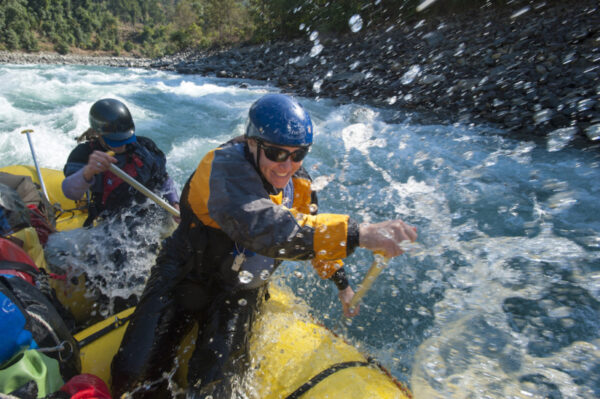
For most adventure seekers, trekking in Nepal is the singular focus. But for some real white knuckle thrills you need to hang up your boots for a 2,900m mountain bike descent, followed by a raft to navigate the grade 3-4 rapids of the Kali Gandaki river, wild camping on the riverside along the way. We designed this itinerary as a truly radical Himalayan adventure that you won't find with most retail trekking operators. This is as action-packed as it comes.
Very few visitors make it out to Mustang; indeed foreigners were forbidden for many years. But I find trekking in Upper Mustang a world apart to the rest of the country; here it's less about the awe-inspiring scenery of most Nepal treks and more of a cultural experience.
This route is for intrepid travellers with good fitness and previous experience at high altitude. You'll experience Tibetan culture and small villages, see unique rock formations and arid cliffs, as well as the legendary walled Lo Manthang.
As Mustang isn’t affected by monsoons, this trek is possible year-round.
The Manaslu Circuit, probably my single favourite route of all the major Nepal treks, has become established as the discerning trekker's alternative to the wildly popular and sadly spoiled Annapurna Circuit.
This route involves some of the best mountain walking in the world. The route features some tough days, but with stupendous views of Himalayan peaks as well as opportunities to experience villages with unspoiled Tibetan culture.
Bear in mind though that although the Larkya La is a little lower than similar passes on the Annapurna Circuit or Everest base camp treks, this is generally harder and facilities are much more basic than on the other two. Don’t expect apple pie and wi-fi at the end of the day.
Your details are safe and will not be used for any other purpose. By using this service you agree for us to share your details with your chosen tour operator according to our Privacy Policy.
1Your trip
2Complete your request
3Meet your specialist
Find a South Asia specialist
Tell us about your trip and we'll find your match
We'll connect you directly with the experts.
Connect with Karma Rigsang, Joni, Shikha and 3 other South Asia specialists.
We'll connect you directly with the experts.
Connect with Karma Rigsang, Joni, Shikha and 3 other South Asia specialists.