




Annapurna Region

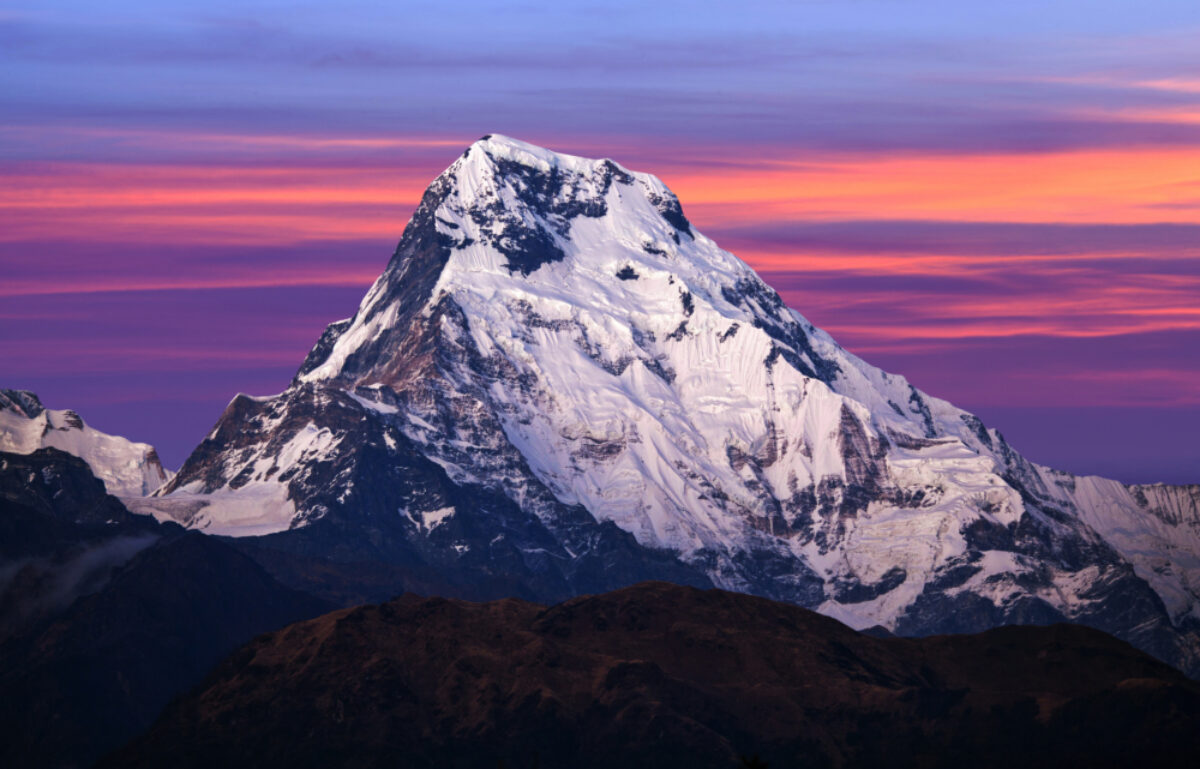
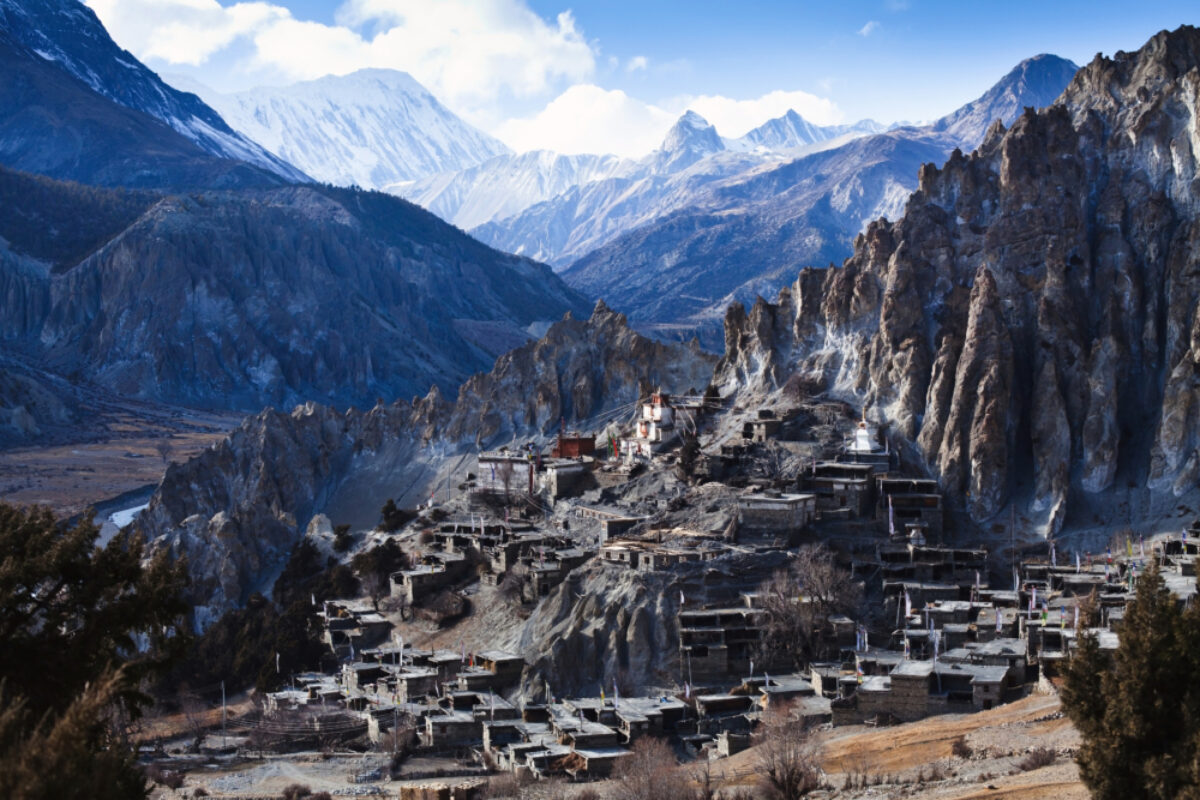
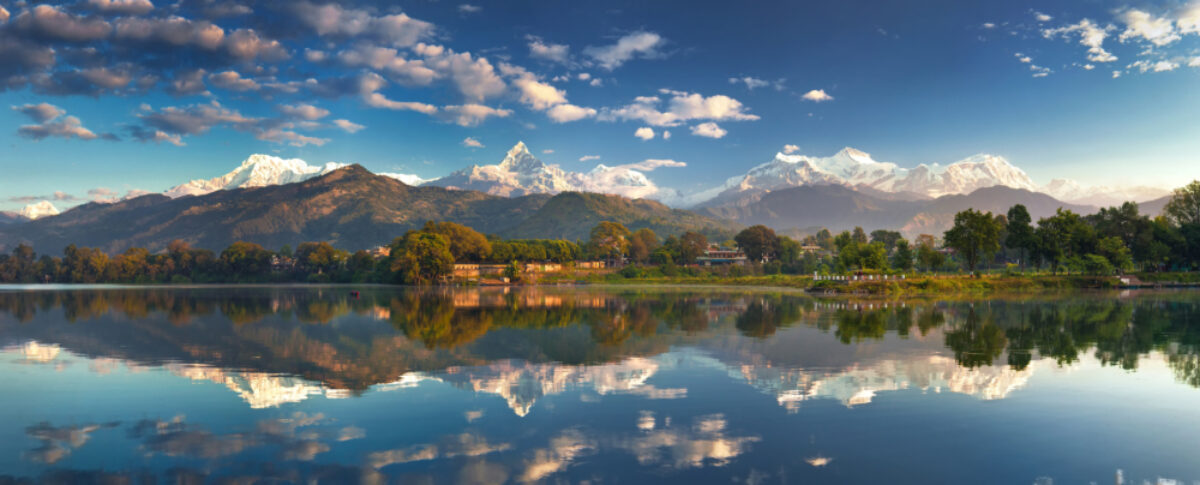
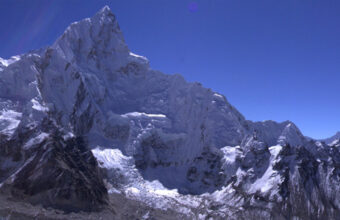
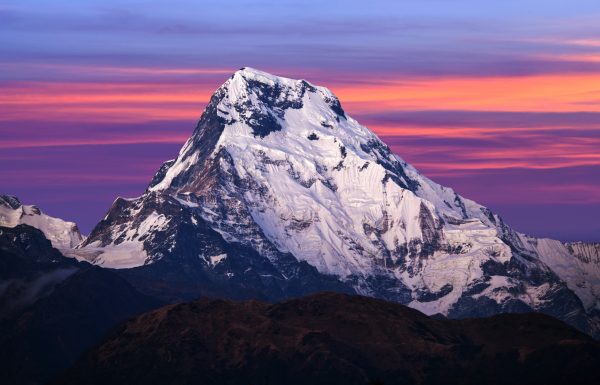
From the lakeside resort town of Pokhara, a great wall of white fills the northern horizon. This is the Annapurna range, which tops out with the 8,091m Annapurna I.
There’s a huge variety of Annapurna trekking routes, from simple walks in the flowery foothills, to legendary hidden valleys that feel like Tibet and require special permits to visit.
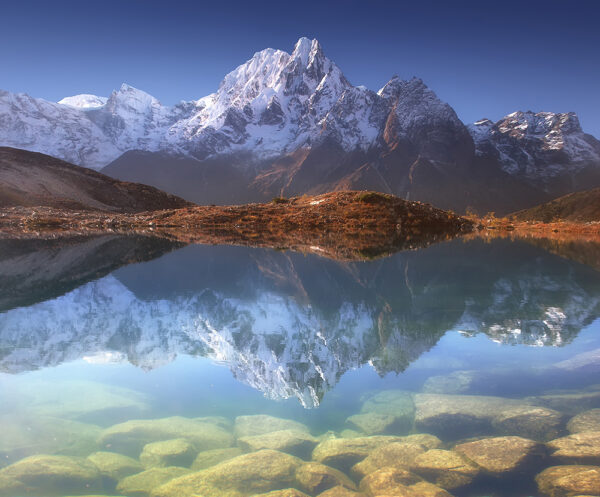
But whatever trek you choose, one thing is for sure: the mountain scenery will blow you away. Standing in the heart of the cirque at the end of the Annapurna Sanctuary trek could move you to tears, and the wilderness around Tilicho Lake will probably be the best mountain scenery you’ll ever lay eyes on.
And then there’s the Annapurna Circuit, the classic walk of Nepal, and one that for many years was hyped as the single best trek on the planet.
The scenery here is second to none, and there’s the added advantage that most treks are simple to organise, trailheads easy to reach on public transport, and accommodation and facilities abundant and of a very high quality. So forget the glory of Everest, Annapurna is where it’s at!
Hidden gems in Annapurna Region
Annapurna Region
Legendary Annapurna
The famed Annapurna range is one of the great trekking regions of the world, and for a very good reason: The mountain scenery here is guaranteed to blow you away. Standing in the heart of the cirque at the end of the Annapurna Sanctuary could move you to tears, and the wilderness around Tilicho Lake will probably be the best mountain scenery you’ll ever lay eyes on. The inevitable downside: it's popular and busy, especially during high season. If crowds and communal teahouse lodges aren't your thing, look elsewhere. Trekking culture is changing fast, too. The end of independent trekking and road construction are changing the face of the region, and not always for the better.
Read more
Annapurna Region
Panchase Trek

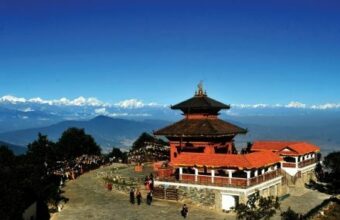
This is one of my favourite alternative treks in the Annapurna region. Don't worry if you've not heard of it – most visitors haven’t, which means you’ll enjoy largely crowd-free trails while ascending to magnificent viewpoints at a maximum altitude of just 2,500 metres. A highlight of this route is the way it begins: you’ll depart directly from the lakeside in Pokhara, boarding one of the city’s colourful boats to reach the opposite shore of Phewa Lake. Your destination on this four-day route is the hill station of Panchase, and you’ll pass through a number of charming Himalayan villages to get there. All told, this is a great Annapurna trek where you won’t have to worry about a long haul on dusty roads. I often recommend it for an acclimatisation trek before embarking on one of the longer and higher altitude main routes.
Read more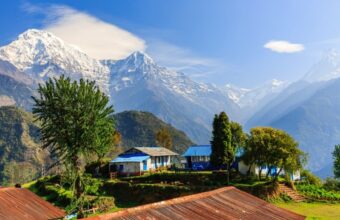
Annapurna Region
Annapurna luxury lodge trek

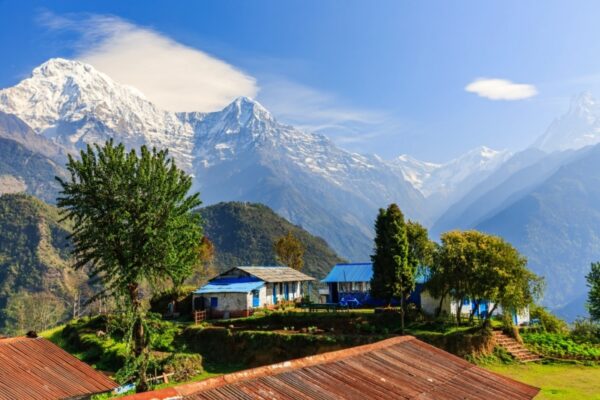
If you shudder at the idea of overnighting in a wooden room no larger than a prison cell, with the single shared toilet located down a hallway echoing with the thunderous snores of a two-dozen unwashed trekkers (or even worse; a tent!), then you might want to consider a luxury trekking itinerary in the Annapurna foothills. You’ll avoid the discomfort of high altitude and can focus on lovely days spent wandering village trails, safe in the knowledge that a hot shower and happy hour awaits you at the end of the day. Ker & Downey operates a string of lodges in the foothills north of Pokhara, allowing you to link the Gurung villages of Dhampus, Ghandruk, Majgaun, Landruk and Birethanti in a five or six day loop, with fine views of iconic fish-tailed Machapuchare never far away. This is trekking in style.
Read more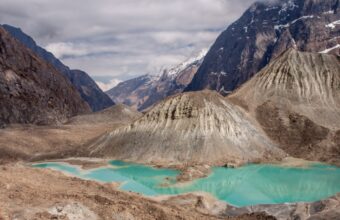
Annapurna Region
Annapurna North Base Camp
Best trek for: Expedition style campingDifficulty: ModerateDuration: Five to six daysMax elevation: 4,050mAccommodation: campingStart/end point: Tatopani/Sandhi Kharka New trek routes always get my pulse racing, especially when they follow in the footsteps of a famous old expedition route. This particular trek follows the expedition route of Maurice Herzog’s epic 1950 ascent of Annapurna I (8,091m), the first ever ascent of an 8,000m peak, and it takes you up to an amazing mountain amphitheatre ringed with 7,000m peaks. Unlike the busy base camps of the popular Annapurna Sanctuary trek, this ‘alternative’ Annapurna Base Camp trek is a true hidden gem that sees only a trickle of well-informed trekkers, largely because you need to camp and be self-sufficient. There are no lodges here and definitely no apple pie. The trek starts at Tatopani, veering off the Annapurna Circuit to make a dramatic, sphincter-tightening jeep ride up the wild, sheer-sided gorge of the Mristi Khola. The walking starts at the hydroelectric plant at Hum Khola Dovan (2,880m), with overnights at Sandhi Kharka and Bhusket Mela (3,550m), until you finally set up camp in the astounding glacial basin of Narchang Lake (4,050m). This secret spot, surrounded by Annapurna I, Fang, Tilicho and Nilgiri peaks and walled off by the Great Barrier of the Annapurnas, is a classic mountain cul-de-sac, surrounded by glaciers, waterfalls and vertical rock walls. The opportunities for day hikes here are fabulous, with faint trails leading to Annapurna North Base Camp, Advanced Base Camp and Nilgiri Base Camp via some epic glacier viewpoints. Bring a copy of Maurice Herzog’s classic 1951 Annapurna, and spend the evenings reading his account of the groundbreaking ascent and even more harrowing descent. It’s a day’s walk back to Sandhi Kharka and then half a day to meet your jeep and make the wild ride back.
Read more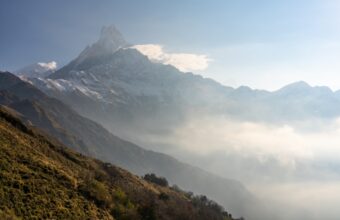
Annapurna Region
Mardi Himal trek
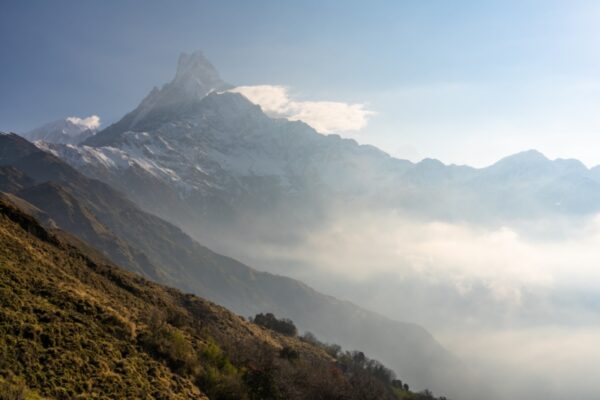
Do you want a taste of the Annapurna region – forests, hillsides of rhododendrons, airy ridge walks and close-up views of big peaks – but can’t afford more than a week? If yes, then I think the Mardi Himal trek might just be for you. It’s very accessible (less than an hour by bus or taxi from Pokhara), well signed, and the trail will take you past everything from Gurung villages to high Alpine ridges. Not so many foreign trekkers make it here but the lodges are decent (though not as comfortable as other parts of the region). It’s popular with Nepali trekkers, though, so avoid weekends if you can. The first day or two take you past Australia Camp and the village of Pothana up through the forests of Pitam Deorali to teahouses at Forest Camp, but before long you’ll find yourself above the treeline at Low Camp (2,985m) and then High Camp (3,550m), where the views of fish-tailed Machapuchare, Himchuli and the Annapurnas really open up. Pray for good weather for the amazing final hike from High Camp up to Mardi Himal ‘Base Camp’ West for views of peaks that seem within reach, before returning to Low Camp. From here return to jeep access roads at Sidhing, Galel or Lwang, or hike from Forest Camp to the road at Landruk. If you are fit (and, crucially, acclimatised) the trek can be done in four days, though five to six is more likely. For an excellent 10-11 day trek link Mardi Himal with the Annapurna Sanctuary route via Landruk.
Read more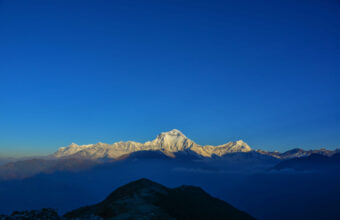
Annapurna Region
Khopra Ridge trek
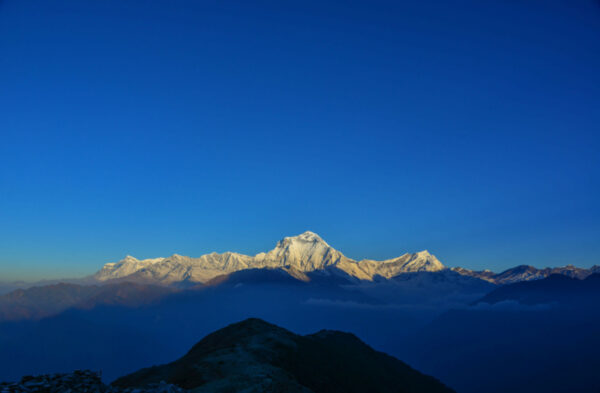
Also known as the Khopra Danda trek, this is well off the standard Annapurna trekking routes and offers a low-key, peaceful trek to lofty viewpoints on the flanks of Annapurna South. There are a number of different route variations but my favourite branches off the Poon Hill trek at Tadopani and climbs to lodges at Bayeli (with its amazing Mulde viewpoint), Chistibang and then Khopra Danda, before descending to Swanta and Ghorepani The trails pass through charming villages with simple private and community lodges and lots of pretty forests. Khopra Ridge itself is an impressive dome with an exposed trail running along it that feels much higher than it really is (especially when covered in snow). The views across to Dhaulagiri I (8,167m) are unforgettable. From the ridge it’s possible to make a very long and challenging 10-hour day trip to the high altitude Khayer Lake (4,600m). Given the 1,000-metre height gain in a day, plus the beauty of the lake, it’s much more advisable to go on an organised camping trek and sleep on the lake shore.
Read more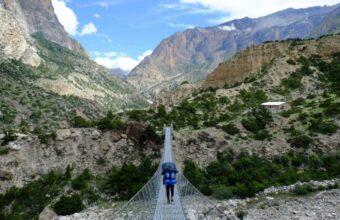
Annapurna Region
Nar-Phu trek
Most Annapurna Circuit trekkers heading through the village of Koto won’t know that a trail off to the east leads to a magical, hidden world. The Nar and Phu valleys were closed to tourism until 2002 and when they finally opened up the first trekkers discovered a landscape of narrow gorges, 7km high mountains, timeless stone villages festooned with prayer flags, and a distinct local culture based on yak herding and trade with neighbouring Tibet. Still rarely trekked (a restricted area permit and camping gear is required), the route follows a dark, deep and shady gorge up to the mediaeval village of Phu, which consists of around 40 or 50 mud and stone houses and red painted monasteries huddled together on the top of a hill. Entry to the village is via a spectacular old gateway. It’s worth allowing a couple of nights in Phu to explore the upper valley. To leave, you have to retrace your steps halfway back down the valley before veering west up the Nar valley, over yak pastures to the large traditional village of Nar where there are four gompas (Buddhist monasteries) worth visiting. Independent trekkers relying on lodges will probably have to turn back here and retrace their steps to Koto, but camping groups and acclimatised trekkers can make the exciting crossing of the Kang La (5,320m) down to Ngawal back on the Annapurna Circuit. This trek works well either as an add-on to the Annapurna Circuit or as a short, stand-alone trek in its own right. For adventurous trekkers with all the correct permits on fully-organised camping treks, it’s possible to take a wild, difficult and very rarely walked route from the village of Nar into Upper Mustang via the taxing Teri La Pass (5,595m).
Read more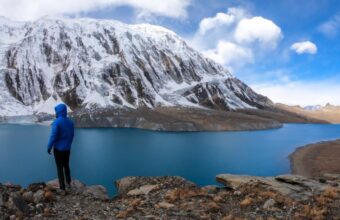
Annapurna Region
Tilicho Lake trek
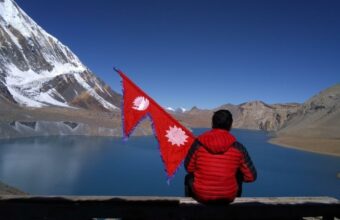
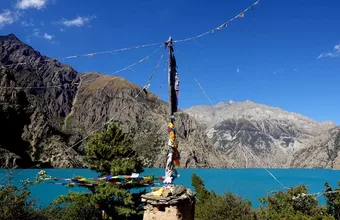
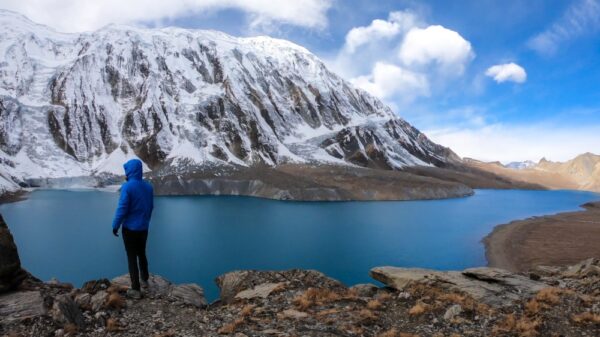
The short, but challenging hike to Tilicho Lake, one of the highest large lakes in the world, is one of the most impressive Annapurna treks. It’s a four or five-day round trip detour off the main Annapurna Circuit trail starting from Manang and heading rapidly upwards, firstly through pine forest and then across scree slopes before a final climb to a pass (5,005m) overlooking the lake. Pushed right up against the great wall of the Annapurna range, and with glaciers crashing down into it, the lake is frozen over for months on end and can be a bleak and scary place. When it is ice-free (normally June to early November), the astonishing turquoise colours of the water clash with the dark rock and white glaciers behind it. For sheer high mountain drama, I find it hard to beat. However, the route up to the lake is not for the faint-hearted. The path rises very steeply from Manang and altitude-related problems are very common. Also, a large part of the trail is high up on an almost sheer shale slope where rock falls and avalanches are almost daily occurrences. Needless to say it can be very dangerous, especially after rain. People suffering from vertigo will probably not enjoy this trek. Although there are a number of decent trekking lodges along the trail to the lake there’s nowhere reliable to stay on the lake shore. By coming on an organised camping trek you can spend a magical night camping along the lake’s northern edge with only snow leopards for company. After reaching the lake it’s best to turn back the way you came rather than going all the way back to Manang though you can take a small shortcut that will get you directly to the lodges at Yak Kharka. Note that many maps and some trekking agencies talk about a route directly from Tilicho Lake to Jomsom via the Mesokanto pass. No matter what any map, sign or trekking agency tells you, this is not a route to be taken lightly. It involves ice-climbing down two huge, vertical glacier walls followed by a hair-raising and utterly exhausting climb up a loose scree slope which makes those you crossed on the way up to Tilicho seem like child’s play. Do not attempt this route without mountaineering experience, ropes, ice-axes and crampons as well as a guide who knows the route — very few do.
Read more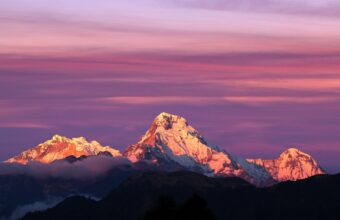
Annapurna Region
Poon Hill trek
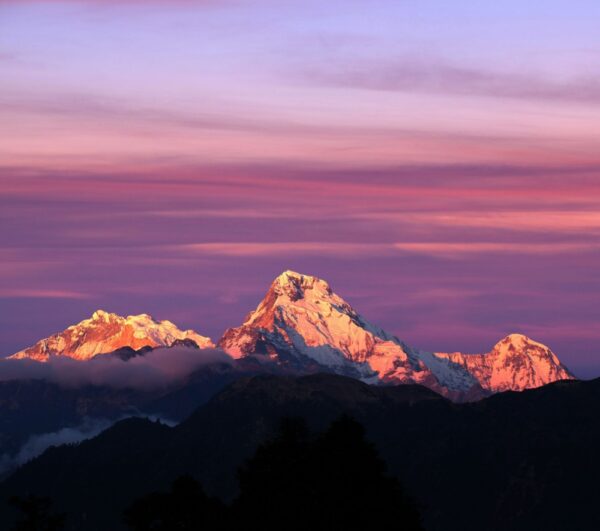
Mixing heart-stirring mountain views with enchanting villages and beautiful forests with a thousand blooming rhododendrons, this is a good introduction to trekking in Nepal. The highlight is Poon Hill itself, an hour’s walk above the village of Ghorepani. Watching the sunrise from here is an almost obligatory Nepalese experience. As the first beams of light shine across a panorama that includes Dhaulagiri I (8,167m), South Annapurna (8,091m) and Nilgri (6,940m), it’s hard not to be moved, despite the often noisy crowds The trailheads are only about an hour’s drive out of Pokhara and there are excellent trekking lodges along the route plus some luxury hotels. The trek can be done clockwise or anti-clockwise and it makes a good add-on to the more challenging Annapurna Sanctuary trek. It’s also an ideal first time trek for families and those who don’t want to go too high. But do keep in mind that there’s a lot of steep up and downs.
Read more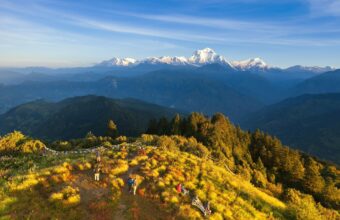
Annapurna Region
Annapurna Sanctuary trek
Rivalling Everest Base Camp for the title of most popular trek in Nepal, the Annapurna Sanctuary Trek is a 10-day extravaganza of non-stop mountain vistas culminating in a great cirque of massive mountain peaks seven to eight kilometres high. If you’re looking for a short, relatively easy and simple-to-organise trek that doesn’t venture too high (max elevation is 4,130m), and with unusually comfortable accommodation, then the Annapurna Sanctuary ticks all the boxes. The straight there and back route starts in the lush subtropical hills to the north of Pokhara, taking you through oak, birch, rhododendron and bamboo forests before hitting the Alpine zone on day five around Machapuchare base camp (which is actually a collection of trekking lodges — for religious reasons it’s forbidden to climb Machapuchare). From here to the Annapurna Sanctuary the views get more stupendous with every corner passed. Once you reach the Annapurna Sanctuary there are a few viewpoints above the lodges which reward with views over glaciers, moraine fields and an amphitheatre of peaks including Machapuchare (6,993m), Annapurna South (7,219m), Annapurna III (7,555m), Gangapurna (7,454m) and, just poking up behind the others, Annapurna I (8,091m), the first 8,000m mountain ever climbed (in 1950 by legendary French climbers Maurice Herzog and Louis Lachenal). The facilities for trekkers are as good as anywhere in the Nepalese mountains. Most lodges have varied menus, some form of heating, separate rooms, electricity, hot showers and even wi-fi. However, this combination of unsurpassed mountain scenery, great facilities and easy access means that tens of thousands of trekkers can walk this trail each year, causing local culture to be overwhelmed by international trekking culture. Lodges can be booked out in the high season. Try to get to the night stop early, or join an organised trekking tour and avoid the worry of finding a bed. If you’re looking for something quieter, the new Annapurna North Base Camp trek might be for you. To avoid this being a straight there and back trek, do the Poon Hill trek first and then on day four link on to this walk. That would give a total of about 12 comfortable days of walking. Or alternatively add on the Mardi Himal trek for a similar duration.
Read more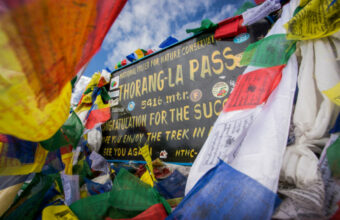
Annapurna Region
Road-free Annapurna Circuit
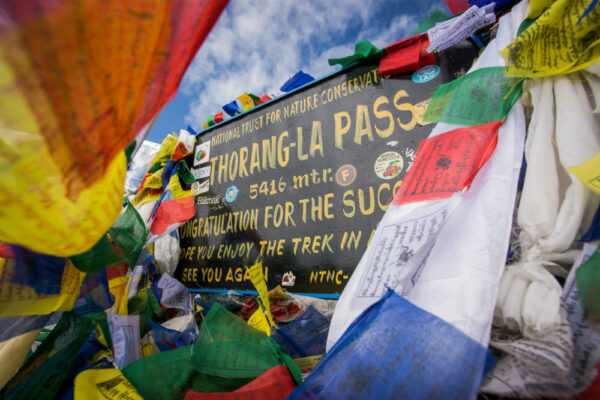
This, one of the world’s classic treks, takes you through virtually the whole range of Nepalese landscapes: From sub-tropical valleys where banana plants and gushing, murky jungle rivers are the defining features, through gorgeous woodlands, and across Alpine meadows and conifer forests, to the rock and ice wastes higher up. Sadly, in the past few years road construction has affected up to 75% of the original Annapurna Circuit route. Life’s too short to trek on roads, so my advice is to avoid the original route and follow the new road-free route instead. If you’re set on walking the Annapurna Circuit, be sure to follow the New Annapurna Trekking Trails (NATT) route that take you away from the road traffic and onto quieter and more scenic side trails – in many cases these new trails offer even more impressive scenery than the original routes. NATT routes are waymarked with signs painted in blue and white, instead of the red and white of the main Annapurna Circuit route. The high point is the often snow-covered Thorung La Pass (5,416m) with its utterly sensational mountain views. From here you drop rapidly down towards the fascinating Hindu and Buddhist pilgrimage site of Muktinath and then into a drier, region of eroded river gorges, lush oases and castle-like monasteries around Kagbeni and Jomsom (look out for ammonite fossils in the Kali Gandaki river bed — evidence that the top of the world was once at the bottom of a prehistoric ocean). Many people finish the trek at Jomsom (there are jeeps and buses to Pokhara or scheduled daily flights), but for the devoted, the new alternative trail winds slowly downhill through the dramatic Kali Gandaki valley into warmer, greener and lusher countryside. The sense of satisfaction of walking the entire circuit is second to none. Facilities along the Annapurna Circuit are excellent with comfortable trekking lodges and good, varied food. Many lodges have hot showers and wi-fi. It’s busy during high season and the demand for beds can exceed supply. You can avoid the problem by joining an organised trip, and miss the crowds by overnighting at midway points between the major stops. See here for our recommended itinerary.
Read more-

Legendary Annapurna
View experience -

Panchase Trek
View experience -
Annapurna luxury lodge trek
View experience -

Annapurna North Base Camp
View experience -
Mardi Himal trek
View experience -
Khopra Ridge trek
View experience -

Nar-Phu trek
View experience -
Tilicho Lake trek
View experience -
Poon Hill trek
View experience -
Road-free Annapurna Circuit
View experience

Annapurna Region itineraries

Annapurna & Poon Hill Sunrise Trek
A customisable trek to the Annapurna Sanctuary and Poon Hill
14 days

Road-free Annapurna Circuit itinerary
A new alternative to the classic route
15 days
Best of Annapurna with Tilicho Lake detour
A slower, more scenic version of the popular Annapurna Circuit
10 daysAnnapurna Region travel companies