





Best of Annapurna with Tilicho Lake detour
A slower, more scenic version of the popular Annapurna Circuit

-
Dharapani
... -
Chame
... -
Upper Pisang
... -
Manang
... -
Shree Kharka
... -
Tilicho Lake
... -
Tilicho Lake
... -
Yak Kharka
... -
Thorung Phedi
... -
Muktinath
... -
Jomsom
...
The Annapurna region, and the Annapurna Circuit specifically, have dominated the Nepal trekking world for decades. But the famed circuit has changed a lot in recent years. Roads have pushed deeper into the valleys, eroding a lot of the original route’s appeal. There is a road free version of the Annapurna Circuit, but I also highly recommend this route with the Tilicho Lake detour.
This version of the circuit still gets you to the big-name highlights like the high pass at Thorong La, the lakeside town of Manang, and the climb to Tilicho, it just follows a more considered route. You walk where it’s worth walking, take the higher trails instead of the dusty ones, and spend time in places that other itineraries rush through.
You start the trek from Dharapani, not the traditional trailhead at Besisahar. These days, the road extends much further than it used to, and what was once a quiet stretch of trail is now a busy transport route. Starting in Dharapani avoids all that. You get straight into more scenic terrain, with fewer vehicles and a better sense of what the circuit used to feel like. It still allows for a steady gain in altitude, which is especially important as you’re going to include Tilicho Lake later in the trek. From there, you follow a slower path towards Manang, stopping in the village of Ngawal where the views open up and the stone houses still feel rooted in the past. Just beyond is Braga, home to one of the region’s oldest monasteries. It’s a detour many trekkers skip, but I always add it to the journey for extra atmosphere and context.
The Tilicho detour is a tough but worthwhile addition. The final stretch from Shree Kharka to the lake is narrow and exposed (one of the more technical sections of the whole route), but when you round the final bend and see that wide turquoise basin flanked by 7,000m peaks, you won’t regret the effort. No matter how many times I’ve been, that view gets me every time.
From Tilicho, you rejoin the main circuit and continue up and over Thorong La at 5,416m. The weather at the top is rarely kind, but the scenery more than justifies the climb, especially when you reach the summit at sunrise. From there, the descent toward Jomsom is long but rewarding. You stop in Lupra and Jhong, two villages known for preserving Bon traditions – an older spiritual lineage that predates Tibetan Buddhism. You can feel the cultural shift as you pass through; it’s quieter, older, and just a little more introspective.
The Annapurna Circuit has become more accessible, but also less rustic. Teahouses are more comfortable than they used to be, though traditional architecture is slowly disappearing. Gangapurna Lake is shrinking, and the weather has grown more erratic – all signs of change that are hard to ignore. But my version of the route, while not exactly the circuit of old, at least offers echoes of its former glory.
Key information
| Destinations | Annapurna Region |
|---|---|
| Activity | Adventure, Hiking & Trekking, Active, Walking, Nature & Wildlife |
| Physical Level | Strenuous |
 Season Season |
March - December |
Featured tours

Featured tours


Best of Annapurna with Tilicho Lake detour itinerary

Trek from Dharapani to Chame
Day 1 in Dharapani
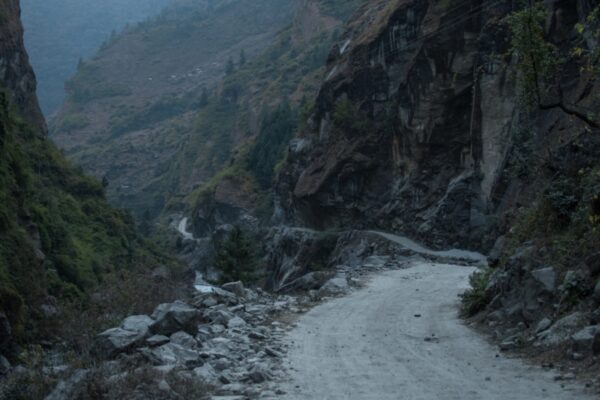
To avoid too much road hiking, my version of the Annapurna Circuit starts from Dharapani, with the trail continuing up the Marsyangdi valley. You'll cross the river several times, following a scenic route through forests of pine and oak, alongside terraces and fields of barley. Passing through villages such as Bagarchhap, Danaque and Timang, you'll gain altitude gradually, with frequent views of Annapurna II and Lamjung Himal.
Duration: Approximately 5 hours walking

Chame to Pisang
Day 2 in Chame
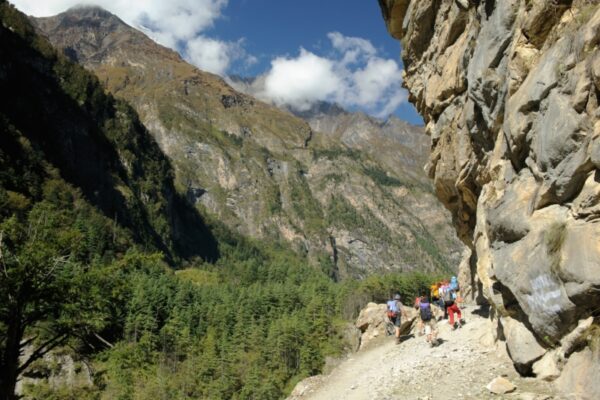
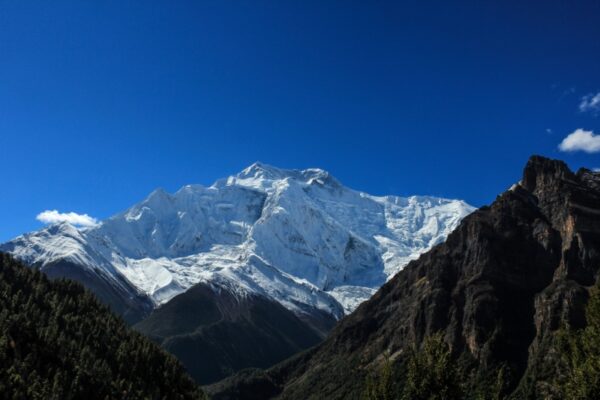
After passing the village of Chame the valley opens up, and you ascend gradually to the picturesque settlement of Pisang. Pisang sits beneath dramatic peaks, split into an upper and lower village, and serves as a gateway to the higher Annapurna region.
Duration: Approximately 6 hours walking

Trek from Pisang to Manang
Day 3 in Upper Pisang
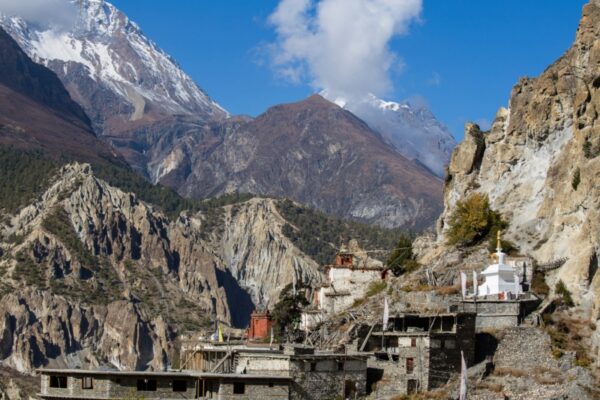
From Pisang, the trail continues gently through the Marsyangdi Valley, passing several traditional villages, including Braga, renowned for its monastery perched high above the village. The gompa here houses statues, religious texts, and painted murals estimated to be around 500 years old. The trail is mostly flat with minor ascents, and the terrain becomes increasingly arid and open. Eventually, you'll arrive in Manang, a large village in a spectacular mountain setting, facing the peaks of Annapurna III and Gangapurna.
- Duration: Approximately 7 hours walking

Acclimatisation day in Manang
Day 4 in Manang
Spend this day in Manang for an acclimatisation day. It’s recommended to take a short hike to higher altitudes and then return to sleep at Manang. Possible hikes include a visit to Bodzo Gompa, Gangapurna Lake, or the viewpoint at Chongkar, each offering rewarding panoramas of the Annapurna range. Alternatively, you can rest and explore Manang itself, enjoying its bakeries and mountain views.
Duration: Day hikes (varied, approx. 3–4 hours recommended)

Trek from Manang to Shree Kharka
Day 5 in Shree Kharka
Leave the main Annapurna Circuit trail behind, crossing the Khangsar Khola and descending through fields before rising again on a track above the river. Passing through the village of Khangsar, surrounded by cultivated fields, the trail continues steadily uphill for about two hours, arriving in Shree Kharka. The views here towards the Annapurna range, especially Gangapurna and Khangsar Kang, are superb.
- Duration: Approximately 5 hours walking

Trek from Shree Kharka to Tilicho Lake Base Camp
Day 6 in Tilicho Lake
This is a challenging day, traversing exposed slopes and steep sections. The trail from Shree Kharka initially ascends gradually, passing the pasture at Tho Kharka before moving onto a more precarious path. A landslide area, approximately one kilometre in length, requires careful negotiation (45 minutes approx). Following this, the route levels somewhat before another exposed section leads to Tilicho Base Camp, set amid glaciers and rugged terrain beneath towering peaks.
- Duration: Approximately 3 hours walking

Trek from Tilicho Base Camp to Tilicho Lake (4,949m), then return to Shree Kharka
Day 7 in Tilicho Lake
Today involves an early start to reach Tilicho Lake which, at 4,949m, is among the highest lakes in the world. The trail climbs steeply from base camp, crossing slopes and switchbacks that become progressively more demanding. The final section traverses exposed terrain before reaching an uneven plateau often covered in snow. Arriving at the turquoise waters of Tilicho Lake offers rewarding views of surrounding peaks and glaciers. After spending time at the lake, return via the same route to Tilicho Base Camp for lunch, before retracing your steps back to Shree Kharka.
- Duration: Approximately 8–9 hours walking

Trek from Shree Kharka to Yak Kharka
Day 8 in Yak Kharka
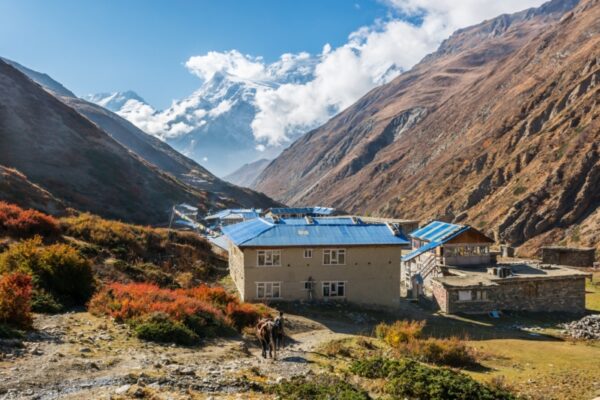
Rejoin the main Annapurna Circuit trail, heading first towards Changyo and then descending slightly before crossing the Thorung Khola on a wooden bridge. Following the main trail from Ghyanchyang, the route is gentle and straightforward, eventually arriving in Yak Kharka. This area is known for its pastures and occasional yak herds.
- Duration: Approximately 6 hours walking

Trek from Yak Kharka to Thorung Phedi
Day 9 in Thorung Phedi
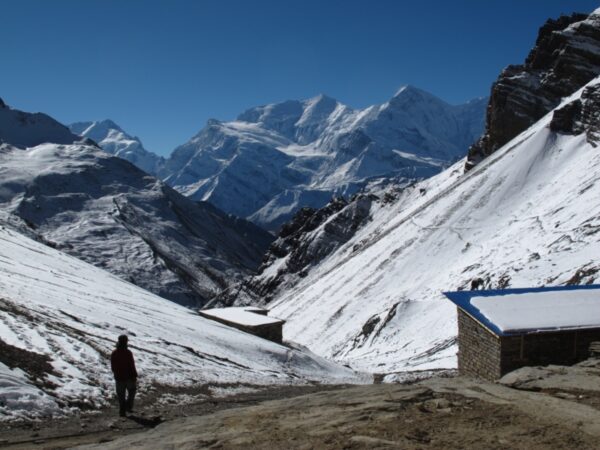
This short but significant ascent leads you to Thorung Phedi, the base for crossing the high Thorung La Pass. Take your time to ascend slowly and steadily, allowing your body to adjust to the altitude. Thorung Phedi provides basic accommodation and a place to rest before tomorrow's challenging pass crossing.
- Duration: Approximately 4 hours walking

Cross Thorung La Pass (5,416m) from Thorung Phedi to Muktinath
Day 10 in Muktinath
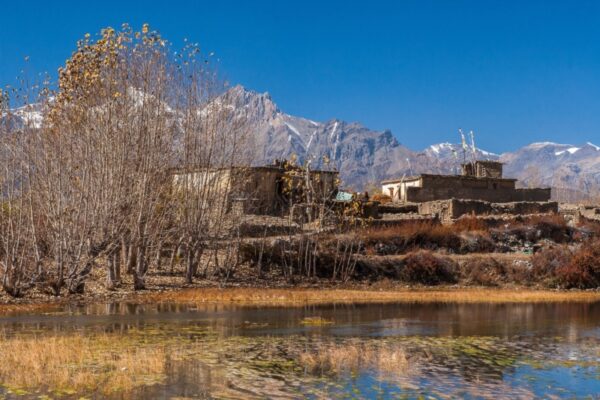
A very early start is recommended for the ascent to Thorung La Pass (5,416m), one of the world's highest mountain passes without vehicular access. The climb is steep and challenging, usually taking 4 to 6 hours to reach the top, marked by prayer flags and a stone cairn. After enjoying expansive mountain views, descend steeply towards Muktinath, an important pilgrimage site sacred to both Hindus and Buddhists.
- Duration: Approximately 8–9 hours walking

Trek from Muktinath to Jomsom (2,720m) via Lupra village
Day 11 in Jomsom
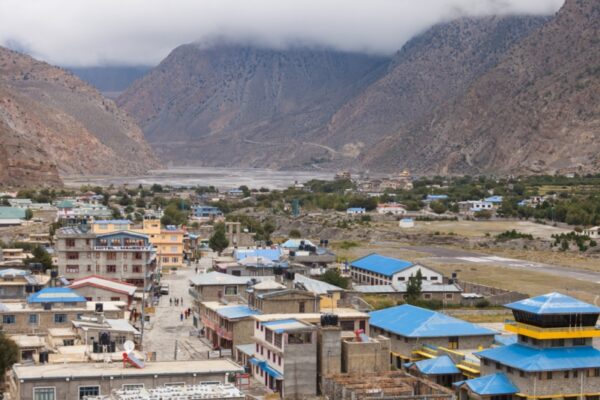
Begin the morning by exploring Muktinath Temple, a revered spiritual site. Then depart via an alternative route through Lupra, a traditional village known for its 12th-century Bon monastery. The trail climbs gently to Lupra Pass before descending gradually into the village. Continue along the Panda Khola valley and cross the Kali Gandaki river, following smaller paths and jeep tracks, finally reaching the town of Jomsom. If you’ve time (and energy) you can explore the nearby village of Thini or Dumba Lake later in the day.
From Jomsom you’ll typically fly back to Kathmandu via Pokhara.
- Duration: Approximately 6 hours walking
Need to know
How difficult is this route?
If you have a decent level of fitness and some experience with multi-day hikes, you’ll be fine. You don’t need to be an athlete, but you should be comfortable with altitude and sure-footed on rough ground.
When to go?
The best seasons are spring (March to May) and autumn (October to early December), when the skies are clearer and the trails more stable. Accommodation is in teahouses throughout – simple but sufficient after a day on the trail.
Itinerary notes
It’s typically a two day journey by road from Kathmandu to the trailhead, which you can split up with a night in Bandipur. And it’s a two day journey from Pokhara back to Kathmandu, if you spend a night in Pokhara.
Other itineraries you might like

Classic Everest Base Camp route
16 day Everest Base Camp trek itinerary
Approx. 16 days
Upper Mustang trek to the Walled City
A trek through Nepal’s restricted Tibetan side
Approx. 14 days
Helambu & Langtang Trek
Crowd-free trekking on Kathmandu’s doorstep
Approx. 16 days

