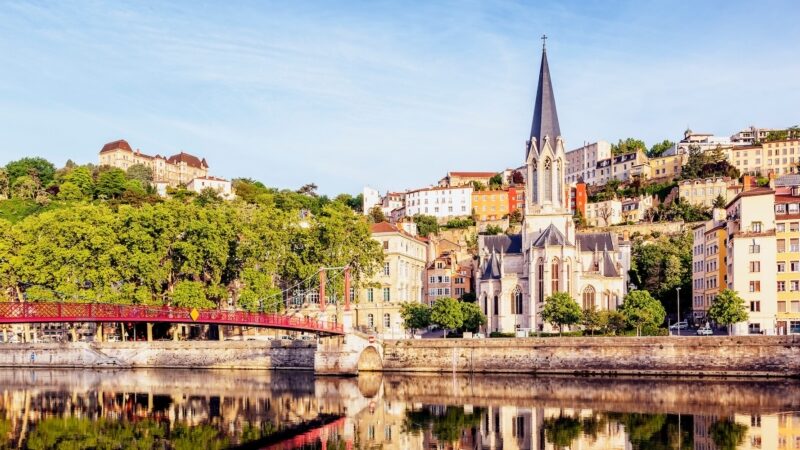
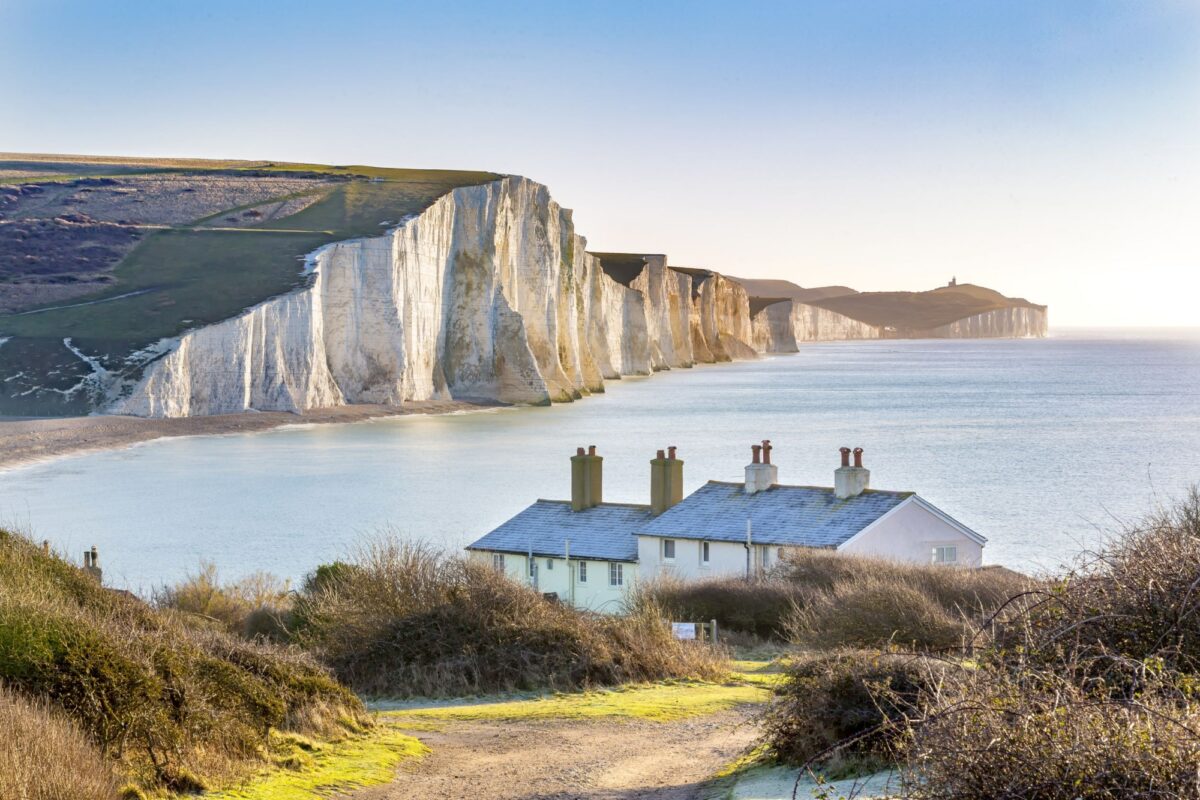
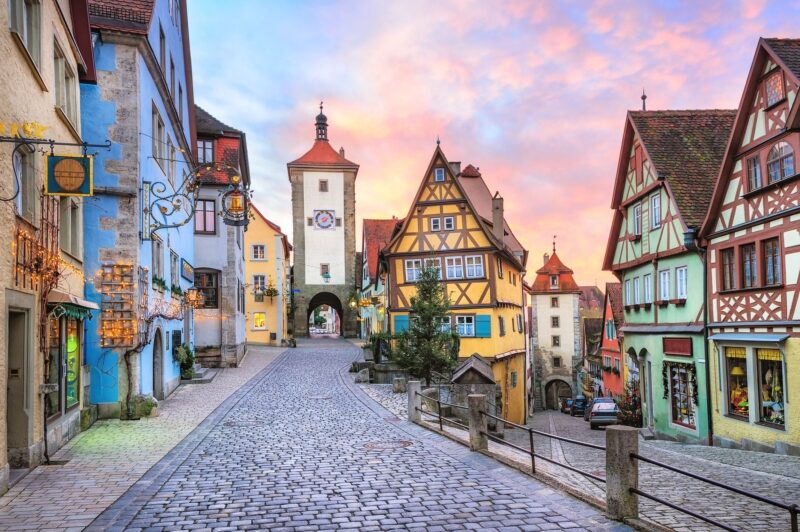
Surely no region on earth is more confidently ticked off. The original home of the six-countries-in-eight-days bus tour. People come back from two weeks in Western Europe and say they've "done" France, or Italy, or Spain. What they've usually done is Paris, Rome, and Barcelona - and increasingly, so has everyone else.
The overtourism problem in Western Europe is real, concentrated, and almost entirely self-inflicted. The crowds exist because tourism here has collapsed into a handful of postcards. Meanwhile, an hour inland, or one train stop off the main line, whole regions go largely unseen.
Germany is the obvious example. Somehow the country that gave the world Beethoven, Bauhaus, and the most consequential - often catastrophic - history of the 20th century barely registers as a travel destination beyond Munich's beer halls and the Rhine. The medieval towns of Saxony, the weird divided energy of Berlin's outer neighbourhoods, the Baltic coast: most visitors never get close.
Austria and Switzerland attract skiers and city-breakers but rarely the deeper attention they deserve. These are small, dense, complicated countries with as much cultural texture per square kilometre as anywhere on the continent.
Western Europe rewards the traveller who resists the obvious. The infrastructure is excellent, the distances are short, and most of what's worth seeing isn't on anyone's list yet.
Can you suggest any easy to moderate hut to hut hikes in the Pyrenees?
Answered by: Phil James
Hut to hut hiking in the Pyrenees is generally quite strenuous with long days in alpine terrain. If you are looking for easy to moderate hiking then it's probably not the best option. I'd suggest a centre-based trip in somewhere like Cerdanya or Ordesa instead.
It’s a country without true wilderness. The national parks are well policed and monitored, and trails across farmland are often very long standing. Some trails follow paths that are thousands of years old.
This means English trails are usually easy to follow. There are plenty of major, well-maintained and signed routes. There will always be some missing posts, confusing directions and momentary aberrations but I generally find the biggest problem comes when there are too many good paths criss-crossing an area.
For example I worried about following the mish-mash of paths along the Malvern Hills before I realised it doesn’t really matter, they all roughly end up doing the same thing.
A bit of map reading competence is a useful safeguard of course, and in a varied landscape like England’s it can increase the pleasure to see there’s an ancient church in the next village or hidden valley just beyond the ridge.
What about a compass? I suppose that’s going to help in a white-out on Scafell Pike but I can’t recall ever using one on an English walk.
Another personal aside here: generally I try to banish fear of ‘getting lost’ on what are mostly harmless English routes. Maybe you don’t want to be clueless on a mountain after dark but for most English walks a bit of being “lost” can be the best bit of the day.
I took a daft detour from a normal route recently in the Cotswolds. I spontaneously turned off the path because it looked so pretty to the west and the view was amazing. I thought I would loop back to the main path but of course I was wrong and found myself in a run-down piggery, ankle deep in mud and had to clamber through barbed wire down onto a busy roadside verge to escape. Disaster or highlight? Well, here I am talking about it and it’s the only bit of that walk that I’ve ended up writing about.
Land access in England is a smorgasbord of labels: we have public footpaths, permissive footpaths, bridleways, restrictive byways, open access land, all grouped together under the banner of “public rights of way”. All you really need to know is that walkers are allowed on all of the above, they’re all clearly marked on Ordnance Survey maps and, for most long distance footpaths, they’ll be clearly waymarked as well. For more information see this handy guide to public rights of way in Britain.
You certainly can organise it all yourself, and lots of people do. Personally, I prefer making my own arrangements unless I’m too busy.
Baggage transfers are often simply the B&B owner running your bags to the next overnight stop in their car. Or booking a taxi to do it. It’s something you can do very easily yourself – and may lead to a conversation or discovery that may improve that day’s walk too.
I’d recommend using a walking holiday company if you can’t be bothered with the logistical headaches, or aren’t confident in your abilities and need advice. It can be pretty good to have someone at the end of the phone should anything go wrong.
Yes – on a self-guided walking holiday. Most of the major long distance walks have fairly well established itineraries for different paces. For example you can do Hadrian’s Wall in anything from 8 to 12+ days, depending on how much distance you want to cover each day.
Beware of a walking holiday operator’s grading of walks. I usually find them geared to inexperienced walkers. I’m not an athlete but I’ve sometimes done a route in half the time they’ve specified.
My best tip in England would be to talk to locals along the way. They’ll often know – and love describing – some little magical detour that those who mapped your route might not have discovered.
Walking holiday companies use “self-guided” as opposed to an escorted or guided tour. England is easy to get around, safe, and the locals are (usually) easy to understand. There’s no real wilderness and most long distance footpaths are well waymarked, meaning you don’t need much in the way of navigational skills. All of which makes self-guided a popular choice.
So what are you paying for? The cost of your walking holiday is primarily each night’s accommodation, plus baggage transfer (so you only need to carry a light day pack) and perhaps a connection to the start/end point. The big advantage of a self-guided trip, in addition to being much cheaper than a guided holiday, is that the company can tailor your itinerary and accommodation to suit your preferred pace.
Ours is a compact and densely populated nation, but it’s surprisingly easy to find a quiet corner even in the most touristy honey-pots. Some of my favourite lesser-visited walking spots include the Blackdown Hills in Dorset, the Marlborough Downs in Wiltshire or the Wolds in Lincolnshire or Yorkshire. There are some brilliant little-known walks around Offa’s Dyke in Herefordshire, in the crazy up-and-down Shropshire hills and in the surprisingly craggy countryside of West Yorkshire.
OS, our national treasure of a mapping agency, produces a handy rundown of the country’s most popular walks. If it’s peace and quiet you’re after, just do anything but these!
Can I say the southwest again? Okay, I’d also recommend the Lake District, the Isle of Wight and the Scilly Isles; all of which have plenty of easy access day hikes, and lots to do for kids on non-walking days.
A pro-tip: our national parks and other protected areas are tiny in comparison to other countries, and you don’t need to base yourself within the park boundaries where availability may be limited and prices higher. Often there are excellent (and more affordable) places to stay nearby. For example you can save money by visiting the Cotswolds from north Wiltshire, south Warwickshire or west Oxfordshire, and you can make forays into the Lake District from places like St. Bees and Ulvaston.
Without hesitation, the Southwest Coast Path. This world-class 630-mile route skirts the shoreline from Watchet in Somerset to Poole in Dorset but there are hundreds of other routes, from the 600 miles of trails in Exmoor National Park to circular day-walks like the National Trust routes around Cheddar Gorge or Avebury. It’s well served by organised walking holiday companies, but do book ahead if you’re coming in summer.
Other favourites include the White Horse Way, the Yorkshire Wolds Way and Striding Edge in the Lakes.
I’m easily bored, and much prefer rolling hills and dales of northern and western England to the flat landscapes of the east and southeast. We may have few mountains but we have lots of hills!
It’s hard to pick just one so here are a few: Parts of Northumberland could be a film set. The Yorkshire Wolds are criminally underrated, but I’d also vote for the (often overpopular) Cotswolds and Lake District.
But if I had to choose just one place to walk for the rest of my life it would be my native southwest; Cornwall, Devon, Somerset and Dorset. Maybe I’m biased but we’ve got the sunsets, favourable prevailing winds, pasties, cider and clotted cream. The southwest has the mildest climate and most varied coastline, which explains why it’s the UK’s most popular holiday area. Don’t panic – it’s easy to avoid the crowds, simply avoid the big resorts.
England has a temperate-maritime climate with wet winters and warm(er) summers, but the weather here is famously fickle. I’ve regretted being in shorts with a freezing wind biting my knees in midsummer in the Lake District, and have been left carrying surplus layers on a bright sunny winter’s day in Oxfordshire.
Although summer heatwaves are now becoming more frequent and severe, it remains the rule of thumb that summer is rarely too hot to walk, and is mostly dry. Those affected by pollen might want to watch out for hayfever season(s). Note that accommodations over the peak summer months are often booked out months in advance.
Winters in England are cold although, thanks to the Gulf Stream, not as cold as our northerly latitudes imply. But cold is compounded by the damp and the wind, which, along with short daylight hours, can make winter walking a bit of a chore. There are few things as glorious as a crisp winter’s morning, but they’re an infrequent pleasure and I wouldn’t plan an entire walking holiday around it.
My advice is to aim for the “shoulder seasons” of late spring and early autumn, which offer the best balance of fewer crowds, greater availability, and a decent chance of agreeable weather.
A 170 km circuit of the iconic Mont Blanc, through some of the finest Alpine scenery in Europe – what’s not to like? Its huge and well-deserved popularity means that it’s a busy route, but it’s still definitely worthwhile – although for a less busy alternative it’s worth considering the Tour des Combins.
Small, family-run guesthouses, welcoming mountain huts and swish hotels – hiking in the Alps goes hand in hand with being very well looked after, with a wide range of accommodation choices.
The hiking season in the Alps runs from June to October, but for higher routes with passes to cross early July to late September is more sensible.
Depending on which part of the Alps you’re planning to hike in, early spring and late autumn can be good – but you’ll find snow on higher routes and passes into the beginning of July, and mountain huts usually close sometime in October.
Paths are usually marked but it’s always good to have map-reading and navigation skills, in case a sign is missed, has been damaged, or in case of disorientation in poor weather. The Ordnance Survey maps are the best ones to use.
You can book yourself, but the advantage of using a walking company is that they can advise on maps, route timings and the best places to stay along a route – and in Ireland you’ll welcome insights on things like where to eat or the best evening activities.
The Slieve Bloom Mountains in Co Laois and Offaly – there are 16 different looped walks and you can do the three-day 70 km Slieve Bloom Way, with quiet walking tracks and paths, and great views from the mountain tops. Alternatively the canal towpaths in the midlands are also a nice, flat option.
The Burren in County Clare is relatively flat and has some relaxing trails which take in some of the area’s unique limestone pavement, with lots of rare plants plus the chance to spot wildlife. The short looped trails in the Irish national parks are good first-time options too.
The town of Killarney, Co Kerry is a good base – you can explore Killarney National Park, around the three lakes, with a mix of short walks or mountain tracks to explore. You are based in a lively town for food, accommodation and traditional music sessions in the evening.
The Dingle Way is a great one – a 180 km route which loops around the Dingle peninsula, taking in mountains, cliffs, beaches and countryside paths, with some dramatic sea views. You can stop at villages and take in views of islands like the Blasket Islands.
I love the southwest of Ireland, especially the peninsulas of Co Cork and Co Kerry, because you have the combination of amazing mountain and coastal scenery.
Get a free, personalised answer about Western Europe.
You'll receive a reply by email. Questions and replies may be anonymised and reproduced on Horizon Guides.
§ 04
The Western Europe atlas
27 picksPlaces & Experiences You Won't Find Elsewhere
Where
What
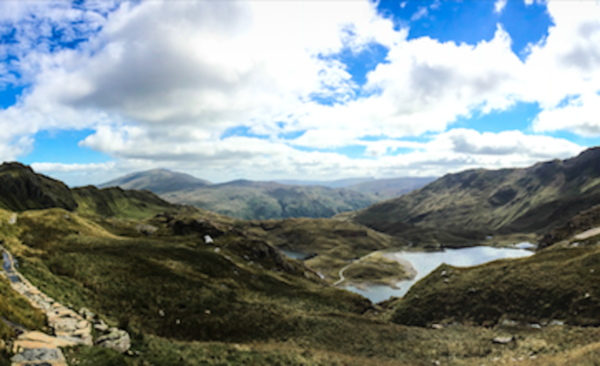
The southern boundary of Eryri National Park includes mountain passes, walking routes and historic villages that can be explored by car or on foot. Travelling towards Beddgelert involves passing through the Aberglaslyn Pass, a narrow gorge popular with walkers. Beddgelert is associated with the legend of Gelert and includes local eateries. From there, the road climbs towards Pen-y-Pass, a common starting point for the Miners’ Track and Pyg Track routes to the summit of Yr Wyddfa.
For visitors who prefer not to climb, Llanberis provides access to the Snowdon Mountain Railway. The round trip takes approximately two and a half hours, including a 30-minute stop at the summit.
In contrast to the mountain landscape, the coast offers beaches and castles. Borth-y-Gest and Morfa Bychan include Black Rock Sands, which can be driven onto. Criccieth Castle is located nearby, subject to tide and weather conditions, and Harlech Castle lies further along the coast.
Together, these locations offer a combination of mountain scenery, coastal access and historic landmarks within a relatively compact area.
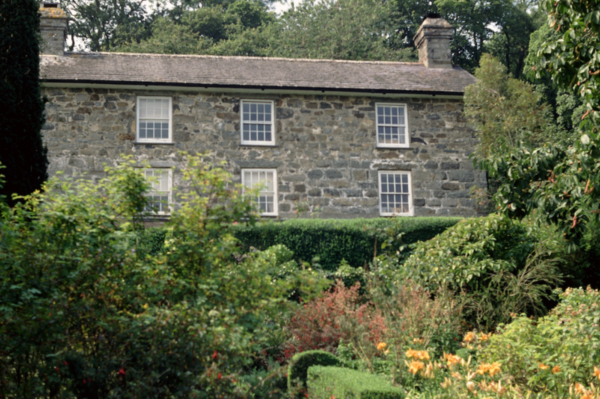
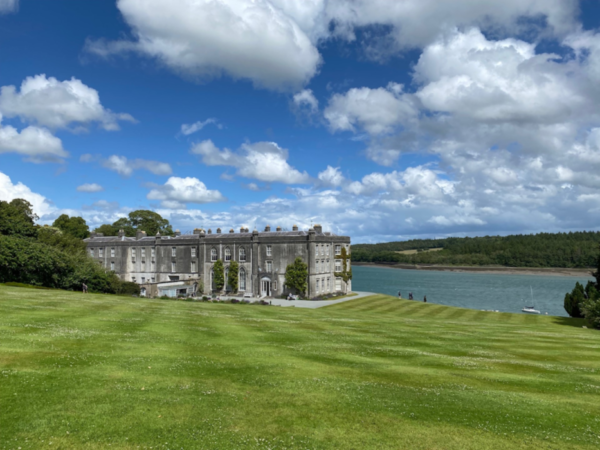
Plas yn Rhiw is a restored 17th-century manor house near Pwllheli. The restoration was undertaken by the Keating sisters, whose involvement forms an important part of the property’s modern history. The house is set within an ornamental garden and is surrounded by woodland, meadow and orchard, with views across the surrounding landscape. A tea room operates on site.Its scale and setting give it a more intimate character than larger country houses, and it appeals to visitors interested in domestic architecture and garden design.
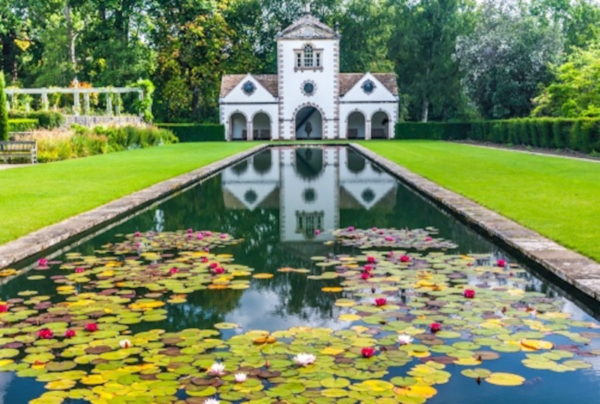
Bodnant Garden, near Colwyn Bay, has developed over approximately 150 years. The garden is set against the backdrop of the Conwy valley, featuring hillside gardens, meadows, and plants from around the world.
Plas Newydd is an 18th-century mansion on the island of Anglesey, combining classical and Gothic architectural styles. It was the seat of the Marquess of Anglesey and retains associations with the 1st Marquess, who lost his leg at the Battle of Waterloo, and the 5th Marquess. The house contains Rex Whistler’s 58-foot mural, one of its most distinctive interior features. The Grade I-listed gardens overlook the Menai Straits towards Snowdonia and are known for wildlife, including red squirrels. There is an Old Dairy café and shop within the grounds. The property suits visitors interested in aristocratic history, architecture and formal gardens in a coastal setting.
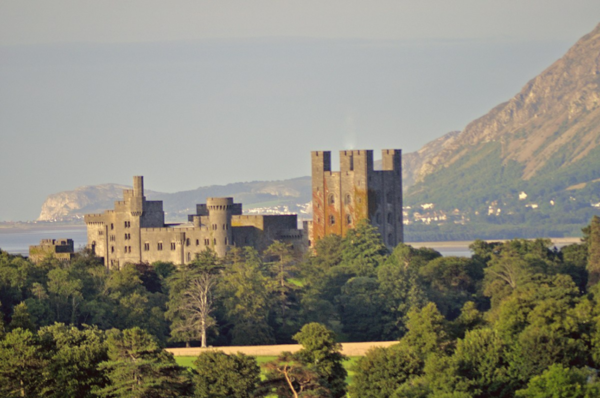
Penrhyn Castle is a 19th-century neo-Norman house in Bangor, built between 1820 and 1837. Its history is closely connected to the wealth generated by the slate and sugar industries, as well as to the longest-running industrial dispute in British history. The castle stands above the Menai Straits, with views towards the quarry and the port from which slate was exported. The estate includes wooded grounds, open parkland extending to around 60 acres, and a walled garden that predates the castle itself. Inside, visitors can explore the principal rooms and Victorian kitchens. A railway museum is also located within the grounds, along with a café and shop. For those interested in industrial heritage alongside architecture and landscape, the property offers insight into the economic and social forces that shaped North Wales in the 19th century.
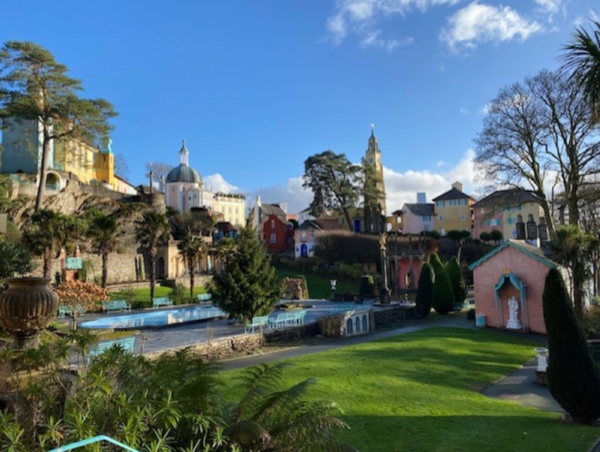
Portmeirion is an Italianate village created by architect Sir Clough Williams-Ellis. He purchased the site in 1925 and continued developing it until 1973. The final structure, the Tollgate, was completed in his 93rd year.
Williams-Ellis intended the village to demonstrate that development on a naturally beautiful site could enhance rather than damage it. His motto was “Cherish the past, adorn the present, construct for the future. Today, Portmeirion receives around 200,000 visitors annually.
Its architectural style and coastal setting make it one of the most distinctive built environments in North Wales.
For the Danube, I’d pick AmaMagna. This vessel is an unusual sight on the Danube: it’s the same length as most river cruise ships, but twice the width. And after a career spent aboard river cruise vessels, I really appreciated the extra space! The extra room allows for larger-than-average cabins – many over 300 square feet, which would be the preserve of top tier suits on other vessels. I also enjoy having more communal areas than you’d find on other vessels. There’s a choice of restaurants, with menus inspired by the regions you pass through to more familiar international dishes, and a generous spa and fitness space.
I absolutely adore the scenery of the Wachau Valley, best enjoyed from the open deck watching terraced vineyards give way to pretty villages and historic towns. It is such a treat to meet with friends at the pop-up bar, or pick a comfortable lounger to watch the world go by. But what I loved best after a busy day of sightseeing was a late afternoon game of pickleball, followed by a dip in the pool with a glass of local wine.
During the day, the atmosphere on board is informal and relaxed; evenings tend to feel a little more dressed-up without being overly stuffy.
If you’re into wine, chances are there’s a Europe river cruise for you. It’s a good way to explore the continent’s wine culture: you meander from city to city, calling in at vineyards and wine tastings along the way, and of course – you don’t need to worry about who’s driving!
Wine lovers might initially gravitate towards some of the French big hitters: the bold reds and famous names of the Rhône, the Garonne or the Dordogne. Or perhaps you’d think of the Douro in Portugal, as famous for its port as its hearty reds.
So it might be a surprise to hear me recommend the Rhine and Moselle river valleys as an alternative to the more obvious wine regions. Partially this is just down to personal taste: the rieslings found here are varied, delicate and approachable. Even if you’re not a huge fan of white wine, I’m sure you’ll find something here to your taste.
But I think what really swings it for me is that on these rivers, it’s about much more than simply the wine alone. Only here do you get an excellent wine experience plus the scenic beauty of the Rhine Gorge and the Moselle, the classic storybook towns and the ridiculous density of castles and medieval heritage, all in one package.
So yes, if you’re a red wine person above all else – maybe look to France or the Douro. For everyone else, the below itinerary is my top wine cruise recommendation.
On specifically wine-focused cruises you’ll be hosted by a wine professional and will get a range of excursions with food and wine pairings, curated wine tasting visits, and gentle hikes or cycling trips through the vineyards.
This mighty river running through the heart of Europe has long been romanticized, most famously with the namesake "Blue Danube" waltz by Johann Strauss. But the waterway is not only a European cultural icon, it’s also a key trade route that has played an important role in the continent’s history, from early man to modern times and with all the long and turbulent drama in between.
A cruise on the river offers the very essence of Central Europe: rolling hills and medieval castles, vineyards, bird-lined marshes and cliffs, small river towns and some of Europe’s best known cities.
Cruises on this river typically split into trips on the upper or lower Danube. On the upper Danube, cruises generally sail from Bavaria to Budapest, Hungary, through Austria's scenic Wachau Valley, and include stop-offs at two of Europe’s most important cultural and historic cities, Vienna and Bratislava, Slovakia.
Cruises on the lower Danube take in the dramatic eastern stretch between Budapest and Bucharest, Romania, through Croatia, Serbia and Bulgaria, with Dracula-related stop offs among the many attractions.
While both offer bountiful historic sights and attractions, the main appeal of the upper Danube cruise itinerary is more focused on central European culture, most notably opera and classical music, wine and art, opulent architecture, medieval fortresses and museums. Cruises along the lower Danube offer a fascinating glimpse behind the former Iron Curtain and a taste of life in post-Communist Eastern Europe, while also promising medieval fortresses and Orthodox churches, not to mention the region’s dramatic natural scenery.
With its countless vineyards, stately chateaux and a landscape that has inspired myriad artists throughout the centuries, the Rhône and Saône river region of France is one of the world’s most sought-after river cruising destinations.
The names of the historical French regions that make up the Rhône Basin inspire pure romance: Provence, Burgundy, Auvergne, Rhône-Alps and Languedoc-Roussillon. Here, you find yourself following the footsteps of Van Gogh, Cézanne and Gauguin, inspired by natural beauty and fortified by some of the world’s most incomparable wine and cuisine. Along the way, numerous UNESCO World Heritage Sites vie for attention, from Avignon to Lyon.
Perhaps the most alluring part of a Rhône and Saône river cruise for lovers of good wine is the tremendous winemaking traditions that define this area of Europe. Cruises in the area are sure to include unique experiences: learning about the art of winemaking at the Georges Duboeuf wine village, private wine tastings in Beaujolais and Châteauneuf-du-Pape, wine and cheese tasting in Valance, sampling baked goods and chocolate goodies in Chalon-sur-Saône. It’s certainly a trip to spur an appetite and truly what cruising the Rhône Valley is all about!
The serene Dordogne idles its way through rural southwestern France, passing intricate chateaux, forests and beautiful gardens, some of the country’s prettiest villages and medieval towns.
The Dordogne flows for 300 miles in the southwest region of France and is considered part of the Aquitaine area. Gentle hills – never overly high or steep – flank the river on both sides, with the highest point being Saint Pierre de Frugie at 479 meters. Much of the land – some 100,000 hectares – is devoted to wine-growing, with acreage farther from the river mainly devoted to poultry farming.
Personal highlights are not just the obvious Bordeaux but also La Roque-Gageac, the “cutest town in France,” and historical Beynac and Périgueux.
Cruises along the Rhine boast postcard-perfect views of terraced vineyards and cliff-clinging castles, lending credence to its reputation as one of the world’s most romantic and oft-traveled rivers.
From Amsterdam’s charming canals to the fairytale-esque Black Forest, the river delights lovers of history, wine, culture and cuisine. In the course of a week, river cruises in the region are able to showcase the dramatic Rhine Gorge, legendary Lorelei rock, Holland’s famed windmills and tulip fields, university towns and cosmopolitan cities, medieval castle ruins and esteemed museums.
Flowing for approximately 820 miles, the Rhine River originates at the Rheinwaldhorn Glacier in the Swiss Alps and culminates in Basel, Switzerland – just before which it tumbles over a 75-foot waterfall, the Rheinfall. The majority of the river’s waters pass through Germany, while river cruises along the Rhine will also introduce travellers to the sights and cultures of Liechtenstein, Austria, France and the Netherlands.
Most cruise itineraries focus on the particularly lovely stretch of the Middle Rhine from Bingen to Bonn as it passes through steep gorges (including the Rhine Gorge, at 430 feet deep), along the Rhineland Plateau and in view of the Rhenish Slate Mountains.
With Paris as its highlight, the Seine is made for romantics who seek the serene pleasures of river cruising with the in-depth exploration of the country that this – France’s second-largest river – provides. An inspiration for French impressionism, a setting for world wars and a boon for history lovers, the river is also replete with opportunities to indulge in the country’s fine wine and cuisine.
Extending for more than 480 miles, the Seine originates in wine-producing Burgundy near Dijon and meanders its way lazily through Paris and Normandy to Le Havre, where it joins the English Channel.
My personal highlights on a Seine river cruise include Paris (obvious), the clifftop village of Les Andelys, two-thousand-year-old Rouen, the lovely coastal town of Honfleur, and solemn visits to the Normandy beaches.
Located near Seillans, Val d’Iris owes its name to an ancient iris plantation for the Grasse perfumery. My family and I have been buying wine directly from this vineyard for years.
Not only do they produce exceptional quality wine, but the people behind it are wonderful as well. The vineyard is run by a small team, and their wines are very reasonably priced – especially given the high quality and their commitment to sustainable production practices.
Today, the vineyard spans 8.5 hectares, with excellent soil that is both stony and clayey. This unusual property is ideal for wine production as it allows the vines to soak up warmth, ensuring the grapes ripen perfectly, while also retaining enough water to withstand the long, dry Mediterranean summers.
Val d'Iris follows sustainable practices, which means no weedkillers or insecticides are used. The soil is carefully maintained using mechanical methods, minimising disturbance. If you look closely, you might spot locusts, grasshoppers, praying mantises, and ladybirds thriving among the vines.
Every decision in the vineyard is carefully considered from a sustainability perspective and the vineyard takes care to use products that are safe for both the micro-fauna and human health, avoiding any that pose carcinogenic risks. They also precisely calculate the lowest effective doses for treatments and adjust their equipment to ensure the most efficient and responsible use.
Transparency is key at Val d'Iris, with every step of the process, from vineyard to cellar, being meticulously recorded. Consumers can trace the entire history of each bottle, including details about the grapes, cultivation methods, harvest dates, production processes, and even specifics like temperatures, yeasts, and ageing techniques.
Harvesting at Val d'Iris is a careful and deliberate process. A team of about 12 pickers works the vineyard, but rather than harvesting all at once, they wait for each plot to reach its peak ripeness. This means the harvest is spread over nearly a month, ensuring that every grape is picked at its prime.
All the grapes are hand-picked and transferred into harvest buckets, which are then carefully loaded into boxes on a tractor trailer. Within minutes, the tractor is driven to the cellar, where the grapes are unloaded by hand into the de-stemmer, separating the grapes from the stalks. And thus begins the meticulous winemaking process in the cellar.
Visiting Val d'Iris
Wine tasting at the vineyard is free, and they offer a small but carefully curated selection. The vineyard is open for visitors without appointment from 10am to 6pm Monday to Friday and 11am to 5pm Saturday. It's closed on Sunday. It's a five minute drive from Seillans, or you can walk there in less than an hour.
Most of their wines are reds, with about five types to choose from, along with two whites and one rosé. The whites are distinctly different—one has a deep, intriguing flavour, while the other is much lighter. Their red wines tend to be full-bodied and spicy, but they've recently introduced a new summer red, designed to be enjoyed chilled. It’s light, fruity, and perfect for hot days—I can personally vouch for how delicious it is chilled!
You’re welcome to explore the vineyards at your own pace, either before or after the tasting. When I last visited, we decided to walk around after the tasting, but with the summer sun blazing down on us, it might not have been the wisest choice!
The vineyard is also home to some friendly cats and dogs, who are always happy to greet visitors.
Duration: Three to five hours (depending on route)Difficulty: Moderate
This trail was one of the first hiking spots I discovered in the region. It’s located just south of our local village, Seillans, where the landscapes much more of a typical Provençal feel with an abundance of fresh thyme wafting through the air, countless streams of vineyards stretching along side the roads and up and down the rolling hills.
The Blavet, a small river that flows through the hills of the Var, has carved its way through striking red volcanic rock formations. Over time, the water has shaped the landscape into something truly unique. Rich in iron, the cliffs, composed of volcanic porphyry-oxidize and take on a beautiful golden-red hue. Their jagged edges rise into the sky, changing colours with the hours of the day and the seasons. Sculpted slowly by water and wind, the rocks have formed strange and beautiful shapes.
The surrounding vegetation, a mix of bushes and forest, blankets the valley floor, climbing the slopes, and clinging to the cliffs. The greenery comes in various shades, from light to dark, creating a rich contrast against the ever-present blue sky. From certain vantage points along the trail, you can even catch glimpses of the Mediterranean Sea.
The hike begins with a walk through a forest, following the river, which leads to the striking red rock formations. Along the way, you’ll pass the 'Grotte du Mueron,’ a cave inhabited during the Bronze Age. With its large entrance and remarkably high ceiling, the cave holds traces of our ancestors dating back to 12,000 BC.
Shortly after the cave, you’ll encounter a brief but steep climb to your first viewpoint, offering sweeping views of the surrounding landscape and the Mediterranean Sea. After crossing a road, the trail continues through the quiet hills and forests of this peaceful region. A couple of hours in, you’ll reach a stunning viewpoint, an ideal spot to enjoy a snack or packed lunch while taking in the medieval hilltop villages in the distance.
After lunch and soaking in the scenery, the route back tracks briefly before winding down along a trail that leads back to the car park.
Need to know
There are a few routes you can take from the trailhead. Here, you'll find an information board with the hikes labelled by difficulty level. This route is well marked and there is a map outlining the route in the car park.
This hike is easily accessible by car. There is a car park with picnic benches and normally plenty of room to park you vehicle.
I recommend wearing hiking shoes or boots, and bringing hiking poles for the steeper sections if that makes you feel more comfortable. Be sure to pack a windproof or waterproof jacket, it is highly unlikely it will rain and it may even feel quite warm in the middle of winter in the sunshine, but its better to be well prepared.
Carry enough water, at least 2.5 litres in the summer months.
This hike is accessible all year round. Be aware that if rainfall has been heavy in the region, especially towards the end of winter, the river can be quite full and might require you to cross on rocks or in the water itself. I find this quite fun, but please be careful as rocks can be slippery.
Distance: Approx seven miles (11.2 km)Duration: Four to six hours with breaksDifficulty: Moderate
I absolutely love this mountain ridge hike. Located in the Parc des Préalpes d'Azur, the hike begins in the village of Séranon, right on the border between the Var and the Alpes Maritimes. This hiking trail offers stunning views of the surrounding mountains and landscapes, and follows the famous RD 6085, or “route Napoléon,” named after the emperor, who stopped at the Château de Brondet in 1815.
Heading west along the foot of the mountain and as you start your climb, you’ll reach Vieux-Séranon, where the ruins of a 12th-13th century fortified village are still visible. Take a quick left at this stage to climb up to a viewpoint with a detailed information stand about the wildlife, surrounding areas and Vieux-Séranon.
The trail then leads through the woods on the northern slope, eventually taking you to the summit of Bauroux (1,644 meters). The 360° panoramic view from here is absolutely breathtaking, with sweeping views of the surrounding mountains and valleys. It’s the perfect spot to take a break, enjoy a packed lunch/snack, and breathe in the fresh mountain air.
After lunch, you’ll descend along the eastern side of the ridge. The trail takes you to the quaint village of Caille, where I always enjoy pausing to appreciate the local charm and tranquility.
Need to know
This hike, along with others in the region, is easily accessible by car. After the hike, there are some fantastic authentic countryside restaurants to enjoy, but be prepared for limited vegetarian options. Though you might get a scowl at first, I’m sure they’ll accommodate your request! This region is home to many farmers and producers of honey, goat’s cheese, and of course, meat!
This route is well signposted and there is a map outlining the route in the car park which you’ll find right next to the roundabout.
Near the start of the trail, there’s a small storage cabinet where local producers sell honey. It operates on a trust-based exchange, so do bring some cash in case you’d like to buy some.
While there are a few steep sections, they’re very manageable. I completed this hike with my 71-year-old mother, and we made excellent time! That said, she’s incredibly fit for her age.
I recommend wearing hiking shoes or boots, and bringing hiking poles for the steeper sections if that makes you feel more comfortable. Be sure to pack a windproof or waterproof jacket, as the weather in the mountains can change quickly. During the hotter months, be sure to carry enough water, 2.5 litres at least.
I’d avoid this hike between December and March, as snowfall can make it dangerous without the right gear.
Distance: 237 kmDuration: 10-12 daysStart: Foix (France)End: Berga (Spain)Difficulty: Moderate
During the 12th-14th centuries a religious group that rejected wealth and led a simple life gained a significant number of followers in Southern France. The Cathars, who referred to themselves as ‘good Christians’ (or ‘good men’), were not just tolerated but even supported by some nobles in the Languedoc area and by 1209, the Catholic church felt so threatened by the movement that the pope declared a crusade against the heretics. Thousands upon thousands were killed but many managed to flee France and cross the Pyrenees to seek refuge in Spain.
The GR107 or Cami dels Bons Homes trail follows the route believed to have been taken by the Cathars fleeing France. As you can expect from a well maintained GR (Grande Randonnée or Gran Recorrido) route, it is well signposted with trusty red and white stripes.
It can be completed in less than a fortnight and, while it is less demanding than the other long-distance walks that traverse the entire length of the Pyrenees, there is no shortage of stunning mountain scenery. I spent the nights in auberges where I was well fed with delicious food and all of my hosts claimed to live in the most beautiful part of the trail.
The route
You can walk the trail in either direction but I prefer to start the trek from Foix and walk across the Pyrenees just like the Cathars did.
The first few days slowly ease you into walking, but I recommend that you save some energy to climb up to the ruins of Roquefixade castle at the end of the first and the ruins of Montségur castle at the end of the second day of the trek.
If I had to pick a favourite section it would be the breathtakingly stunning middle section of the trail. If you want to enjoy the best mountain scenery but you can only spend two or three days on this trail, I suggest starting from Mérens-les-Vals and walking to Bellver de Cerdanya. This is the highest part of the entire trail which also happens to be the most demanding and stunning section.
You can download a route card from camidelsbonshomes.com to collect stamps at the guesthouses and receive a certificate of completion of the trek.
Need to know
You can reach Foix from Toulouse by train (approximately one hour) and at the end of your trek in Berga you can take a bus to Barcelona (approximately two hours). Toulouse and Barcelona are both well connected with other European cities.
The best time to walk the trail is between May and October, but July and Aug are the busiest months in the mountains.
During the first few days the trail passes through some hamlets, but don’t expect bakeries and snack bars; on the French side of the trail you will hardly ever encounter a place where you can buy food. That doesn’t mean you have to go hungry, you can buy packed lunches from the auberges and gites where you stay.
You don’t have to carry your camping gear, as it is possible to spend every night in a gite or family run guesthouse, where you will be treated with delicious local food. Fortunately you won’t have to worry about the high calorie intake in the evenings as you will certainly burn them off the next day.
Once you’re in Catalonia you will be passing through towns with wider accommodation choices but if you’re walking in July or August it is best to book ahead. Take a sleeping bag and towel as it might not be provided at some gîtes and refuges. The weather can be variable in the Pyrenees and it is essential to have a waterproof jacket and warm fleece even in the summer months.
Official website: www.camidelsbonshomes
Difficulty: EasyDistance: 60 miles (98km)Duration: Six to seven daysStart/end point: Hereford Cathedral
Pilgrimages are booming in popularity, for those with faith and without. While you don’t need to be a Christian to walk Herefordshire’s Golden Valley Pilgrim Way, it does have the church at its heart. On this 60-mile (98km) circuit, you stay in a different one each night.
At the end of each green-hilled hiking day, I placed my boots on centuries-old flagstones, dumped my rucksack onto time-smoothed pews, and hung my waterproof off the poppyheads at the end of choir stalls. I’ve been walking in the UK for years as a travel journalist and book author. And I can safely say this is one of the country's quirkiest long-distance walks, complete with a touch of the divine.
The route
Herefordshire gets overlooked. Lodged against Wales, merged into the Midlands, with no coast to define its edges, few walkers wander here. But it’s excellent hiking country, especially the Golden Valley, where the Black Mountains loom above a rural borderland, once fought over by the Welsh and English, now peaceful, serene.
The Golden Valley Pilgrim Way is unusual for a pilgrimage. Most lead you somewhere; on this, you finish back where you started. But the idea, says the priest behind it, is that you return a little changed. Maybe, maybe not. But spending in pubs and farm shops, and paying into church coffers, certainly feels like a positive for the countryside economy.
The start and finish is Hereford Cathedral, once a major pilgrimage site itself. Arrive early to look around – it’s home to the Mappa Mundi, the biggest surviving medieval world map. Walkers can stay in the cathedral’s 15th-century cloisters – the first cathedral in Britain to accommodate pilgrims since medieval times. The designated sleeping room is fairly plain. But following the choir into the main nave, and listening to them erupt into evensong, is spine-tingling stuff.
From Hereford the route heads west towards Wales, a moderate loop around the Abbeydore Deanery – it isn’t waymarked but you can download GPX files. This is a landscape of apple orchards, woody vales, castle ruins, grazing sheep; of timelessness and stories. There’s the gnarled ancient oaks of Moccas Park, the gurgle of St Peter’s sacred spring, the views from ridge-top Arthur’s Stone, a Neolithic dolmen where King Arthur allegedly slayed a dragon.
The route also visits many medieval churches, nine of which offer ‘night sanctuary’ for pilgrims. They are simultaneously basic and atmospheric, all soaring ceilings and tombstones. At Dorstone I slept behind the choir and was woken by sun streaming through the stained glass.
The churches are also frequently next to excellent village pubs, like Dorstone’s low-beamed Pandy Inn. Best was Cloddock, where the Cornewall Arms is more like your gran’s front room, where locals gather to drink, eat crisps and play table skittles.
Need to know
Hereford has a train station, with direct services from cities such as Cardiff (1hr), London (3hrs) and Birmingham (85mins).
The trail must be booked via Abbeydore Deanery (abbeydoredeanery.org/gvpw). You’ll be sent a pilgrim passport to stamp en route. A donation of £20pp per night is requested. You have exclusive access to the church; if someone else wants to stay the same night, you’ll be asked if you’re happy to share. It’s OK to say no.
At the night sanctuaries you get access to a sink and toilet (which might be outside) but no shower. Kitchen facilities range from full set-up to just a kettle. Simple camp beds are provided – they’re not especially comfy. Bring a warm sleeping bag and pillow; consider a sleeping mat for extra padding. At Kingstone there were pieces of carpet on the pews, which I borrowed, for extra insulation. At Dorstone bigger camp beds came with mattresses, blankets and hot water bottles – luxury indeed!
The route is open year-round – visitor books evidenced pilgrims who’d walked over Christmas. Be aware the churches are chilly, even in summer. Also, this is farming country, prone to muddiness. I walked in March, after an especially wet winter – it was a quagmire. The pay-offs were newborn lambs, daffodils and no other tourists.
Distance: 48 milesDuration: Four to eight days depending on your paceDifficulty: Easy to moderate
The southern half of the Peak District, called the white peak for its limestone geology, is the gentler and more 'traditionally' picturesque stretch of the national park. You'll find no brooding crags and desolate moors here, it's more about gentle dales, meandering brooks and quant – sometimes twee – villages. That's not to say the scenery isn't impressive; around Monyash and Lathkill Dale it's often breathtaking.
The Limestone Way weaves through the white peak, skirting historical Illam, crossing famous (and busy) Dovedale, before meandering north towards Matlock and, eventually, Castleton on the border of the much sterner dark peak.
Broken up into eight casually-paced days this is a gloriously gentle walk through some of the most easy-going but immensely rewarding countryside in the UK.
Why it's best for beginners: A moderately-easy long distance pathDistance: 46 miles/74kmDuration: Four to five daysDifficulty: Easy to moderate
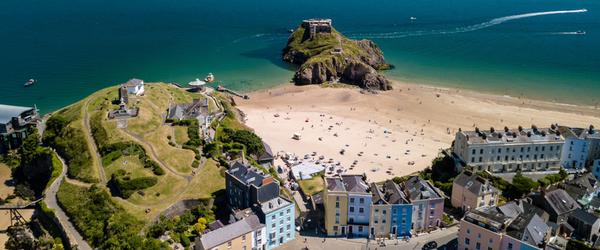
This section of the Wales Coast Path packs a spectacular series of coastal landscapes into a short and, apart from a couple of steep cliffs, mostly easy walk. The route passes some of Britain’s best beaches, swaying marshes, caves, castles and churches. Landscape highlights include Worm’s Head and Three Cliffs Bay. It’s impossible to get lost and walkers find plenty of accommodation and luggage transfers available.
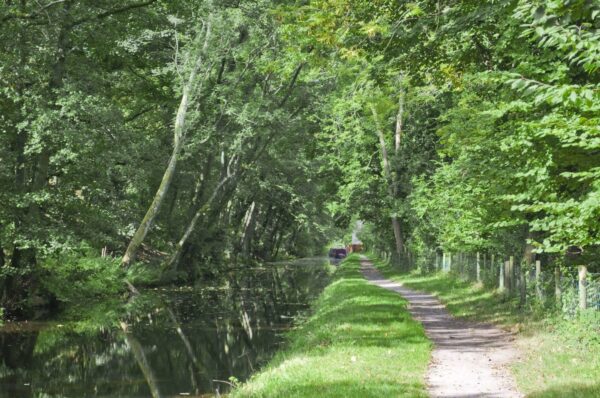
Why it's best for beginners: Flat, gentle canal-side walkingDistance: 36 miles/58kmDuration: Two to three daysDifficulty: Easy
One of the UK’s quietest, least known canals isn’t even connected to the rest of the network but offers a leafy, flat, easy walking adventure through the Usk Valley. Historic towns like Crickhowell and Abergavenny provide en-route facilities while walking highlights will include an aqueduct, tunnel, locks, lifting bridges… and fine Brecon Beacons views.
Why it's best for beginners: Easy-going day hikes and moderate ascents up SnowdonDistance: Various day walksDuration: Two to three daysDifficulty: Easy to moderate
Snowdonia’s answer to Ambleside is another outdoor centre nestling among trees amid an inspiring mountainous landscape. The picturesque riverside town is a tourist honeypot but walkers can avoid day-tripper crowds by setting off on a wide choice of routes in all directions, then return for quieter evenings among a wide choice of restaurants and accommodation. Highlights could be easy but impressive waterfall walks or tackling one of many routes up Snowdon.
Why it's best for beginners: A huge range of walks for all abilitiesDistance: Various day walksDuration: Two to three daysDifficulty: Easy to moderate
Basing a walking holiday in a popular Lake District centre like Ambleside means you have a vast choice of accommodation, outdoor shops and walking routes. It can be crowded and won’t feel like ‘getting away from it all’ but with all those resources on hand it can be perfect for beginners. Walkers can find paths ranging from tricky fell ascents to gentle hikes around lakes, right from their doorstep.
Best for: easy-going long-distance pathDistance: 62 miles/100kmDuration: Three to six days - or shorter segmentsDifficulty: Easy
Generally flat, although with more ascents than the Norfolk Coastpath, this way-marked coastal walk offers a pleasant and easy-going route through nature reserves, broad sandy beaches and dunes, and across low rocky headlands.
Landmarks like Lindisfarne and Bamburgh Castle are highlights but walkers will also appreciate a series of unspoilt coastal villages and towns, all with friendly pubs and B&Bs to eat and stay.
There's a Europe river cruise for each taste and every interest: for wine you’ve got the Rhône or the Moselle, for historic cities you’ve got the Rhine or the Seine. If it’s scenic beauty you crave – well, they’re all good but my heart lies with the Douro or the Dutch waterways in tulip season.
And then for classical music – one of Europe’s greatest cultural contributions to the world – there’s no real contender to Strauss's glorious blue Danube, whose 2,800 km stitches together some of Europe’s most significant musical locations.
On this route, the musical heritage really takes centre stage. You don’t travel far – it’s only eight days and around 250km from Vienna to Budapest, and you’ll spend a good chunk of your time off the river in concert and visiting some key musical landmarks. There are longer and more varied cruises on the Danube – if maximising distance and destinations is your focus, this might not be the route for you. But if it’s a journey of musical discovery you’re on, then look no further.
Considered by some to be the best long-distance walk in the UK, Wainwright’s Coast to Coast Path has many remarkable qualities, but it’s the walker camaraderie that is my stand-out highlight of this hugely popular cross-country hike.
The scenery is at times stunning – looking at you, Lake District – but the sense of community you experience with fellow walkers is felt here on this walk perhaps more than on any other in Britain.
This is largely due to the fact that many, if not most walkers tackle the Coast to Coast Path in one go (or at least in two halves), rather than dipping in and out of it on day- or weekend-hikes as many people do for Britain’s other long-distance trails. The result is that you’ll bump into the same people again and again over the course of your two-week walk, in pubs, cafes and hostels along the route, where you can share a drink, and compare blisters whilst drying your bog-drenched toes in front of a roaring log fire.
The Coast to Coast isn’t an official National Trail. Instead, it was the brainchild of the legendary fell walker and guidebook writer Alfred Wainwright, who in 1973 decided to plot a walk-to-remember across the width of the country which, as far as he knew, wouldn’t break any trespassing laws. Two-thirds of the trail is spent walking through three of England’s 10 national parks (The Lake District, The Yorkshire Dales and the North York Moors) and the route includes some of the most dramatic upland scenery in England. Prepare to be blown away by the beauty of some of the Lake District sections. Prepare also for quite a lot of rain.
My recommended itinerary breaks the route down into the following segments, walking from west to east. You can do it all in one straight shot, but lots of people break it up into weekend hikes.
Whisper it quietly; this might just be the best coastal path in Britain, and one of the UK’s best walks overall.
If you ask me, Pembrokeshire has it all – dramatic clifftop vistas, seemingly endless beaches, secluded coves and tiny fishing villages, but best of all; almost no one knows about it, so you get pretty much all of it to yourself.
You’ll need two or three weeks to complete the trail in one go, and, as with most coastal paths in Britain, you’ll have to endure a lot of ups and down as you climb from clifftop down to cove and back up to clifftop, time and time again. But the rewards are plenty; as well as the sensational views, there’s wildlife to spot (seals, dolphins, all manner of seas birds), historic sites to explore (including no fewer than 11 castles), and exotic Welsh cuisine to fuel those tired legs (oggy and faggots, anyone?).
Your details are safe and will not be used for any other purpose. By using this service you agree for us to share your details with your chosen tour operator according to our Privacy Policy.
1Your trip
2Complete your request
3Meet your specialist
Find a Western Europe specialist
Tell us about your trip and we'll find your match
We'll connect you directly with the experts.
Connect with John Millen, Andrew, Hellen and 3 other Western Europe specialists.
We'll connect you directly with the experts.
Connect with John Millen, Andrew, Hellen and 3 other Western Europe specialists.