




The best Lares trek
A Lares trek route well beyond the beaten path

The Lares trek is what captured my heart on my very first trip to Peru, and what inspired me to keep coming back.
In those days, I was young and into counter-culture so, the Inca Trail? Forget it! That’s what everyone does; I wanted to do something different. And it totally paid off. Of all the classic Peru treks, Lares is for those who want wilderness, culture… and no tourists. We literally saw one other group during the entire three days of trekking.
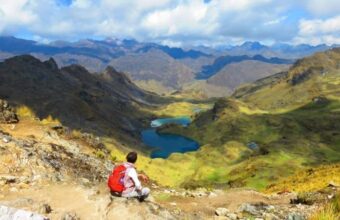
Like Ausangate (another firm favourite of mine), the Lares trek is dotted with stunning mountain views and crystalline lakes, plus a big dose of Andean culture as the trail takes you through a series of remote villages, where people still go about their day adorned in colourful handwoven ponchos and lliklla shawls.
Unlike the heavily regulated Inca Trail, there isn’t one set path that everyone follows, but several ways of hiking through the area around the Lares Valley. This means the itineraries can be very flexible – there are some good side treks you can try, or you can spread this route out across five or even six days to make the daily hiking distances shorter (good for groups with kids) and give yourself longer in the mountain communities.
Most agencies start their treks in the middle of the Sacred Valley near Huaran. But the itinerary below is by far my favourite. It starts outside Ollantaytambo and heads up to a remote village called Chaullacocha, where you can homestay with a family and get to know the local traditions in an area that is almost entirely untouched by tourism.
And for another bonus, there’s no better way to end a trek than at the Lares hot springs, a popular spot for visitors and locals alike, and a great way to rest weary muscles.
Good to know
- Difficulty: Moderate
- Distance: Various routes, classic route approx 33km (20mi)
- Duration: Three to four days
- Max elevation: 4,400 metres
- Accommodation: Camping or homestays
- Start/end point: Huarán - Lares Hot Springs
Key information
| Destinations | Sacred Valley |
|---|---|
| Activity | Adventure, Trekking, Active, Walking, Camping, Nature & Wildlife, Culture, Indigenous Tourism, Responsible Travel, Slow Travel |
| Physical Level | Moderate |
 Season Season |
January - December |
Featured tours
Featured tours
The best Lares trek itinerary
Cusco – Ollantaytambo – Palqaq – Chaullacocha
Day 1 in Palqaq
- Walking distance: ~9 km
- Walking time: ~4 hrs
Depart early from Cusco (approx. 3 hours by road) and head northwest to Ollantaytambo, a small town in the Sacred Valley notable for its preserved Inca street grid and extensive archaeological site. If you’ve not yet had breakfast you can fuel up here.
Continue by vehicle for roughly an hour to reach the trailhead at Palqaq (4,000m). From this point, begin trekking steadily uphill through open puna grassland. After approximately three hours, reach the Chaullacocha Pass (4,350m), which offers expansive views of the high Andes. The area is home to grazing alpacas and a scattering of small lakes, including the one from which the nearby community of Chaullacocha (meaning "fish lake" in Quechua) takes its name.
From the pass, descend gently for another hour to the community itself (4,100m), where you’ll spend the night. The settlement is small and traditional, with adobe houses and few modern amenities. Local life centres around subsistence agriculture and weaving, and when school is in session, visits to the local primary school may be possible. Cultural encounters here tend to be observational rather than participatory, and visits are informal and sensitive to local routines.
It is possible to arrange a homestay in the village for those seeking a closer look at rural Andean life, though this must be arranged in advance and is dependent on family availability and travel dates.
Chaullacocha – Quinsacocha – Ruyaccancha – Rayancancha
Day 2 in Rayancancha
- Walking distance: ~11 km
- Walking time: 6–7 hrs
Set off from Chaullacocha with a steady climb toward Quinsacocha (4,334m), a region of small glacial lakes after which the first pass is named. The name means "three lakes" in Quechua. Continue past these tarns and ascend to the Quinsacocha Pass (4,380m), followed by the Q’aqahuachana Pass (also 4,380m). A short, optional detour (20 minutes round trip) leads to a nearby lookout (4,400m), offering extensive 360-degree views over the Cordillera Urubamba.
The route then continues to Ruyaccancha Pass (4,438m), the highest point of the trek, before descending through isolated grazing lands populated by alpacas and llamas. Traditional stone-and-thatch shelters used by herders dot the landscape. The vegetation is typical of the high Andes, with hardy grasses such as ichu and cushion plants like yareta.
Stop for lunch near Maranpaqui (4,165m), a small flat area with access to water. After lunch, continue descending for another 2–2.5 hours through a gradually greener valley. Look out for native flora such as Polylepis (queuña) trees and the vivid purple kulli t’ika flowers (Brachyotum rostratum), known locally as "Inca earrings".
Set camp in Rayancancha (3,731m), a sheltered grassy valley by a stream, offering a welcome change in altitude and temperature.
Rayancancha – Tambohuaylla – Lares Hot Springs – Ollantaytambo
Day 3 in Lares Hot Springs
- Walking distance: ~6.5 km
- Walking time: ~3 hrs
Today’s walk is a gentle descent through a pleasant valley following the Trapiche River. The trail passes cascading waterfalls, stands of native trees, and several bird habitats, with hummingbirds often seen in sunnier weather.
After roughly an hour and a half, reach the small community of Tambohuaylla, where it’s common to encounter locals tending their fields or travelling with livestock. The trail then continues down to the hot springs at Lares (3,250m), a set of simple thermal pools popular with local families and trekkers alike. Facilities include changing rooms and basic toilets.
After lunch and time to soak in the thermal baths, a vehicle transfer (2–3 hours) returns you to Ollantaytambo. If conditions allow and time permits, it is possible to visit the lesser-known Inca archaeological site of Huaman Marka en route – this requires an additional 2–3 hours and must be factored into the day’s schedule in advance.
Lares trek: Need to know
Although an emergency horse is usually included, if you suspect you may have difficulties, it’s a good idea to request an additional emergency horse for your use (at an extra charge).
Most organised trekking tours do not include a sleeping bag, although they can be rented.
You’ll want to bring some extra cash with you to tip the support staff on your last night of trekking, as well as to purchase weavings in the communities.
Bring small gifts to pass on to local children in the communities you visit.
Ask trekking agencies if they offer pack llamas rather than mules. Llamas have less impact on trails and the environment.
Stories woven in
Traditional weaving is as important a tradition in the high Andes as alpaca herding and the Quechua language. Since Quechua was an oral language long before it was ever a written one, weaving was the main medium for communication, telling stories, and keeping records. By purchasing traditional weavings directly from the artisans, travellers can help keep the tradition alive.
Lares trek FAQs
Question
How long is the Lares trek?
Answer
There are several different routes for this hike, but the typical one will have you hiking about three days, covering around 25-30km. Most operators sell the trek with an extension to Machu Picchu, however note this is not, as it’s often described, a trek “to” Machu Picchu. You will go by train to a hotel Aguas Calientes for the night and then up to Machu Picchu with the other day trippers the next morning.

Question
How difficult is the Lares trek?
Answer
The trek is generally rated moderately challenging, although this will vary with side trips or changing the daily distances. Either way, the challenging aspect is principally due to the altitude.
Question
What permits are required for the Lares trek?
Answer
No permits are necessary for hiking the Lares trail, but you will still want to book with a local operator. They will have the right connections with local horsemen and employ qualified guides who know the area well and speak Quechua. This is key for interacting with the communities along the route, as well as for ensuring your safety in the mountains. There is an extensive web of trails that go through valleys and over several mountain passes and trails are not well marked.
Question
When is the best time to do the Lares trek?
Answer
The dry season (April/May to September/October) is the best time for hiking in Peru and the Cusco region, but this is peak tourism season and the trails will be busier. Rainy season (November to March) brings less than ideal trekking conditions, but there are some advantages, not least warmer temperatures at night, quieter trails and (maybe) lower prices.
Unlike most treks in the area, the Lares trek is not prone to landslides or other issues during the rainy season, making it a great choice for the off-season. Just don’t forget to pack your rain gear!
Other itineraries you might like

From Iguazu to Perito Moreno
Argentina north to south
Approx. 9 days

Classic Peru & Machu Picchu itinerary
The classic route to Peru's most popular highlights
Approx. 6 days
Machu Picchu & Amazon cruise
Small-ship luxury cruise with Machu Picchu
Approx. 9 days
Machu Picchu & Amazon lodge
See Peru from rainforest eco-lodge to mountain empires
Approx. 9 days