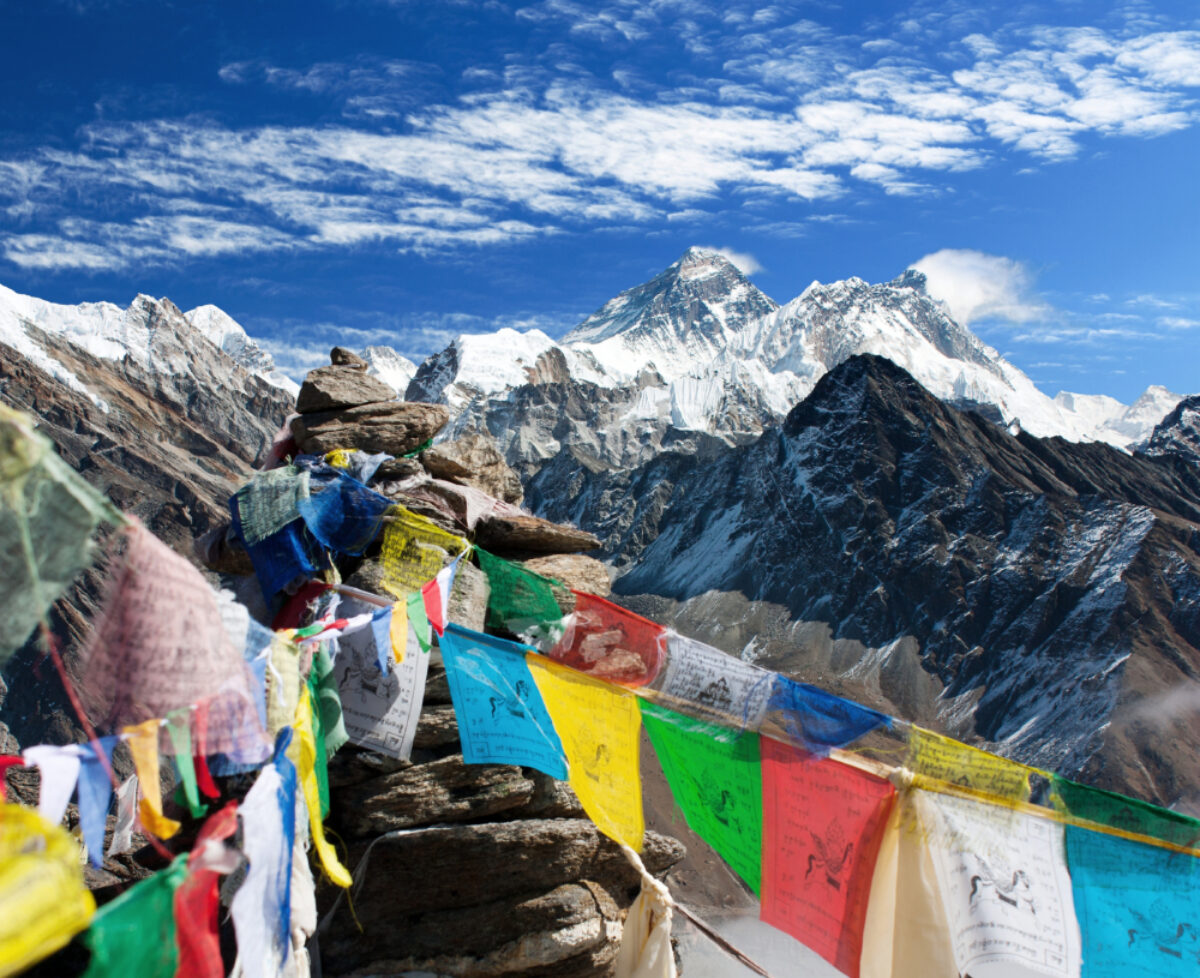
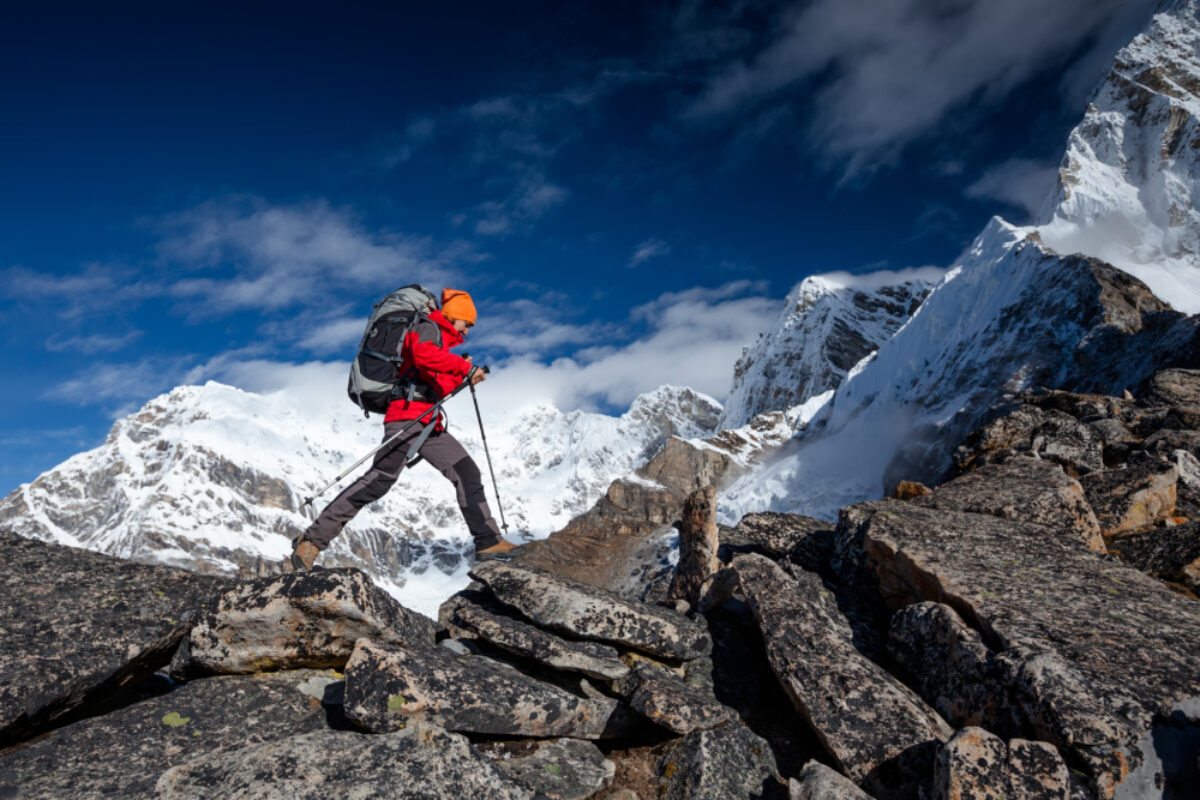
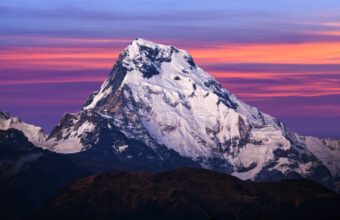
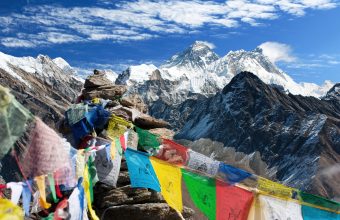
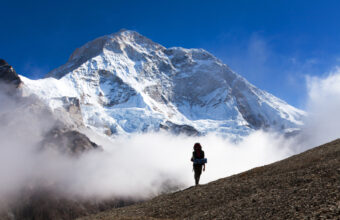
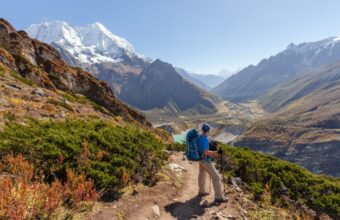
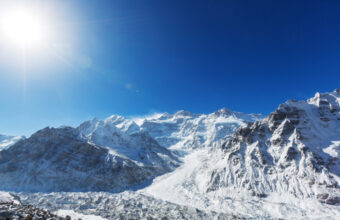
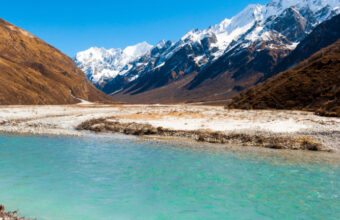
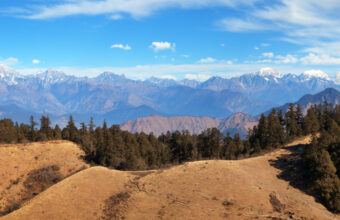
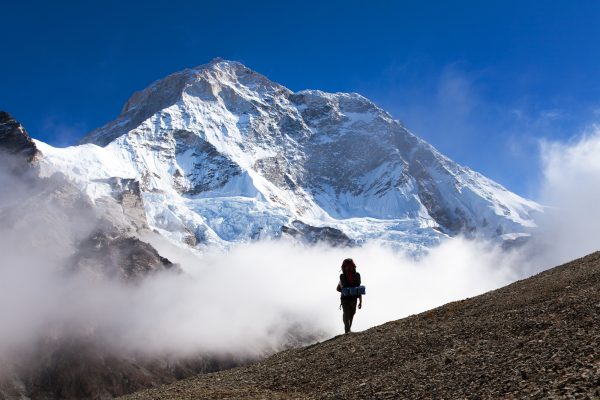
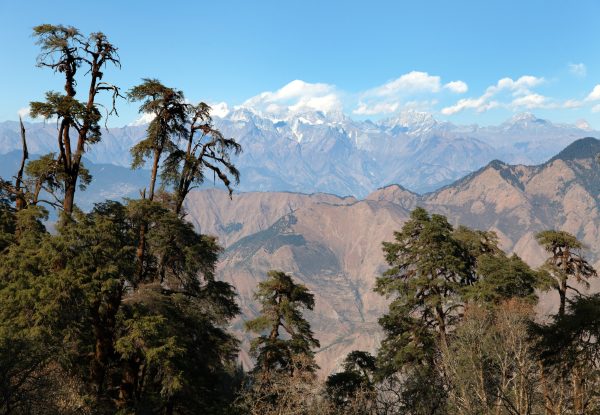
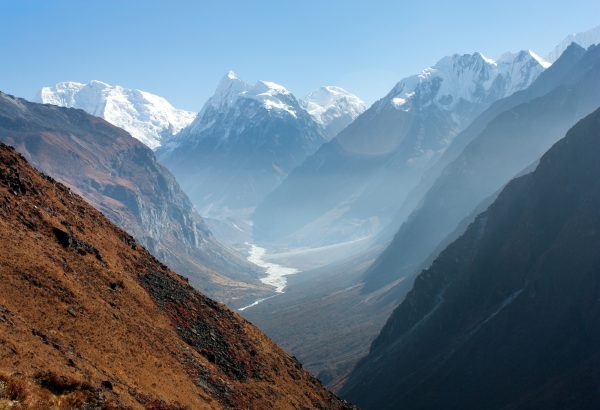
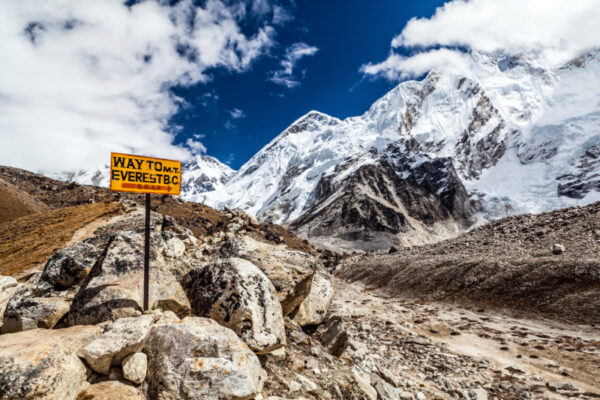
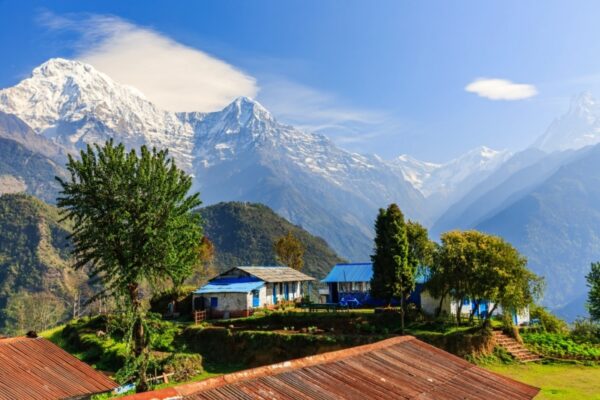
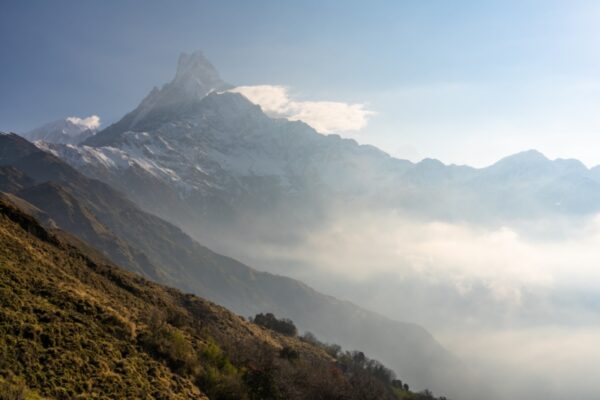
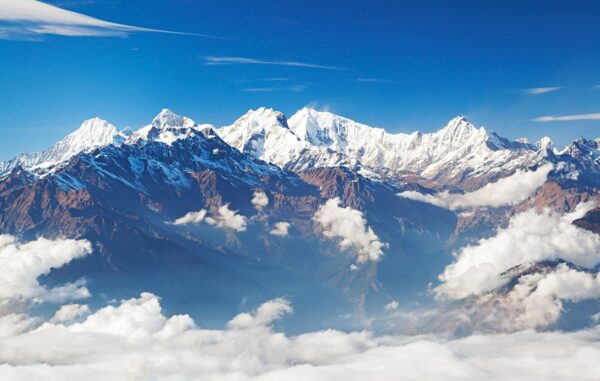
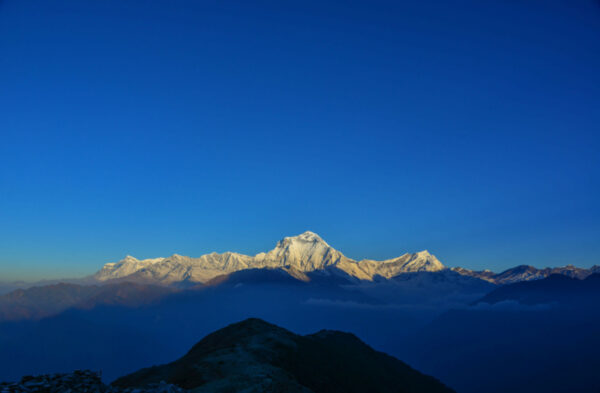
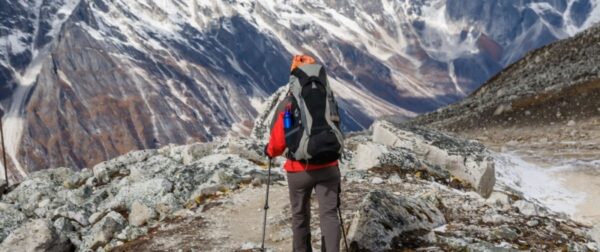
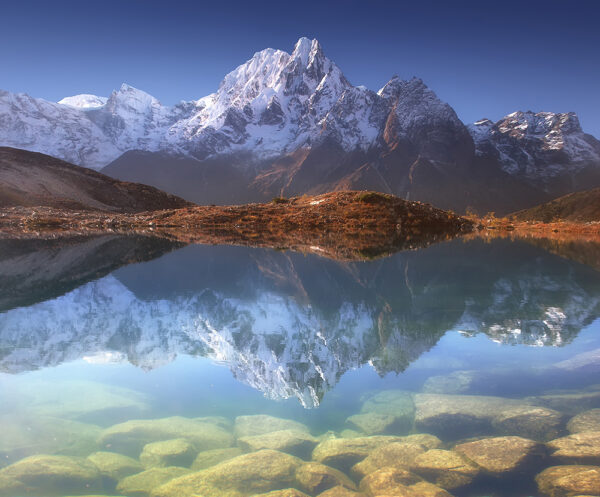
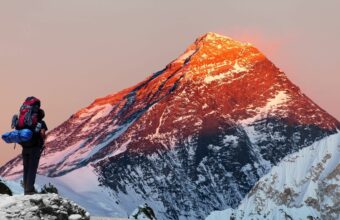
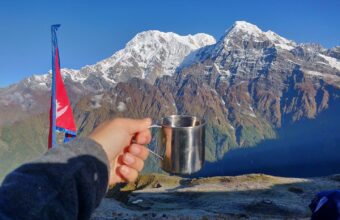
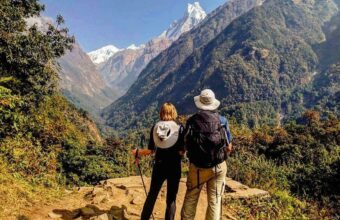
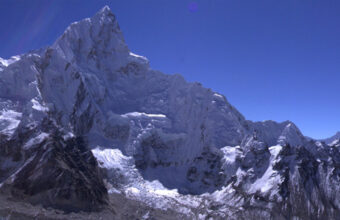
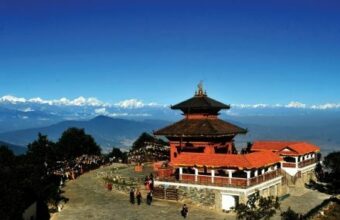
Home to Mount Everest and more than half of the planet’s other 8,000m-plus mountains, Nepal stakes a strong claim as the trekking capital of the world.
Nepal was closed to outsiders and most foreign influences for the first half of the 20th century, and when the first western mountaineers and trekkers arrived in the 1950s they were enchanted by what they discovered. The country was living in a medieval time warp and even the capital, Kathmandu, was little more than a collection of temples, shrines, palaces, markets and red brick townhouses. There were almost no roads in the country and those first mountaineers and trekkers had to walk from Kathmandu’s Durbar Square to Everest and the other big peaks.
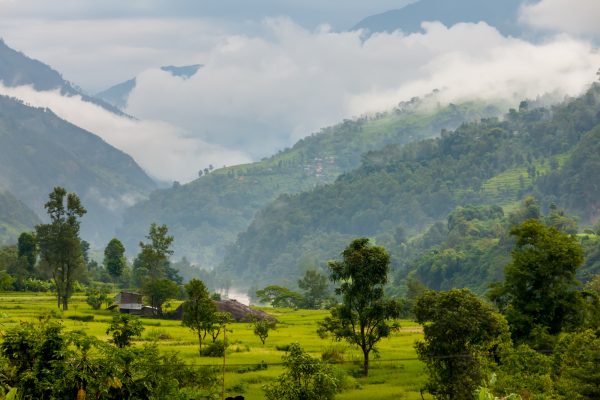
Things have come on a long way since then. Kathmandu is now a sprawling mega-city, the ever-expanding road network fans out across much of the lower and flatter parts of the country and the Nepal trekking industry is second to none. One thing that hasn’t changed though is the magnificence of the mountains, the sheer beauty of the countryside, and the unending warmth of welcome displayed by the Nepalese people. These are what continue to make Nepal such an attractive trekking destination.
With the spectacular Himalayas running down its eastern side, it’s no surprise Nepal is known as the roof of the world. Getting out into these vast panoramas with their immense snowy peaks, flower-strewn meadows and sparkling lakes — while also making time to relax at chilled out Pokhara — is reason enough to visit.
But there's far more to Nepal than just mountains and trekking.
Down on the hot lush plains of the Terai, you'll find a brace of magical national parks where rare beasts like one-horned rhino and tiger roam and the trees twitch with birdlife. Your chances of seeing rhino are surprisingly high if you visit in the spring. Then there are the cultural jewels, a scattering of ancient cities stuffed with serene temples, cobbled alleys and hidden squares. In parts of Bhaktapur, Patan and the vibrant capital Kathmandu, it feels like life hasn't changed in generations.
I understand there are no flights between Pokhara and Jomsom during July because of the monsoon season. Is this correct, and what does it mean for a July trip to Mustang?
Answered by: Abhi Shrestha
You're right: airlines generally suspend flights to and from Jomsom during that time of year due to the monsoon conditions. As a result, travelling to and from Jomsom by road would add approximately two additional days to the overall itinerary.
It's also worth being mindful of landslides during the monsoon. The road between Pokhara and Jomsom can occasionally be disrupted or closed by landslides, which is an important factor to consider when planning a July departure.
My wife and I are interested in trekking in Mustang, with about 5 days (27–31 July 2026). We'd love to reach Lo Manthang, but realise time is short and we also need to acclimatise to the altitude, so we wondered about combining part trekking with part 4WD. Is this too short a time to include acclimatisation? We'll be in Pokhara and would want to fly into Jomsom to save time.
Answered by: Abhi Shrestha
Thanks to road development throughout much of the Mustang region, we have been operating a combination 4WD-and-trekking itinerary for several years. Our standard itinerary is considerably longer than five days, but it can certainly be adapted into a shorter trip.
For a 5-night / 6-day journey within Mustang, it helps to allow time around it as follows: 1 night in Kathmandu on the arrival day; travel to Pokhara (about 7 hours by road or 25 minutes by flight) and 1 night there; an early-morning flight from Pokhara to Jomsom to begin the drive-and-trek; on return, either 1 night in Pokhara or a late-morning/afternoon flight on to Kathmandu the same day; and 1 night in Kathmandu before your international departure.
A preliminary outline of the Mustang portion would be:
Day 1: Morning flight from Pokhara to Jomsom (~25 mins). Drive Jomsom to Samar (~3 hours), trek via the sacred Chungsi Cave to Syangboche (~4–5 hours), then drive to Ghiling (~30 mins).
Day 2 – Monasteries and ancient villages: Drive to Dhakmar (~1.5 hours), then trek via Ghar Gompa and Lo Gekar Monastery to Charang (~4 hours).
Day 3 – Crossing Chogo La: Trek over the Chogo La pass to Lo Manthang (~4.5 hours).
Day 4 – Exploring Lo Manthang: Visit the ancient caves, monasteries, and medieval villages around Lo Manthang (on foot or by vehicle).
Day 5 – Return to Jomsom (~7 hours): Scenic drive back through Upper Mustang to Jomsom.
Day 6 – Return to Pokhara: Morning flight from Jomsom to Pokhara. Either overnight in Pokhara and return to Kathmandu the next day, or connect on to Kathmandu on a late-morning/afternoon flight the same day.
As you'll spend the first two nights at altitudes of around 3,500–3,600 metres, you should have a reasonable opportunity to acclimatise gradually. That said, altitude affects everyone differently and individual reactions can't be predicted with certainty. If you experience significant symptoms of altitude sickness, a vehicle will be on standby to take you promptly to a lower, safer altitude where recovery is usually much quicker.
The road-free version of the Annapurna Circuit is very attractive. What's the proposed itinerary to experience the best of the region while keeping off the roads as much as possible?
Answered by: Abhi Shrestha
It's no longer possible to completely avoid roads along the Annapurna Circuit. To experience the best of the region while minimising road exposure, the most rewarding itinerary is to drive to Chame, then trek the alternative trail to Manang (roughly 50% off-road), detour to Tilicho Lake, rejoin the main trail and cross the Thorung La Pass, and finish in Jomsom before flying to Pokhara.
If completely avoiding roads is a top priority, consider the Manaslu Circuit Trek instead. It offers a similar physical challenge, alpine landscapes, and cultural immersion, and is increasingly regarded as the "new Annapurna Circuit."
I understand the Manaslu Circuit is a good alternative to the Annapurna Circuit, but is it still as quiet as people say or is it getting popular?
Answered by: Abhi Shrestha
The Manaslu trek has been emerging as an excellent alternative to the Annapurna Circuit. It is getting increasingly popular but is still nothing like the Annapurna Circuit in terms of numbers. The circuit itself typically takes about 12 days to complete, including travel days. Accommodation is in simple teahouses and the first half of the route follows a road, so it's not as scenic as some other treks. For a more off‑the‑beaten‑path experience, consider adding a side trip into Tsum Valley. This extends the trek to around 20 days and offers more authentic cultural encounters and beautiful landscapes.
Do you recommend the Annapurna Circuit or are there any other treks you would recommend, such as the Manaslu Circuit?
Answered by: Madhav Prasad
The Manaslu Circuit is not just an alternative. It is really a must-do trek in Nepal if you are looking for a more authentic Himalayan experience. My recommendation is:
- Choose the Annapurna Circuit if you want a classic, well-known route with varied scenery and easier logistics
- Choose the Manaslu Circuit if you prefer fewer people, more remote trails, and a very special trekking experience
We only have 14 days total, is that enough for the New Annapurna Trekking Trails route?
Answered by: Madhav Prasad
Yes, 14 days in total (including arrival and departure in Kathmandu) is enough to complete a safe and enjoyable trek, if the itinerary is planned properly with good acclimatisation.
Can you do the Kanchenjunga basecamp trek in March?
Answered by: Abhi Shrestha
Yes, but note that early to mid-March can still be extremely cold at higher altitudes in the Kanchenjunga region. If possible, I would recommend planning the trek as late in March as feasible for less harsh conditions. A shorter version (approximately 16 days in Nepal) takes you to the North Base Camp of Mount Kanchenjunga, while a more comprehensive 21-day itinerary allows you to visit both the North and South Base Camps.
I'm looking for a quiet, spiritual and not over crowded trek. Is the Langtang Valley a good choice?
Answered by: Abhi Shrestha
The Langtang Valley is quite a popular and well-trodden area. For your trip, the Tsum Valley Trek, an offshoot of the Manaslu region, would be a great fit. It has a blend of remote landscapes, authentic cultural encounters and fewer crowds.
Any tips for 7-10 day Nepal treks with higher quality or luxury accommodation?
Answered by: Madhav Prasad
The best known are the Yeti Mountain Home lodges on the 5 day Everest View trek, the Ker & Downey lodges on the Annapurna Luxury Lodge trek. In other areas there are some higher standard lodges; on my last trip to Upper Mustang I stayed at Red House which was very good, but you can’t find such lodges everywhere.
I have 9 days in total in Nepal, is that enough time for a good trek perhaps with a view of Everest? I like the look of Annapurna North Base Camp and Pikey Peak Trek.
Answered by: Madhav Prasad
With travel time to/from Kathmandu you won't have enough time for a longer trek. I'd recommend something shorter from Pokhara – you'd have enough time for the Poon Hill trek, a classic with great views of the Annapurna Range.
We have about 8 days and were thinking of the Annapurna/Pokara area. What would you suggest?
Answered by: Abhi Shrestha
With 8 days, the iconic and wonderfully scenic Annapurna Base Camp Trek or the slightly less-traveled Annapurna Khayer Lake Trek would both be excellent options.
With 20 days you have time to do the Manaslu Circuit and the most interesting parts of the Annapurna Circuit. This time last year I was on the Manaslu Circuit again and the road now goes further up the valley so you can save a couple of days there by driving as far as Jagat. Allowing plenty of time to acclimatise by doing various side trips you can be over the Larkya La and down to Dharapani (on the Annapurna Circuit) within 10 days. You can then follow the Annapurna Circuit and get to Jomson (going slowly and again adding in an acclimatisation day or two) in nine days. From Jomson you can drive (or fly) back to Pokhara in one long day.
Add in an extra couple of days (three ideally) and you can even do the side trip to Tilcho Lake which is very impressive.
Twenty days though is not enough time to also include Tsum Valley. You would really need about 26/27 days for all three areas.
On my route I flew into Jomson, hiked up the western side of the Upper Mustang Valley and then back down the eastern side. My original intention was to then cross the Teri La pass to the villages of Nar and Phu just off the Annapurna Circuit and then join up with the Annapurna Circuit. However, we couldn't find any local guides willing to lead us over the Teri La and it later turned out that most people preferred not to cross this because of the real danger of rockfalls (a very experienced trek leader who did do it later told me it was very scary).
So instead, we joined the Annapurna Circuit at Muktinath. We then went clockwise (ie the opposite way to everyone else) over the Thorung La pass. Having already been at altitude in Upper Mustang we were well acclimatised so the pass was easy enough. We then continued down the Annapurna Circuit the opposite way to everyone else until Yak Kharka where we cut across to Tilcho Lake. We camped by the lake shore and then continued west along a little used pass over the Mesokanto La and back to Jomson to make for a neat figure eight trek.
However there's a catch and a very good reason why I wouldn't fully recommend this route: We didn't know until we were fully committed but the Mesokanto La is not a trekking pass, it's a mountaineer's pass that involves descending down two very steep glaciers and crossing some rockfall zones. You need ice axes, ropes and crampons to be safe.
I really very strongly advise against doing this pass, so instead if I were you I would simply hike down the eastern side of Upper Mustang and then meet up with the Annapurna Circuit at Muktinath and then go over the Thorung La pass and follow the Annapurna Circuit clockwise (opposite way to everyone else) as far as you wish.
Over the years I have hiked most of the trekking routes in Nepal and, crucially for your question, I also get very bad vertigo – I don't even feel comfortable going up a small step ladder!
But, I can say that for the vast majority of Nepal treks you don't need to worry too much about having a fear of heights. Generally speaking on the (non-mountaineering) routes you'll be following pathways along hillsides and valleys rather than navigating sheer drops.
The exceptions you might want to avoid are the Tsum Valley Trek which has some decidedly airy sections, a couple of very, very short bits of trail on the eastern side of the Upper Mustang Valley (but really this is only a few metres) and perhaps the section over the landslide zone on the Tilcho Lake Trail. The Manaslu Trek trail is fine but there are a couple of stretches on the way up the valley where you do start to become a little aware of the nearby drop, but it's not enough of a sensation to really put you off.
I have done all the above with vertigo, but if you have it very bad they're the only ones I'd specifically avoid. I think you'll be fine pretty much everywhere else.
Firstly it depends on when you're going: Both Upper Mustang and Dolpo are best trekked between May and October. On the other hand, the Annapurna treks are best done between October and May.
Secondly it depends on what you're looking for. The Annapurna region is the classic Nepal trekking experience: You'll get the iconic close-up mountain views, lodge/teahouse trekking is standard, it's considerably cheaper, but also much, much busier.
Upper Mustang and Dolpo are totally different. The culture and landscapes here are more Tibetan and the scenery is less in-your-face-mountains, and more stark, high-altitude desert. They're both vastly less popular than Annapurna, travel logistics are more complex and more expensive, and you'll either be camping or in basic homestays.
If you're an experienced trekker looking for something totally different, I'd recommend Upper Mustang or Dolpo over Annapurna. And of the two I'd probably recommend the eastern side of Upper Mustang. There's quite a lot of road building taking place in Dolpo right now but on the eastern side, Upper Mustang is still classic Tibet scenery and culture.
It's true that there has been significant road building in Upper Mustang over the past few years. The government intends to continue upgrading the road to make this one of the key border crossings to Tibet. These roads have a significant impact on the culture and environment of Upper Mustang and they've had a very negative impact on trekking in parts of Upper Mustang. The road, though far from busy, has regular truck traffic along it and the dust these vehicles kick up doesn't make for a pleasant trekking experience, plus the character of roadside villages has changed dramatically.
However: this only affects the western side of the river valley. On the eastern side of the valley there is currently no road construction and life carries on in much the way it has been for years. Trekking routes here are quiet and unaffected by vehicle traffic whereas the villages remain small and traditional. There are many routes you can do on the eastern side of the valley to villages, caves and monasteries and the scenery is great.
Personally, I would not pay for an Upper Mustang permit if I were only going to trek the western side, but I would certainly pay for it to trek the eastern side. In my opinion the best option is to drive up the western side of the valley to Lo Manthang and then slowly walk down the eastern side. You'd also want a few days exploring side valleys and areas to the north, east and west of Lo Manthang. If you do this then Upper Mustang is as good as it has always been.
There are lots of alternatives to the Annapurna Circuit in the Annapurna region. With eight to ten days you could combine Nar-Phu and Tilcho Lake. Getting to the Nar-Phu valleys would take about five to six days depending on where you started and how long you stayed in either Nar or Phu village. You could then scoot across to Tilcho Lake (you'd probably need to hop in a car for the short drive toward Manang village where the trail starts) for another four days trekking. This would give a great mix of traditional Tibetan villages in Nar-Phu and spectacular mountain scenery around Tilcho.
Another option is the new Annapurna North. I've not yet had the chance to walk this one myself (it's really only come onto the scene recently) but I have heard good things about it and it's certainly going to be very quiet. I'm not totally sure of the length but I think it fits with your timeframe. I know there are basic teahouses and they have set up an interesting community tourism project to ensure money gets distributed fairly between all villagers.
If you have eight days you can have a wonderful time trekking up the Langtang Valley. You won't see Everest but you will see a lot of stunning mountain scenery. You'd need a day each way for travel to/from Kathmandu then minimum of three days walking up the valley and two days down (these are long days and altitude sickness is a possibility) and then just one day up at the head of the valley.
Just make sure you don't rush and give yourself plenty of time to acclimatise.
Some Nepal trekking operators market a short four or five day trek from where you might get a very distant and totally unrewarding view of Mt Everest.
On these treks you fly into Lukla and then walk to Namche (arriving there on day two), then along the trail towards Dingboche for a couple of hours from where, on clear days, you can just about see Mt Everest. You'd then walk back to Namche and then, in one long day, all the way back to Lukla for a flight back out the following day.
Take into account flight delays and you'd be lucky to do it in four days. It's technically possible, just not remotely worth it in my opinion.
If you wanted to get up to Everest Basecamp and there were no hiccups with flights in and out of Lukla (which happens all the time) then you'd need at least ten days. This is the minimum safe amount of time to do it in and in that time frame you'd still run a real risk of altitude sickness.
If it's views of Everest you're after, there are some view points on the edge of the Kathmandu valley where you can spend the night in one of the villages there and at dawn on a clear day stand on your hotel balcony and see a distant smudge of Mt Everest.
Here's my advice: there's much more to trekking in Nepal than just seeing Everest. Please choose a route that is safe, gives you time to properly acclimatise, and doesn't rush through this magnificent country just to tick off a bucketlist item.
Although I always recommend using a guide, ending solo trekking is such a big change to the Annapurna trekking scene! I can understand why people are disappointed. I can't recommend any individual operator, but there is a list of licensed Annapurna trekking companies here.
Access to trailheads for most Annapurna treks is fairly simple and all but Nar-Phu and Tilicho Lake start and end a short bus or taxi ride from Pokhara. An ever-expanding road network is changing routes in this region and many people skip the first couple of days of the Annapurna Circuit by driving up the valley.
An equally large number finish the trek at Jomsom from where there are regular buses and jeeps back to Pokhara as well as early morning flights. However, be warned that landslides can block the road for days on end and flights are frequently cancelled due to unfavourable (ie terrifyingly strong) winds. Allow an extra day or so in your schedule.
The Annapurna Sanctuary and Circuit, the two main Annapurna treks, have numerous trekking lodges of a very high standard., some bordering on luxurious. Hot showers, wi-fi, and international menus are common.
Nar-Phu and Khopra Ridge are earthier with limited and very basic homestay style lodges which fill up quickly. These areas are best trekked on a fully organised camping expedition.
The best time to trek in the Annapurna region (except for Nar-Phu) is between October and November, and from late February to April. Between late November and early February, it’s very cold at high altitude and the Thorung La Pass will probably be impassable due to snow. The routes to Tilicho Lake will also be snowed in at this time and lodges at higher elevations closed. There’s a real avalanche risk on the Annapurna Sanctuary and Tilicho Lake routes in spring. Avoid trekking most of this area during the monsoon (June-early-Sept)
Nar-Phu is unusual because it lies in the Himalayan rain shadow, and it’s possible to trek here during the monsoon — although you should still expect some rain and obscured mountain views. From November to early March, most valley inhabitants leave for lower and warmer climes and trekking lodges will be closed. The Kang La Pass will also be buried under snow and impossible to cross in mid-winter. This pass can also be complicated in spring with late and/or melting snow and ice. April-May and September-October are great times for Nar-Phu.
All these treks require a TIMS permit (Trekkers’ Information Management System) and an Annapurna Conservation Area Permit. At the time of writing, individual permits cost R 2,000 per trekking route per entry, while group trekkers pay R 1,000 per person. Check the latest prices on the official Nepal tourism board website.
The Nar-Phu trek also needs a restricted area permit (seven days Sept-Nov/Dec-Aug US $90/75, additional days, US $10). You must be in a party of at least two trekkers and be accompanied by a guide.
Everest, Annapurna and to some extent Langtang are the favourites for first-timers. These three regions are convenient with easy access, plenty of lodges and good facilities. However, during the 'peak seasons' of mid-March to mid-May & October to November, these regions get very busy indeed.
My personal advice for someone looking for a quieter experience is to look at either the Manaslu or Kanchenjunga regions. The Manaslu Circuit trek has been hailed the "new Annapurna Circuit" and Kanchenjunga North offers some of the best views you'll get without straying into actual mountaineering. Until a decade ago trekking here used to be a full scale, high-cost camping expedition. These days there are some lodges on the routes but still far fewer trekkers, which makes them attractive if you're looking for true wilderness, unspoiled culture and quiet views.
Nothing takes away from the beauty of Everest or Annapurna, but for a different experience, Manaslu or Kanchenjunga get my vote.
Aside from the Everest region then yes, officially, you do now need an officially recognised guide to hike inside any national park/protected area in Nepal. This would include most of the main Annapurna trails.
However, enforcement of the rule in the Annapurna region has been spotty so far. There are plans (in theory at least) to start enforcing the new rule in 2024.
I would say though that a guide is just a good idea anyway because a good guide (and getting a good one is key) will enhance your trek by giving background information, offering up interesting side routes, translating when required, opening cultural doors and, of course, providing a bit more safety. Not to mention that it gives much needed jobs to local people and in the big picture it costs very little.
I have two children (now aged 13 and 10) and wouldn't hesitate to take two ten year old girls to Nepal trekking if they already have some walking experience.
If you and your children are used to hiking in mountain areas with decent height gains, they can hike in Nepal.
There's very little in the way of wilderness trekking on all the main trails as there are villages everywhere.
It would be a rare day that you'd have to gain more than about 500m in elevation gain and most days are around five hours walking (without stops).
The main difficulty lies in altitude and cold temperatures. With younger children I would be cautious about doing anything too high - say above 4,000m - just in case they don't think to tell you that they're feeling ill.
The cold is also a problem so take plenty of warm gear as lodges are unheated and at night it gets bitterly cold. In the day the temperature is normally pleasant or even warm.
As for particular treks with children then I would say the best are the Langtang Valley trek with a few days at Kanjin Gompa to explore the upper valley as this is a short trek, with beautiful scenery, decent enough lodges and only goes to 4,000m.
Annapurna Basecamp is another good - but longer - hike to a similar altitude and with better lodges. The Tamang Heritage Trail is also good as it doesn't go too high at all but there has been quite a lot of road construction there. The Rolwaling Valley is a newer, quieter trek that is a nice length and only goes to 4,000m. Lodges are still pretty basic.
And then there's Poon Hill but it doesn't really take you into the mountains and probably won't seem too exciting if you already have mountain experience.
My most important advice is – keep things light and minimal. When you’re slogging your way up to a mountain pass you will regret every extra kilo you’re carrying. The following is a list of recommended items, some of which are more essential than others.
Hiking boots
You’ll need boots. Not shoes or trail running shoes. Make sure they’re waterproof, very sturdy and above all, comfortable. Don’t buy a cheap pair. Make sure you break them in before leaving for Nepal. Whatever you do, don’t hire boots in Nepal as they probably won’t be up to scratch and will give you blisters. Nothing will ruin your trek more than blisters.
Winter jacket
A thick, warm, waterproof and breathable but lightweight jacket is another must. It needs to keep you warm as toast in sub-zero temperatures. These can be rented in Nepal but most are inferior knock-offs of respected brands. They’re okay for a one-off trip but if you’re likely to go mountain trekking again, it’s worth buying your own jacket.
Sleeping bag
It gets bitterly cold at night, even at comparatively low altitudes in winter, and the thin, gap-riddled walls of trekking lodge bedrooms provide little protection. Get the warmest yet lightest one you can afford. When a manufacturer says a sleeping bag can be used down to minus-10 degrees the reality is you won’t be comfortable in it below about plus-five. Aim for one that says it will keep you warm down to minus-20 or lower. A really good sleeping bag is expensive. Bags can be rented in Nepal but as with jackets, they’re very rarely of good quality.
Trekking Poles
If you’ve never trekked before then you might consider trekking poles as something that just old people use. Well trust us, if you don’t use them after a few days clambering up and down steep Himalayan slopes you’ll forever walk like an old person… Poles help save energy going up and take the strain off your legs on the way down. They also stop you falling and twisting ankles as much.
Water bottle
Take two of at least a litre each and refill whenever possible. Don’t rely on bottled mineral water. It’s often not available and it’s environmentally unfriendly, particularly up in the mountains where there’s little chance of recycling.
Water purification pills
Get enough to treat at least three litres of water a day. On more popular trekking routes some lodges provide pre-treated water but don’t rely on this always being available.
Thermals
Two or three thermal tops of different thickness and even a pair of thermal under-trousers are worth their weight in gold.
Fleeces
Two fleeces, one thin and one thick, are vital.
Walking trousers
Don’t try to skip around the Annapurna Circuit in a pair of jeans (yes, we’ve seen people try. And fail). Get some comfortable walking trousers. Two pairs should be sufficient for the longest treks.
T-shirts/shirts
Many people recommend specialist quick-dry shirts designed for trekking. However, we’ve used a combination of these and normal shirts and T-shirts and never noticed much difference. Don’t over pack. You probably won’t change your shirt more than once in a two-week trek!
Socks
Specialist hiking socks are supposed to reduce blisters and are worth buying. However, changing your socks frequently seems to reduce blisters as much as any clever equipment. Take at least three pairs for a two-week trek. Also pack a thick, warm pair of ski socks to keep warm when you arrive at camp.
Sandals
Most people appreciate being able to remove their boots at the end of the day and don some sandals (with or without thick ski socks, depending on how cold it is).
Hats
A sun hat is vital for hotter, lower elevations, and a winter hat or balaclava for up high.
Gloves
Take a thick warm pair of skiing gloves and a thin, cotton pair of under gloves. You won’t be able to use your camera or eat properly with thick gloves but you can with the thin ones, and they’ll keep your hands warm for a few minutes.
Sun glasses
An essential bit of kit at all elevations. The sun reflecting off the snow can quickly frazzle your eyes.
Suncream and sunblock
Slap on lots of sun cream no matter what the weather or elevation. Use total sunblock on lips, nose and ears.
Wash kit
Keep this minimal as you won’t get much chance to wash. A small lightweight travel towel isn’t a bad idea.
Torch
A head torch is a must.
Books
The evenings can be long. Bring a good book, not a tablet or Kindle as power sources can be erratic and batteries drain very fast at altitude. Don’t forget a guidebook. We recommend the Rough Guide to Nepal, which covers the country and gives details of the main treks. For specific trekking information try Lonely Planet’s Trekking in the Nepal Himalaya.
Camera
Even non-photographers will want photos of this stunning scenery.
Spare batteries
Bring spare torch, camera and phone batteries. Below a certain temperature and above a certain altitude (which vary from product to product), batteries drain very fast or don’t work at all. Above about 3,000m put the batteries in your sleeping bag at night to keep them warm and reduce drainage.
Snacks
A few biscuits and chocolate bars might give you the energy boost you need to get over that pass.
Backpack
To carry all this you’ll need a decent, comfortable trekking backpack. Don’t consider any other kind of bag. If you’re using a porter you’ll need a small backpack for your day gear and you’ll have to provide a bag for the porter to carry - a holdall is best.
Travel Insurance
You’d be utterly insane to go trekking in the Himalayas without a decent travel insurance policy. Make sure it covers trekking above a certain altitude and helicopter rescue.
Leave the gadgets at home
Don’t bother taking computers, tablets, etc. They get easily broken on the trail and the batteries probably won’t work at altitude. More importantly, most people don’t want to see fellow trekkers glued to their tablets in a lodge at night.
October to April is the dry season and, overall, this is the best time to trek in most of Nepal. But within that, the ideal trekking time is really from October to early November when the skies are crystal clear and the visibility excellent. It’s warm in the valleys and cool to cold up high. However, this is also the busiest time on the main trails, and villages can be overwhelmed with trekkers.
In general avoid the monsoon season from May to September, when many trekking routes close and paths become dangerous. However, for some regions, such as Upper Mustang and Dolpo, this is actually a good time to trek.
Yes. You’d be utterly insane to go trekking in the Himalayas without a decent travel insurance policy. Make sure it covers trekking above a certain altitude and helicopter rescue.
By and large the altitude makes trekking in Nepal a relatively challenging activity. But there are a smattering of truly beginner-friendly trekking routes. Annapurna Sanctuary is easy-to-moderate, other easier routes include Jiri/Shivalaya to Lukla, Poon Hill, Langtang Valley trek, Helambu trek, Tamang Heritage Trail and Phoksundo Lake.
For the most part the actual hiking in Nepal is easier than in many other mountain areas. The trails often follow old trade routes that have been used for centuries and these routes generally take the easiest option.
It’s not the amount of time you spend walking each day – or the altitude gains and losses – that can make trekking in Nepal hard work, but the often bitter cold and the very high altitude conditions that make the going tough.
All trekkers in Nepal must buy a TIMS (Trekkers Information Management System) card. The idea is that it allows the authorities to know where every foreign trekker is hiking and makes you easier to trace in an emergency. There are rumours that the cards will be done away with, but for now, they can be obtained quickly, cheaply and easily, in Kathmandu or Pokhara.
The most convenient place to buy the card is at the Nepal Tourism Board office in either Kathmandu or Pokhara. Bring a copy of your passport and two passport-sized photos and be prepared to disclose your trekking route, entry and exit points and emergency contact information.
At the time of writing, individual permits cost R 2,000 per trekking route per entry, while group trekkers pay R 1,000 per person. Check the latest prices on the official Nepal tourism board website.
For the main trekking areas (Everest, Annapurna and Langtang) you'll require the relevant national park permits, which can be obtained in an hour or so in Kathmandu or Pokhara. For other treks, additional permits might be needed including Restricted Area Permits. In some cases, these permits are fairly cheap and fast to obtain (the Kanchenjunga area being a case in point), but in other areas such as Upper Mustang and Inner Dolpo they are very expensive (US$ 500 per person for 10 days and a minimum of two trekkers are required to get them).
If you’re on an organised trek your trekking agency will deal with all the required paperwork while you go sightseeing in Kathmandu. Independent trekkers will have to face Nepalese bureaucracy alone but in most cases, it’s pretty painless. You will need copies of your passport and a spare passport photo.
Unfortunately, none of the permits can be obtained at home before leaving for Nepal so it’s unlikely that you will be able to get off the plane and straight on to a bus to the trailhead. Allow at least a day to get the papers in order after you arrive.
Always take more cash with you than you imagine you’ll need. There are very few ATMs on any of the trekking trails (Lukla and Namche Bazar in the Everest area have the only reliable bank machines) and it’s easy to underestimate how much you’ll spend.
Banks and ATMs accept foreign cards in all larger Nepalese towns and cities. Bigger banks will change cash (dollars and euros are best). Travellers’ cheques are rarely accepted now. The best way of accessing money is from an ATM. However, it’s wise to have some emergency cash with you in US dollars or euros.
Guides and porters will expect a tip (cash) at the end of a trek. A good rule of thumb is for each member of your group to pay the equivalent of one extra day's salary to each porter and the guide for each week you trek.
On an organised group trek, your trekking leader will be a qualified first-aider and the support staff will be carrying basic supplies for minor medical ailments. In a more serious situation, evacuation by helicopter is relatively common and trivial – provided you’ve got insurance.
On an organised group trek with a quality operator you’ll be very well fed indeed – your porters and support staff will work miracles to produce three hearty meals per day. Depending on the route and accommodation you might also eat a la carte in teahouses. Staples include dhal bhat (lentil curry and rice, Nepal’s national dish), momos (Nepalese dumplings) and thukpa (noodle soup). International dishes and beer are sometimes available at a higher price.
Commercial organised treks use a combination of camping and ‘teahouses’, or trekking lodges. Trekking lodges range from spartan to comfortable, and even luxurious. You can expect a simple but warm twin room, a shared bathroom, and a cheap but filling breakfast and evening meal. Trekking lodges are social places, with hikers gathering around the heater at night to swap stories.
A group trekking tour in Nepal with a reputable operator will typically cost between USD $800 and $2,000+ per person, depending on the trip duration, location, route and other variables.
Organised treks are generally priced on an all-inclusive basis: virtually everything from arrival to departure will be factored into the price. This should include the services of a qualified guide and support team (assistant guides, porters, cooks, etc), all accommodation (either teahouses or camping), TIMS card and any other necessary permits, three full meals per day, all ground transfers, any internal flights, and 24/7 backup support. Certain equipment, such as sleeping bags and trekking poles, may be hired at an additional cost. Insurance will not be included, but will be a mandatory requirement.
This is a good question as there are countless Nepal trekking companies and more seem to spring up every year. You might choose to book with an international travel agency or tour operator; booking with a company in your home country can offer added financial protection, at an extra cost. Note that most international operators will not be the ones actually running your trek on the ground so you're paying extra for a middle-man, which may still be a worthwhile investment if you like the extra reassurance.
If you go for a local operator, they must be registered with TAAN and they may also be registered with the Nepal Tourism Board and the Nepal Mountaineering Association (NMA). Cross check reviews on their website against 3rd party review sites, and try to pay with a credit card for financial cover.
As of April 2023, all trekkers must be accompanied by a licensed guide arranged through a government-registered trekking agency. Look for the green TAAN (Trekking Agencies' Association of Nepal) logo on their website, and check their credentials on the official website.
In April 2023 the Nepalese Tourist Board announced that guides would be mandatory for all trekkers hiking within a national park (which accounts for pretty much all the main trekking regions), except for people trekking in the Everest region. When it came down to it though the rule was not enforced due to local opposition. However, in June 2023 the tourist board again insisted on compulsory guides and increased fines for those not respecting the rules. It won’t be known how strictly the rule is enforced until the trekking season recommences after the monsoon in October 2023.
From my personal experience a guide is not only handy for route finding but serves the vital role of being a language and cultural translator and can open doors to experiences, sights and encounters that might otherwise pass you by. A good guide can also be very useful for showing interesting and little known side routes.
In our guide we classify Nepal treks on a spectrum between Easy – Moderate – Strenuous – Challenging. Anything above that enters technical mountaineering territory. The grading depends on factors such as the altitude, duration, total ascents/descents, quality of trails, and standard of accommodations.
There are a small handful of truly “easy” treks, such as the Poon Hill Trek, which don’t go beyond 4,000 metres in elevation. The Annapurna Sanctuary Trek (4,130m) is easy-moderate, Annapurna Circuit and EBC are moderate-hard.
The country’s conservative but welcoming culture makes Nepal a generally safe country for solo female travellers. You’re unlikely to encounter the sort of harassment or unwelcome attention that can blight visits to, for example, neighbouring India. Honestly, you're more likely to receive unwelcome attention from other foreign trekkers than Nepalis.
This is the most common question I get asked! By and large trekking in Nepal is a safe, well-regulated industry. Mishaps and even deaths do happen, typically in the single digits per year. But (reputable) operators employ top quality professionals and have thorough risk-management processes in place. Should something go wrong, evacuation is usually straightforward if expensive (insurance is always mandatory).
That said, you must be aware of the very real health risks, such as Acute Mountain Sickness (AMS), sun/heatstroke, hypothermia, and general stomach issues.
The golden rule with high mountain trekking is to go slowly and never ascend too high, too fast. Most experts agree that above 3,000m you shouldn’t ascend more than around 300 to 500m in a day and that you should allow for frequent rest days above 3,500m.
There are also infrequent but frustrating reports of petty theft in the busier teahouses. Don’t trek with valuables and keep a keen eye on your possessions.
You'll receive a reply by email. Questions and replies may be anonymised and reproduced on Horizon Guides.
§ 04
The Nepal atlas
30 picksPlaces & Experiences You Won't Find Elsewhere
Where
What
Duration 3 daysDistance Approx 20kmDifficulty: ModerateStart/end point: Sermathang to Tarke Ghyang
Ama Yangri is the trek I often recommend when people want real Himalayan scenery but don’t have a week to spare. The peak sits at 3,771 metres and you can do the whole thing in three days from Kathmandu. The route is quiet and feels properly local, with Sherpa and Hyolmo villages in Sermathang and Tarke Ghyang. It’s close to the city but never feels busy.
For me the heart of the trek is the summit. On a good morning the view from the mountains look crystal clear. In spring and autumn you get that kind of sharp visibility about nine mornings out of ten if you start early. You can see Jugal Himal, the Langtang range, Dorje Lakpa and the rest stretching across the skyline. The best window is from around 5.30 to 9am.
The route itself isn’t technical. The climb from Base Camp feels harder because you start at 3.30am after a short night. There aren’t any tricky ridges or switchbacks; it’s just steady uphill in the dark. A fit person can manage it without trouble. What helps most is keeping the day before simple: eat, hydrate, and go to bed early. I tell people to try for 7pm. Avoid alcohol and tea or coffee, or it gets harder to settle. The rooms can be cold, which doesn’t help, but there aren’t really any special tricks that make sleep easier.
One thing people do underestimate is the temptation to skip Base Camp. Some try to go straight from Sermathang to the summit and it never works well. It’s too quick an ascent and you feel the altitude. Staying at Base Camp gives your body time to adjust and makes the morning climb safer.
The trail between Sermathang and Base Camp is long and completely without water or teahouses. It takes six to seven hours, so I always tell people to bring a simple packed lunch and about two and a half litres of water. It’s a quiet forest route and easy to drift off the main line, so having a guide makes a difference.
The teahouses are friendly but basic. Eco Yangri Lodge in Sermathang and Chyomuthang Resort at Base Camp are the usual choices. Booking ahead helps in the busy months. The road in and out is rough and slow, so I prefer private transport over local buses. Motion sickness tablets are useful.
Spring and autumn are the best seasons. Winter mornings can be very cold, down to minus five, but the views are lovely. Monsoon is muddy and slippery, so I don’t recommend it.
If you want to catch the best colours and avoid the wind, leave Base Camp at 3.30am. Bring a headlamp and be ready for a cold summit. In the Sherpa and Hyolmo villages, dress modestly and only go into monasteries or homes if someone invites you.
Difficulty: StrenuousTrek Duration: 4-6 DaysMax. Elevation: 4,720MAccommodation: CampingStart/End Point: Chanaute or Barpak/Lokpa
For those on organised camping treks, a fabulous alternative route for the first half of the Manaslu Circuit is to start trekking from Chanaute or Barpak, both of which are north of the town of Gorkha. Cross over the Rupina La (4,720m; April to November only), and join the Manaslu Circuit at Lokpa. This is a real wilderness trek with around five days away from all human habitation except for the occasional herder with his yaks. The trail skirts the Gorkha and Boudha Himal and has impressive mountain views.
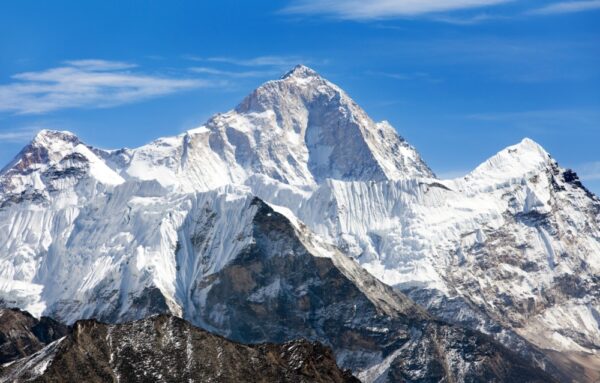
One of the great forgotten trekking routes of Nepal, the strenuous two-week march straight to the base camp of the world’s fifth-highest mountain, the daunting Mt Makalu (8,463m) will delight those who revel in tranquil mountain trails, a sense of being off the beaten path and, most importantly, awesome mountain views.
The name Makalu is derived from the Sanskrit, Maha Kala, which is a name for the Hindu God Shiva. When you stand at base camp and stare up at Makalu you could feel as if you’re in the presence of the gods.
A combination of logistical problems, the difficulty of the trekking and the lack of side routes and connecting trails means that only a few hardy groups come out this way. Most leave with the smug smile of people who’ve just experienced the magic of an older, more dramatic corner of Nepal. This is definitely a trek for the discerning walker.
Almost all of the (very few) people who trek Makalu take a simple up and down route along the same path. For those with plenty of time and stamina, and who are very well-equipped with a full, experienced expedition-style support team, there are wildly exciting treks to Kanchenjunga or even Everest.
A vast and little-known area of western Nepal, Dolpo is a magical region of frozen desert, piercing blue skies and unnamed peaks. There are hidden monasteries stashed with treasures, yak caravans passing along the old salt trade routes to Tibet, high passes where the air is so thin it pierces the lungs, snow leopard tracks and stone walled villages seeming to blend into the mountain slopes.
Perhaps no other region in Nepal offers such scope for wild adventure as Dolpo. Few foreigners walk the trails here and in many cases there’s still a sense of blazing your own routes — especially when undertaking the epic month-long walk from Dolpo to Jomsom (or Upper Mustang) along the roof of Nepal.
Here, time is measured by the ripening of crops and the arrival of the first snows. You won’t find any trekking lodges, apple pies or crowded passes, but you will find scenery to make you gasp and people welcoming you with open arms.
There are, however, a few things to remember. Getting there, nearly always by small twin-prop plane, is difficult, expensive and unreliable. Most of the walks are demanding, long and high with no creature comforts and must be undertaken with an organised camping group. Lastly, permits are complicated and expensive to obtain. But if you have the stamina, patience and finances, Dolpo will leave you enchanted.
Among my favourite highlights in the Dolpo region are Phoksundo Lake, Nepal’s most beautiful lake and the valley of Do Tarap where time really seems to have stood still.
In terms of development, the far west of Nepal comes at the bottom of almost every list, but for adventure and wonder, the region is near the top of the class. This is a landscape of deep, dank forests, sparkling sheets of water, lonely ice and snow-covered mountains, narrow canyons and ancient villages.
Just entering a village out here is a cue for a memorable cultural exchange. So few trekkers come here that people will fall over themselves to try to talk to you and invite you into their homes for a restoring cup of tea. Accept these invitations with gratitude. They’ll make for some of your fondest trekking memories.
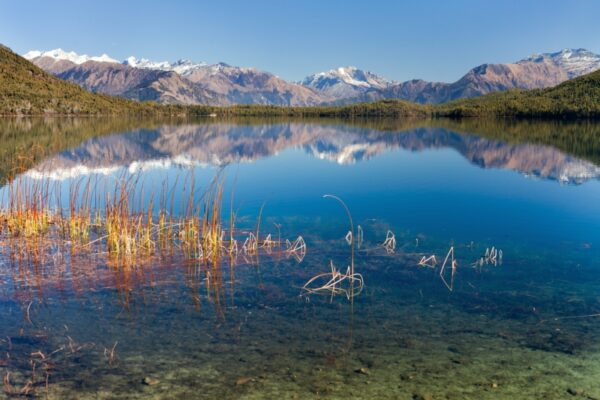
On the Rara Lake trek, the focus isn’t so much on the high mountains (though these are always the backdrop), but rather on unhurried village life and the variety of ethnic groups found along the way. The thick forests that surround the lake provide a home to musk deer, black bears and other wildlife. The area around the lake is a national park with few signs of human habitation and there are some delightful wild camping spots. This is a genuine wilderness trek.
Note: For a trekker, western Nepal offers many challenges and logistical nightmares, but the payback is a vast swathe of untouched mountainous country waiting to be explored. You need patience and to be on a fully supported camping trek, but if you’re looking for something truly different then the far west of Nepal will probably suit.
Way out in the east of Nepal a wall of rock and ice rises up over eight and half kilometres into the sky. This is Kanchenjunga and at 8,586m it’s the third highest mountain on Earth. The hike to the base camp of this daunting peak is one of the most exciting treks in Nepal.
Over a couple of weeks you pass through pretty farming villages with terraced hillsides, through sub-tropical river valleys and misty, old-growth coniferous forests, and then across Alpine tundra until you come face-to-face with the glaciers and fluted peaks of the Kanchenjunga massif.
As a trekking destination, Kanchenjunga is little known and the number of visitors tiny compared to the numbers who pace the Everest and Annapurna trails. It’s this peace and quiet that is perhaps its biggest draw.
The distance from Kathmandu and the unrelenting up and down terrain means that very few people trek out here, although it is becoming more popular. Between October and November and March to April, very basic herders’ teahouses and village homestays are available along most of the route. At other times, most tend to be closed and you will need to be fully self-sufficient with camping gear and food.
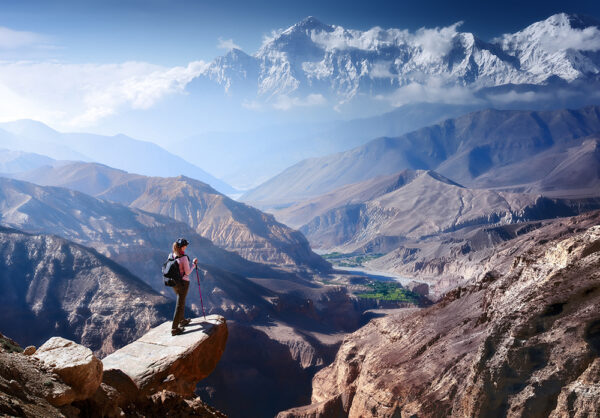
North, beyond the highest Himalayan peaks, is Upper Mustang. This is a high-altitude desert of multi-hued gorges, green oases, fairy-tale gompas, prayer flags and blood red fortified monasteries. This is a land so rich in traditional Tibetan Buddhist culture that it can often feel more classically Tibetan than the modern Chinese region of Tibet itself.
Mustang doesn’t have the same awe-inspiring close-up views of the mountains as many of the other main Nepalese trek areas, and walking here is as much a cultural experience as a mountain one. With classical Tibetan Buddhist culture severely restricted in Tibet itself, Upper Mustang is now one of the best places to see it flourishing. But take note: Traditional life is changing here too, thanks to increased road construction and development.
Often visible from Kathmandu city centre, the Langtang range offers the most accessible trekking in Nepal. If the city pollution and traffic wasn’t so off-putting, you could start walking from your guesthouse straight to the mountains.
This accessibility, easy-to-follow trails and lots of lodges has meant the Langtang Valley has always been, alongside Everest and Annapurna, one of the big three trekking areas.
The basic Langtang Valley hike takes eight days including travel time from Kathmandu, but add in another couple of days for side trips from Kanjin Gompa: this small village might be the official end point of the Langtang Valley trek but in truth this is where the fun really starts. Numerous day and overnight trips fan out from the village. You can make the almost obligatory hike up to the Kyanjin Ri viewpoint (4,600m) for sensational views, or have a rollicking day’s adventure to the glaciers and yak pastures of the Lirung Valley.
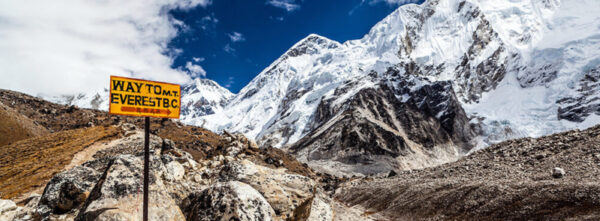
Mt Everest, (8,848m) the highest mountain on Earth, exerts a magnetic pull on trekkers, mountaineers and armchair adventurers alike. The main trekking routes around Mount Everest – most obviously Everest Basecamp (EBC) – can be busy and over commercialised, but for sheer awe nothing comes close to the trails threading through the Khumbu, the area around Everest.
Most Nepal trekking first timers will be coming for Everest Base Camp and I wouldn't begrudge them a thing. But for my money, the best trek in this region is the Gokyo Lakes trek: with scenery every bit as spectacular as that on the Everest base camp trek but with far fewer crowds, this trek, which leads to a series of high glacial blue lakes, is arguably one of the best in Nepal.
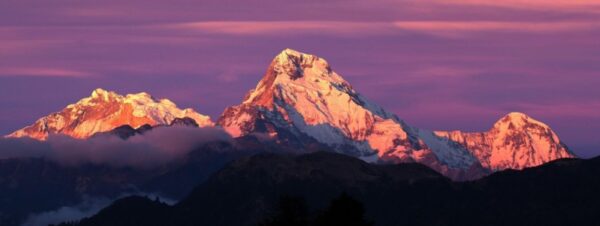
The famed Annapurna range is one of the great trekking regions of the world, and for a very good reason: The mountain scenery here is guaranteed to blow you away. Standing in the heart of the cirque at the end of the Annapurna Sanctuary could move you to tears, and the wilderness around Tilicho Lake will probably be the best mountain scenery you’ll ever lay eyes on.
The inevitable downside: it's popular and busy, especially during high season. If crowds and communal teahouse lodges aren't your thing, look elsewhere. Trekking culture is changing fast, too. The end of independent trekking and road construction are changing the face of the region, and not always for the better.
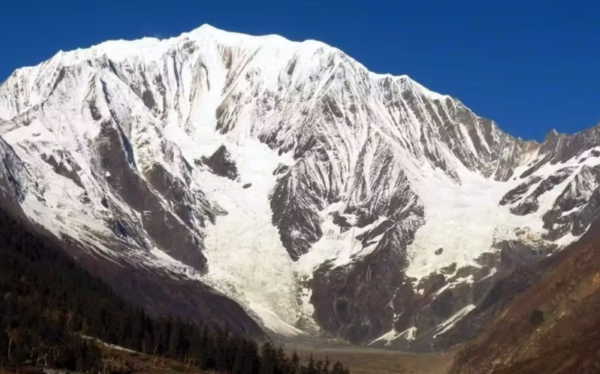
The hiking trails around mighty Manaslu (8,156m), the world’s eighth-highest mountain, have it all. Trekking in Manaslu takes you through steamy lowland valleys and fields of rice which give way to ice-coated passes stalked by leopards.
When people ask me for my most recommended trek, my usual answer is the Manaslu Circuit. It's arguably one of – if not the – best trek in the country; competing with Annapurna and Everest for the crown of amazing scenery and epic hiking but with a fraction of the crowds. There are trekking lodges all along the standard routes in Manaslu but for now, they are a lot more primitive than those on the Everest and Annapurna treks. Getting to the trailheads in this area is easy and cheap with frequent public transport from Kathmandu and Pokhara.
I've hiked through mystical valleys rich in Tibetan culture and seen monasteries stuffed with treasures. There's some exhilarating walking with relatively few other trekkers and exciting day-long side trips to glaciers, base camps and hidden gompas. The Manaslu trekking region didn’t open up to foreign trekkers until the early 1990s ( the neighbouring Tsum Valley opened even later), but it was an instant hit with those wanting a challenging and less developed trekking area. Anyone who has walked in the shadow of Manaslu will probably tell you that overall, this is one of the most rewarding Nepal trekking areas.
Difficulty: Easy to moderateDuration: Eight daysMax elevation: 4,065 metresAccommodation: Tea house/trekking lodgesStart/end point: Dhap to Phaplu
This newly opened route in the Everest (Khumbu) region leads to Pikey Peak, which was regarded by Sir Edmund Hilary to offer the very best view of Mt Everest. Despite this claim to fame, Pikey Peak is hardly-known on the mainstream trekking circuit, drawing a fraction of the visitors who trek out to Everest Base Camp (from which you can't even see the famous mountain!)
It's also an easy and relatively short trek for the Everest region, so I often recommend this one to guests who are keen on seeing Everest, but either don't have the time or the confidence to do one of the more challenging Everest treks.
Difficulty: ModerateDuration: Three to four daysMax. elevation: 2,500m Accommodation: Teahouse lodgesStart/end point: Pokhara
This is one of my favourite alternative treks in the Annapurna region. Don't worry if you've not heard of it – most visitors haven’t, which means you’ll enjoy largely crowd-free trails while ascending to magnificent viewpoints at a maximum altitude of just 2,500 metres.
A highlight of this route is the way it begins: you’ll depart directly from the lakeside in Pokhara, boarding one of the city’s colourful boats to reach the opposite shore of Phewa Lake. Your destination on this four-day route is the hill station of Panchase, and you’ll pass through a number of charming Himalayan villages to get there. All told, this is a great Annapurna trek where you won’t have to worry about a long haul on dusty roads. I often recommend it for an acclimatisation trek before embarking on one of the longer and higher altitude main routes.
Difficulty: StrenuousTrek duration: 21-30 daysMax. elevation: 5,550mAccommodation: CampingStart/end point: Juphal/Jomsom
You want adventure? Here it is: The epic three to four-week long Dolpo to Jomsom or Upper Mustang trek. Starting from the airstrip at Juphal head north to Phoksundo Lake (you can also go via Do Tarap), over the Sehu La (5,160m) to Shey Gompa and then east, up and over several massive 5,000m-plus passes, through desolate high-altitude desert. The only other people you’ll meet will be the occasional herder with his flocks, or a yak caravan and trader returning from Tibet. There are one or two tiny villages along the way. Almost completely cut off from the rest of the world, this is a fascinating insight into old Tibetan culture.There’s no set route and any company offering this trek will largely create their own. Make sure they have guides who know the area. The route to Jomsom takes you into the shadow of mighty Dhaulagiri and is the slightly shorter walk (three weeks all in). It also doesn’t require quite as many restricted area permits, which makes it a little cheaper. The more rewarding route though would take you up along the border of Tibet to Lo Manthang in Upper Mustang, and from there back down to Jomsom. Allow a month for this walk. You will need the Inner Dolpo and the Upper Mustang permits.This trek is a true expedition and should not be attempted by inexperienced trekkers.
Best trek for: Soft trekking in styleDifficulty: EasyDuration: Six daysMax elevation: 2,015mAccommodation: luxury lodgesStart/end point: Lumle/Phedi
If you shudder at the idea of overnighting in a wooden room no larger than a prison cell, with the single shared toilet located down a hallway echoing with the thunderous snores of a two-dozen unwashed trekkers (or even worse; a tent!), then you might want to consider a luxury trekking itinerary in the Annapurna foothills. You’ll avoid the discomfort of high altitude and can focus on lovely days spent wandering village trails, safe in the knowledge that a hot shower and happy hour awaits you at the end of the day.
Ker & Downey operates a string of lodges in the foothills north of Pokhara, allowing you to link the Gurung villages of Dhampus, Ghandruk, Majgaun, Landruk and Birethanti in a five or six day loop, with fine views of iconic fish-tailed Machapuchare never far away. This is trekking in style.
Best trek for: Expedition style campingDifficulty: ModerateDuration: Five to six daysMax elevation: 4,050mAccommodation: campingStart/end point: Tatopani/Sandhi Kharka
New trek routes always get my pulse racing, especially when they follow in the footsteps of a famous old expedition route. This particular trek follows the expedition route of Maurice Herzog’s epic 1950 ascent of Annapurna I (8,091m), the first ever ascent of an 8,000m peak, and it takes you up to an amazing mountain amphitheatre ringed with 7,000m peaks.
Unlike the busy base camps of the popular Annapurna Sanctuary trek, this ‘alternative’ Annapurna Base Camp trek is a true hidden gem that sees only a trickle of well-informed trekkers, largely because you need to camp and be self-sufficient. There are no lodges here and definitely no apple pie.
The trek starts at Tatopani, veering off the Annapurna Circuit to make a dramatic, sphincter-tightening jeep ride up the wild, sheer-sided gorge of the Mristi Khola. The walking starts at the hydroelectric plant at Hum Khola Dovan (2,880m), with overnights at Sandhi Kharka and Bhusket Mela (3,550m), until you finally set up camp in the astounding glacial basin of Narchang Lake (4,050m). This secret spot, surrounded by Annapurna I, Fang, Tilicho and Nilgiri peaks and walled off by the Great Barrier of the Annapurnas, is a classic mountain cul-de-sac, surrounded by glaciers, waterfalls and vertical rock walls.
The opportunities for day hikes here are fabulous, with faint trails leading to Annapurna North Base Camp, Advanced Base Camp and Nilgiri Base Camp via some epic glacier viewpoints. Bring a copy of Maurice Herzog’s classic 1951 Annapurna, and spend the evenings reading his account of the groundbreaking ascent and even more harrowing descent. It’s a day’s walk back to Sandhi Kharka and then half a day to meet your jeep and make the wild ride back.
Best Trek For: Short trek with great viewsDifficulty: ModerateDuration: Five to six daysMax elevation: 4,250m-4,500mAccommodation: simple lodgesStart/end point: Khare (Kande)/Sidhing or Landruk
Do you want a taste of the Annapurna region – forests, hillsides of rhododendrons, airy ridge walks and close-up views of big peaks – but can’t afford more than a week? If yes, then I think the Mardi Himal trek might just be for you.
It’s very accessible (less than an hour by bus or taxi from Pokhara), well signed, and the trail will take you past everything from Gurung villages to high Alpine ridges. Not so many foreign trekkers make it here but the lodges are decent (though not as comfortable as other parts of the region). It’s popular with Nepali trekkers, though, so avoid weekends if you can.
The first day or two take you past Australia Camp and the village of Pothana up through the forests of Pitam Deorali to teahouses at Forest Camp, but before long you’ll find yourself above the treeline at Low Camp (2,985m) and then High Camp (3,550m), where the views of fish-tailed Machapuchare, Himchuli and the Annapurnas really open up. Pray for good weather for the amazing final hike from High Camp up to Mardi Himal ‘Base Camp’ West for views of peaks that seem within reach, before returning to Low Camp. From here return to jeep access roads at Sidhing, Galel or Lwang, or hike from Forest Camp to the road at Landruk.
If you are fit (and, crucially, acclimatised) the trek can be done in four days, though five to six is more likely. For an excellent 10-11 day trek link Mardi Himal with the Annapurna Sanctuary route via Landruk.
Difficulty: ModerateTrek duration: Two weeksMax. elevation: 3,842mAccommodation: Camping onlyStart/end point: Syabrubesi/Tripura Sundari
Named after Ganesh, the elephant-headed Hindu god of fortune, Ganesh Himal lies directly between the Manaslu and Langtang ranges, and is one of the great unknowns of Nepalese trekking. With stunning mountain scenery, attractive and welcoming villages, hot springs, waterfalls and a genuine sense of being well off the beaten track, the Ganesh region really has a bit of everything — except crowds of other trekkers.
A handful of homestays and trekking lodges have started to open up, but for now the trails are still largely empty. Because formal accommodation is still so scarce, an organised camping trip is the best way to tackle this trek.
There are a couple of different trekking routes in the Ganesh region which you can access from Manaslu and the Tsum Valley in the west, but the standard trail starts from Syabrubesi and follows the Tamang Heritage Trail to the gorgeous village of Gatlang before crossing the Pansang La pass (3,842m).
Best trek for: Quieter, less-crowded routeDifficulty: ModerateTrek duration: Five to six daysMax. elevation: 3,660mAccommodation: Camping and limited trekking lodgesStart/end point: Ghorepani/Tadapani
Also known as the Khopra Danda trek, this is well off the standard Annapurna trekking routes and offers a low-key, peaceful trek to lofty viewpoints on the flanks of Annapurna South. There are a number of different route variations but my favourite branches off the Poon Hill trek at Tadopani and climbs to lodges at Bayeli (with its amazing Mulde viewpoint), Chistibang and then Khopra Danda, before descending to Swanta and Ghorepani
The trails pass through charming villages with simple private and community lodges and lots of pretty forests. Khopra Ridge itself is an impressive dome with an exposed trail running along it that feels much higher than it really is (especially when covered in snow). The views across to Dhaulagiri I (8,167m) are unforgettable. From the ridge it’s possible to make a very long and challenging 10-hour day trip to the high altitude Khayer Lake (4,600m). Given the 1,000-metre height gain in a day, plus the beauty of the lake, it’s much more advisable to go on an organised camping trek and sleep on the lake shore.
Difficulty: ModerateTrek duration: nine to 11 daysMax. elevation: 3,480mAccommodation: CampingStart/end point: Jumla
The focus on the trek to Rara Lake isn’t so much on the high mountains (though these are always the backdrop), but rather on unhurried village life and the variety of ethnic groups found along the way. The thick forests that surround the lake provide a home to musk deer, black bears and other wildlife. The area around the lake is a national park with few signs of human habitation and there are some delightful wild camping spots. This is a genuine wilderness trek.
Best trek for: Getting well off the beaten pathDifficulty: Moderate to difficultTrek duration: Seven to nine daysMax. elevation: 5,320mAccommodation: Camping and basic trekking lodgesStart/end point: Koto/Ngawal
Most Annapurna Circuit trekkers heading through the village of Koto won’t know that a trail off to the east leads to a magical, hidden world. The Nar and Phu valleys were closed to tourism until 2002 and when they finally opened up the first trekkers discovered a landscape of narrow gorges, 7km high mountains, timeless stone villages festooned with prayer flags, and a distinct local culture based on yak herding and trade with neighbouring Tibet.
Still rarely trekked (a restricted area permit and camping gear is required), the route follows a dark, deep and shady gorge up to the mediaeval village of Phu, which consists of around 40 or 50 mud and stone houses and red painted monasteries huddled together on the top of a hill. Entry to the village is via a spectacular old gateway.
It’s worth allowing a couple of nights in Phu to explore the upper valley. To leave, you have to retrace your steps halfway back down the valley before veering west up the Nar valley, over yak pastures to the large traditional village of Nar where there are four gompas (Buddhist monasteries) worth visiting. Independent trekkers relying on lodges will probably have to turn back here and retrace their steps to Koto, but camping groups and acclimatised trekkers can make the exciting crossing of the Kang La (5,320m) down to Ngawal back on the Annapurna Circuit.
This trek works well either as an add-on to the Annapurna Circuit or as a short, stand-alone trek in its own right. For adventurous trekkers with all the correct permits on fully-organised camping treks, it’s possible to take a wild, difficult and very rarely walked route from the village of Nar into Upper Mustang via the taxing Teri La Pass (5,595m).
Difficulty: Very strenuous. Borderline mountaineeringTrek duration: Minimum 21 daysMax. elevation: 6,143mAccommodation: Camping; very basic herders’ tea houses, trekking lodgesStart/end point: Num/Lukla
One of the most challenging treks in this book is the Makalu to Everest traverse via the very high passes of Sherpani (6,135m), West Col (6,143m), Baruntse Base Camp (5,700m) and Amphu Laptsa (5,850m) before descending into the Everest region at Pangboche. You should allow a minimum of three weeks for this trek and a lot more if you want to explore the Everest region in depth. You will need full expedition equipment, an experienced team, mountaineering experience and to be prepared for many nights’ camping above 4,500m.
Difficulty: StrenuousTrek duration: 18 daysMax. elevation: 4,550mAccommodation: CampingStart/end point: Cahinpur
This very remote trek leads through pristine conifer forest to the base camp for Saipal (7,031m), western Nepal’s highest mountain. This is possibly the quietest trek listed in this book and any agency offering this will probably have their own variation of the walk.
Difficulty: Very strenuous and dangerous. People have died attempting this crossing.Trek duration: Four days from Kyanjin GompaMax. elevation: 5,106mAccommodation: CampingStart/end point: Kyanjin Gompa/Tarke Ghyang
The most challenging and dangerous trek in the Langtang region is the crossing of the high (5,106m) Ganj La pass, which links Kyanjin Gompa at the head of the Langtang Valley with Tarke Ghyang on the Helambu Circuit.
This should only be attempted by very experienced trekkers with a good support team. You will need camping equipment, a guide who knows the route well, ropes, ice-axes and crampons.
If you're trekking in Nepal for the first time, chances are the classic Everest Base Camp trek is on your radar. But for anyone with the time (and fitness), I often recommend this as a fine alternative.
The trek follows the Everest base camp trail for the first couple of days to Sanasa, a half day walk beyond Namche Bazaar. From here, while the masses plod towards Everest, Gokyo trekkers skip up the Dudh Kosi valley. Forested at lower levels, the valley becomes increasingly forbidding as it passes herders’ camps and yak pastures and enters a realm of moraine and ice circled by looming peaks.After about eight days of hard walking you’ll arrive at the Sherpa village of Gokyo with its end-of-the-world feel. Along the way, you’ll ascend Gokyo Ri for stunning views of Everest before crossing the typically snow-covered Cho La Pass. The trail then descends through a breathtaking valley, arriving at Lobuche and continuing to EBC. To top it off, a climb up Kala Pattar provides iconic views of Everest before you return to Lukla via the classic EBC trails.
Do note, however: this route is even more demanding than the already formidable EBC trek – it demands respect, preparation and proper acclimatisation. In this route we have 15 days of walking, with an extra three days for acclimatisation, rest and contingency.
Surpassed only by the Annapurna Circuit in Nepal trekking lore, the Everest Base Camp trek carries ultimate bragging rights – even if that means coming with some commercialised baggage.
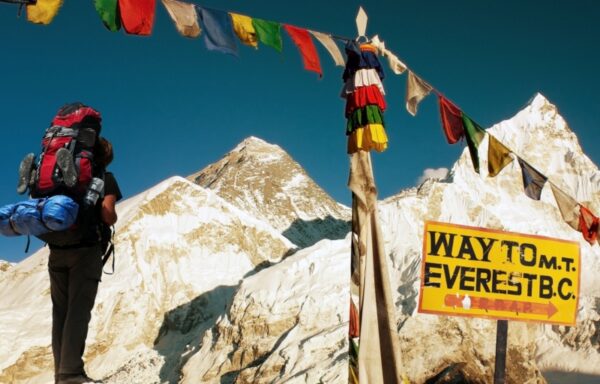
This is the classic Everest Base Camp itinerary. It follows good trails with moderate daily distances which, at more reasonable altitudes, would make for an easy-going hike. But here, at the foot of the tallest mountain on earth, even easy trails present a challenge. The EBC trek is famous and popular, but it demands respect. In this itinerary there are essential (non-optional) acclimatisation days, but no side treks or rest days. If you have more time to spare you may find some of the other Everest routes to be more interesting and less crowded.
Whatever you choose, the challenge is well worth it and this is guaranteed to be a high point – quite literally – in your lifelong memories.
This route combines two of Nepal's classic treks, the Annapurna Sanctuary and the Poon Hill Sunrise trek.
We prefer to structure the route with the Poon Hill sunrise first, before descending to join the traditional route up to Annapurna Base Camp via Machhapuchhare Base Camp.
The great thing about this route is its flexibility. You can add a few days' trekking and side routes along the way, around the Modi Khola Valley, or head out to Ghandruk and Birethanti.
This route has 10 days of hiking with a few days' padding for essential acclimatisation and rest.
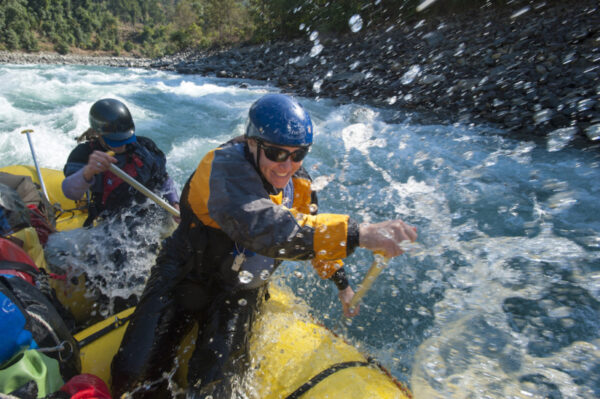
For most adventure seekers, trekking in Nepal is the singular focus. But for some real white knuckle thrills you need to hang up your boots for a 2,900m mountain bike descent, followed by a raft to navigate the grade 3-4 rapids of the Kali Gandaki river, wild camping on the riverside along the way. We designed this itinerary as a truly radical Himalayan adventure that you won't find with most retail trekking operators. This is as action-packed as it comes.
Very few visitors make it out to Mustang; indeed foreigners were forbidden for many years. But I find trekking in Upper Mustang a world apart to the rest of the country; here it's less about the awe-inspiring scenery of most Nepal treks and more of a cultural experience.
This route is for intrepid travellers with good fitness and previous experience at high altitude. You'll experience Tibetan culture and small villages, see unique rock formations and arid cliffs, as well as the legendary walled Lo Manthang.
As Mustang isn’t affected by monsoons, this trek is possible year-round.
The Manaslu Circuit, probably my single favourite route of all the major Nepal treks, has become established as the discerning trekker's alternative to the wildly popular and sadly spoiled Annapurna Circuit.
This route involves some of the best mountain walking in the world. The route features some tough days, but with stupendous views of Himalayan peaks as well as opportunities to experience villages with unspoiled Tibetan culture.
Bear in mind though that although the Larkya La is a little lower than similar passes on the Annapurna Circuit or Everest base camp treks, this is generally harder and facilities are much more basic than on the other two. Don’t expect apple pie and wi-fi at the end of the day.
Your details are safe and will not be used for any other purpose. By using this service you agree for us to share your details with your chosen tour operator according to our Privacy Policy.
1Your trip
2Complete your request
3Meet your specialist
Find a Nepal specialist
Tell us about your trip and we'll find your match
We'll connect you directly with the experts.
Connect with Sonam, Niraj Shrestha and 4 other Nepal specialists.
We'll connect you directly with the experts.
Connect with Sonam, Niraj Shrestha and 4 other Nepal specialists.