





West Island Way
Scotland's top long distance walks and trails

Another lesser-known Scottish walking trail, the West Island Way around the Isle of Bute in the Firth of Clyde boasts secluded beaches, a range of wildlife, and a generally flat profile.
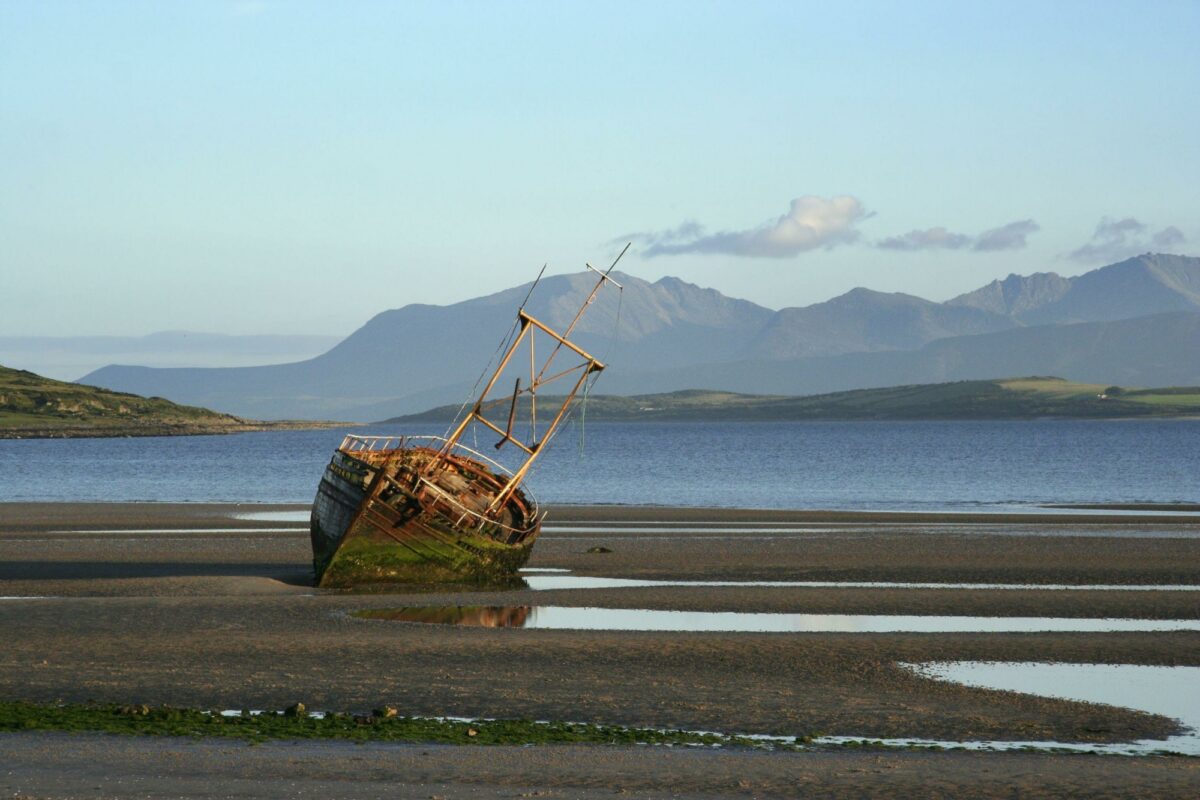
Bute's Ettrick Bay with the Isle of Arran in the background
West Island Way
Distance: 30 miles (48km)
Duration: 2 to 4 days
Start point: Kilchattan Bay, Bute
End point: Port Bannatyne, Bute
Difficulty: Generally suitable for inexperienced walkers, although some sections are strenuous and rough
Suitable for: All levels
Early settlers were drawn to the small, relatively sheltered and productive land on the island of Bute where there are more Neolithic chambered cairns per area than anywhere else in Scotland. Christian missionaries also came, using the island as a gateway to the mainland.
The mainly off-road, well signposted, West Island Way can be completed by the fitter walker in two days, though it is recommended to allow four shortish days for the best experience. As it is a linear walk, with a north and south loop, the local bus service is ideal for the return to the main ferry town of Rothesay.
The principal connection to the island is by car and passenger ferry from Wemyss Bay which is served by direct train from Glasgow's Central Station. If you are flying into Glasgow Airport you can also take the train from Paisley station. The ferry crossing takes half an hour with very regular sailings. Tickets can be bought at the ferry terminal.
West Island Way route
The route crosses diverse landscapes from rocky headlands, seashore and sandy beaches to moorland, farmland and forest. Most of it is level though there is a high moorland section on Day three between Rhubodach to Port Bannatyne which can be boggy, especially in the winter and after long periods of heavy rain. For that reason, as for all west Scotland walks, the optimum months are May, early June and September when the days are warmer, the climate more stable and also when the biting midges are scarcer than in the main summer period.
Accommodation on Bute is limited away from Rothesay and one is strongly advised to pre-book the available hotels, guesthouses and B&Bs. An alternative to finding accommodation away from Rothesay is to base oneself there and stick to day hikes, returning at the end of your day's walk by bus or taxi.
To get to the start point at Kilchattan Bay one can use the hourly bus service which leaves from Rothesay's main square opposite the ferry terminal. This excellent 5-mile (8km) loop has fantastic views across the Firth of Clyde to the island of Arran and the unmistakable domed mound of Ailsa Craig in the distance. Basking sharks may be seen, as from other parts of the Bute coastline too.
Throughout the West Island Way the common wildlife you may see includes foxes and roe deer with peregrines, buzzard and raven overhead.
A good diversion on day three is the walk from Ettrick Bay to St Michael's Chapel (8 miles/ 13km return). The road passes sweeping sands and a lovely tea-room for approx. 2 miles, past a collapsed chambered cairn called Saint Michael’s Grave with an uninterrupted view down the Kyles of Bute to Arran. It’s a fine place to relax and perhaps hear a cuckoo call. Continuing, the path leads to the remains of medieval St Michael's Chapel, where a stone altar and aumbry recess survives.
The West Island Way isn’t widely offered by walking holiday companies, but a good specialist should be able to put together an itinerary for you. In the absence of dedicated baggage transfer companies you may be able to organise luggage transport through your B&Bs or via a local taxi company. Alternatively, base yourself in Rothesay and just walk each section as a day hike.
West Island Way day by day
Day 1: Kilchattan Bay Circular (5 miles/ 8km)
Day 2: Kilchattan Bay to Port Bannatyne (11.5 miles/ 18.5km)
Day 3: Port Bannatyne to Rhubodach (8.5 miles/ 14km)
Day 4: Rhubodach to Port Bannatyne (5 miles/ 8km)


About the author
Fergal MacErlean
Dublin-born Fergal fell in love with Scotland as a student, settling there to become a journalist and cycle guidebook writer. In addition to his guides covering Scotland, he has written for the BBC, New Scientist, BBC Countryfile Magazine and many travel publications. Andalusia is a second home.



Find a Scotland specialist
Tell us about your trip and we'll find your match
We'll connect you directly with the experts.



We'll connect you directly with the experts.
- Hand-picked local specialists
- Honest advice from real experts
- Free to use, no hidden fees