










Sherpa Expeditions [Walker's Britain] organised my recent self-guided Coast to Coast trek All the arrangements went seamlessly, and the route notes and maps provided were extremely comprehensive and tailored to my itinerary. All my pre-departure questions were answered promptly and to my satisfaction. I absolutely recommend Walker's Britain and I will be using them again in the future. Thank you so much!
Isle of Wight coastal path
An expert guide to walking the Isle of Wight coastal path

As a long distance walk, the Isle of Wight coastal path is quite short but it provides an opportunity to walk right round the shoreline of England’s largest island.
You might find that on return to the start point there’s great satisfaction in completing an island’s circumference, regardless of the length!
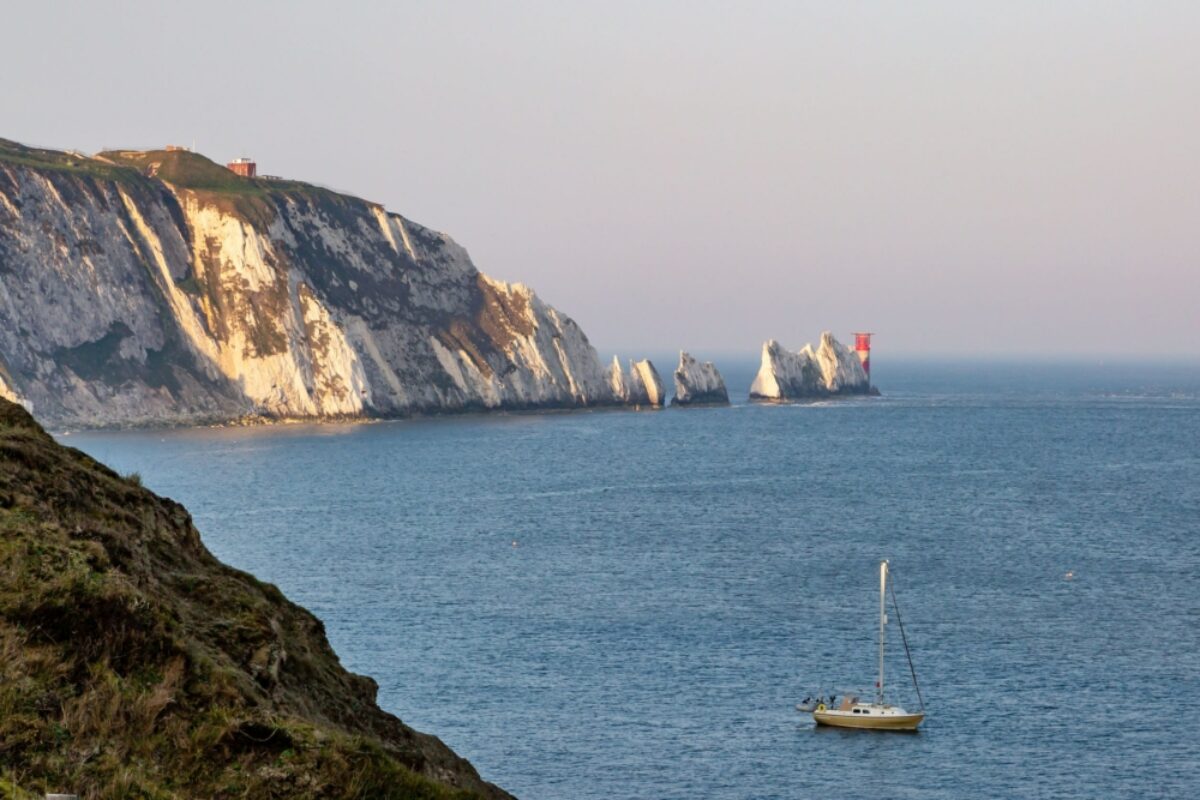
The Isle of Wight's classic view across Alum Bay to the Needles chalk stacks
Walking the Isle of Wight coastal path
The Isle of Wight trail
Distance: 70 miles/113km
Duration: 4 – 6 days
Start point: It’s a circuit – but any of the ferry terminals make most sense
End point: Wherever, it’s a circuit, see above!
Difficulty: Moderate with a few gentle cliff climbs
Suitable for: Seascape admirers and those who like a sense of achievement
Along the way, the Isle of Wight offers a surprisingly varied sequence of landscapes, including jagged chalk headlands, long sandy bays, salt marshes and estuaries. There are certainly no boring stretches on this route.
Many islanders are keen walkers and many visitors try at least part of the coast trail. This means the local authority keeps the path well maintained and signposted. It also means you are likely to see other walkers at any time, especially round Tennyson Down and the Needles. Nevertheless the round-the-island walk is generally less crowded than mainland coastal trails simply because it’s harder for most people to get there.
Isle of Wight Coast Path route
It’s a circular route of course so walkers could start anywhere and it may depend on your accommodation plans.
Most walkers will arrive by ferry and so the terminals make sensible start and end points.
The choice of clockwise or anti-clockwise is entirely down to personal preference. Similarly, the time of year is a personal choice. Summer brings more people but better chances of good weather; winter storms could make a coast walk very memorable or spoil your day. Generally the Island has a mild climate and the north coast is particularly sheltered.
It makes sense to check the dates of occasional round-island walks and races before committing. Even major yachting events like the Round-the-Island race could make a big difference to the walk, either positive or negative depending on taste, and also affect availability of accommodation.
Isle of Wight coastal path sections
Wherever you start it’s useful to know what each section of the walk is like:
Day 1: Cowes to Yarmouth (16 miles/26km)
Heading along the sheltered north coast with views across the Solent and its busy waterways to the mainland. Highlights include Newtown Nature Reserve and panoramic views at the delightful coastal village of Gurnard.
Day 2: Yarmouth to Brighstone (14 miles/23km)
This is probably the most spectacular day on the route. Savour amazing seascapes including Alum Bay, the Needles and the south coast ‘chines’ or valleys. Note Tennyson’s grand home at Freshwater too.
Day 3: Brighstone to Niton (8 miles/13km)
Another inspiring day, now walking along the south coast of big chalky cliffs, grand sea views and rolling grassy downs.
Day 4: Niton to Sandown (9 miles/14km)
A chance to explore Ventnor’s Victorian charm and free botanical gardens, then stroll along Shanklin and Sandown’s classic seaside promenades.
Day 5: Sandown to Ryde (12 miles/19km)
Continue up the east coast tackling a fascinating sequence of seaside resorts, wild cliffs, sandy bays and yachting harbours.
Day 6: Ryde to Cowes (8 miles/13km)
Head back along the north coast through attractive wooded shores to photogenic Wootton Creek, then passing Queen Victoria’s favourite home at Osborne House to descend back into the bustling yachting centre of Cowes.
Need-to-know
Arriving at the route’s start point will usually involve a ferry trip for most walkers. The available ferry routes for vehicles and pedestrians are: Portsmouth to Fishbourne, Southampton to East Cowes and Lymington to Yarmouth.
Additional pedestrian-only ferries are: Southampton to West Cowes, Portsmouth to Ryde and Southsea to Ryde.
The best route can depend on your route to the south coast and where you plan to stay on the island. Accommodation should not be a problem; there aren’t any wilderness areas although there are some largely rural stretches. As a holiday destination the choice should cover everything from nice boutique hotels to campsites and B&Bs.
Hidden Gems
Walkers pass through to one of the Island’s great ‘secret’ locations: Steephill Cove near Ventnor. The tiny classic bay with its semi-circle of pretty old fishing huts and cottages can only be reached on foot. Look out for the seafood pasty stall.
About the author
Daniel McCrohan
Daniel is a prolific guidebook writer who divides his time between exploring Asia for Lonely Planet and Britain for Trailblazer. As well as writing close to 50 guidebooks for Lonely Planet, he has worked on more than a dozen Trailblazer walking guides, and has hiked and camped his way across many parts of the UK, China, Mongolia and India.
Talk to a The United Kingdom expert
Describe your trip and we'll connect you with a vetted local specialist
Our The United Kingdom travel partners

Customer reviews
Why we're different
- Hand-picked local specialists
- Honest advice from real experts
- Free to use, no hidden fees
Your details are safe and will not be used for any other purpose. By using this service you agree for us to share your details with your chosen tour operator according to our Privacy Policy.