Best times to climb Kilimanjaro
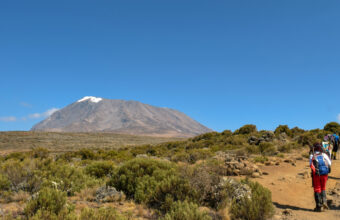
Kilimanjaro, along with the rest of East Africa, gets two rainy seasons: the “long rains” from March to May and the “short rains” around October to November. You can climb Kilimanjaro year round but the dry seasons – late December through to late March and late June to the end of October – are more pleasant conditions for trekking and camping. That said, even during the rainy seasons you can expect short bursts of heavy rain rather than day-long showers.
If you’re coming in the rainy seasons, the Marangu hut-to-hut route has obvious appeal during wetter months. And the Rongai route, being mostly in the mountain’s rain shadow on the northern slopes, usually receives less rainfall than the others.
In terms of the best overall time to trek Kilimanjaro, the shoulder periods towards the end of each rainy season, i.e. early May and early December, bring fresh conditions and fewer crowds.
Why cheap is expensive on Kilimanjaro
Lots of people come to Kilimanjaro looking for a low budget trek, in a way you’d never dream of in other serious high-altitude trekking regions like Nepal or Peru. There are lots of local and international operators, creating downward pressure on prices which might seem like a great deal for travellers, but this is a serious endeavour and penny-pinching rarely works out well.
The first casualty is pacing and acclimatisation: lower cost treks, especially on the Marangu route, try to race up and down in five days. It’s simply too fast, you won’t acclimatise properly, and failure rates can be as high as 70%. Adding extra days may cost another few hundred dollars, but consider the disappointment of a failed summit attempt and it seems worth the extra cost.
Also it’s worth remembering cost savings on the cheapest trips must come from somewhere, and too often it comes from the welfare and treatment of the porters and support staff. Before you book anything, ask your operator how much they pay their porters and just as importantly, when they get paid: payments should not exceed 48 hours after the trek.
Question
Is there a minimum age for the Meru and Kilimanjaro treks?
Our youngest is 7 years old – we're all good hikers, including the youngest, what are the minimum ages?
Answer
There's no official minimum age for climbing Mt Meru, it just depends on the policy of each tour operator. Seven is usually fine, most would probably say 6 is the minimum, but if you do it as a private guided trek there's probably some flexibility. Kilimanjaro is a different matter – the official minimum age is 10, and some operators prefer 14.
Answered by
Frazier Msuya
Question
Are there any easier treks or hikes around Mt Kilimanjaro?
Answer
It's perfectly possible to hike around Kilimanjaro but not go for the summit.
My favourite is a two-day Kili hike, where you do the first part of the Marangu route, sleep at the Mandara Huts, hike as high as the Horombo escarpment on day two, and then go back down.
Along the way, you encounter narrow trails through the rainforest, amazing views of for example Mawenzi Peak and open moorlands with giant lobelias and groundsels. The ridged trail is narrow as you wander through the rainforest. It’s lush and misty, with the trees adorned with moss. The canopy overhead is alive with birdsongs and a colobus monkey or two.
The hike to the Mandara Hut takes four to six hours at a good walking pace, and it's possible to add a one-hour walk to the Maundi Crater to that. If you are lucky, you see tree hyraxes on the way and on a clear day, the views to the east over Taveta and to the northwest of Mawenzi Peak are stunning.
On day two you will see the glades of the rainforest and follow an ascending path on the open moorlands towards the Horombo escarpment. Views of Mawenzi and the summit of Kibo are amazing. Look for giant lobelias and groundsels. This hike up takes you three to four hours, then you go five to six hours back down again. You stop at the Mandara Huts for lunch, then hike back to the Marangu Gate where the walk ends and you drive back to the hotel.
Answered by
Robbin Meulemans
Question
Can you trek Kilimanjaro solo or without a guide?
Answer
No. All trips up Kilimanjaro are as part of an organised trek. You don’t necessarily have to be a part of a trekking group but you are obliged to take a guide and porters and the more people you can share these costs with then the cheaper it becomes. In fact, guides are either compulsory or near enough compulsory on all Tanzanian trekking routes.
Answered by
Stuart Butler
Question
How serious is altitude sickness on Kilimanjaro?
Answer
Altitude related health problems – which can be potentially lethal – are a real risk on Kilimanjaro. This is due as much to the great height of the mountain and because too many people ascend too quickly. This is why it’s very important to allow more days than the quickest tour itineraries suggest. Yes, it costs more but by taking things slower you have a far greater chance of success.
Answered by
Stuart Butler
Question
What are the accommodations on a Kilimanjaro trek?
Answer
The Marangu route is the only route that offers accommodation in very basic mountain huts. On all other routes only camping is allowed and then only in designated camping areas. Trek organisers will supply all camping equipment (the quality of which varies depending on how much your trip costs). On the Marangu route everyone must stay in the mountain huts and the beds are laid out dormitory style.
Answered by
Stuart Butler
Question
Is Kilimanjaro too touristy these days, are there any suitable alternatives?
Answer
As Africa’s biggest mountain and a very achievable “big” summit, Kilimanjaro has always been a popular trek. Is it too touristy? Well, that depends on perspectives and route taken. There are several different trails to the top and some are very quiet indeed. But, if you really want some peace and quiet, then nearby Mt Meru might be the one for you.
Answered by
Stuart Butler
Question
Is Kilimanjaro realistic for someone in their 60s who is pretty fit and active?
Answer
The main routes up Kilimanjaro involve no technical climbing and really involve nothing more than a long slog. There’s no reason why an older person (or young though, 10 is the legal minimum) of decent fitness cannot climb Kilimanjaro. The big thing to remember is that because of cost most trips are shorter than they really should be and many people get altitude sickness. It’s worth factoring in an extra day or so to allow for proper acclimatisation.
Answered by
Stuart Butler