





Alternative 'coffee route' hike to Machu Picchu
Hike the backroads to Machu Picchu

-
Cusco
Capital of the Inca
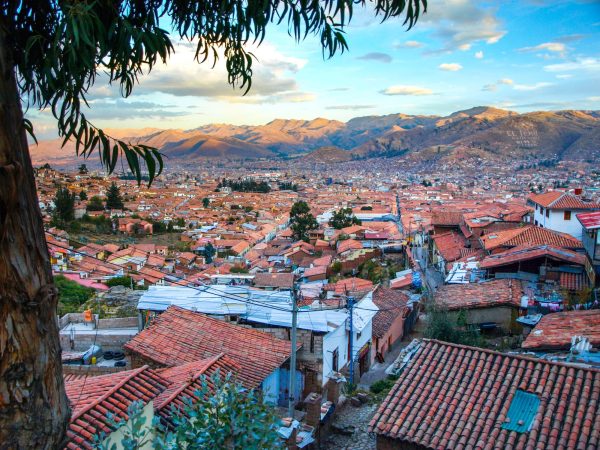
Once the capital of the mighty Inca Empire, Cusco is today the beating heart of Peru's tourism industry... -

Huacayupana
... -

Machu Picchu
Peru's archaeological rock star
Machu Picchu is the top attraction in Peru and, in 2007, was voted one of the New Seven Wonders of the World... -
Cusco
Capital of the Inca
Once the capital of the mighty Inca Empire, Cusco is today the beating heart of Peru's tourism industry...
In my opinion, Machu Picchu represents everything that needs to change in the tourism industry. The ruins are marketed as the "lost city" that you can "discover" like some sort of modern day Indiana Jones. But tell that to the people who've lived around these ruins for centuries. Why don't they feature in the Machu Picchu story – or benefit from the vast profits it brings to big tourism companies?
To answer some of these questions, alternative ways of getting to Machu Picchu have been developed by those of us in the responsible tourism movement. This 'coffee route' breaks down the barriers between mass tourism and local people. You'll get to know coffee farmers, stay in their family homes, and trek with them on the backroads to Machu Picchu that most visitors don't even know exist.
The final leg does involve taking the regular shuttle bus from Aguas Calientes to the entrance gates, but you'll be there safe in the knowledge that you did it the 'right' way.
Need to know
- Difficulty: Moderate
- Distance: Approx. 24km
- Duration: Four days (three days hiking)
- Accommodation: Homestay
- Start/end point: Santa María/Aguas Calientes
Key information
| Destinations | Machu Picchu |
|---|---|
| Activity | Adventure, Trekking, Active, Walking, Nature & Wildlife, Culture, Responsible Travel, Community-led Tourism, Slow Travel |
| Physical Level | Moderate |
Featured tours

Featured tours


Alternative 'coffee route' hike to Machu Picchu itinerary

Cusco to Huacayupana (1,650m)
Day 1 in Cusco
Depart in the morning from Cusco or Ollantaytambo, travelling by road via the 4,300m Malaga Pass to Santa María. From here, continue by local transport to the trailhead. The first hike of the journey leads to the home of Alejandro, a coffee farmer, with a choice of routes: a scenic 2–2.5-hour trek with some steep sections or a shorter 1 hour 15-minute path for those uncomfortable with heights.
Upon arrival, lunch is served by Alejandro’s family. In the afternoon, take part in a hands-on introduction to coffee production, from harvesting and processing to roasting and brewing.
Overnight: Homestay at Alejandro’s. Rooms have either private or shared bathrooms with hot showers.
- Altitude gain: 385m (1,260ft)
- Distance: 3.8km (2.36 miles)

Huacayupana – Lucmabamba (2,100m)
Day 2 in Huacayupana
The morning trek follows the river towards Santa Teresa, taking around four hours. If conditions allow, the route follows a narrow, adventurous trail alongside the water; otherwise, an alternative path is used.
Near Santa Teresa, stop at the Cocalmayo hot springs for a soak before continuing to Lucmabamba by shared or private transport. Lunch is prepared by Teófila, the wife of local coffee farmer Enrique. In the afternoon, visit Enrique’s plantation to see how coffee is grown, or take a short walk in search of orchids and hummingbirds.
Overnight: Homestay at Enrique’s. Private rooms with en-suite bathrooms and hot showers.
- Altitude change: +379m (1,240ft) ascent, followed by a descent
- Distance: 7.9km (4.9 miles)

Lucmabamba – Aguas Calientes (2,100m)
Day 3 in Machu Picchu
Set off early, following a well-preserved Inca trail that climbs through cloud forest. After a two- to three-hour ascent, the path reaches a high vantage point with views of Machu Picchu before descending for a further 2.5 to 3 hours to Hidroeléctrica. This section of the trek is shared with the final day of the Salkantay Trek and is excellent for birdwatching.
At Hidroeléctrica, lunch is available at a local restaurant (not included). From here, continue on foot for another three hours along the train tracks to Aguas Calientes. This final stretch is on flat terrain and can be replaced with a train journey if arranged in advance.
Spend the evening in Aguas Calientes, where there are various options for dinner. Many visitors choose an early night in preparation for the following day’s visit to Machu Picchu.
Overnight: Hotel in Aguas Calientes.
- Altitude change: 1,100m (3,600ft) ascent to 2,800m (9,185ft), then descent to 1,800m (5,900ft)
- Distance: 11.7km (7.2 miles), plus an additional 10km (6.2 miles) if walking from Hidroeléctrica

Machu Picchu (2,430m) – Ollantaytambo – Cusco
Day 4 in Cusco
Take an early morning bus from Aguas Calientes to Machu Picchu. Perched high above the Urubamba River, this 15th-century Inca citadel was built as a royal estate for Emperor Pachacuti. Its remote location, surrounded by steep mountain peaks, helped keep it hidden for centuries.
A guided tour (approximately 2–2.5 hours) explores the site’s most significant areas. For those seeking additional hiking, an ascent of Machu Picchu Mountain is an option. This lesser-visited peak offers panoramic views over the ruins and the surrounding valley but requires a separate permit booked in advance.
In the afternoon, return by train to the Sacred Valley, followed by a transfer to Cusco. Arrival is expected between 17:00 and 19:00.
Note: Only small backpacks are allowed on the train. Larger luggage should be stored at your hotel in Cusco or the Sacred Valley.
Other itineraries you might like

From Iguazu to Perito Moreno
Argentina north to south
Approx. 9 days

Classic Peru & Machu Picchu itinerary
The classic route to Peru's most popular highlights
Approx. 6 days
Machu Picchu & Amazon cruise
Small-ship luxury cruise with Machu Picchu
Approx. 9 days
Machu Picchu & Amazon lodge
See Peru from rainforest eco-lodge to mountain empires
Approx. 9 days