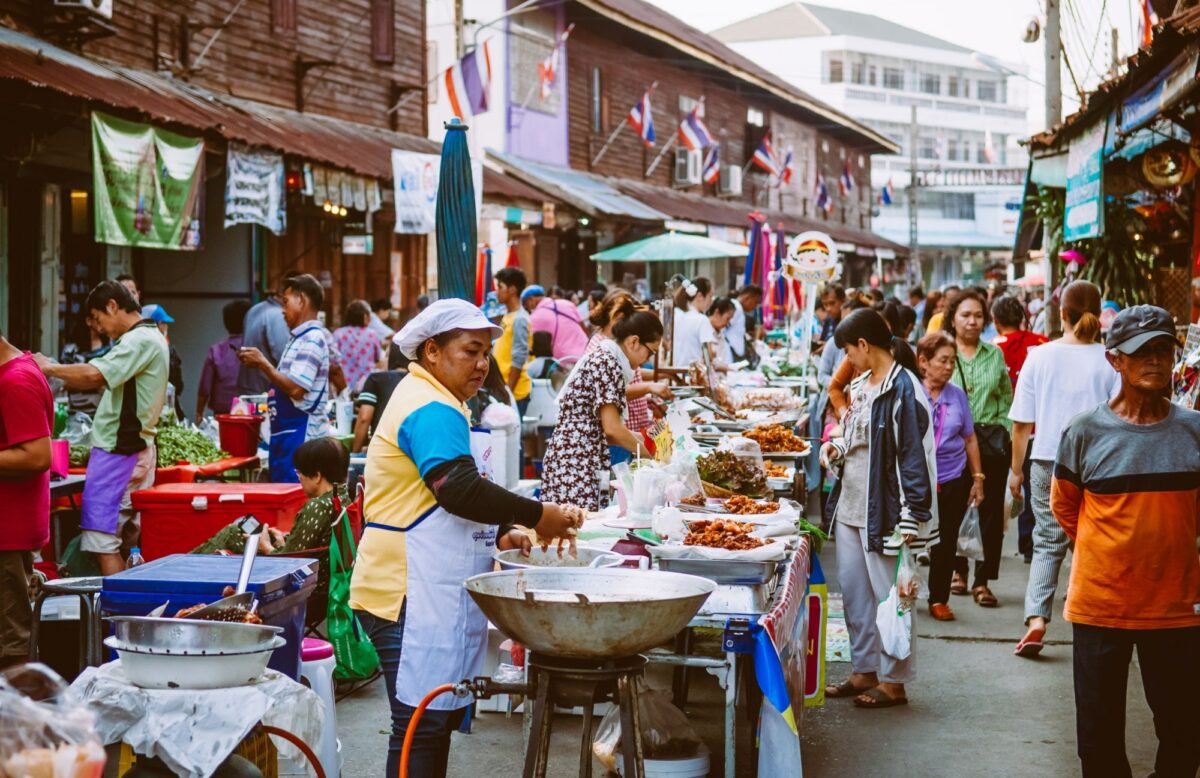
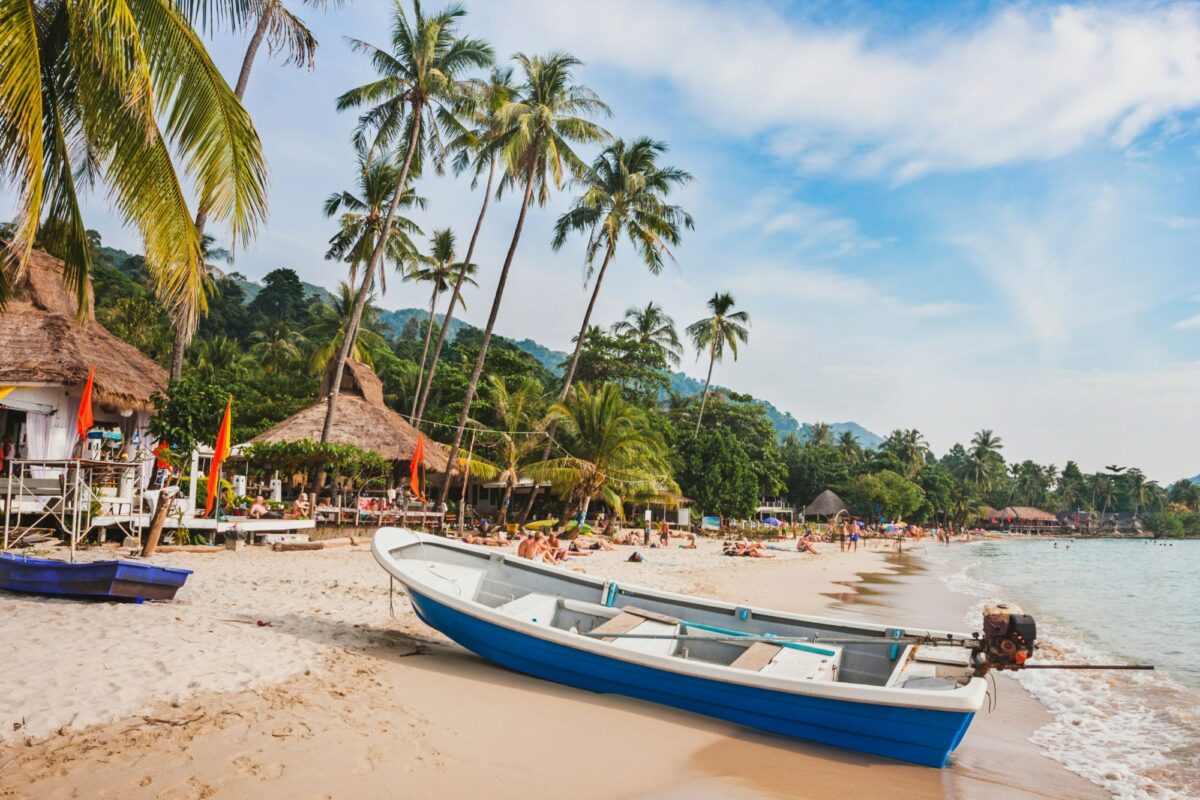
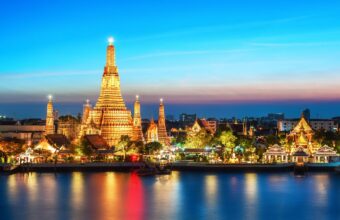
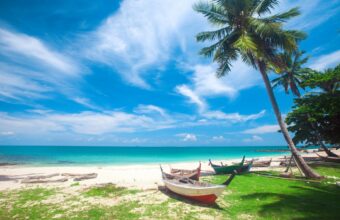
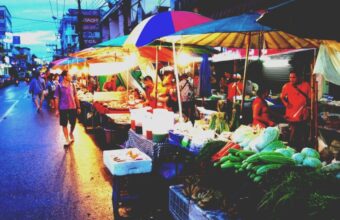
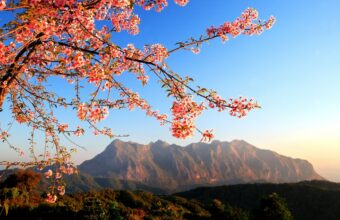
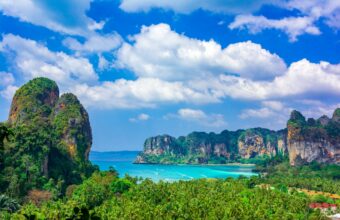
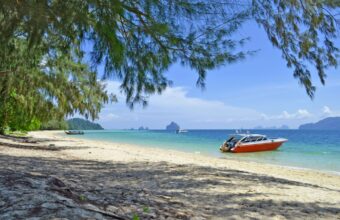
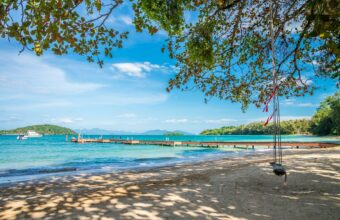
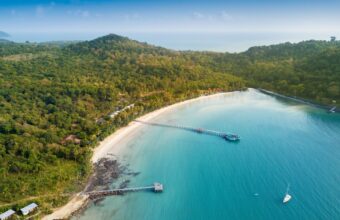
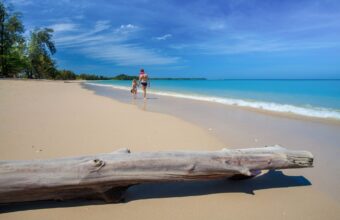
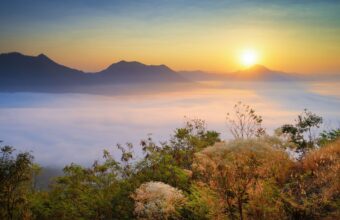
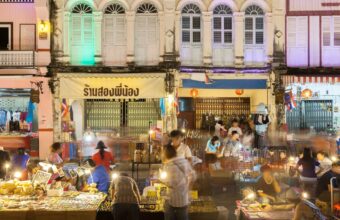
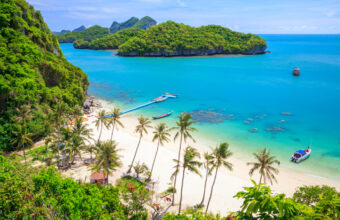
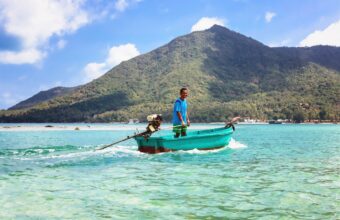
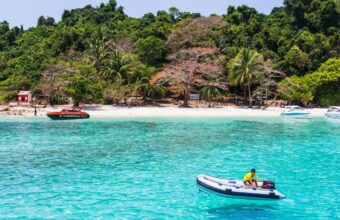
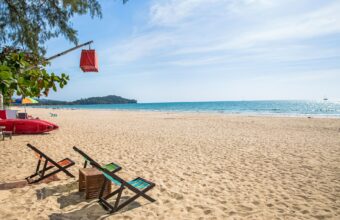
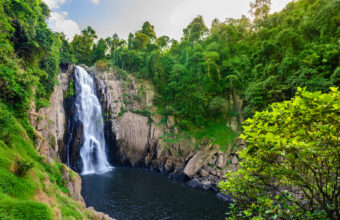
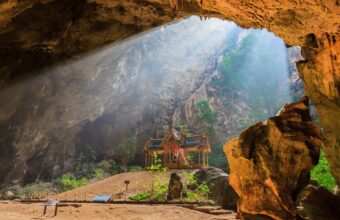
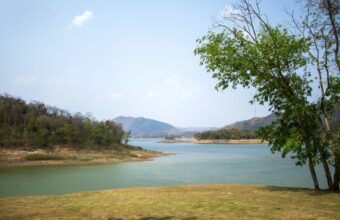
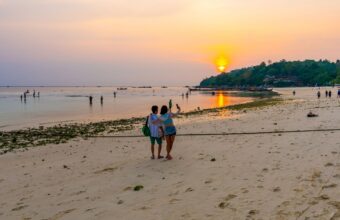
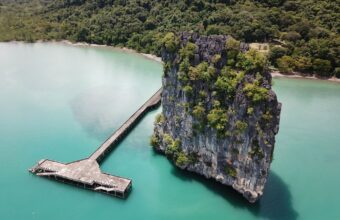
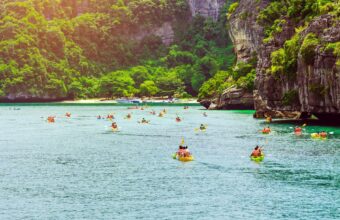
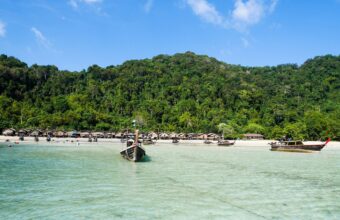
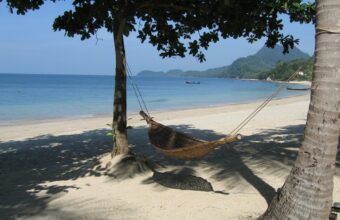
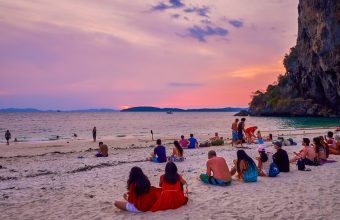
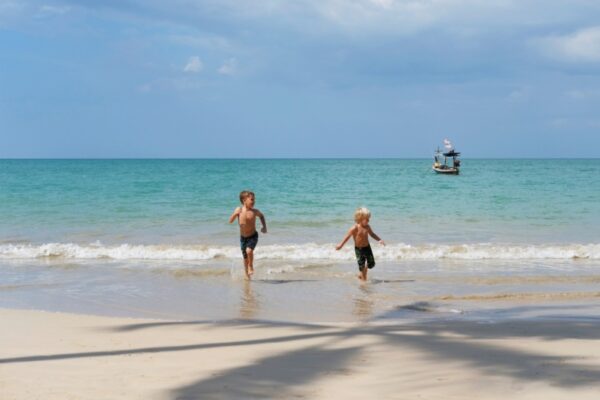
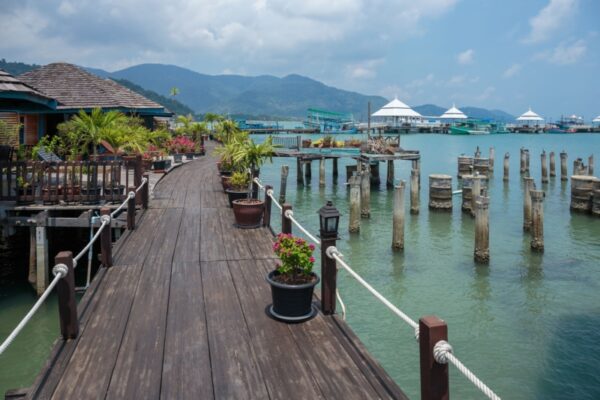
Thailand, a nearly 1,000-year-old kingdom with a population and landmass to match the UK, is a land of plenty. Old-growth jungle cloaks the mountains. Brilliant beaches rim hundreds of islands. The scent of tropical aromatics—galangal and coconut, finger root and bird's eye chilli—steam from endless markets.
So far, so travel brochure. But dig deeper and you'll find a country in transition, rethinking its tourism business model for the post-covid era in an attempt to shake off its reputation for over-tourism, crowded beaches and (for better or worse) lower spending backpackers.
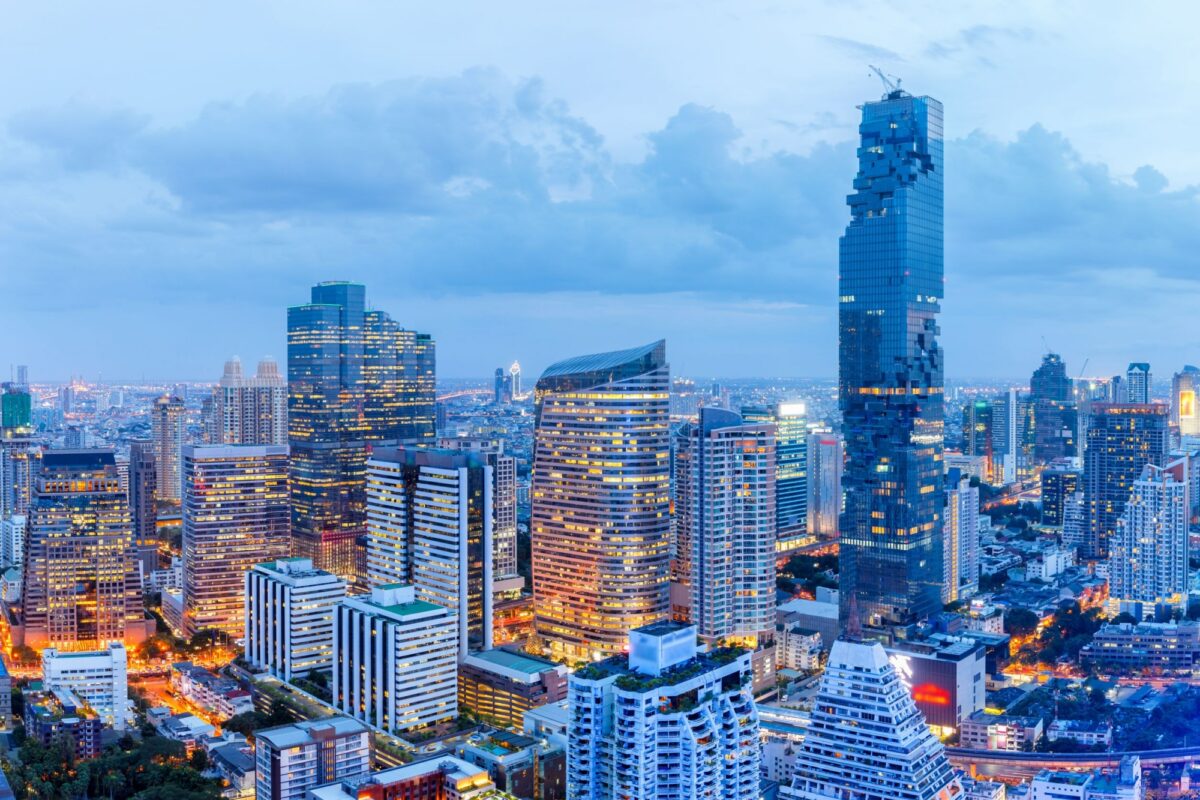
In the cities you'll find a metropolitan and youthful culture that's marching into the 21st century at a pace that would shame the snoozing Europeans and North Americans, with lively music and arts scenes and a political awakening that is shaking the country's establishment to its core.
But Thailand is still Thailand—all bustle, noise and excitement. And yes, venture out of the cities and you'll see that shimmering rice paddies, jungles and glorious (if not entirely deserted) beaches, are still there.
It depends what you’re looking for, but I think there are three broad categories of family-friendly accommodation in Thailand:
Kid friendly resorts
You’ll find plenty of family friendly resorts with good pools in parts of Khao Lak, Krabi, Koh Lanta and Koh Chang, as well as in Bangkok. Koh Kut is truly a stunning island in the east that has quite a few family visitors. Though much smaller, Koh Ngai is also known for its family resorts.
Villa / apartment rentals
Some recommended short term rentals include Koh Jum Villas on Koh Jum, Baba Beach Resort (formerly Golden Buddha) on Koh Phra Thong, Railei Beach Club on Railay in Krabi, and Good Time Resort on Koh Mak. You’ll find plenty more on Airbnb and Agoda. Koh Samui may be too busy for some, but it's also worth a mention for its plethora of affordable villas / houses including some on the quiet side of the island along beaches like Lipa Noi and Mae Nam.
Traditional bungalows
If you came to Thailand pre-kids you probably remember sleeping under mozzie nets while fans hum and geckos roam the wall. Don't be afraid to share this quintessential Thailand travel experience with the kids! You’ll find quality family bungalows on quieter islands, for example at Jungle Hill on Koh Jum, Horizon Eco Resort on Koh Phra Thong, and the wonderful Our Jungle House in the Khao Sok valley, just to name a few.
Some Thai beaches that might be suitable for very young kids:
Koh Lanta: Khlong Dao and Ao Kantiang beaches are both family favourites.
Krabi: Noppharat Thara and Khlong Mueang are quiet; busier Ao Nang has some of the best resort swimming pools, and Railay Beach is gorgeous.
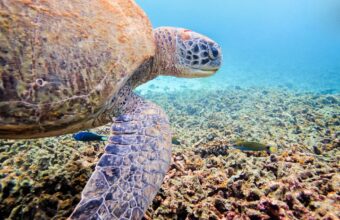
Khao Lak: several beaches with many family-oriented resorts and don't forget the sea turtle conservation centre.
Khanom: low-key mainland beach area near Koh Samui that's known for its pink dolphins.
Koh Chang: Khlong Prao beach is popular for families and I love the low-key south around Bang Bao.
For sleepy, chilled out, alternative islands with more of a Robinson Crusoe style (but often with reasonably comfy lodgings), I suggest Koh Jum, Koh Yao Noi (and Koh Yao Yai), Koh Muk (Mook).
In the East there’s Koh Mak, which is popular with families although the sandflies can be a problem there. Another that I adore is Koh Bulon Leh (or Lae), just a tiny island where some of the best beachfront is occupied by nothing but an adorable little schoolhouse.
Ultimately this depends on your baby, your itinerary, and your own comfort zones. But overall yes Thailand is perfectly safe to visit with kids of all ages. I recently met a German family doing a six month trip with a one-, three- and six-year old and they were having a great time! Aside from the general family travel advice in this guide, my most important recommendation for February/March is to stick to the southern beaches and islands, as further north the air quality can be awful at that time of year.
I think Chiang Rai would be a great choice for a large family, particularly if you're willing to splash out on tours or a private van for excursions outside the provincial capital city.
Chiang Rai is a bit further off the beaten path than Chiang Mai, but still relatively easy to reach and with plenty of local travel offices and tour operators that can assist English-speaking travellers.
The provincial capital is full of photogenic temples and museums and also has a great night market. There are loads of trips from the city, including the Tham Luang Cave that was the site of the incredible rescue of 12 boys and their football coach back in 2018. Other good options include mountain viewpoints like Doi Tung and historic Mekong River towns like Chiang Khan, or if going further up into the mountains, the tea-growing outpost of Mae Salong.
Do keep in mind that, as with virtually any mountainous area in Thailand, travelling involves winding roads with switchback turns. Also the entire north gets hit by bad air pollution late in the dry season. I do not suggest going up there in March or April and even in February the air can get bad as farmers start to burn off the stubble in their fields.
One other suggestion is Kanchanaburi, which isn't too far from Bangkok and can be fun for families especially if you're interested in the World War II history. If you go, the Hellfire Pass Memorial and Museum is not to be missed. Kanchanaburi province has some of Thailand's best waterfalls, such as Huai Mae Khamin and Erawan. While it might be too far out of the way for a large family, the lake mountain town of Sangkhlaburi is an enchanting place.
I'll suggest one destination in the Gulf of Thailand and another on the Andaman coast. Which one you choose partially depends on when you're travelling. The rainy season in the Gulf starts around Aug-Sep and lasts straight through December. Rainy season on the Andaman coast is from around May-June through October, although in recent years it seems to be starting later and lasting into Nov or even Dec.
In the Gulf, Koh Samui might work for your group because it has plenty of private house / villa rentals. These cater for many budgets, from extreme luxury on the beach to rather modest options set down inland lanes. So if you're looking for a place to all stay together in one big house, with its own kitchen and perhaps its own swimming pool, consider Samui.
The areas that are quietest and generally considered best for families are Samui's northern beaches like Bophut, Mae Nam and Bang Po, as well as southern and western beaches like Taling Ngam and Lipa Noi. Chaweng and Lamai are the two busiest beaches and both have some seedy nightlife along with techno-blasting beach parties, etc., but there are rental houses along the quieter nearby inland lanes.
On Samui you have a solid list of attractions on the island, and those who want more adventure will find some of Thailand's most dazzling islands if day tripping into the nearby Ang Thong National Park. You could hire a private boat for that or book into a group tour. Another nearby island that you might find worth a day trip is Koh Matsum, where kids often enjoy seeing the domesticated boars that live on the beach.
Meanwhile on the Andaman coast, the Khao Lak area is not far from Phuket but much quieter and without the traffic jams and seedy nightlife (to be fair, several parts of Phuket, such as Bang Tao and Kamala beaches, are also good for families). Khao Lak might work for you because there's loads to do, including day tours to nearby Similan or Surin islands, both of which are also part of national parks and also rank among the most dazzling islands in Thailand. Or you could go to the sea turtle conservation centre or, if you're really lucky, even possibly see turtles hatching on nearby Khao Lampi and Thai Mueang beaches. Other kid friendly activities here are visiting the old town market in nearby Takua Pa, a boat tour of the magnificent Phang Nga Bay, miniature golf, the butterfly farm, and the night markets and many different beaches within the Khao Lak area.
Perhaps not ideal for younger kids but worthwhile for everyone else, is a visit to the deeply moving 2004 tsunami memorial just north of Khao Lak in Ban Nam Khem.
I agree there are probably better places than Hua Hin to visit with kids, although I can see the appeal – it has good restaurants, markets and accommodation. And there are some great family-friendly day trips from Hua Hin:
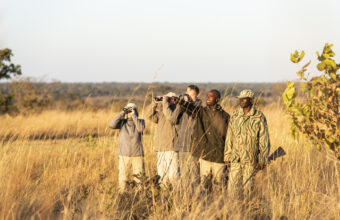
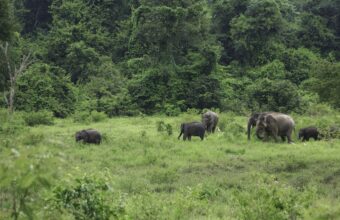
One highly underrated idea is Kui Buri National Park, which is by far the best place in Thailand to spot wild elephants (as well as gaur, the world's largest bovine species). I'm 40 years old but had all the excitement of a kid when piling into the back of a pick-up truck and driving slowly down dirt tracks into the mountains, stopping often to watch the elephants in the forest and grasslands. You have close to a 100% chance of seeing wild elephants in Kui Buri National Park, whereas it's something like 10% in Khao Yai and maybe 30% in Kaeng Krachan, both of which are far better known for wildlife than Kui Buri.
Other family-friendly day trips out of Hua Hin include the Pala-U Waterfall where you also might spot wild elephants; the mangrove forest park in Pranburi where kids enjoy peeping the crabs from elevated walkways that pierce a vast mangrove forest; the Khao Tao area where Sai Noi Beach is a well-kept secret that is arguably among the best mainland beaches in all of Thailand and situated a short hike from a good viewpoint with a Buddha image; and finally the Khao Sam Roi Yot National Park which has some fabulous caves and viewpoints amid a dramatic karst mountain landscape to go with notably scenic lotus-filled wetlands on the inland side of the park.
I'd also keep Sam Roi Yot in mind as a secondary overnight destination. Just north of the park, the lengthy beach known as Hat Sam Roi Yot or Hat Phu Noi has some good family beach resorts – one called Dolphin Bay is popular thanks to its big pool with waterslides – with a much quieter and more laid-back vibe than Hua Hin.
March to April is peak burning season, and during that period Chiang Mai in the north is routinely ranked among the worst air quality on earth. Visiting Thailand with kids, I'd definitely avoid the north during that period and if you're worried about air quality, I'd probably avoid Isaan and the central region, too. Perhaps even more pressing for travelling with family, the heat can be brutal during this time.
On the other hand, the coast and islands in southern Thailand are lovely in March/April. Still hot, but with the cooling effect of the ocean to help with the kids.
If you feel like you're missing out on the north you can visit scenic mountain areas like Khao Sok and Khao Luang. And for the best family friendly beaches/islands at that time, I'd recommend Khao Lak on the Andaman coast – it's popular with families, with plentiful activities including day tours to some of Thailand's most spectacular islands, namely the Similans and Koh Surin. The Gulf side such as Koh Samui and around is also pretty in March - April.
You can get around safely without a motorbike in all of the main islands; there are usually other family-friendly forms of transport.
Some of the islands, like Chang and Samui, have songthaews (pick-up trucks with roofed benches in the back) that connect all of the main beaches, although they are pricey compared to the mainland; expect to pay at least a few hundred baht even if going a short distance.
Lanta and other islands around there (such as Jum) have salengs (sidecar motorbike taxis) which are more affordable. You'll also find tuk tuks and regular taxis in places. Or, if you have an international drivers licence and would prefer to drive yourself, car and jeep rental is available on Samui, Lanta and Chang.
Otherwise, if you want to go out you can always ask the reception staff to call a driver for you; indeed that is often the only way to find a driver on Kood. But finding a saleng on Lanta or a songthaew on Chang is typically easy in all the main areas.
I think all three of the areas you've singled out (Samui, Lanta, Chang) can be great for families with a toddler. Two weeks is plenty of time so wherever you are, you could easily spend a week at the main island and then take one of the easily available island hopping boats (dry season only) to check out some of the smaller islands. I always recommend some of those smaller islands because the beaches are often more beautiful than on the main island.
Of the three areas I personally prefer the Koh Chang Archipelago and Koh Lanta / Krabi / Trang areas because, although Koh Chang and Koh Lanta are both sizable tourist destinations, they are both more laid back and not as developed or mainstream as Koh Samui.
Although Koh Chang does have some slightly seedy nightlife on the main road near White Sand Beach, neither Chang or Lanta are as seedy as parts of Samui, around Chaweng and Lamai. (That said, the south of Samui is a whole different story and you could easily stay there and never even stop at Chaweng or Lamai if you wanted.)
One thing that Samui, Chang and Lanta have in common – and I would also say this about Koh Phangan – is that they're all beautiful but also big enough to have totally different "vibes" or "scenes" in different areas. So on any of them you can stay in a quieter area that still puts you within relatively easy access of all attractions and other parts of the islands.
If you want to do some island hopping, a slowboat from Koh Chang to Koh Mak to Koh Kood, or ferry from Krabi town to Koh Lanta and then private longtail boat around the Trang islands, would be, I think, more exciting than the larger ferries to Koh Samui / Koh Phangan / Koh Tao.
Ask a question
Get answers from our independent Thailand experts.
You'll receive a reply by email. Questions and replies may be anonymised and reproduced on Horizon Guides.
§ 04
The Thailand atlas
20 picksPlaces & Experiences You Won't Find Elsewhere
Where
What
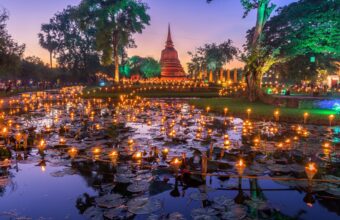
After Songkran, Thailand's other big nationwide festival is Loy Krathong, when candlelit offerings fill rivers and float through the sky in a moving ritual to release past negativity and start anew.
In the north, Loy Krathong coincides with another festival, Yi Peng, when vast clouds of paper lanterns are released into the air. It's a breathtaking sight that is certain to awe the kids. Just don't think about where all those lanterns eventually come back down to earth... Note that downtown Chaing Mai gets fairly rowdy at this time of year with lots of fireworks in the streets.
The date changes each year but it’s usually in November, always on a full moon.
The Songkran holiday is now a full-blown water war waged by hose, pistol, balloon and bucket, but it began centuries ago with more gentle water splashing which remains part of a cleansing ritual still seen at temples.
The festival runs from 13th to 15th April nationwide, although Chiang Mai adds extra soakage days and the Mon enclave of Phra Phradaeng, near Bangkok, throws its own unique style of Songkran a week later.
A word of warning: it's all good fun, but it does get boisterous and tourists are seen as prize targets. Keep your electronics indoors, and fully expect to get drenched.
Elephants have a troubled and controversial place in the Thai tourism industry. The basic rule of thumb is to avoid elephant riding or any close-contact, captive elephant experiences. Even so-called "sanctuaries" can be a problem. But one that is universally recognised as above board is the Elephant Nature Park just outside of Chiang Mai. A must-visit for visitors with kids.
Prachuap Khiri Khan, Prachuap for short, separates Bangkok to the north and the islands and beaches to the south, making it perfect for lazy road trips following the coastline in either direction.
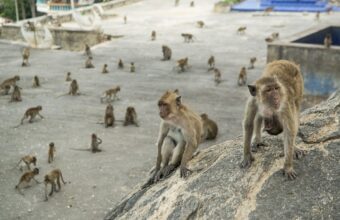
The most popular tourist destination is Hua Hin, a well developed city with plenty of family-friendly resorts overlooking miles of beaches. The centre is cramped and noisy, but the southern part of town is a relaxing base for attractions such as the Black Mountain Water Park and Wat Khao Takiab, the Chopsticks Hill Temple, where you can meet monkeys and enjoy the sea views. Hua Hin is also a golfing centre and tour companies offer club rental and transport to any one of 10 courses, some very scenic.
Further south, Pranburi is a more laid-back seaside city with a mangrove-forest walkway and some of the best wind and kite-surfing in Thailand. It's also close to Khao Sam Roi Yot National Park with quiet beaches, magnificent limestone caves and a wetland rich in birdlife.
Prachuap town is a kid-friendly destination in its own right. It has a monkey-filled hilltop temple at Khao Chong Krachok, a family-oriented beach at Ao Manao, and a seafront walkway where fishers offload their catch. And within striking distance are the refreshing Huai Yang waterfall and the Kui Buri National Park, the best place in Thailand to spot elephants in the wild.
Note for all travellers, but especially those with kids, road safety in Thailand leaves a lot to be desired and a high degree of caution is advised.
Thailand's northernmost province is often overlooked by travellers assuming that Chiang Mai is the must-visit destination up north. Both are worth a visit, but Chiang Rai is hard to beat for vistas of layered mountains and one of Asia's grandest rivers, the Mekong.
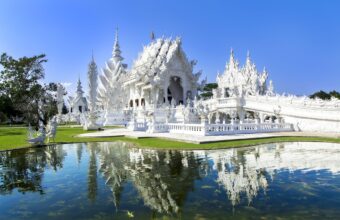
Start with three of Thailand's most imaginative structures: Wat Rong Khun (White Temple), Wat Rang Suea Ten (Blue Temple) and Baan Dum (Black House). Designed by two Thai artists, they feature creative interpretations of the country’s spiritual themes in art and architecture.
Then there are great options in the countryside. Soak up Mekong River views in relaxing Chiang Khong; observe 700-year-old ruins in Chiang Saen, an early capital of the Lanna kingdom that predates Chiang Mai; gaze at the Golden Triangle, where Thailand meets Laos and Myanmar in an area that was once notorious for drug smuggling.
When you're ready to hit the mountains, enjoy the temperate flower gardens and tea farms perched at 1,100 to 1,700 metres at Phu Chee Fah, Doi Tung, and Mae Salong. It gets chilly up there so pack semi-warm clothes.
For travellers with older kids, there are several tour outfits offering jungle trekking to villages that are home to hill tribes, such as the Lahu. For a real adventure, take a bus to Tha Ton in northern Chiang Mai province and then catch a longtail boat down the Kok River to Chiang Rai.
Loei province in Thailand's northeast draws a fraction of the visitors of the more popular destinations to the south. This makes it a thrilling place to visit with older (and more adventurous) kids.
Chiang Khan's historic temples, heritage houses, trendy cafes and Thai massage shops make it fun for a day of strolling or cycling. In the late afternoon enjoy the lengthy walkway along the Mekong and watch fishers casting out their nets before puttering home on longtail boats as the sun sinks behind the fluffy green hills. It is enchanting.
Near Chiang Khan is a mountain, Phu Tok, from which you have views of the Mekong - and there's no need to hike thanks to the songthaews that can truck you to the viewpoint. A glass-floor skywalk set over the confluence of the Mekong and Hueang rivers is a thrill.
Further west, Phu Ruea National Park has waterfalls accessible via a road that winds up to a 1,365-metre summit with tremendous views. In the south of the province, climb to the 1,316-metre plateau at Phu Kradueng if you’re fit enough. There’s a campground there where temperatures can drop close to freezing at night. Alternatively, head to Suan Pha Hin Ngam for a tractor ride between vertical karst cliffs.
Buses access some parts of Loei province, but renting a car in one of the larger provinces nearby, such as Khon Kaen or Udon Thani, would make it easier to explore the countryside. Loei also fits nicely into a wider tour of the Northeast that might include Nong Khai, Bueng Kan, Nakhon Phanom and other provinces along the Mekong.
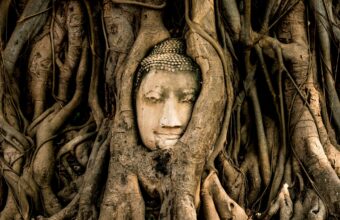
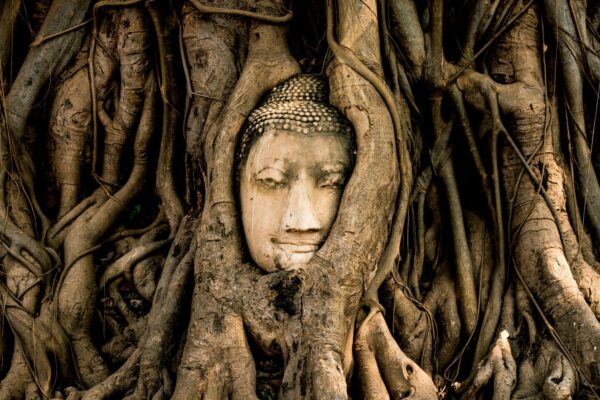
Founded in 1350 and destroyed by invading Burmese in 1767, the once-glorious city of Ayutthaya preceded Bangkok as the capital of Siam, as Thailand was known before 1939. Its ruins are extensive and easier to reach than those of Sukhothai.
The UNESCO-listed historical park covers part of an island rimmed by a canal and three rivers. Here you'll find Wat Phra Sri Sanphet, the former royal temple with slender bell-shaped chedis and the remains of a once-ornate palace. Many of the ruins here dot the city to form a contrast between modern and ancient. There are many noteworthy historical sites on the outskirts of Ayutthaya, accessible by longtail boat or the area's signature frog-shaped tuk tuks.
The Million Toy Museum is a hit with kids, while adults appreciate the remains of settlements built by Portuguese, Dutch, Japanese and other foreign merchants who once prospered in the city. You can climb the towering chedi at Wat Yai Chai Mongkhon and imagine the approach of the Burmese invaders.
A highlight of Lopburi is Phra Phrang Sam Yod, featuring a trio of corncob spires built by Khmers in the 12th century and later embellished with Thai artistry. Another is Phra Narai Ratchaniwet, a 17th century palace that's now an excellent museum.
Just 70km north of Bangkok, it’s perfect for a day trip or stays of a night or two. A further 60km up the Northern railway line is Lopburi, another historic centre.The thousands of monkeys at Lopburi can be brazen, sneaking up to snatch food or even cameras and wallets before scampering away. Though mostly harmless, they do sometimes bite. Don't let kids pet them, and keep a tight grip on your valuables.
Founded in the 12th century, Sukhothai (Dawning Lotus) was the first Thai kingdom to conquer most of the land within modern Thailand's borders. Guided by leaders like Ramkamhaeng, now a revered figure, this was the kingdom where the Thai script was created and where a distinctive Thai culture first emerged.
Sukhothai's three zones can be explored in a day. One key site is the former royal temple Wat Mahathat, with its lotus-shaped chedi spires and exquisite carvings. Another is a seated 11-metre wide Buddha image at nearby Wat Si Chum which is hidden by a brick enclosure accessed via a narrow passageway, which makes for a dramatic approach.
A third is the meditation monastery at Wat Saphan Hin set on a wooded hill, to which King Ramkamhaeng once rode on a white elephant. The atmosphere is serene even today.
Kamphaeng Phet's ruins are less extensive than those of Sukhothai, but the reclining Buddha image at Wat Phra Kaeo and dozens of 14th century elephant statues at Wat Chang Rob are no less captivating. Away from the historical sites, Kamphaeng Phet's riverfront makes for a relaxing sunset stroll followed by a search for tasty Thai treats in the night market.
Compact layouts and plentiful tree cover make the historical parks in Sukhothai and Kamphaeng Phet great for bicycles, which can be rented. If your family has a keen interest in history, consider another historical park, Si Satchanalai, set in a rural area 50km north of Sukhothai.
Trang province, south of Krabi, is another of Thailand's many lesser-visited spots, and is a good place to do some kid-friendly island-hopping.
The capital of Trang province, south of Krabi on the Andaman coast, is worth a night if you're a food lover. Rise early for dim sum, deep-fried tofu and steamed buns (sala bao) with locally-grown Robusta coffee, then sample the many curries and Trang's signature roast pork dish in the markets.
Ko Mook is Trang province's most popular island, even if it's downright sleepy compared to Ko Phi Phi or Ko Lanta. Explore the fishing villages, hike to the viewpoint and take a longtail boat or kayaks to Tham Morakot. A dark 50-metre sea cave that might frighten little ones, ends at a white sand beach concealed by a vertical ring of limestone.
Easy to reach from Ko Mook by affordable private longtail boat, the smaller islands of Ko Kradan and Ko Ngai both have beaches that rank among the most stunning in the country. They also offer fine resorts, reefs for off-the-beach snorkelling, and forest trails ending at sparsely developed coves.
You could finish with Ko Libong, which draws yet fewer tourists, but is home to quaint villages and one of the last herds of dugongs (similar to manatees) left in Thailand. From a boat tour or an observation tower you may spot some of these endangered creatures, sometimes known as sea cows, feeding in their protected waters.
You can fly direct to Trang Airport (TST) from Bangkok, or take a train down the only offshoot of the Southern Line that accesses the Thai southwest.
Krabi, on Thailand's southwest coast, is a glorious, family-friendly alternative to the often seedy and rowdy Phuket.
Ao Nang is Krabi province's most touristy town on the mainland coast, with a large selection of comfortable family-friendly resorts. A little further north, Noppharat Thara and Khlong Muang beaches are quieter and less nightlife-oriented. The provincial capital is also worth a visit for food and culture.
Close to Krabi town, you can hop in a longtail boat and climb into the caves at Khao Kanab Nam before taking a spin around the pastoral island of Ko Klang with its mosques, water buffalo and batik workshops.
Outside the town, the viewpoint at Wat Tham Suea (Tiger Cave Temple) is breathtaking, but try climbing the 1,237 steps only if the whole family is in good shape. Other options include hiking to the 11-tier Huai Toh waterfall, or along the scenic Dragon Spine ridge known as Khao Ngon Nak.
On the mainland, but only accessible by boat from the Ao Nang area, is Railay, a peninsula with top-notch beaches framed by vertical karst cliffs that are well known to rock climbers. While Railay has several resorts, many visitors drop by on a boat tour that also covers the islands of Ko Poda and Ko Gai - Chicken Island because of its hen-like shape. Further north, Ko Hong rewards day trippers with a viewpoint set near a jade-hued lagoon.
Krabi province also includes the islands of Ko Phi Phi, Ko Jum and Ko Lanta, among others. Day trips are possible from Krabi town and Ao Nang, but I'd recommend you treat them as separate destinations and try to spend several nights there if possible.
Khao Sok is one of Thailand's best-known national parks, and makes a convenient stop-off for family itineraries calling at Thailand's southern beach destinations.
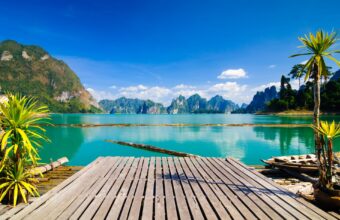
The park’s centrepiece is a reservoir, Ratchaphrapa or Chiew Lan, one of the most magnificent bodies of fresh water in Southeast Asia. The emerald water glistens between 1,000-metre high limestone mountains. You can take a boat tour lasting a few hours or a full day, or you can spend a night at one of 17 raft-house lodgings. They all come with kayaks.
West of the reservoir are caves and waterfalls, and a trail guide is required to access most of them. This area is also where you'll find the rafflesia kerrii, the fire-red, so-called dinosaur flower that smells rank and is one of the world's largest flowers when it blooms in the dry season. Though large mammals are rare, Khao Sok is full of birds and reptiles.
Most people will visit as part of an organised tour that includes accommodation, transfers in/out of the park, and guided nature hikes.
The Thai islands have some reputational baggage when it comes to the all-night party vibes, but there are plenty of islands that are perfectly suited for kids and family travellers. I'd put Ko Mak and Ko Kood firmly on the kid-friendly list.
On star-shaped Ko Mak you can rent bicycles to explore the gently rolling terrain blanketed in pineapple and rubber farms, and Ko Rang, the prime snorkelling and diving destination in the archipelago, is easily reached.
There are islets accessible by kayak or private boat tour, the largest of which is Ko Kradat, where herds of deer roam freely. The white sand of Ko Kham is also a hit near Ao Suan Yai, one of Ko Mak's two main beaches.
Ko Kood is a larger island with more than a dozen beaches that are among the finest in Thailand. When not relaxing seaside you might kayak the mangrove-draped rivers, cool off at one of three waterfalls, and marvel at 500-year-old macca trees that tower amid the mountainous interior.
Ko Mak is easy to get around, but some of Ko Kood's beaches are remote and traversing the island can be expensive and tricky with younger kids. Sand flies become a problem on both islands at times, especially on Ko Mak. In the dry season, you could first head to the larger island of Ko Chang and then catch up with island-hopping ferries that stop at Ko Mak and Ko Kood, as well as the smaller island of Ko Wai.
Thailand's capital city; vast, bustling, traditional in places, sleekly modern in others, and fascinating for visitors of all ages.
Bangkok is surprisingly accessible for family travellers. Public transportation is excellent and easy to navigate, the food is varied and, despite its size, the city and its inhabitants are exceptionally welcoming to kids.
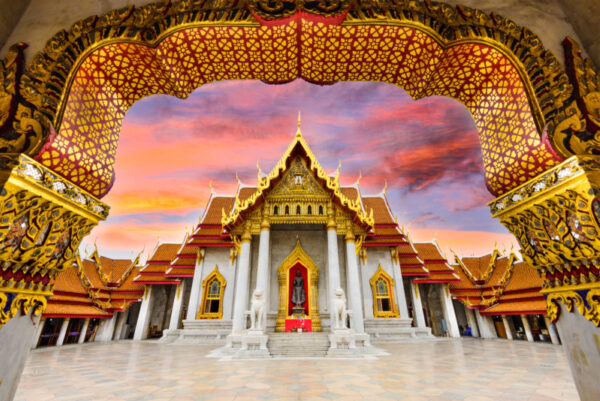
A half day in the historic district is a must to take in key sites like Wat Pho's 46m-long gilded reclining Buddha, the lavish mix of 18th and 19th century architecture at the Grand Palace, and Phu Khao Thong, the Golden Mount affording views of the city set to chiming prayer bells. In between, thrill the kids with a ride in one of the city’s sputtering tuk tuks.
If the kids are suffering from temple overload there's plenty more to keep them entertained for a day or two.
There’s mask painting, puppetry and evocative canal-side life at the Artist House of Khlong Bang Luang, one of several stops on Thonburi's famous khlong (canal) tours.
And if they need a real break from sightseeing, for an all-out kids’ day in Bangkok try the Dream World amusement park and make education fun at the Children’s Discovery Museum. Throw in a river ferry ride on the Chao Phraya followed by dinner, and finish with a spin on the ferris wheel at Asiatique.
It's not all kid-friendly paradise, however. The city can feel cramped, choked with traffic and often extremely hot. Don’t squeeze too many activities into a day, and look for air-conditioned spots to cool down. Try to avoid using the metro and the roads during rush hours.
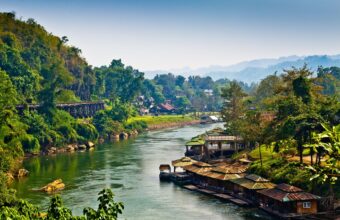
This scenic and historic town on the River Kwai (pronounced kway), along with the province of the same name, offers families a chance to learn Second World War history between visits to some of Thailand's most impressive waterfalls.
A host of museums in the provincial capital cover the history of the Thai-Burma Railway and the roughly 100,000 Allied prisoners and forced labourers who died during its construction overseen by the Japanese Army in 1942-43. One highlight is the rail bridge that inspired the 1957 film, The Bridge on the River Kwai. Visitors can ride on part of the railway built atop trellises high above the river.
Kanchanaburi's most riveting Second World War site is Hellfire Pass, a memorial where you can hike a portion of a now-closed stretch of railway that was extremely gruelling for the malnourished workers to build. It’s just 80km north of the provincial capital and you can visit with a tour, or independently.
This sobering history is balanced by fabulous natural attractions, including the popular Erawan waterfall and the more remote Huai Mae Khamin waterfall. Bring swimsuits. If you have more time, consider venturing to the misty lakeside town of Sangkhlaburi or the border outpost of Pilok, both in the Tenassarim Mountains near Myanmar.
Kanchanaburi is only 130km west of Bangkok, making it convenient for a short trip. But as the third largest province in the country, it's also worth considering for a longer stay.
Most of Kanchanaburi town is family friendly, but you may want to avoid staying in the nightlife area at the south end of Mae Nam Kwai Road. For a more kid-friendly setting, stay towards the north end of this road or on the west side of the river. The nearby countryside also has quality resorts set in quieter areas along the River Kwai.
Home to at least one million people, Thailand's second city straddles the Ping River valley in the scenic and mountainous north of Thailand.
The city is one of Thailand's most popular tourist destinations. There are hundreds of guesthouses, hotels, travel offices and eateries in the highly walkable, square-shaped historic district that is rimmed by some of the original city walls.
Chiang Mai is probably best known for its glistening 14th to 17th century Lanna-style temples. With their gilded surfaces, multi-tiered sloped roofs and lacquer doors, they are among the most graceful examples of Thailand's historic architecture.
The city is also famous for its night markets, including a nightly bazaar east of the old town and a Saturday and Sunday “walking street” that takes over an entire road west of Tha Pae Gate in the old town. The atmosphere is lively with street musicians, artists painting on-the-spot portraits, and a variety of street food.
Another highlight for visitors and older kids are the many Thai cookery classes in the city.
Just north of the rowdier Phuket, I think Khao Lak has the perfect balance of peace and action for families. The area covers several miles-long expanses of soft sand rimmed by terrific family resorts and restaurants offering Western and Thai menus.
Nightlife is minimal, but a good night market and many boutiques keep the after-dark scene lively enough for most families. Unlike some of Thailand's busier beach towns, the mood is kid-friendly: very laid-back with a jungle-backed landscape that is dotted with coconut farms.
The most popular beach is Nang Thong, where an offshore light tower often features in sunset photos. Nearby beaches - Bang Niang, Pakarang, Maphrao, Pak Weep and Bang Sak - each have resorts of their own; the scene gets sleepier the further north you go up the coast.
Khao Lak's Thap Lamu Pier is the jumping off point for day trips to the Similans, a chain of nine protected islands with powdery white-sand beaches and some of the finest diving and snorkelling in Thailand. There’s no shortage of boat tours and diving excursions on offer.
Back on the mainland, kids enjoy swimming at the natural pool fed by Ton Pling Waterfall; stop at a butterfly and orchid farm on the way to see historic architecture and paddle through a mangrove forest known as Little Amazon in the nearby town of Takua Pa.
The 2004 Asian tsunami hit Khao Lak hard and museums and memorials are dedicated to the roughly 3,000 people who died locally in the tragedy. Khao Lak now has several tsunami shelters and an early warning system in place.
The main event at the late Thai visionary Lek Viriyabhun's Erawan Museum, off Bangkok's southeast fringe, is a 44m tall copper elephant depicting the vehicle of Hindu god Indra. Look for scenes from every world religion beneath a tremendous stained glass ceiling crafted by the late German artist, Jakob Schwarzkopf.
Dive into Krung Thep Maha Nakhon (Sacred City of Angels), the Thai name used for the kingdom's New York City-sized swirl of life, art, history, boats, tuk-tuks, markets, malls and more than enough sizzling woks to make you sneeze. Rise for an early northbound train to wander the 14th to 18th-century ruins at Ayutthaya. On day three, journey west into Kanchanaburi for travertine waterfalls followed by various sites related to the brutal forced construction of the Thai-Burma Railway during World War II. If you have any time left, finish with a float down the River Kwai, which is pronounced kway, by the way.
Pick up at the urban tourism hub of Surat Thani — Phuket works too — and turn uphill to Khao Sok, arguably Thailand's most impressive national park. Spend one night in a rafthouse and another in a treehouse after days spent hiking and kayaking beneath the vertical limestone cliffs.
Head to Krabi Town for bursting markets and riverside scenery, then catch a boat to Ko Lanta and take your pick out of a baker's dozen beaches boasting top-notch family and luxury resorts. Take another boat ride south to sedate Ko Muk for the Emerald Cave and snorkelling around (or staying on) neighbouring islands like Ko Kradan, Ko Ngai and Ko Rok, all boasting luscious beaches as well.
Re-engage with the non-island world at Trang, a low-key town with an airport and train station.
Hike to waterfalls and paddle down mangrove-draped rivers. Plunge into terrific diving and snorkelling sites. Enjoy a swanky villa or kick your feet up on a beach hut porch. Hit the pubs or find a low-key spot to watch the fishing boats. And, of course, relax on divine beaches between dips in the teal water. In the Ko Chang archipelago, most island lovers find everything they’re looking for.During dry season, this part of the eastern Gulf of Thailand is an island-hopping winner thanks to slow ferries and public speedboats that link Ko Chang to Ko Wai to Ko Mak to Ko Kut, with tour/dive boats accessing other islands. While visiting is possible during rainy season from May through October, getting around at that time of year requires doubling back to the mainland between islands.Getting aroundThe Ko Chang archipelago is well serviced by slow ferries and public speedboats. They link Ko Chang to the surrounding islands and depart both morning and afternoon during the dry season. Most depart from Bang Bao Pier on Ko Chang but piers may change depending on the weather. Travel agents or resort staff will tell you where to go or throw in a transfer to the right pier when you book your ticket. It's all made rather easy for travellers. Island hopping by private boat is not common but private speedboat or yacht charters are available. Unlike in parts of southern Thailand, the more affordable longtail boats are not found in the eastern Gulf.Once on Ko Chang you'll find an abundance of songthaews (hop-on/off shared taxis) which will take travellers to any resort and can be used to get around the island during your stay. Or you can rent a car, motor scooter or mountain bike. Beware that some of the roads in southwest Ko Chang are extremely steep and dangerous, especially when wet.Trat province borders southwest Cambodia and many travelers keep the beach vibes going by crossing the border at Hat Lek and heading out to Cambodian islands, such as Koh Rong. Public vans run frequently between Trat town and the border crossing. If you’re travelling west towards Bangkok, consider stopping in Chanthaburi for its old town and temples.
Your details are safe and will not be used for any other purpose. By using this service you agree for us to share your details with your chosen tour operator according to our Privacy Policy.
1Your trip
2Complete your request
3Meet your specialist
Find a Thailand specialist
Tell us about your trip and we'll find your match
We'll connect you directly with the experts.
Connect with Nico, Miles and 1 other Thailand specialist.
We'll connect you directly with the experts.
Connect with Nico, Miles and 1 other Thailand specialist.