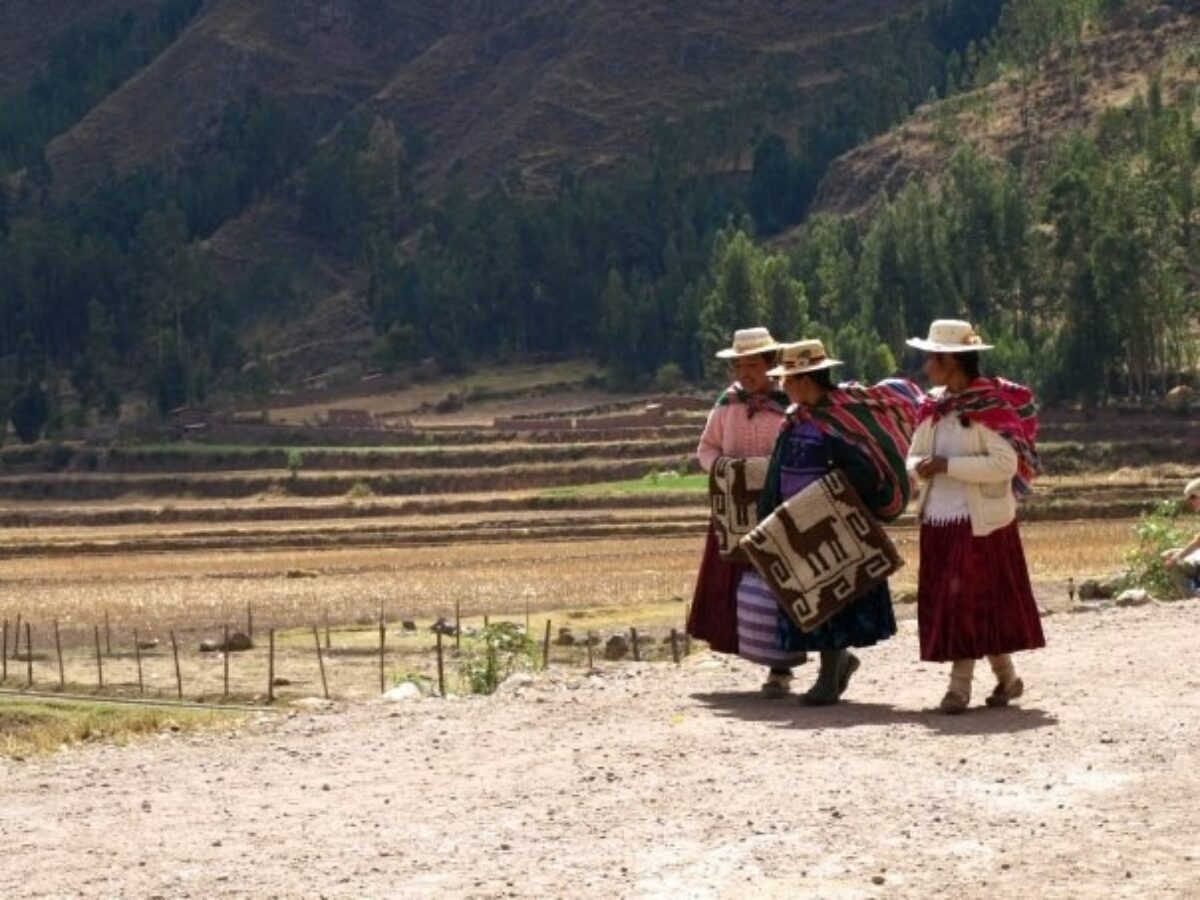
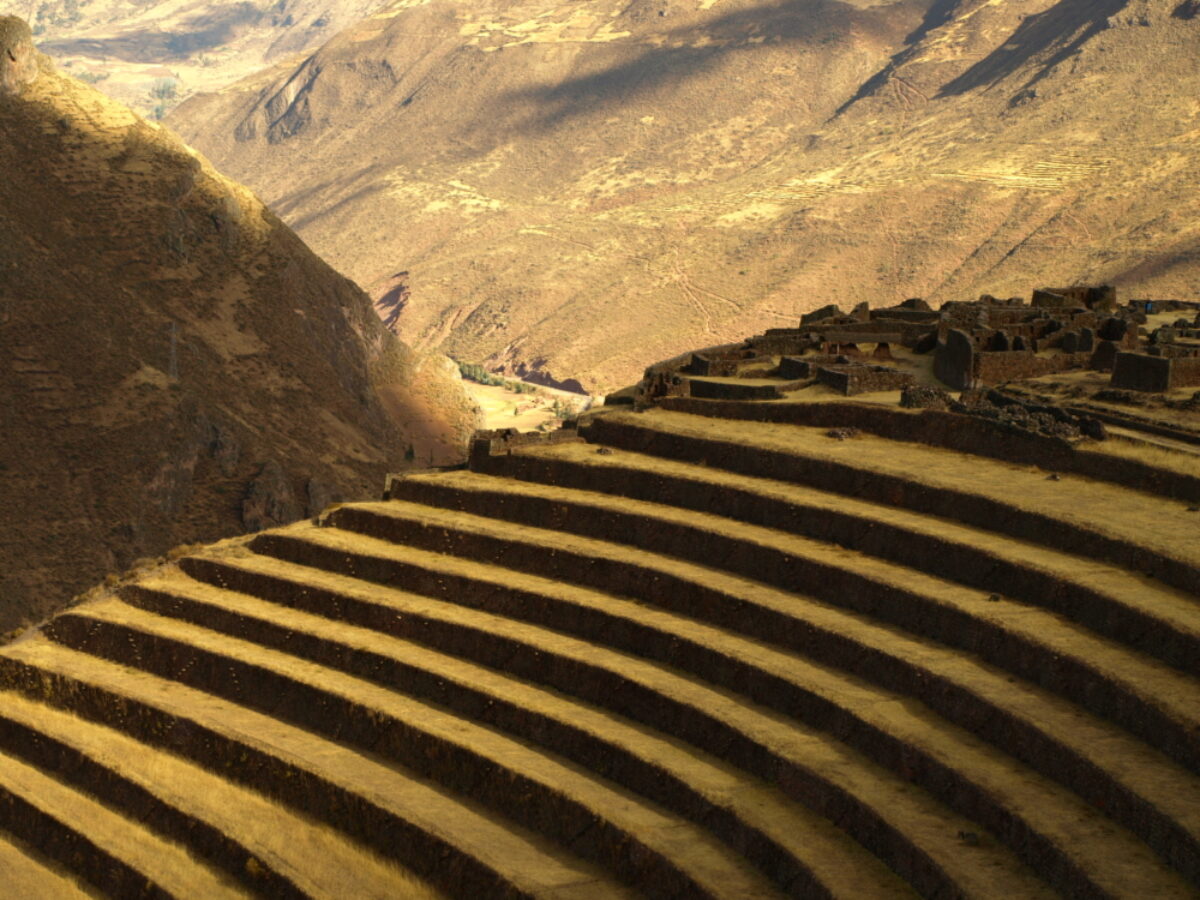
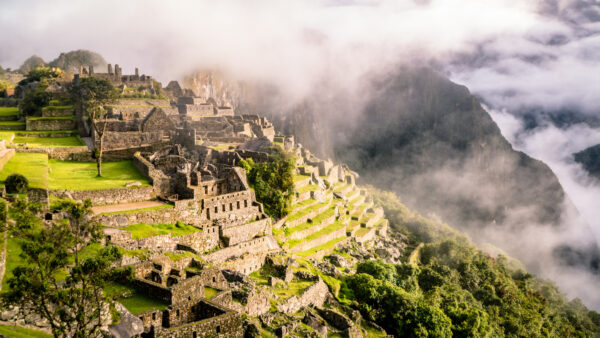
The Urubamba River descends from Cusco, eventually connecting with tributaries of the mighty Amazon. Over immense periods of time, this river has carved out a deep valley whose beauty defies the imagination. Little wonder then that the Inca chose this stunning and fertile location as their spiritual and agricultural heartland. Scattered with ruins, towns and villages where Quechua is still commonly heard, the Sacred Valley is much more than a mere stop-off before Machu Picchu. It’s a destination in its own right, and one that is easily explored from Cusco or by staying in the valley itself.
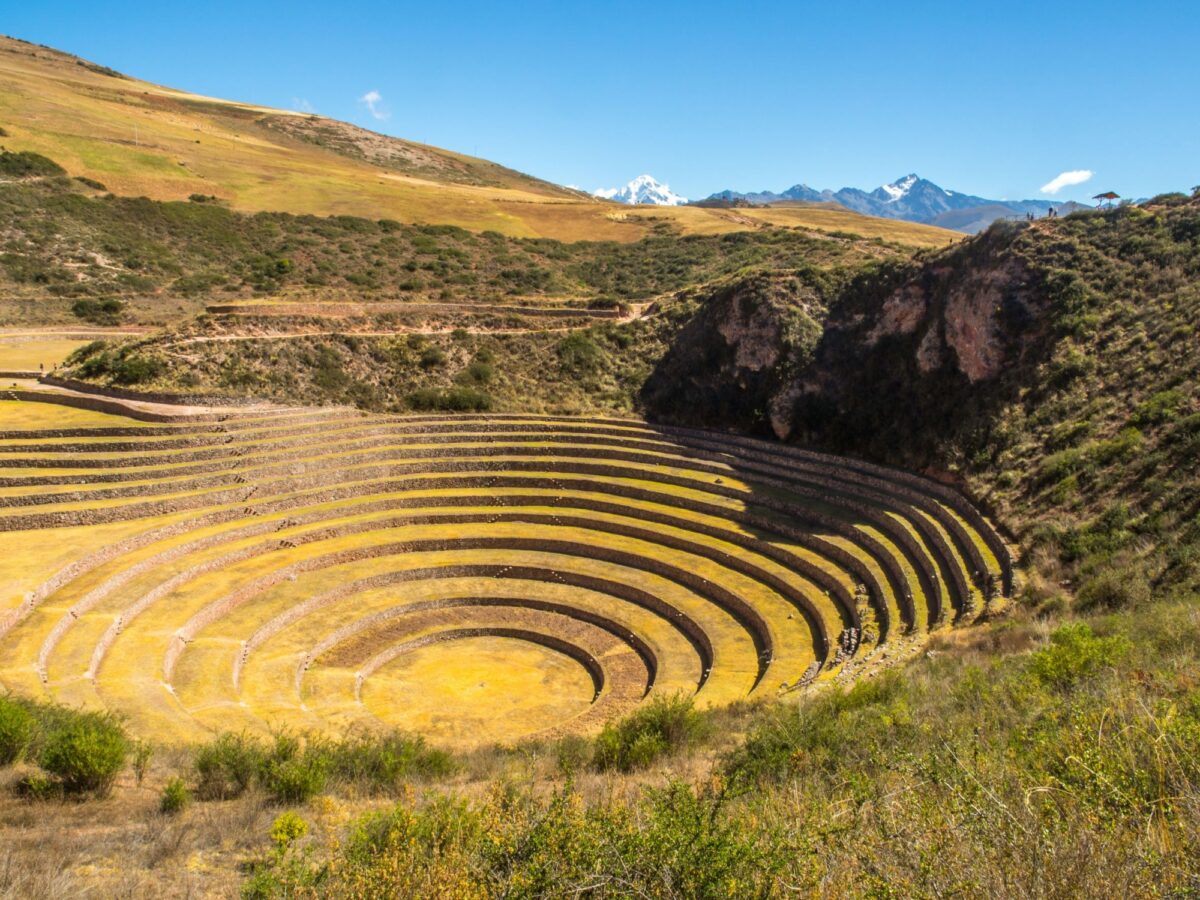
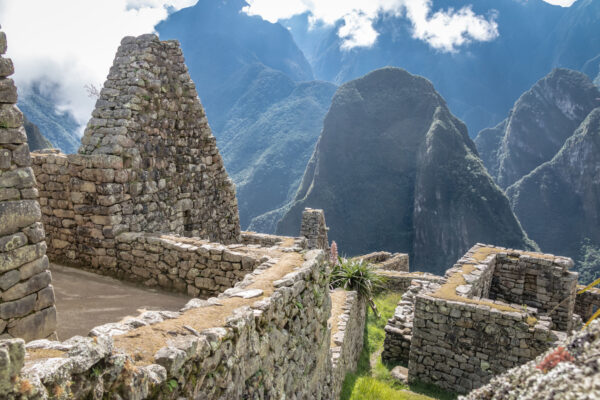
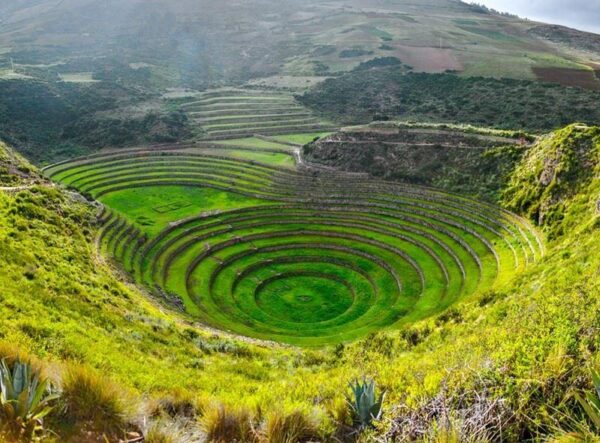
Standout attractions in the Sacred Valley include the Inca citadels of Pisac and Ollantaytambo, and the towns that sit beneath them. Here you’ll find traditional markets selling beautiful textiles and handicrafts made by the locals. Two other popular sites, located in close proximity to each other, are Maras and Moray. Moray features a series of terraced circular depressions, used by the Inca for crop experimentation at different altitudes and microclimates. Maras, meanwhile, is home to thousands of salt evaporation ponds that have been in use since Inca times. In more recent years, the Sacred Valley has become a destination for trekking, rafting, rock climbing and paragliding.
§ 02
Ask our Sacred Valley experts
Real questions, answered by the people who know it
It has usually started to rain by November, so hiking Ausangate from November onwards is not a good idea.
In fact it can be snowing in places by November. We had a group there recently and it was not fun for them due to the weather conditions. If it has to be November, the Inca Trail or Salkantay are good options.
On the classic camping trek, which loops around Mt. Ausangate, you’ll be camping for four nights in marked campsites that are more or less maintained by local communities.
The lodge route takes you from lodge-to-lodge, each one as beautiful as the last and all constructed from local materials. Part-owned and operated by members of the nearby Chillca community, the lodges are a great example of inclusive tourism. Although there is no electricity, the lodges are comfortable and cosy, especially in the evenings around the fire. The fresh meals prepared each day are delicious and you can even have a hot shower!
This is another trek that needs no permit and can, theoretically, be done solo. Yet it is highly advisable to book with a local trekking operator. With the higher altitude and more remote conditions, you will need a guide and support staff who are well-versed in the requirements of trekking in this area.
The classic Ausangate trek is extremely challenging, in particular, because of the altitude, not to mention the cold nights. Even the very fit will find this a challenging route due to the altitude. You’ll need at least three days acclimatisation at altitude before setting off. An emergency horse will be available for exhausted trekkers but should not be relied upon for completing the trek. Make sure you’re fit, healthy, fully acclimatised and not suffering from any stomach troubles before you set off.
That said, although Ausangate is a beat of a trek, there is – as with Salkantay – a lodge version that brings some very welcome creature comforts to the overall experience, doesn’t negate the altitude, weather and gruelling ascents!
You can only really attempt this trek during the dry season, between May and August/September. Trekking during the rainy season (Dec-March) brings snow, flooded paths and the risk of landslides. Note that the dry season is winter in the southern hemisphere, which means night time temperatures will be cold – well below freezing.
The dry season (April/May to September/October) is the best time for hiking in Peru and the Cusco region, but this is peak tourism season and the trails will be busier. Rainy season (November to March) brings less than ideal trekking conditions, but there are some advantages, not least warmer temperatures at night, quieter trails and (maybe) lower prices.
Unlike most treks in the area, the Lares trek is not prone to landslides or other issues during the rainy season, making it a great choice for the off-season. Just don’t forget to pack your rain gear!
The trek is generally rated moderately challenging, although this will vary with side trips or changing the daily distances. Either way, the challenging aspect is principally due to the altitude.
No permits are necessary for hiking the Lares trail, but you will still want to book with a local operator. They will have the right connections with local horsemen and employ qualified guides who know the area well and speak Quechua. This is key for interacting with the communities along the route, as well as for ensuring your safety in the mountains. There is an extensive web of trails that go through valleys and over several mountain passes and trails are not well marked.
There are several different routes for this hike, but the typical one will have you hiking about three days, covering around 25-30km. Most operators sell the trek with an extension to Machu Picchu, however note this is not, as it’s often described, a trek “to” Machu Picchu. You will go by train to a hotel Aguas Calientes for the night and then up to Machu Picchu with the other day trippers the next morning.
Personally, I like Lares the most because you get a real taste of indigenous Andean culture while staying close to Machu Picchu. If you want to do a challenging trek and see Inca archeology, but not necessarily Machu Picchu, go to Choquequirao.
Yes, if you acclimate to the altitude first. Every day somebody gets to the point that they can’t walk any more and a porter actually carries that person piggy-back. I don’t think that should be allowed, but it happens and you don’t want that to be you.
Ask a question
Get answers from our independent Sacred Valley experts.
Get a free, personalised answer about Sacred Valley.
You'll receive a reply by email. Questions and replies may be anonymised and reproduced on Horizon Guides.
§ 03
The Sacred Valley atlas
16 picksPlaces & Experiences You Won't Find Elsewhere
Where
What
Difficulty: StrenuousDistance: Approx. 42kmDuration: Four days hikingStart/end point: Soraypampa/HidroelectricaAccommodation: Camping
The Palcay Trail is a virtually unheard of Machu Picchu trek. The trail runs through community-managed land and access is allowed only with local consent, making this a truly unique trek for those who manage to get permission.
I find this route offers all the magical elements of the Inca Trail – cloud forest, Inca ruins, towering mountains – but almost entirely free of any other trekkers. The route starts in Soraypampa, approximately three hours’ drive from Cusco, and begins climbing almost straight away. The main climb is on the second day, with two high mountain passes, and by the fourth day you arrive at the hydroelectric station near Aguas Calientes. Typically you’d spend the night in a hotel there before doing a day tour of Machu Picchu the following morning.
One word of caution, though: this is a very challenging route, and one I’d only recommend for fit and experienced trekkers. The highest point is Inka Chiriaska at 4,937 m, and Palcay Pass isn’t far off at 4,708 m. The ascents are steep but the views, right across the valley all the way to Salkantay mountain, are incredible.
You can’t realistically do this hike on your own, you need a guide and to gain the necessary permissions to enter community-managed land.
Difficulty: StrenuousDistance: 50 kmDuration: Four daysMax elevation: 4,959m/16,270ft.Accommodation: CampingStart/end point: Socma to Piscacucho
This is another lesser-known trek in the Sacred Valley and Machu Picchu area, and is one of the most difficult in the whole Cusco region.
On the final day of my preferred route you link up with the first day of the classic Inca Trail, but in the opposite direction. Despite this, very few other hikers do this trek, making it a great hidden gem in an otherwise busy region.
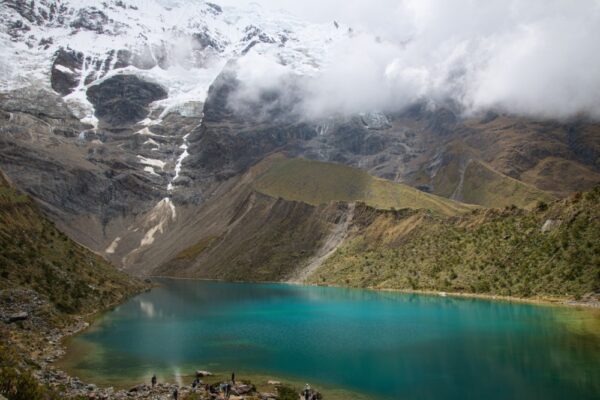
My preferred route starts at Socma and follows the same route as the Cachiqata trek (Quarry Trail). But where that trek veers north, this route goes west into the Chancachuco Valley and, on the second day, over some strenuous mountain passes to beautiful Ancascocha Lake, fed by glaciers from Huayanay mountain. The mountain scenery up here is out of this world.
The downhill stretch from Chancachuco to Chilca or Paukarcancha is particularly stunning, with beautiful wild orchids lining the trail.
On the third day you see the first day of the classic Inca Trail in reverse and get to visit the ruins of Paukarcancha and Llaqtapata before finishing the hike where the classic Inca Trail begins. From here, you can either take the train to Aguas Calientes and a bus to Machu Picchu or, my favourite, finish with the KM 104 (‘short Inca Trail’) and arrive at Machu Picchu on foot.
No permits are required unless you’re combining the hike with the classic inca trail.
Difficulty: MildDistance: 23 kmDuration: Two daysMax elevation: 4,335 metresAccommodation: CampingStart/end point: Patabamba to Lamay
This is one of my favourite shorter treks in the Sacred Valley region. The hike leads to the remains of Huchuy Qosqo, which means ‘small Cusco’ in the indigenous Quechua language.
The Huchuy Qosqo Trek is an excellent choice for inexperienced hikers as it is the easiest trek in the Cusco area. The hardest climb takes only three hours, followed by a downhill walk. I usually recommend this hike for groups with kids or older trekkers, although proper acclimatisation is still essential.
One of the most impressive features is the Leon Punku Canyon, which leads you through a stunning Inca road that runs along the bottom of the canyon. Another interesting feature of this hike is that it’s the only trek where you can camp within Inca ruins.
The route starts in Patabamba and leads through grassland puna as it climbs towards Sihuas pass, following some of the original Inca roadway, of which the more famous Inca Trail is just one section. Eventually on the end of the first day you reach the site of Huchuy Qosqo and make camp at the ruins. (With no light pollution for miles, the high altitude night sky here is one of the best places to stargaze.) The next morning you can explore the ruins before descending and finishing in Lamay town, which is an interesting place to explore for an hour or so.
Probably my favourite way to hike to Machu Picchu is by combining the Huchuy Qosqo trek with the KM 104 (‘short Inca Trail’) hike, and entering Machu Picchu on foot rather than by bus with all the day trippers.
If you prefer more of a challenge, the alternative routes via Ccor Ccor or Cuper Alto are just as impressive, but a bit tougher.
Difficulty: ModerateDistance: Approx 28 kmDuration: Three daysMax elevation: 4,440 metresAccommodation: CampingStart/end point: Socma to Ollantaytambo
The Cachiqata (Cachicata) trek, also known as the Quarry Trail, is one of my favourite short treks in the Sacred Valley area. Although close to Ollantaytambo, Cachiqata has a real “off the beaten path” vibe, with very few tourists compared to the area’s other more popular trekking routes.
The trail is named after an Inca Quarry in the mountains above Ollantaytambo. It’s an extensive site and was the main source of stone for the town. You can see quarried stone still left unfinished, burial houses and even a cave with mummies still in situ. This is the only trek around Machu Picchu where you can see firsthand the techniques used by Inca stonemasons to cut and shape rocks for the empire’s impressive constructions.
My preferred route starts from the small settlement of Socma, south of Ollantaytambo. You follow a valley towards the waterfalls and ruins at Perolniyoc before camping for the night in Rayan. The next day you climb a mountain pass and cross high Andean plateau until you reach Cachiqata quarry, going via an Inti Punku ‘sun gate,’ (not to be confused with the more famous sun gate on the Inca Trail), which offers a stunning balcony view of the majestic Veronica mountain.
On the third day you spend most of the day exploring the site before descending to Ollantaytambo. From here you can continue to Aguas Calientes and Machu Picchu, or head in the opposite direction back to Cusco.
No permits are required for this hike, unless you want to combine it with the KM 104 (short Inca Trail’) afterwards.
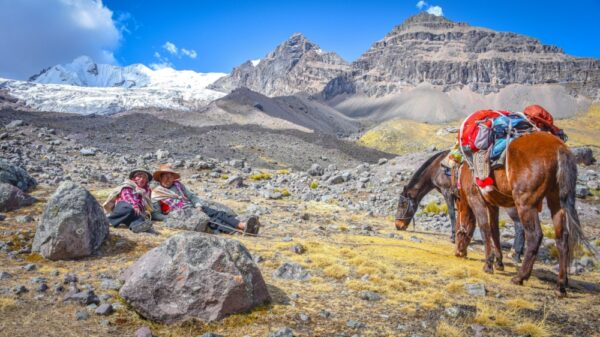
Difficulty: StrenuousDistance: Approx. 96 km (60 miles)Duration: Four to five daysMax elevation: 5,200 metresAccommodation: Camping or lodgesStart/end point: Tinki - Pacchanta
The classic Ausangate route is a beast of a trek, although - as with Salkantay - there is a lodge version that brings some very welcome creature comforts to the overall experience.
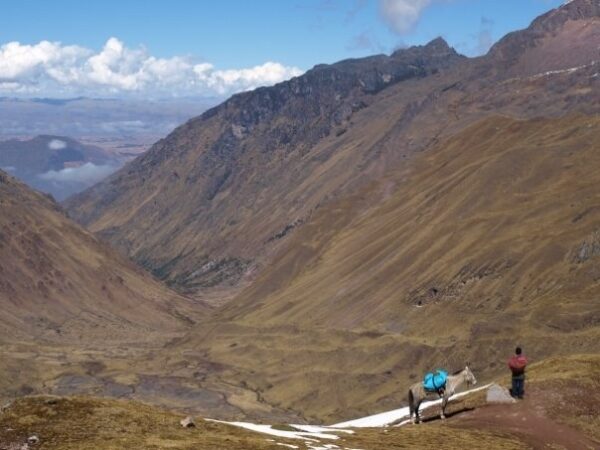
The landscape here is rugged, wild, and pristine. You’ll be surrounded by awe-inspiring glacier mountains, turquoise lagoons of various sizes, and wildlife such as an abundance of waterfowl, raptors, and vizcachas, a cousin of the chinchilla. There are also some high mountain communities in this area who shepherd their alpacas in the region and offer some of the most beautiful weavings you’ll see in Peru. You’ll also get to soothe your aching feet in hot springs along the way.
Difficulty: StrenuousDuration: Five daysDistance: 55 kmMaximum elevation: 4500mStart/end point: Huancacalle - Yanatile
The Vilcabamba Trek takes hikers through the remote and rugged Vilcabamba mountain range, home to the last Inca stronghold during the Spanish conquest. Few trekking agencies run trips here but if you do go, you’ll likely have the place to yourself. Two amazing Inca ruins that you’ll visit are Vitcos and Ñustahispana.
The highlight of the trek is the visit to the remote and well-preserved Inca site of Espiritu Pampa, also known as "The Last City of the Incas." Read “Turn Right at Machu Picchu” by Mark Adams for a humorous account of his gruelling trek to Vilcabamba. This is a difficult trek because of the high mountain passes.
Difficulty: StrenuousDistance: Approx. 60km (37m)Duration: Four to five daysMax elevation: 4,630 metresAccommodation: Camping or lodgesStart/end point: Challacancha - Santa Teresa
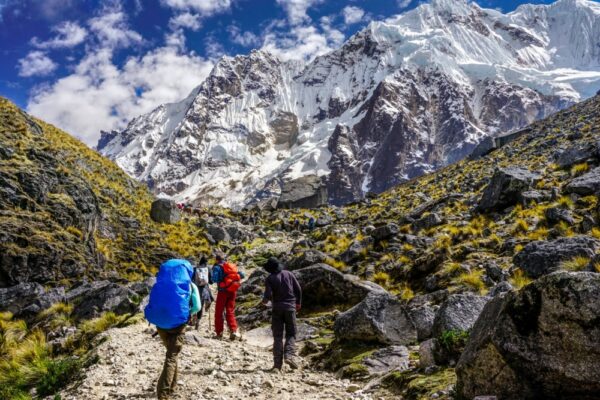
The Salkantay Trek is the most popular alternative to the Inca Trail, described by National Geographic as one of the best treks in the world. While there are no ruins along the way unless you do the lodge-to-lodge version, the opportunity for gorgeous landscapes is even greater than on the Inca Trail, leading it to be known as the “Nature Trek.”
From snow-capped mountains down to high jungle, this trek is known for its varied ecosystems and landscapes. You’ll pass high mountain glaciers, walk along rolling fields and pastures, and end up in the high jungle that surrounds Machu Picchu.
The length of this hike can vary, both in mileage as well as in the number of days. The traditional version is four days of hiking, covering a distance of about 37 miles. If you choose the much more comfort-oriented lodge-to-lodge version of the trek, you will hike for six days, covering a bit more distance but with less hiking time per day.
Expert insight, by Miles Buesst of PeruNorth, a specialist in Peru trekking tours: "The last time I did the Salkantay Trek, despite being tired from the first day’s hiking, I made the effort to climb up the lateral moraine left by Salkantay Glacier. Boy, it was worth it! I was rewarded with a vast lunar landscape of rocks and craters, left by the retreating ice sheet. I could hear the occasional sound of the glacier calving a kilometre above me, and falling rocks and ice. It was easy to see why locals - past and present - have worshipped these mountains as gods, called apus."
Difficulty: ModerateDistance: Various routes, classic route approx 33km (20m)Duration: Three to four daysMax elevation: 4,400 metresAccommodation: Camping or lodgesStart/end point: Huarán - Lares Hot Springs
The Lares Trek is known as the “cultural trek” to Machu Picchu, as it offers opportunities to interact with local communities along the way. It’s one of the shorter treks, which makes it a good option for those who are short on time.
This is probably my favourite of all the Machu Picchu region treks, for the cultural interactions that are less common on some of the other routes.
Hiking from the Sacred Valley up to high mountain passes, you’ll be treated to some stunning vistas on this route. However, the real treat here is meeting the local inhabitants of indigenous villages along the way, learning about ancestral weaving techniques directly from the descendants who are still practising them today. An added (and welcome) bonus is finishing at the hot springs in Lares.
Difficulty: StrenuousDuration: Four daysMax elevation: 4,215 metres (13,828 ft)Accommodation: CampingStart/end point: KM82 to Machu Picchu
The Inca Trail is easily the most famous of all the Peru treks. Since it first opened, it’s been included in every roundup of the world’s best trekking routes, and for good reason. There’s something profoundly magical about making this pilgrimage, as the Inca once did from Cusco to Machu Picchu.
Only on this classic route can you actually arrive at the famous ruins on foot. For any of the so-called alternative Inca Trail treks, the route will finish at a different point, and you’ll arrive in Machu Picchu via train to Aguas Calientes.
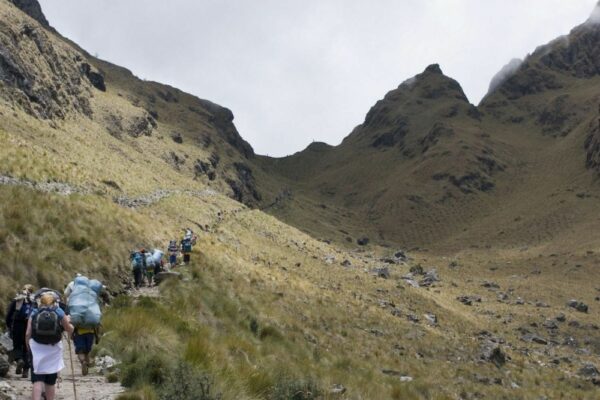
Although you’ll certainly see your share of stunning landscapes as you head from the mountains to the high jungle, this trek is particularly known for its stop-offs at numerous Inca sites along the way. While you’ll be sharing the path with a great number of other tourists, porters, cooks, and guides, you can still snatch some private moments to take in the scenery, not to mention the history, of the trail.
For me, a major downside to the Inca Trail is its deeply problematic workers' rights concerns. Be sure to book with a responsible operator, or consider one of the alternatives.
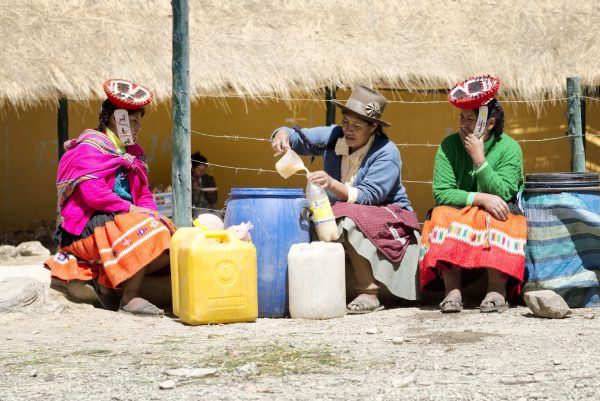
Down a glass of chicha de jora, a corn beer brewed in the Sacred Valley for centuries. As you stroll through the streets of any settlement in the Sacred Valley, keep an eye out for regular-looking houses with one defining characteristic: a pole with a red bag or piece of red cloth attached to one end. This means that the household has chicha for sale. Knock on the door and you’ll likely be greeted by an elderly resident, who will fill you a glass of the pale, straw-coloured beer.
The classic itinerary to Peru's absolute top highlights. Starting in Lima head to the southern Andes to visit the ancient capital and Inca stronghold of Cusco, followed by a night or two exploring the glorious Sacred Valley. From here round off the trip with a guided tour of Machu Picchu itself.
There's no denying that this is a well-trodden route, but with the help of a quality tour operator with intimate local expertise it's still easy to get off the beaten path for a view of Peru's indigenous cultural heritage.
If you've got time to extend your trip you can get truly off the beaten path with a visit to some of Peru's lesser-known archaeological sites, the Amazon rain forest, or simply spend a little longer in Lima and Cusco for a better insight into contemporary Peru, its fascinating culture and world-beating cuisine.
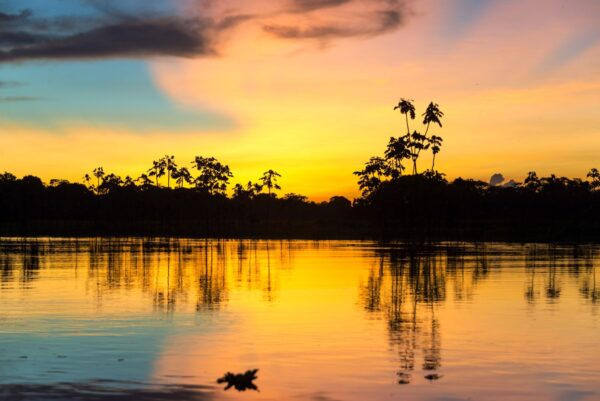
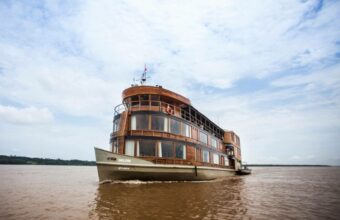
The northern Amazon is very different to the more popular Puerto Maldonado in the south. Located closer to the Amazon River, this is a watery wonderland best explored by a small-ship river cruise. Cruises depart from Iquitos for a three-night voyage to the remote Pacaya Samiria National Park. On the way you'll take guided excursions into the jungle to spot its myriad wildlife, kayak the tributaries, fish and swim in the mighty Amazon River. After your rainforest adventure you'll head south via Lima and up into the Peruvian Andes to visit historical Cusco, the glorious Sacred Valley and, the cherry on the cake, the world-famous ruins of Machu Picchu.
Combine Peru's two finest gems in one trip: the biodiverse wonderland of Puerto Maldonado in the southern Amazon basin, and the incredible cultural heritage of Machu Picchu and the Sacred Valley. Start your trip in Lima before heading to a remote jungle lodge to explore the rainforest with expert guides, before arriving up into the high Andes to marvel at Machu Picchu, historical Cusco and the many ruins of the beautiful Sacred Valley.
This popular route covers the best of the Peruvian highlights in one convenient itinerary, calling at all the key locations in the country's southern highlands, a region of remarkable natural and historical heritage.
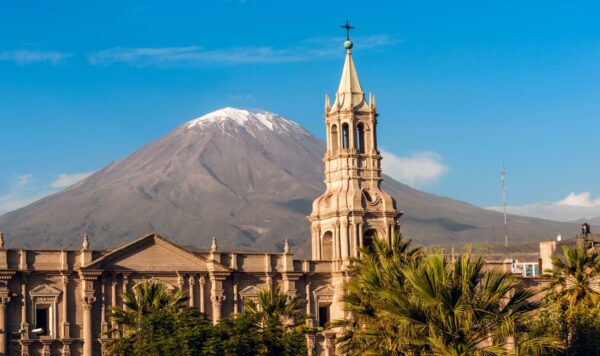
Starting from Lima you'll head south to Arequipa, Peru's elegant second city and gateway to the Colca Canyon. From here you'll travel to Puno, on the shores of Lake Titicaca, the highest navigable lake on earth and cradle of the Aymara pre-Colombian cultures.
Finish the epic trip in the Sacred Valley, exploring Cusco and, of course, Machu Picchu.
Go on an Incan adventure in Peru by combining a trip to culture-rich Machu Picchu and the Sacred Valley with a trek along the forgotten Great Inca Trail from Huaraz to Huanuco Pampa.
Start your trip in Lima before heading marvelling at the Inca citadel of Machu Picchu, historical Cusco and the ruins of the Sacred Valley. Then, journey to Huaraz where you'll pick up the Great Inca Trail, passing through Andean mountains and along river basins, camping out under the stars as you learn more about this fascinating culture.
This Sacred Valley tour is for travellers who want to explore hidden villages on foot while also seeing the glorious historical sights the Inca heartland has to offer. You will hike to the remote indigenous community of Choquechaca to learn about their ancient weaving traditions, enjoy a freshly prepared mountainside lunch, and explore the ruins of Pumamarca, before heading on to tour the world-famous Machu Picchu and Cusco in style.
Your details are safe and will not be used for any other purpose. By using this service you agree for us to share your details with your chosen tour operator according to our Privacy Policy.
1Your trip
2Complete your request
3Meet your specialist
Find a Sacred Valley specialist
Tell us about your trip and we'll find your match
We'll connect you directly with the experts.
Connect with Martha Cohen, Claire, Rene and 2 other Sacred Valley specialists.
We'll connect you directly with the experts.
Connect with Martha Cohen, Claire, Rene and 2 other Sacred Valley specialists.