





Difficulty: Mild
Distance: 23 km
Duration: Two days
Max elevation: 4,335 metres
Accommodation: Camping
Start/end point: Patabamba to Lamay
This is one of my favourite shorter treks in the Sacred Valley region. The hike leads to the remains of Huchuy Qosqo, which means ‘small Cusco’ in the indigenous Quechua language.
The Huchuy Qosqo Trek is an excellent choice for inexperienced hikers as it is the easiest trek in the Cusco area. The hardest climb takes only three hours, followed by a downhill walk. I usually recommend this hike for groups with kids or older trekkers, although proper acclimatisation is still essential.
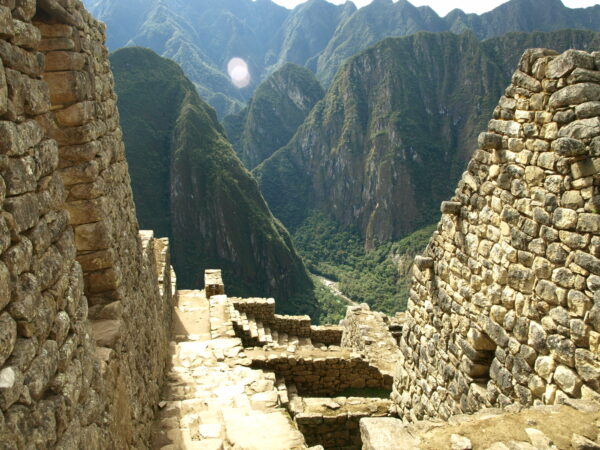
One of the most impressive features is the Leon Punku Canyon, which leads you through a stunning Inca road that runs along the bottom of the canyon. Another interesting feature of this hike is that it’s the only trek where you can camp within Inca ruins.
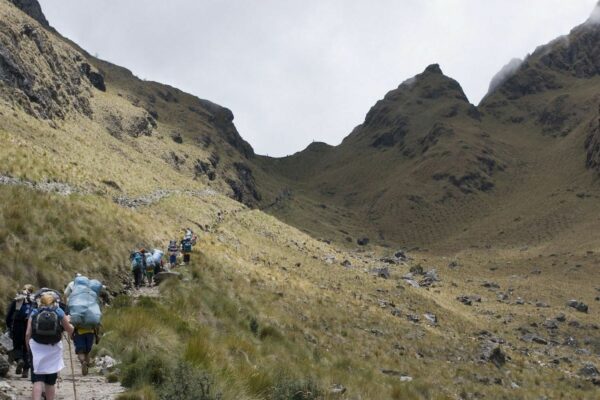
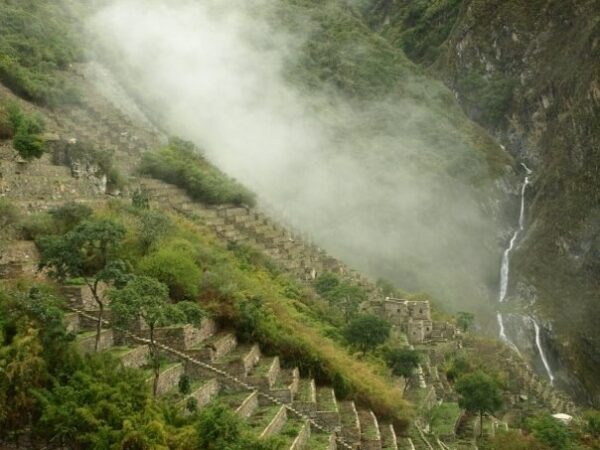
The route starts in Patabamba and leads through grassland puna as it climbs towards Sihuas pass, following some of the original Inca roadway, of which the more famous Inca Trail is just one section. Eventually on the end of the first day you reach the site of Huchuy Qosqo and make camp at the ruins. (With no light pollution for miles, the high altitude night sky here is one of the best places to stargaze.) The next morning you can explore the ruins before descending and finishing in Lamay town, which is an interesting place to explore for an hour or so.
Probably my favourite way to hike to Machu Picchu is by combining the Huchuy Qosqo trek with the KM 104 (‘short Inca Trail’) hike, and entering Machu Picchu on foot rather than by bus with all the day trippers.
If you prefer more of a challenge, the alternative routes via Ccor Ccor or Cuper Alto are just as impressive, but a bit tougher.
At a glance
Destinations
Machu Picchu
Activity
Adventure, Trekking, Active, Walking, Camping, Nature & Wildlife, Culture, Archaeology, Responsible Travel, Slow TravelPhysical Level
Mild
Duration
2 days
Related Guides
Trekking in Peru
There’s nothing quite like traversing a remote trail on foot, arriving at a new place by muscle power just like the travellers of old. Trekking in Peru satisfies the human itch to travel by foot for days, to earn a destination after a hearty physical challenge.
Machu Picchu hikes
While there are hundreds of fascinating ruins in Peru, the famed Machu Picchu has captured the hearts and imaginations of travellers around the world.
The Inca Trail Trek: An Expert Guide
The classic Inca Trail, one of the world's most iconic treks, is so famously popular because its final destination is the most spectacular of all: Machu Picchu. Only on this classic route can you actually arrive at the famous ruins on foot.
Hiking to Choquequirao
Until recently, relatively unknown and vastly overshadowed by the “sister ruins” of Machu Picchu, the Choquequirao complex is a true hidden gem that receives just a handful of visitors each year.
Hiking the Salkantay Trek
The Salkantay Trek is the most popular alternative to the Inca Trail, described by National Geographic as one of the best treks in the world. While there are no ruins along the way unless you do the lodge-to-lodge version, the opportunity for gorgeous landscapes is even greater than on the
Hiking the KM 104 route
Although tour operators typically refer to this as the "Two Day Inca Trail", it actually only involves one day of hiking. The second day you visit Machu Picchu after spending the night in a hotel Aguas Calientes.
The best time to hike in Peru
Choosing the best time to go trekking in Peru requires some trade-offs between ideal conditions, prices, and busyness. Conditions also vary considerably depending on where you're going.
Must-see Peru ruins
Peru is one of the most archaeologically-rich countries on earth, and not just because of its blockbuster site, Machu Picchu.
How to get to Machu Picchu
The 800lb gorilla of Peru's historical sites, most visitors to the country are here primarily to visit Machu Picchu.
Alternatives To Machu Picchu
For most people, Peru is Machu Picchu.