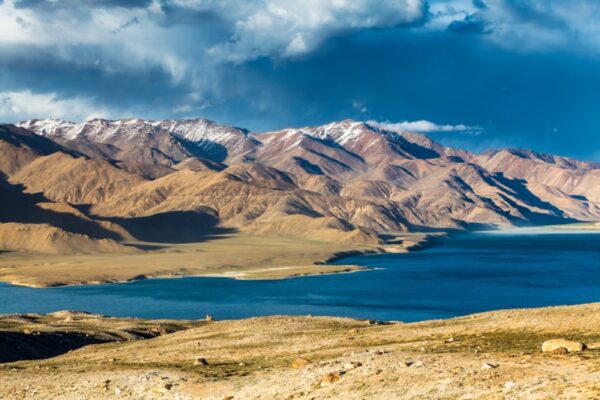
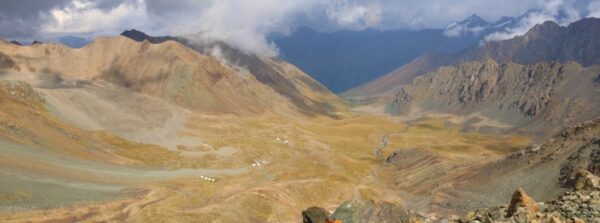
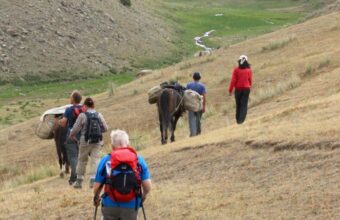
Kyrgyzstan, straddling the Pamir and Tian Shan ranges, is an adventure traveller's dream and most people come here to trek its stunning landscapes of mountains and lakes.
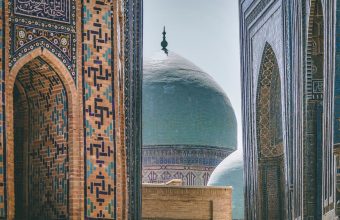
Kyrgyzstan has a rich culture but, unlike in neighbouring Uzbekistan, the nomadic shepherds have left few physical landmarks—you’ll find no shimmering Samarkand equivalents here. Instead, Kyrgyz history is woven into the tapestry of daily life. To get under the skin of the Kyrgyz it is necessary to accept their hospitality: drink enormous amounts of milky tea, play with the kids, and round up the sheep for the evening. Before long, your adopted lifestyle will be hard to leave.
I'm interested in the Shamshy Gorge to Son-Kul Lake trekking tour. Is there a departure around 1 May, or is that too early in the season?
Answered by: Asel Ismailova
The best time for trekking from Shamshy Gorge to Son-Kul Lake starts from 1–10 June. Before June all the passes are covered by snow, and it would be very difficult to trek in May.
Is early June a good time for horse trekking at Song-Kul Lake?
Answered by: Adri de Koning
The beginning of June is rather early in the season, so you will need warm clothes at this high altitude (3100m). The good thing however is that all spring flowers are blooming then.
We’re planning about 10 days in Kyrgyzstan in August or September. We’d like to see Son Kul, Sary Jaz, a couple of canyons, and do hikes like Lenin Peak Base Camp, Kel-Suu, Kol-Tor, and Ala-Kul, plus maybe 1–2 days of horse riding. Is it realistic to fit this all in, and what would you recommend?
Answered by: Adri de Koning
You’d need around two weeks to include everything. For a 10-day trip, it’s better to leave out Lenin Peak, which requires several days of travel, and focus instead on Son Kul, Kel-Suu, Ala-Kul, and two canyons such as Konorchok and Skazka. This keeps driving manageable and gives a balanced mix of scenery, hiking, and local experiences.
I understand November is too late in the trekking season, but are there any places we can go for day hikes?
Answered by: Adri de Koning
The weather in November is too unpredictable to organise overnight treks, but there are still plenty of options for day hiking. The lower valleys around Chon Kemin and the red-rock canyons of Konorchok and Kok Moinok would be ok. Around Kochkor and Temir-Kanat, there are scenic day routes to viewpoints and mountain villages. At Lake Issyk-Kul you can hike in the Skazka and Jeti Oguz valleys and visit Altyn Arashan by vehicle. These can be organised into a 10 day trip, although be prepared for disruption with changeable weather.
We'd like to visit Kyrgyzstan in August, but could possibly come a little later in September if it would be more peaceful - what do you suggest?
Answered by: Adri de Koning
It depends where you go hiking – if you follow a more touristic itinerary, for example Ala Kol, or around Issy Kul, perhaps the end of August and into early September would be better. If you're not doing a touristic tour, July and August are the best time – the days are longer and the temperatures are still warm – and you certainly won't be troubled by any crowds.
The Ak Suu Traverse is a rather difficult trek – the full route may not be suitable for intermediate or less confident hikers. The first four days might be a better option, which can be easily arranged.
For less confident trekkers I'd encourage you to consider other treks. Personally I'd recommend three days trekking around Tong in the Issyk-Kul region. It's much less popular than the Ak Suu Traverse, but is similar in that you'll sleep in tents and your luggage will be carried on horseback. The first two days you hike through forest, alpine meadows, crossing a high pass of 3500m. On the third day the trail descends gently at first. When you enter Tosor gorge, steep red rock formations rise on either side. The Tosor river flows beside the trail, providing cool air and the soothing sound of water. Occasional stream crossings and narrow, rocky paths require care, but nothing technical.
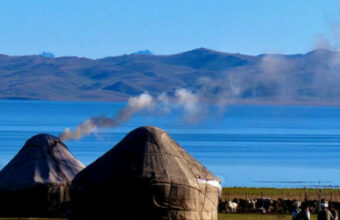
Traditionally, the Kyrgyz people were nomads who didn't build houses in the mountains but spent the summers there with their flocks in yurts. It is possible to spend a night in these traditional yurts, but it's very rustic and informal and will depend on the contacts of your guide or trekking operator.
To meet growing interest, there are now fixed yurt camps that cater especially for tourists – this is more like a simple safari camp experience, with a meal tent, separate bathrooms, hot water, and other facilities to make it a bit more comfortable.
There are a few point to point treks that can be done with homestays, guesthouses or yurt camps. There is a network of yurt camps on the Ak Su Transverse trek and the short Ala Kol trek can be done with yurt camps rather than tents, as can the horseback treks in the Pamir Alay Mountains.
If you really don't want to camp, you should try staying in a few different yurt or homestays and doing day hikes from there. Popular spots are around Karakol, Son-Kul and Sary Chalek, others are quieter and not yet so well known. These places you still find on the south side of Lake Issyk-Kul and hiking in the Chon Kemin valley are a good option.
For most treks, the hiking season for organised/supported tours begins in mid-June. You can hike solo before then, but you'll need to be prepared for the cold and rain.
The night time temperatures in June vary from 7 to 10 degrees C. You won't be troubled by mosquitoes in the mountains.
The full range of necessary gear is available in trekking hubs (especially Bishkek and Karakol), though footwear for anything larger than about 40cm can be difficult to find. However, the gear available is often low-end Russian equipment (some military, more often Red Fox or similar brands) so Ultralight wannabees will need to bring everything from home.
In cities, Russian and Kyrgyz are more or less equally common, with English and other foreign languages also heard in the more touristy destinations. In rural regions and especially deep in the mountains, Kyrgyz is by far the more common with Russian a bit behind. Though, oddly, as part of the Soviet educational system German was widely taught and so some old timers can still converse a bit.
No permits are required for trekking, but border areas do require a special permit from the Border Guards Service. The most popular tourist and trekking areas that this includes are Peak Lenin Base Camp, Kel-Suu Lake, and Inylchek Glacier and Base Camp areas. While this is possible to do individually, it will require multiple visits over several weeks to various government offices in Bishkek and regional cities. It’s far more practical to pay a tour company $40-50 to do it on your behalf before you arrive in the country.
Basically anywhere that one treks can be done as a horse trek, with a rare few exceptions like Ala-Kol where the primary trail is in parts either too steep or poor footing for horses. Most visitors will arrange these trips in tourist hubs like Karakol, Kochkor, Naryn, or Sary-Mogol; but in principle anyone with the language and horsemanship skills could arrange this directly with shepherds in the mountains.
A few day trips out of Bishkek are suitable for basically any fitness and experience level: Ala-Archa’s waterfall, Belagorka waterfall, and Boirok Birch Grove are all top of mind. In terms of most difficult, the sky's the limit. Peak Lenin is one of the most accessible 7,000m+ peaks on the planet, but with a guide and some climbing training can be done by trekkers.
Kyrgyzstan is safe with the caveats of any wild alpine destination: landslides, flash floods, widowmakers (falling tree branches), and avalanches can and do happen in a mountain environment and you should be prepared for these eventualities.
Solo female travellers need have no specific concerns for Kyrgyzstan, beyond the risks that exist anywhere in the world.
I’m a big fan of the village of Jyrgalan in far eastern Issyk-Kul. It’s one of the few areas where you can walk right out the door and into the start of a hike, and also quite popular for freeride skiers in winter.
To pick one best trek, the Ak Suu Transverse from Jyrgalan to Jeti-Oguz route via Ala-Kol might be it - lakes and waterfalls and one or two passes everyday for a week, in varying scenery and with the Altyn Arashan hot springs right in the middle. It has a bit of everything that makes trekking in Kyrgyzstan delightful.
Shepherds’ yurt camps will typically offer passing visitors tea or fermented horse milk and some small bites but, if trekking solo, you’ll want to carry in your own provisions as much as possible. The major exception is tourist yurt camps, which typically include breakfast and dinner into their pricing schemes.
On an organised trekking tour you'll be well catered for, with three meals a day.
On DIY trek, there is only the accommodation that you carry in on your back. Yurts do exist in most places, but these are typically authentic shepherd’s yurts and not really set up to receive tourists. You may be welcomed in, but expect a very rustic experience, and at any rate you can’t count on it so you’ll still need to lug a tent along.
On organised trekking tours your operator will take care of the camping logistics: you'll have porters striking and setting up camp each day and horses or vehicles transporting camp equipment from stop to stop.
In more popular tourist areas like Ala-Kol and Son-Kol, local community-based tourism programs have established tourist yurts that do reliably receive overnight guests.
Most of Kyrgyzstan’s trekking routes can be done solo, but having a guide or even just a local friend along can open up so many yurt doors and so many incredible interactions along the way: from simply being invited in for tea and a chat to being invited along on horseback to collect the herds from high pastures in the morning.
Despite how amazingly vast the landscapes are, so many of my favourite trekking moments have been borne of these small personal interactions that even the best route planning and map reading could never guarantee.
The major exception might be routes along the southern border with Tajikistan, where recent border clashes mean having a guide and interpreter to hand is probably wise.
The high season is mid-June through mid-September, as higher temperatures mean less snow on high passes and in deep valleys, though it is important to be prepared for any weather all year round at these elevations.
Spring sees hillsides covered in wildflowers and autumn brings bright autumnal foliage, but in both hikers will need to be prepared for lower overnight temperatures and plenty of rain.
Winter does see some snowshoe and cross-country skiers, or in the rare desert areas that see no real precipitation, sometimes a tiny few dedicated hikers.
Most of the trekking in Kyrgyzstan is non-technical and requires no real skill. But there’s plenty of elevation gain most days and very little flat walking, so the focus should really be on assessing the ‘fit and active’ criteria in the lead up to a trip.
Ask a question
Get answers from our independent Kyrgyzstan experts.
You'll receive a reply by email. Questions and replies may be anonymised and reproduced on Horizon Guides.
§ 04
The Kyrgyzstan atlas
22 picksPlaces & Experiences You Won't Find Elsewhere
Where
What
Duration: 8 days (excluding acclimatisation days)Distance: Approx. 100kmStart/finish: OshAccommodation: Tents and yurt campsDifficulty: Strenuous
Lenin Peak is a fairly well-known and commercially organised trek in the southern Pamir-Alay range on the borders of Tajikistan and China. The trek is offered as a basecamp trek or a summit climb to the very top, a stonking 7,134m above sea level with views stretching right across the Pamirs to China, the Hindu Kush and beyond.
The summit climb is a serious undertaking and requires prior experience, skill and plenty of prior acclimatisation. The basecamp trek gets you to a more achievable 4,400m.
Difficulty: StrenuousDuration: Approx. eight days not including acclimatisationStart/finish: Altyn-ArashanAccommodation: Camping
An exceptional, and little-known summit trek to the roof of the Tian Shan mountains. At 4,770m, climbing Palatka is certainly a challenge but one that requires no technical mountaineering skills, just better than average fitness and an iron will!
You might question your life choices on the way up, but the scenery – especially the views from the summit – are life changing.
There are around eight days of actual trekking, with at least one rest / contingency day built in. Most organised trips will also include several buffer days beforehand for acclimatisation and organising logistics.
Distance: Approx. 80kmDuration: Six daysStart/end point: Enilchek ValleyDifficulty: Moderate to strenuous
This is a really special hike, and probably my top recommendation in all of Kyrgyzstan. It's quiet and remote (you're unlikely to see any other trekkers the entire time), and it culminates at one of the most quirky geological locations in the whole country – the so-called "disappearing" Merzbacher Lake, on the border with China and Kazakhstan.
This is a seasonal glacial lake that fills with meltwater from the Inylchek Glacier each spring and drains in spectacular fashion in late summer. This phenomenon is a rare – and incredibly dramatic and noisy – only witnessed by a lucky few. You'd be exceptionally lucky to time your arrival to witness the lake draining, and the lake itself is not hugely impressive, but the surrounding landscapes make it all worthwhile.
You'll be hiking four to six hours each day, often along rugged and challenging paths. You'll spend the night in tents, or maybe in semi-permanent yurt camps if you're booking an organised trip.
Distance: Approx. 60 kmDuration: Six daysStart/finish points: Song-Kul to Tuura-SuuAccommodation : Yurts & campingDifficulty: Moderate
This is a popular route that offers a relatively easy introduction to the stunning Tian-Shan mountains as you hike between the two largest lakes in Kyrgyzstan: Song-Kul and Issyk-Kul.
The route is offered by some operators as a three day itinerary, but in my opinion that’s a touristy option and not a great experience. I usually advise visitors to spend at least six days on this trek, partially to enjoy the beauty of the landscapes, but also to acclimatise to the altitude as you’ll cross three high passes over 3,500 metres along the way.
The total distance is between 58 and 62 km with between seven and 12 hours hiking per day, depending on the conditions. There are some small rivers that have to be crossed and there are two options for the descent into Tuura-Suu. The exact route you follow will depend on the weather and the water levels in the rivers.
You’ll follow ancient trading routes and donkey trails through the mountains, meeting nomadic herdsmen who live there with their horses, sheep and yaks during the summer months. This is where a good guide comes in handy – helping with the language and cultural barriers, and maybe securing an invite to take tea with a herder and their family.
You’ll be staying in yurts at both lakes and wild camping during the hike, and organised treks will use horses to carry your equipment and baggage. The route is only really passable from June until mid-September.
Distance: Approx. 150 kmDuration: Eight to 10 daysStart/end point: Bokonbaeva (Issyk-Kul) to Naryn townAccommodation: CampingDifficulty: Challenging
For experienced trekkers and those looking for a real challenge I usually recommend this route from Issyk-Kul over the dramatic Terskey Ala-too mountains to Naryn town.
The route starts out gently over the Zhazy Kechuu pastures but quickly climbs into the mountains, crossing three high mountain passes, the highest of which, the Jakyp Bolot pass, reaches an eye-watering 3,960 metres. It’s essential you acclimatise before setting off and build rest days into your itinerary where necessary.
I find it hard to describe just how beautiful this route is: you need to see it to believe it. You hike surrounded by snow capped mountains, past dramatic lakes and gorges, through forests and pastures, maybe passing the camps of nomadic herders. It’s a tough route, and not one you can do solo, but you won’t see any other trekkers out there and the scenery is out of this world.
Distance: Approximately 85 kmDuration: Ten daysStart and end point: Bachor to YashilkulDifficulty: Strenuous
The Bachor region of the Pamirs offers some of the most remote, high-altitude and overall challenging trekking anywhere in the Pamirs, and all Tajikistan for that matter.
One of my favourite routes is a ten day hike from Bachor to Yashilkul Lake staying in a mixture of camping and local homestays. This trek hops from one glacial lake to the next, with Kulen Lake topping out at 4,800 metres. But the scenery makes it all well worthwhile, the views over Zaroshkkul Lake can bring you to tears and after dark you’re treated to spectacular night scapes of the Milky Way.
After eight days of high altitude hiking you descend through through the wide valley of the Chapdarkul river to Bachor pasture grazed by herds of yaks, before crossing the river to Yashilkul Lake.
Distance: Approximately 3.1 miles (5 km) round trip Duration: One day Start and end point: Engels Village Difficulty: Moderate
Like the definition of short but sweet, Engels Peak Base Camp day hike is just a 3.1-mile round trip from Engels Village. Engels Peak Base Camp is the starting point for those looking to conquer Engels Peak, one of the significant summits in the Tajik Pamirs. The base camp sits at an altitude of around 4,200 metres and, for those with just a day, is a scenic introduction to Engels Peak without the commitment of a summit climb. The trail is graced with stunning panoramas, rivers, and isolated hamlets, where you can experience the Tajik mountain culture firsthand.
Distance: Approximately 62 miles (100 km) Duration: Eight days Start point: Bachor Village End point: Barchidev Village Difficulty: Strenuous
The Bachor to Sarez Lake trek is a spectacular journey in Tajikistan's Pamir Mountains. This demanding eight-day trek starts in Bachor, a remote village in the Bartang Valley. Accommodation options are primarily camping, with occasional homestays.
The route takes you across high passes, rocky landscapes, and past swift rivers. Along the way, you'll visit secluded villages, experience local Pamiri culture, and witness stunning panoramas of snow-capped peaks. The pinnacle of the journey is the arrival at Sarez Lake, a high-altitude lake created by a devastating earthquake in 1911. The natural dam, Usoi Dam, is the tallest in the world and has trapped a stunning body of water over 55 km long. The lake's deep blue waters set against the stark mountainous backdrop form a breathtaking vista and haven for migratory birds.
Distance: Approx. 90 km Duration: Six days Start and end: Sarymogol village Difficulty: Moderate to Strenuous
The Heights of Alay Valley is a scenic long-distance trek that cuts through Kyrgyzstan's picturesque southern region. Most nights will be spent camping under the stars, providing a genuine connection with the wilderness or local community at a local yurt homestay.
The trek involves crossing several high-altitude passes, including the Koshmoinok and Jiptik passes, where you'll be rewarded with views of the Pamir and Tian Shan ranges and the expansive Alay Valley. You traverse vast pastures, rugged slopes, and riverside trails, with the chance to encounter local shepherds and their livestock. And famously, you see the red rock formations of “Three Dragons Gorge."
Distance: Approx. 30 km Duration: Two to three days Start and end: Karakol town Difficulty: Strenuous
This is a rewarding but tough trek in the Karakol area and makes a quieter alternative to some of the region’s more popular routes. Note that it’s not a peak trek – unless you're mountaineering you don't reach the summit of Karakol Mountain, but you do get to the ‘basecamp’ where you can spend time exploring the Ontor glacier. It can be easily combined with other hikes in the region, such as the popular Ala Kol trek.
Distance: Approx. 30 km Duration: Four days Start and end: Arslanbob village Difficulty: Moderate
The Arslanbob Holy Lakes hike takes you on a four-day round trip through the largest walnut forest in the world and a community deeply rooted in traditional Kyrgyz culture.
Starting and ending in Arslanbob, the trail ascends into the mountains, through forests, meadows, and eventually, to the trek's highlight - the two serene Holy Lakes. Local folklore preaches that these lakes are where the Prophet Muhammad prayed and left his footprint. The Holy Lakes hike provides an ideal blend of cultural immersion and natural beauty, with the added allure of local legends. Accommodation ranges from guesthouses in the village to camping near the lakes.
Distance: Approx. 40 km Duration: Six to eight days Start: At-Jailoo End: Base Camp (South Inylchek Glacier) Difficulty: Strenuous
Khan Tengri is one of the highest peaks in the Tian Shan Mountains, standing over 7,000 metres. The Khan Tengri Base Camp trek takes you up close to Khan Tengri, all without the commitment of a more technically challenging summit climb – but this is still serious business, with the potential for heavy snows even during the narrow trekking window of July and August.
The journey begins in At-Jailoo (via Karakol) and traverses approximately 40 km over six to eight days to reach the base camp situated on the South Inylchek Glacier.
The trek takes you through valleys, across streams, and over moraines, all while offering captivating vistas of rugged peaks and sprawling glaciers. You'll also pass Merzbacher Lake, which is an interested trek in its own right. However, the trek's highlight is the panoramic view of Khan Tengri from the base camp, nicknamed "Blood Mountain" at sunset.
Nights are spent in tents, which will be provided by your trekking operator. You'll need to bring your own sleeping bag (four seasons) and a sleeping mat.
Most people on organised tours leave basecamp by helicopter, although of course it's perfectly possible to hike back out again.
Distance: Approx. 45 km Duration: Three days Start / end: Jyrgalan Village Difficulty: Strenuous
If you are hiking in Kyrgyzstan, it's fair to guess that you'd prefer to skip the busy trails and get off the beaten path. One such hike is the Bulak-Ashuu Lakes Trek, which ventures to the pristine Bulak-Ashuu Lakes in the Alay mountain range. This is a remote and tranquil camping trek, through some truly stunning scenery.
Starting and ending at Jyrgalan village, the trek's terrain varies from valleys, alpine meadows, and rugged mountain paths. One of the key attractions of the trek is the chain of azure Bulak-Ashuu Lakes. The hike offers exceptional views of these high-altitude lakes and snow-capped mountain peaks.
Distance: Approx. 55 miles (90km)Duration: Eight daysStart point: MadaniyatEnd point: Sary-Chelek National ReserveDifficulty: Strenuous
This trek is an intense, eight-day journey across breathtaking landscapes and challenging terrain. The trek is best experienced from the end of June to mid-September and is notable for the abundant and varied wildlife in Sary-Chelek National Park.
This adventurous hike takes you over the majestic Talas Range, crossing two passes over 3,000m, requiring good physical condition and appropriate equipment. Along the way you’ll encounter nomadic life, orthographic art by indigenous communities, and might even catch a glimpse of marmots and griffon vultures.
The trail winds its way through scenic river valleys, glaciated landscapes, and walnut and fruit forests, leading to the stunning Sary-Chelek Lake, nestled at the foot of the Chatkal mountain range. The lake’s greenish-blue waters are an exquisite sight, rivalling the beauty of the world's finest lakes.
Accommodations include a mix of camping and local home stays.
Distance: Approx. 55 kmDuration: Three daysStart: Karakol ValleyEnd: Ak-SuuDifficulty: Moderate
The 55 km Ala-Köl Trek is the most popular (and busiest) hike in Kyrgyzstan, drawing hikers with iconic views over Ala-Köl lake.
This is a good hike to spend a few days at a high elevation in Kyrgyzstan's beautiful mountains, and only of moderate difficulty.
This trek begins from the Karakol Valley and ends in the Altyn Arashan Valley. The journey traverses diverse terrains, from meadows to forests, through the Terskey Alatau mountain range in the Tian Shan Mountains. The highlight is the Ala-Köl Pass, with its lake and mountain peak views. And accommodation is a mix of guest houses, camping, and yurts.
Distance: Approx. 110 km Duration: Seven to nine days Start: JyrgalanEnd: Jeti-OguzDifficulty: Strenuous
The Ak Suu Traverse isn't a trek to approach light-heartedly. The 110 km beast of a hike demands a seven-day hiking commitment and winds through some of the most beautiful landscapes in Kyrgyzstan's Terskey Alatau range. Starting from Jyrgalan village and concluding in Jeti-Oguz, it introduces you to some of the country's most striking mountainous terrain.
The trail passes valleys, dense coniferous forests, and across rivers, with near-constant views of glacier-capped peaks. The trail ascends towards Ala-Kul Lake and then to the panoramic Ala-Kul Pass. However, the hike’s highlight is the hot springs at Altyn Arashan before reaching Ak-Suu village. The springs offer a perfect place for a soothing dip, a reward on your descent after a challenging climb.
Accommodation typically includes guest houses, yurt camps, and camping sites.
This is the classic Kazakhstan & Kyrgyzstan itinerary, a route for the landscape lover. Desert, valley, mountain, forest, lake and steppe are all packed together in the small Zhetisu area. Learn more about the history and culture of Kazakhs and Kyrgyz, while being hosted in small villages in the most beautiful part of their country.
This itinerary starts in Almaty and finishes in Bishkek, although you could do it in reverse just as easily. If pressed for time, a shorter version of this loop would leave out Kazakhstan, and start and finish in Bishkek.
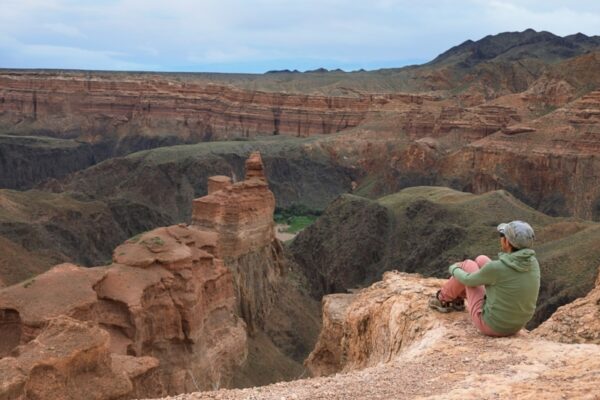
From Almaty, there are two ways to start exploring what tour operators often call “the Golden Ring of Zhetisu”. One route goes east directly, past the wild apple forests of Talgar and the kurgans of Esik, straight to Charyn Canyon and the Kolsai lakes. The other option is to detour north, to the Altyn Emel national park, for a 2- or 3-day wildlife safari in search of ibex and kulan.
Cross the boarder at the Karkara valley, stopping over at San Tash before reaching Karakol, on the eastern side of Lake Issyk-Kul.
There's lots to explore here from the Seven Bulls at Zheti-Oguz and the sandstone Fairytale Valley to Barskoon where you can learn how to build a yurt or ride a horse to one of the nearby waterfalls.
Stop off at Song Kol lake before heading to Suusamyr valley as your journey winds down, following the M41 through the outskirts of Bishkek to finally arrive in the centre of the nation’s capital.
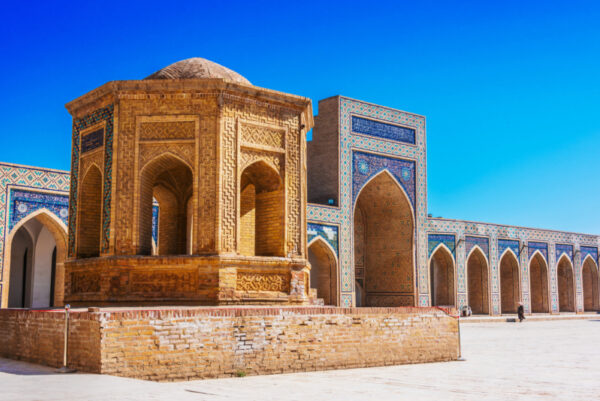
This is an itinerary of the exotic, a route for those ready to take the road less known, who want to discover a wild and beautiful landscape, meet warm and wonderfully hospitable people, and walk in the steps of the giants of history, from Alexander the Great to Marco Polo. Travel conditions are not up to Western standards, but what you forego in comfort, you get back in lifelong memories.Travel back in time as you move up the Pamir Highway to find people living much the same as centuries ago before spending some time in Dushanbe.You can then follow the Uzbekistan loop, starting in Tashkent. After spending time exploring the city, take the train to Samarkand and take a couple of days to take in the sights.A direct train will take you to Bukhara, or you can opt to make the journey by car, stopping at caravanserais and minarets along the way. If you have an extra two days take the roundabout way to Bukhara through the Nuratau mountains.There is no rail connection between Bukhara and Khiva, so the next part of the journey needs to be done by road-- a seven-hour ride. Its remoteness makes this desert khanate little-visited by the majority of tourists.From Urgench near Khiva, a flight back to Tashkent brings your journey to an end.
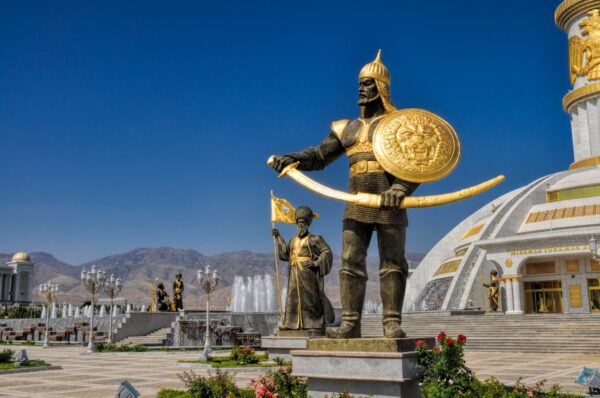
Four very different nations with a shared past, the Four Stans, Kazakhstan, Uzbekistan, Kyrgyzstan and Turkmenistan, occupy the heart of Eurasia. Turkic nations with similar languages and a mutual history under the Soviet Union, these four countries have taken wildly different paths since independence.This popular route will take you through searing deserts and over high mountain passes. One moment you are horseback riding over mountain meadows in seclusion, the next moment arguing over prices at a bustling city market. You’ll go from catnapping in a nomad’s tent to unwinding in a luxurious B&B.If you are unafraid to cover a lot of ground in a short amount of time and want to experience all that Central Asia has to offer: this is the route for you.
Stephen Lioy, author of our guide to trekking in Kyrgyzstan, picks the Ak Suu Transverse (sometimes called Ak Suu Traverse) as his single favourite trekking route in the country. And as someone who has spent decades guiding hikers through this stretch of the Tian Shan mountains, I can totally understand why.
This point-to-point trek winds across around 100 km of mountain trails that connect the village of Jyrgalan with the old soviet resort of Jeti-Öguz. On the way you hike through some incredible landscapes of lakes, waterfalls, and tackle at least one, sometimes two, mountain passes each day.
The route incorporates some of Kyrgyzstan’s more accessible (and busier) hikes, most notably the well-trodden path to Ala Kol lake. Unlike that hike however, you’re unlikely to be troubled by crowds on the rest of the Ak Suu Transverse. Other highlights include camping on the shores of Boz-Uchuk Lake, the spellbinding panorama from atop Ala-Kol North Pass, the beautiful Jeti-Oguz Gorge, and the soothing hot springs of Altyn-Arashan.
There are a number of ways to complete the Ak Suu Transverse. Some operators offer a seven-day itinerary, which I think is too fast-paced with very long days (this abridged seven-day version is a good alternative). My ideal itinerary, the one shown below, is spread over nine days which I think is manageable if you have decent fitness and are adjusted to the altitude.
You can hike the Ak Suu Transverse independently, although only recommended for experienced navigators. You can secure a guide in Karakol town, and trekking operators also offer the Ak Suu Transverse as a fully supported and guided camping trek. There are also now a network of yurt camps along the length of the route which offer an extra edge of comfort.
Distance: Approx. 80kmDuration: Six daysStart/end point: Enilchek ValleyDifficulty: Moderate to strenuous
This is a really special hike, and probably my top recommended Kyrgyzstan trek. It's quiet and remote (you're unlikely to see any other trekkers the entire time), and it culminates at one of the most quirky geological locations in the whole country – the so-called "disappearing" Merzbacher Lake, on the border with China and Kazakhstan.
This is a seasonal glacial lake that fills with meltwater from the Inylchek Glacier each spring and drains in spectacular fashion in late summer. This phenomenon is a rare – and incredibly dramatic and noisy – only witnessed by a lucky few. You'd be exceptionally lucky to time your arrival to witness the lake draining, and the lake itself is not hugely impressive, but the surrounding landscapes make it all worthwhile.
You'll be hiking four to six hours each day, often along rugged and challenging paths. You'll spend the night in tents, or maybe in semi-permanent yurt camps if you're booking an organised trip.
The Ak Suu Traverse (or Transverse) has become renowned as the best, most varied, and most spectacular trek in Kyrgyzstan. The full Ak Suu Transverse from Jyrgalan to Djeti-Oguz is typically done in nine days or longer. (Some may try to cram the full route into seven days, but I think that’s too rushed with some very long and demanding days.)
For hikers on restricted schedules, I instead recommend this abridged, seven-day version. It includes the most rewarding sections of the full Ak Suu Traverse route, including Terim Tor Pass (3,467m), Bozuchuk Pass, Ailanysh Pass (3,671m), and Ala-Kul Pass (3,860m). Unlike on the full route after Ala-Kul you descend and exit, rather than continuing on through Karakol Gorge.
But the best part for me was that you still get to stop off at the hot springs in Altyn Arashan. Yes it gets kind of busy at this point, but after days of solitude, I really didn’t mind a bit of company. After here it’s another two day push through the Ala-Kul Pass, a descent to the famous Ala-Kul Lake, and then exit.
All in all, it’s an unforgettable and very rewarding trek, and ideal if you don’t have time (or stamina!) for the full Ak Suu Traverse.
Your details are safe and will not be used for any other purpose. By using this service you agree for us to share your details with your chosen tour operator according to our Privacy Policy.
1Your trip
2Complete your request
3Meet your specialist
Find a Kyrgyzstan specialist
Tell us about your trip and we'll find your match
We'll connect you directly with the experts.
Connect with Luca, Daniiar, Asel and 2 other Kyrgyzstan specialists.
We'll connect you directly with the experts.
Connect with Luca, Daniiar, Asel and 2 other Kyrgyzstan specialists.