






Germany
Sixteen states of mind
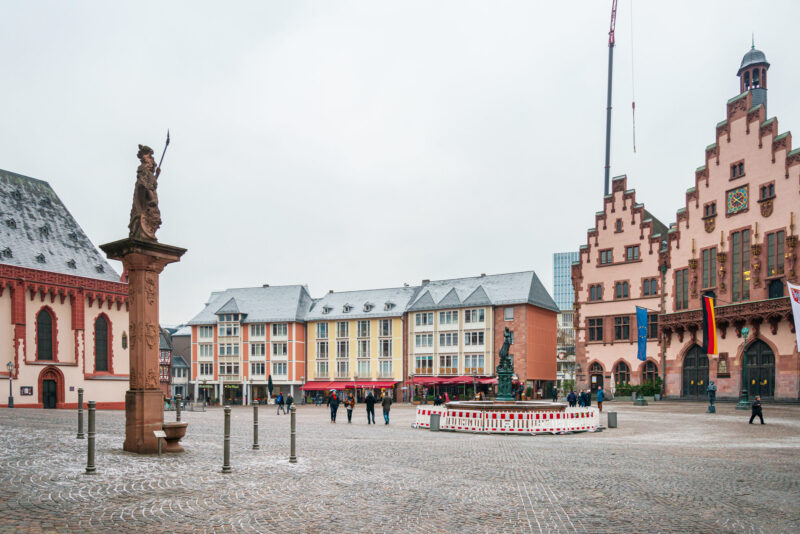
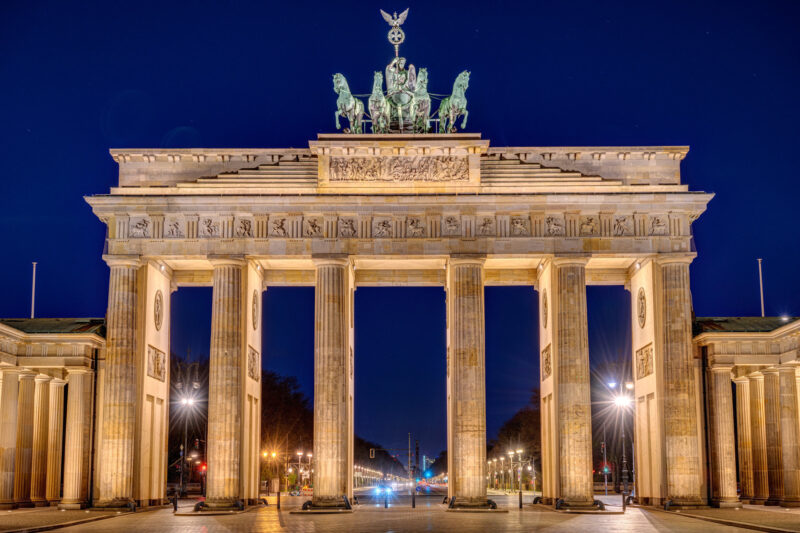
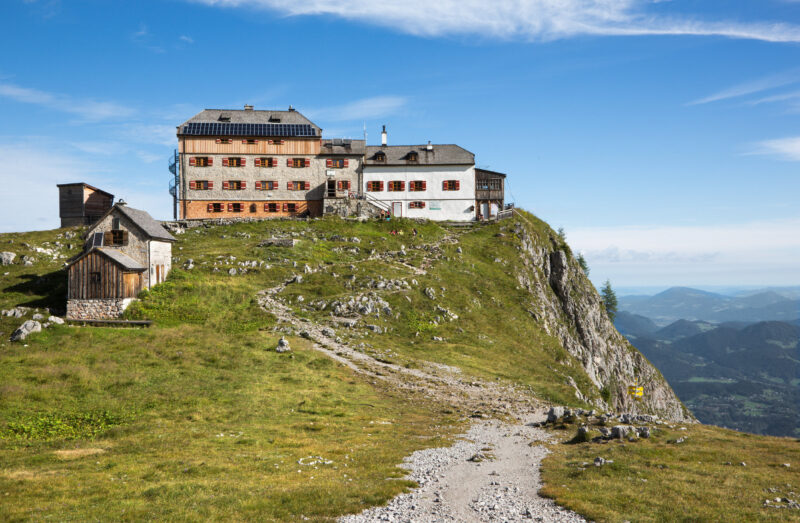
The mistake most visitors make with Germany is treating it as a single destination. It isn't. The country was only unified in 1871, and before that it was a patchwork of kingdoms, principalities and city-states - and in many ways it still is. Bavaria and Berlin are not just different cities; they are different temperaments, different aesthetics, different ideas about what Germany is supposed to be.
This regionalism is the key to travelling here well. Saxony has a medieval urban fabric that rivals anything in Western Europe and a fraction of the visitors. The Rhineland is a different country again. The north, flat and Baltic-facing, looks more towards Scandinavia than towards Munich. Even the food changes every hundred miles.
And then there is the history, which is inescapable and worth engaging with honestly. No country in Europe has reckoned more seriously with its own past - the memorials, the museums, the architecture of memory that runs through every major city. It can be heavy. It is supposed to be.
What remains is a country that is more varied, more interesting, and considerably less understood than its reputation suggests. The beer and the autobahns are fine. But they're not the reason to go.
Hidden gems in Germany

Western Europe
AmaMagna

For the Danube, I’d pick AmaMagna. This vessel is an unusual sight on the Danube: it’s the same length as most river cruise ships, but twice the width. And after a career spent aboard river cruise vessels, I really appreciated the extra space! The extra room allows for larger-than-average cabins – many over 300 square feet, which would be the preserve of top tier suits on other vessels. I also enjoy having more communal areas than you’d find on other vessels. There’s a choice of restaurants, with menus inspired by the regions you pass through to more familiar international dishes, and a generous spa and fitness space. I absolutely adore the scenery of the Wachau Valley, best enjoyed from the open deck watching terraced vineyards give way to pretty villages and historic towns. It is such a treat to meet with friends at the pop-up bar, or pick a comfortable lounger to watch the world go by. But what I loved best after a busy day of sightseeing was a late afternoon game of pickleball, followed by a dip in the pool with a glass of local wine. During the day, the atmosphere on board is informal and relaxed; evenings tend to feel a little more dressed-up without being overly stuffy.
Read more
The Rhine
The best rivers for wine cruises
If you’re into wine, chances are there’s a Europe river cruise for you. It’s a good way to explore the continent’s wine culture: you meander from city to city, calling in at vineyards and wine tastings along the way, and of course – you don’t need to worry about who’s driving! Wine lovers might initially gravitate towards some of the French big hitters: the bold reds and famous names of the Rhône, the Garonne or the Dordogne. Or perhaps you’d think of the Douro in Portugal, as famous for its port as its hearty reds. So it might be a surprise to hear me recommend the Rhine and Moselle river valleys as an alternative to the more obvious wine regions. Partially this is just down to personal taste: the rieslings found here are varied, delicate and approachable. Even if you’re not a huge fan of white wine, I’m sure you’ll find something here to your taste. But I think what really swings it for me is that on these rivers, it’s about much more than simply the wine alone. Only here do you get an excellent wine experience plus the scenic beauty of the Rhine Gorge and the Moselle, the classic storybook towns and the ridiculous density of castles and medieval heritage, all in one package. So yes, if you’re a red wine person above all else – maybe look to France or the Douro. For everyone else, the below itinerary is my top wine cruise recommendation. On specifically wine-focused cruises you’ll be hosted by a wine professional and will get a range of excursions with food and wine pairings, curated wine tasting visits, and gentle hikes or cycling trips through the vineyards.
Read more
Danube
The Danube

This mighty river running through the heart of Europe has long been romanticized, most famously with the namesake "Blue Danube" waltz by Johann Strauss. But the waterway is not only a European cultural icon, it’s also a key trade route that has played an important role in the continent’s history, from early man to modern times and with all the long and turbulent drama in between. A cruise on the river offers the very essence of Central Europe: rolling hills and medieval castles, vineyards, bird-lined marshes and cliffs, small river towns and some of Europe’s best known cities. Cruises on this river typically split into trips on the upper or lower Danube. On the upper Danube, cruises generally sail from Bavaria to Budapest, Hungary, through Austria's scenic Wachau Valley, and include stop-offs at two of Europe’s most important cultural and historic cities, Vienna and Bratislava, Slovakia. Cruises on the lower Danube take in the dramatic eastern stretch between Budapest and Bucharest, Romania, through Croatia, Serbia and Bulgaria, with Dracula-related stop offs among the many attractions. While both offer bountiful historic sights and attractions, the main appeal of the upper Danube cruise itinerary is more focused on central European culture, most notably opera and classical music, wine and art, opulent architecture, medieval fortresses and museums. Cruises along the lower Danube offer a fascinating glimpse behind the former Iron Curtain and a taste of life in post-Communist Eastern Europe, while also promising medieval fortresses and Orthodox churches, not to mention the region’s dramatic natural scenery.
Read more
The Rhine
The Rhine
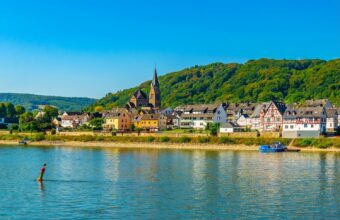
Cruises along the Rhine boast postcard-perfect views of terraced vineyards and cliff-clinging castles, lending credence to its reputation as one of the world’s most romantic and oft-traveled rivers. From Amsterdam’s charming canals to the fairytale-esque Black Forest, the river delights lovers of history, wine, culture and cuisine. In the course of a week, river cruises in the region are able to showcase the dramatic Rhine Gorge, legendary Lorelei rock, Holland’s famed windmills and tulip fields, university towns and cosmopolitan cities, medieval castle ruins and esteemed museums. Flowing for approximately 820 miles, the Rhine River originates at the Rheinwaldhorn Glacier in the Swiss Alps and culminates in Basel, Switzerland – just before which it tumbles over a 75-foot waterfall, the Rheinfall. The majority of the river’s waters pass through Germany, while river cruises along the Rhine will also introduce travellers to the sights and cultures of Liechtenstein, Austria, France and the Netherlands. Most cruise itineraries focus on the particularly lovely stretch of the Middle Rhine from Bingen to Bonn as it passes through steep gorges (including the Rhine Gorge, at 430 feet deep), along the Rhineland Plateau and in view of the Rhenish Slate Mountains.
Read more
The Black Forest
Albschäfer Trail

The Albschäferweg is another accessible waymarked path, a 157km circuit through the Swabian Jura.
Read more
The Black Forest
Westweg
The Westweg, which crosses the Black Forest from Pforzheim in the north to Basel over the southern border in Switzerland, is a relatively gentle 285km trail taking in dramatic gorges, castles, lakes and the region’s highest mountain, the Feldberg.
Read more-

AmaMagna
View experience -

The best rivers for wine cruises
View experience -

The Danube
View experience -

The Rhine
View experience


Germany itineraries

Germany travel companies