



Paul Callcutt is the founder of Fitzroy Travel. His background as a guide across Africa and South America underpins the way he designs trips today. He began working in conservation in Zambia, including time monitoring wildlife populations in Kafue National Park, before leading expeditions across Patagonia, Bolivia and the Andes, where he was involved in restoring a remote mountain lodge and training local staff. Paul now splits his time between the UK and the field, personally guiding selected trips and scouting new regions for Fitzroy.
When people talk about trekking in Tanzania they jump straight to climbing Kilimanjaro. It steals the oxygen from all the other options but maybe this is a good thing. While the crowds trudge up and down Kili, I prefer overnight walking safaris, fly-camping in the quieter corners of northern Tanzania’s Rift Valley.
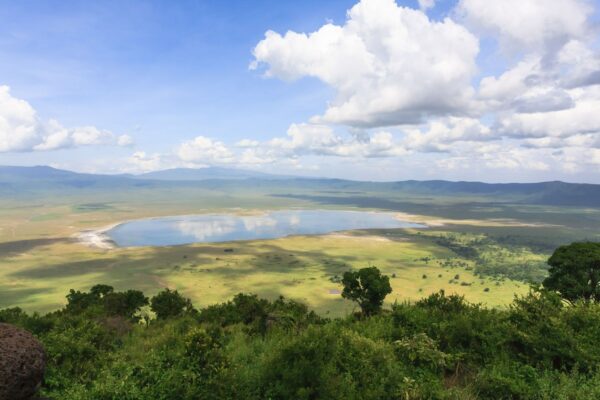
My favourite route runs from the crater at Empakai down to Lake Natron. You start at the trailhead and walk along the volcanoes, spending the first night right on the rim of Empakai. Waking at sunrise over the forested caldera, with its enclosed soda lake, gives you a clear sense of the Rift’s structure. You feel the shifts in altitude, vegetation, and temperature as you move. You see where water, ash, and old lava flows have shaped how people and animals move across the land.
As the route drops towards Natron the country opens up. It becomes arid and bright, with those alkaline flats below. We pass through remote nomadic pastoralist communities. They are often intrigued by our presence. For me, that brief connection is one of the great joys of walking here. You get a glimpse of how these environments are used seasonally. Walking with Maasai guides adds another layer, because their knowledge comes from lived experience rather than interpretation.
Most travellers focus on the headline parks, so they never see terrain like this. Tanzania offers huge spaces and long-established traditions of remote trekking, and this is where that really shows.
There are downsides. It is not an easy hike, and it is vital to do it at the right time of year to avoid excessive heat. Good mobility and trekking fitness are essential. Camps are lightweight. By that I mean very simple tents, a bedroll, a table and chairs for dinner, and a long-drop toilet. That is about it. For some people that simplicity is part of the appeal. For others it is not.
A mobile camp suits this landscape. The journey unfolds naturally, with camp positions guided by distance, water, and conditions on the ground. There is no returning to the same place, just steady progression along the Rift.
At a glance
Destinations
Tanzania
Activity
Safari, Adventure, Climbing & Mountaineering, Active, Walking, Camping, Nature & Wildlife, Responsible Travel, Slow TravelPhysical Level
Moderate
Duration
3 days
Related Guides
The best places to see the wildebeest migration
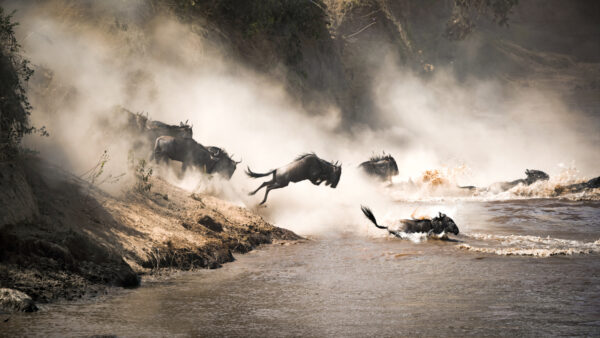
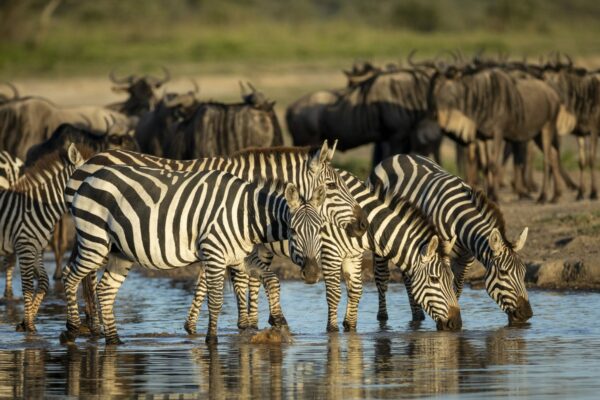
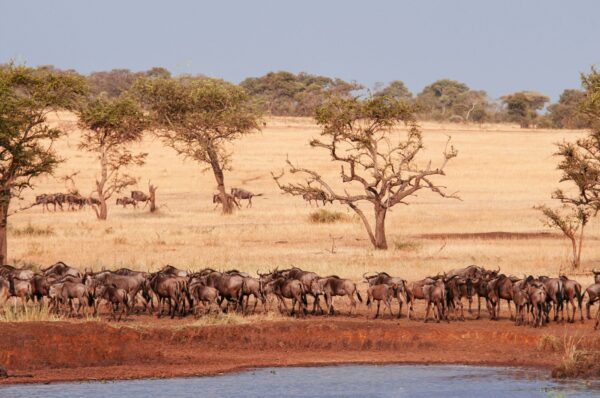
Sometimes called ‘the greatest show on earth’, the wildebeest migration sees mega herds of almost two million wildebeest, zebras and gazelles continuously travel thousands of kilometres in a broadly clockwise direction from the southern Serengeti, north into Kenya’s Maasai Mara, and back again. The migration is one of Africa's classic safari experiences, drawing visitors year round to witness this magnificent spectacle.
The Best Time To See The Wildebeest Migration
By definition, the wildebeest migration is a continually moving and perpetually active phenomenon; where you go depends very much on when you decide to travel. A note on the "route" Beware any safari company that tells you they can guarantee the route the herds will take.
Where Is The Wildebeest Migration In January?
A new year means new life, and the stage for the spectacle this month is around the Ndutu Plains in the Ngorongoro Conservation Area, to the south of the Serengeti National Park.
Where Is The Wildebeest Migration In February?
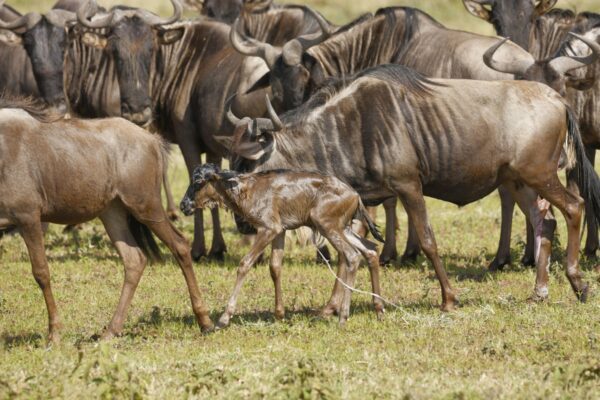
In February most of the migration action takes place in the Ndutu Plains, to the southwest of the Serengeti. Behold the classic image of endless plains, blanketed and dotted as far as the eye can see with grazing wildebeest and their newborn calves.
Where Is The Wildebeest Migration In March?
After a long period of grazing in the Ndutu region, the once green grass is now over-grazed, with little left for the enlarged herd. The time to move on has come.
Where Is The Wildebeest Migration In April?
Long rains mean thicker vegetation and scattered herds, which makes viewing more of a challenge. But the rewards of the low season are lower prices and few other people as the migration makes its way north and into ‘big cat territory’.
Where Is The Wildebeest Migration In May?
The long rains taper off and the herds are on the move, heading north towards Kenya. Routes diverge somewhat, but they’ll all funnel through a narrow corridor between two rivers in a dramatic spectacle.
Where Is The Wildebeest Migration In June?
The skies are clear, the land dries out, and the herds gain strength and power as the calves mature. But June is no walk in the park.
Where Is The Wildebeest Migration In July?
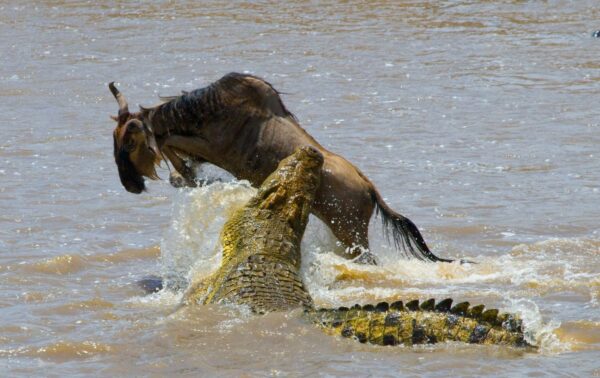
July is primetime viewing for what many consider to be the main act of the migration theatrics – the crossing of the Mara River.
Where Is The Wildebeest Migration In August?
Welcome to the height of the high season. Everyone has the same idea of witnessing the most action-packed month for river crossings.
Where Is The Wildebeest Migration In September?
The September high season in Kenya’s Maasai Mara has its obvious rewards.The skies are sunny, crowds are thinning somewhat, dramatic river crossings are still going strong in Mara side with few crossing between Lamai and Kogatende, predators have hit their stride, and the ‘big five’ are all out in view.
Where Is The Wildebeest Migration In October?
The end of the high season means the crowds have (mostly) gone.The migration is straddled between Kenya’s Maasai Mara and Tanzania’s Serengeti.
Where Is The Wildebeest Migration In November?
In November the ‘short rains’ start to fall in the Mara.The plains return to their emerald green hue, and the migration is on the move southward, back to Tanzania’s Serengeti.
Where Is The Wildebeest Migration In December?
The annual cycle of life is turning full circle.The rains have returned, and the wildebeest are on the move back toward the rich grasses of Ndutu.
The best safaris in Tanzania
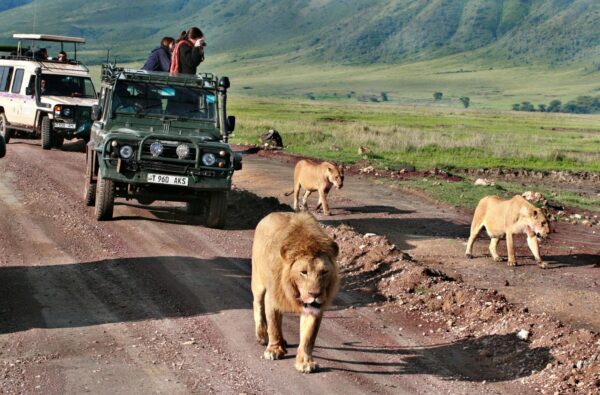
Tanzania's big-ticket park is the 12,000-square-mile Serengeti, home to the great wildebeest migration and a healthy population of big cats: lions, leopards and cheetahs. During peak season— July and August—when the famous wildebeest river crossings coincide with northern hemisphere summer holidays, the park can be very busy.
Tanzania's best safari lodges & camps
The best time for safari in Tanzania
With the exception of the rainy months of March and April, Tanzania is a great safari destination through most of the year. The dry season – June to October – is the most popular and best for wildlife sightings, but January and February also see a break in the rains.
How to book a Tanzania safari
There's no denying it, a safari anywhere is an expensive trip – and a safari in Tanzania is at the pricier end of the spectrum.
What to do in Tanzania besides safari
If you're coming to Tanzania, chances are you'll be going on safari.
Where To See The Big 5 In Africa
The "Big 5" safari beasts – lion, elephant, buffalo, leopard and rhino – were so named because they were the prize targets of colonial-era hunters. Fortunately, modern safari has become a force for wildlife conservation not destruction, and today's safari-goer is more likely to be shooting with a camera than a rifle (aside from the many trophy hunting reserves, which we resolutely do not cover in this guide).
Trekking in Tanzania
Kilimanjaro is a vast mountain and there are seven established routes to the top. The Marangu route is the least interesting but, at six days, is the fastest route which makes it the cheapest, and therefore the most popular.
Kilimanjaro trekking: An expert guide
Kilimanjaro, along with the rest of East Africa, gets two rainy seasons: the “long rains” from March to May and the “short rains” around October to November. You can climb Kilimanjaro year round but the dry seasons – late December through to late March and late June to the end of October – are more pleasant conditions for trekking and camping.
Chimpanzee trekking
Trekking with wild chimpanzees through the East African jungle is one of the most thrilling adventures I’ve ever experienced. I’ve been privileged to track chimps on numerous occasions in my capacity as a guidebook writer and tour leader specialised in East Africa.
-
Fly-camping from Empakai to Lake Natron
...