





Sri Lanka
Ancient civilisation and endless beaches


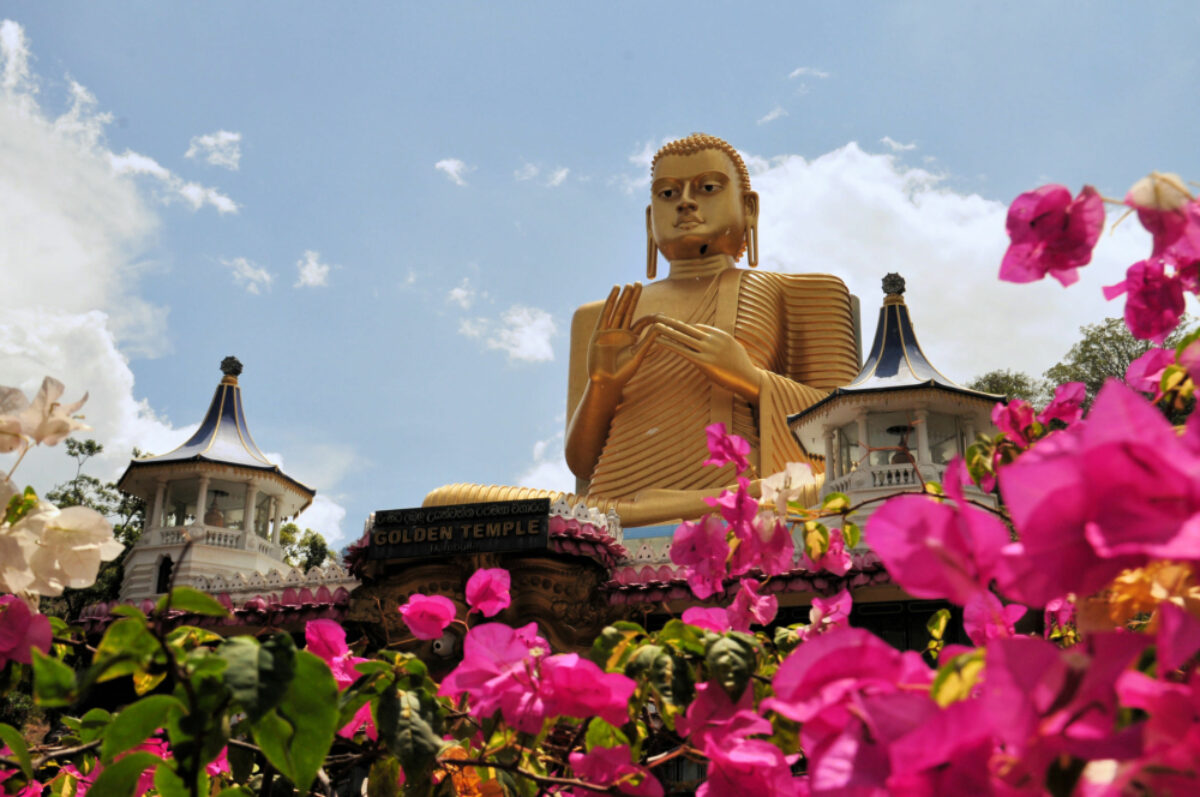
Welcome to Sri Lanka
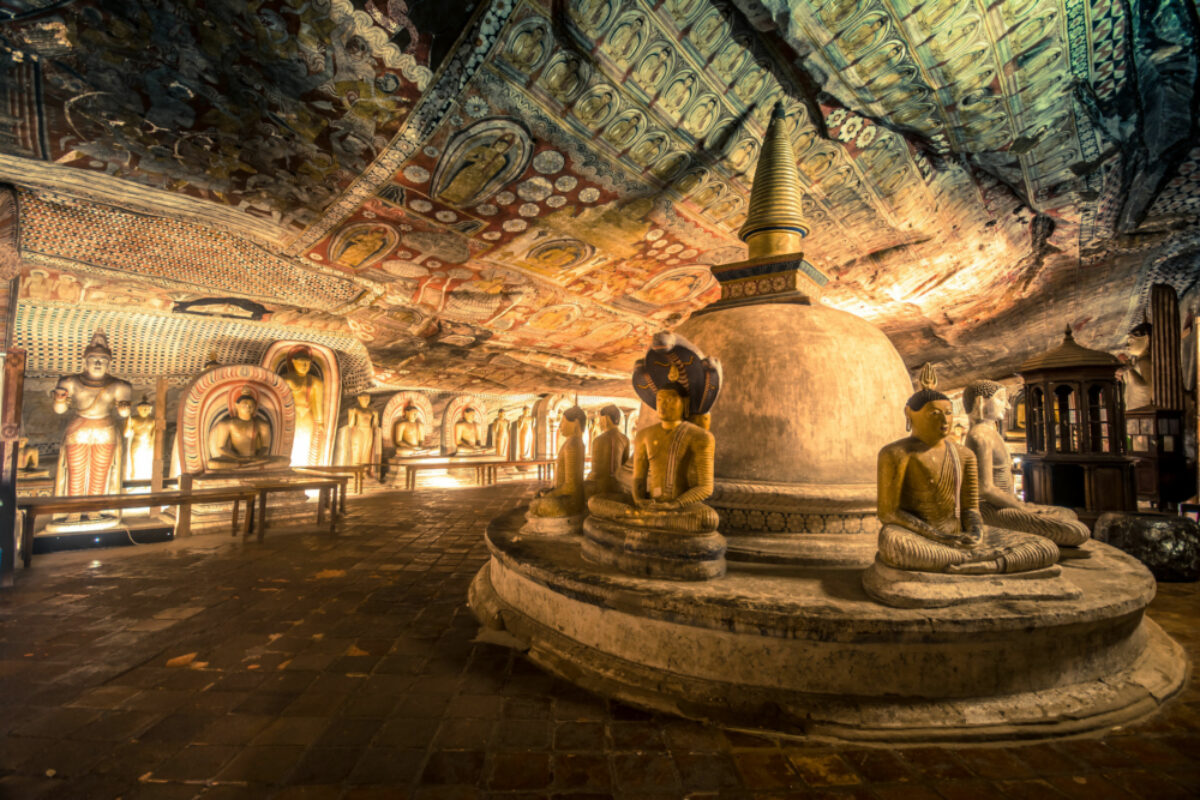
The insider's travel guide to Sri LankaFrom ancient ruins to a vibrant and welcoming contemporary culture; from lazy afternoons on glorious beaches to hikes through the rolling hills of tea country and wild elephant spotting in untouched national parks; this is a destination that truly has it all.
Despite having its hard-won stability rocked by the tragic events of Easter 2019, Sri Lanka's tourism infrastructure is developing in leaps and bounds. Hospitality is warm and abundant, transport is convenient, and accommodation — particularly in the independent boutique sector — is world-class.
Where to go in Sri Lanka
Highlights & hidden gems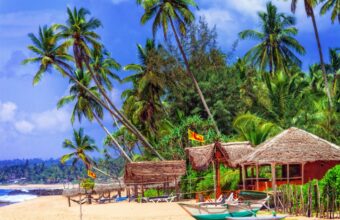
The Sri Lanka atlas
30 picks Places & Experiences You Won't Find Elsewhere-
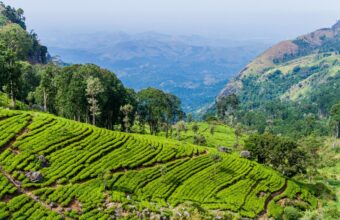
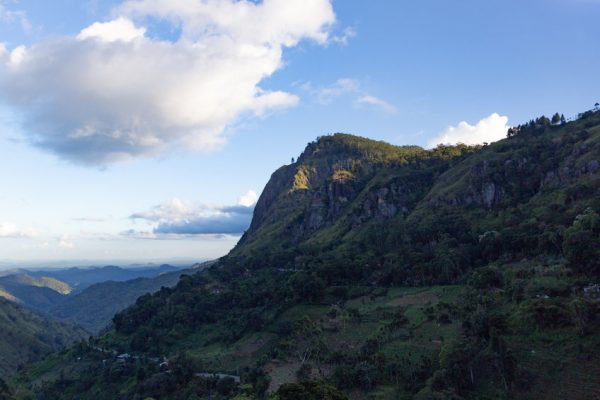
Sri Lanka’s central hills are the gateway to the island’s picturesque tea country. The undulating forest- and tea-dominated terrain is a great way for families to bond while exploring by foot. Tour operators can organise guided day hikes in tea country. For something a little different take a look at the Pekoe Trail. This 186-mile trail winds its way through tea country from Kandy to Nuwara Eilya and was designed to foster slow travel within this historic and beautiful part of the island. The trail’s 22 stages are described clearly in an app and provide plenty of useful pointers so you can explore independently. Each stage takes between three to five hours and navigates pine forests, high altitude grasslands, lakes and swirling tea fields (including Loolecondera, Sri Lanka’s first tea estate, established by James Taylor in 1867). Stages can be hiked separately or combined by staying at local guesthouses. Stage 16 passes through Ella – where you can also go zip-lining – and, along with 15 and 17, are some of the easiest on the trail. Other family-friendly stretches include stage one (Kandy) and stage seven (Hatton).
-
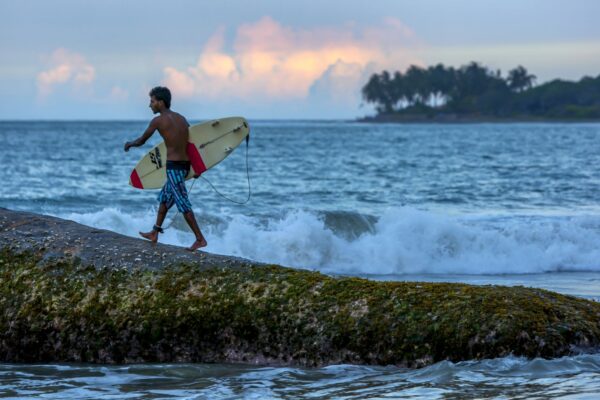
On the remote south-eastern coast of the island, Arugam Bay is the last word when it comes to surfing in Sri Lanka. Counted among the top surfing destinations in the world, “A-Bay” boasts large swells that wash up to its shore from Antarctica and a number of right-hand breaks that are suitable for beginners as well as more advanced surfers. About 30 km from Kumana National Park is the country’s top bird sanctuary, Arugam Bay. The natural beauty here is stunning. Tucked away in a distant part of the island, A-Bay is a seven or eight-hour drive by car or an overnight ride by luxury bus from Colombo. Not yet as developed as the southern coast, A-Bay has just a handful of hotels. The best time to visit is between May and November. Hiriketiya, a horseshoe-shaped bay just 10 minutes from the town of Dickwella along the south coast, is a great testing ground for novice surfers. Regarded as one of the country’s most picturesque beaches, Hiriketiya is shrouded from view by a coconut grove. It has a year-round surf break that makes it ideal for those learning to ride the waves. The beach has a few shacks selling fresh juices and renting beach beds. Visit between December and April.
-
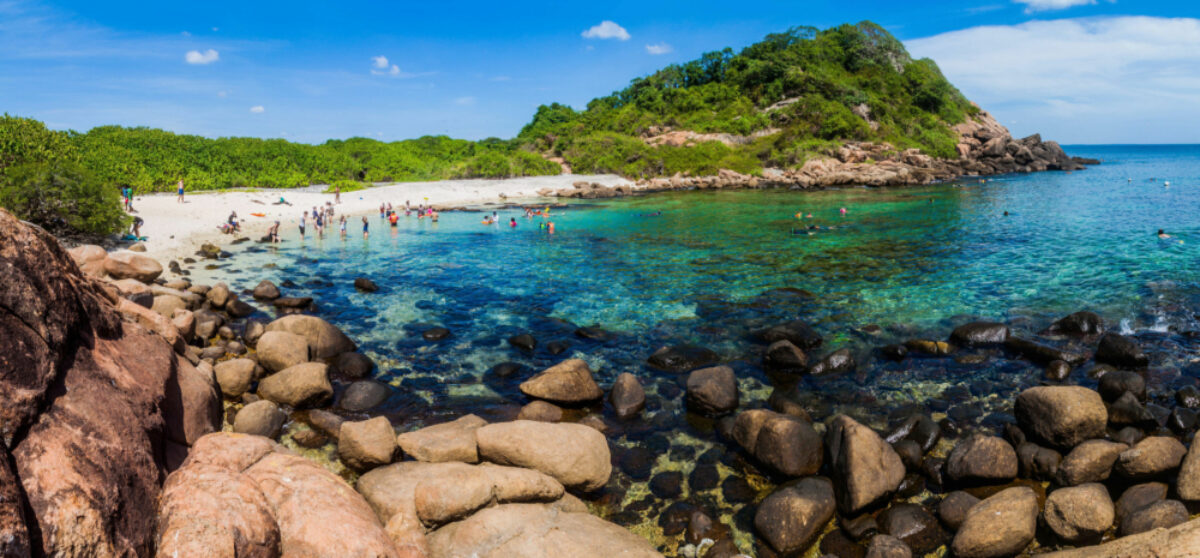
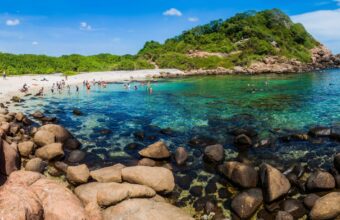
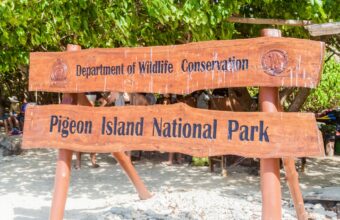
For snorkelling and diving, there are few better locations than Pigeon Island National Park, just off the coast of Trincomalee, a popular beach town on the east coast of the island. One of two national marine parks in the country, Pigeon Island is surrounded by shallow waters and an abundance of marine life, including corals, shoals of colourful fish, and even the odd sea turtle. The beach itself is narrow in parts and can get crowded at weekends and holidays with visitors who make the 1 km boat trip from Trinco (as it is fondly known). A number of private scuba operators along the Nilaveli beach in Trinco organise round trips to Pigeon Island throughout the day. The Nilaveli Private Boat Service, run by an association of local boat owners, also organises round trips at a fixed rate of LKR (Sri Lanka rupee) 2,000 ($13). You can also rent snorkelling gear for a small fee. Entry tickets to the park cost $10 per person and $8 for a group, and are available at the Pigeon Island ticket office on Nilaveli beach. Pigeon Island can get very crowded in the peak season, between May and September, so make sure you book a boat in advance.
-
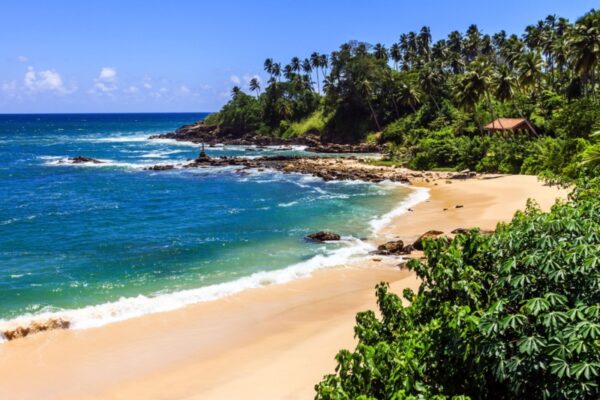
Despite its greater popularity, there are still plenty of unspoilt beaches on the southern coast. Most people don’t bother making the trek to Tangalle, which means that the beaches in and around this coastal town are among the most pristine you will find down south. Beaches between the towns of Galle and Tangalle are generally long, wide and sandy. Some of my personal favourites would be Kabalana, Mawella and the sublime horseshoe cove of Hiriketiya. A 10-minute tuk-tuk ride from Tangalle, Goyambokka beach boasts clean sands bordered by the country’s signature coconut palms, clean waters and an unhurried vibe. Large hotels are still few and far between in these parts, but a number of restaurants along the beach offer fresh seafood, beer and thambili or king coconut water. Closer than Tangalle but almost as untouched, Talalla is another beach worth visiting. A long, crescent-shaped beach partially hidden from view by a thicket of shrubby trees, Talalla is clean – if underdeveloped – and ideal for an offbeat holiday. A few shacks on the beach offer refreshments and you can also rent beach beds for a small fee. The currents here can be quite rough, so it is best to check conditions beforehand. Talalla is just over three hours from Colombo by car via the Southern Expressway, while Tangalle takes half an hour longer. The ideal time to visit both these beaches is between December and April.
-
Only just opening up to outsiders after decades of civil war, the beaches surrounding Jaffna, at the northernmost tip of the country, are superb, isolated – and, at least for now, refreshingly non-commercial. Named after a grove of casuarina trees that border the shore, Casuarina is the best known of these beaches. With placid waters and a sandy stretch devoid of people, especially on weekdays, Casuarina makes for a perfect day trip from Jaffna. There are changing facilities, toilets and a few kiosks on the beach, but it would be advisable to bring your own picnic basket. There are hardly any hotels or guest houses in the area, so Jaffna might be your best bet for accommodation. Casuarina is about 20 km from Jaffna on the island of Karaitivu, which is connected to the mainland by a causeway. You can get there with a rental car or local bus from Jaffna; alternatively, a quality tour operator will be able to help with transport. Jaffna is easily reached from Colombo by road or train (it’s an approximately six-hour trip). The best time to visit is between May and September.
-
Of the many islands scattered off the coast of Jaffna, Nainativu – or Nagadeepa as it is also known – holds a special religious significance for Hindus and Buddhists. Believed to have once been home to a legendary tribe called the Nagas, Nainativu is best known for the Nagapooshani Amman Kovil, an ancient temple dedicated to Parvati, the consort of Shiva, the Hindu god of destruction. Nainativu’s importance is heightened by the fact that it is mentioned in both ancient Tamil and Buddhist literature. Apart from the temple, the island’s other religious attraction is the Nagadeepa Purana Vihara, which is counted among the holiest Buddhist shrines in the country. Legend has it that the Buddha visited the Nagadeepa Vihara on Bakmaha Poya, or the full moon day in April. Getting to Nainativu is an adventure in itself, and one that requires a degree of fortitude. The journey involves taking a bus or car from Jaffna to Kurikadduwan (KKD) jetty, some 36 km away, and then taking a ferry to the island. The ferries run at regular intervals but are notorious for being overcrowded, so keep that in mind when planning your trip. June and July are the most colourful months of the year to visit Nainativu – the temple hosts a 16-day thiruvizha festival during this period. Check the festival dates beforehand, and expect large crowds.
-
Travelling by train in Sri Lanka is a fun activity for the whole family. It is one of the cheapest ways to travel yet offers a rich insight into the Sri Lankan way of life. The most enchanting journey is along the Main Line, which weaves through the island’s dramatic mountainous region. Thanks to its incredible views it is also the most popular – sometimes uncomfortably so – route, particularly the long 5.5 hour journey between Kandy and Ella. My advice: either do it in reverse (quieter) or take fidgety youngsters on a shorter route, such as between Galle and Weligama on the ocean-glimpsing Coastal Line. Less touristy than the Main Line route is the service between Colombo and Jaffna. Once a lifeline connecting the two cities, the route was suspended for nearly 25 years during the country’s civil war. When the Yal Devi or Queen of Jaffna – an iconic train that plied the route for more than 40 years – resumed its run in 2014 after extensive track repairs, it became one of the most telling signifiers of the end of the war. This journey is the most memorable way to see the distinct shifts in the landscape as you travel to the country’s northernmost reaches. It offers you glimpses of nondescript villages, lush paddy fields and the arid northern countryside, inaccessible until recently. It is a journey that is likely to give you pause – and a break from the brochure-ready beauty of most of Sri Lanka. With its non-air conditioned coaches and vendors supplying a steady stream of snacks, the Yal Devi makes for a leisurely 10-hour ride. But if you’d prefer air-conditioned comfort, the speedy Inter-City Express is a better bet. The train service to Jaffna is a popular one, so it is advisable to buy tickets in advance from a railway station in Colombo (or in Jaffna, for the return trip). Tickets cannot be bought online, but a reputed travel agent should be able to arrange them for you. Don’t be tempted to travel first class, which isn’t as indulgent as it sounds. Second- and third-class carriages have better views (first-class trains are air-conditioned so you can’t open the windows) and offer a better chance of interacting with local people.
-
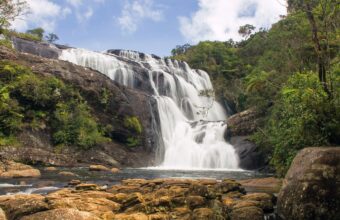
Nuwara Eliya may now be an overdeveloped mess, but it is the gateway to one of the most unique landscapes in the country. Approximately 30 km uphill from the city is the Horton Plains National Park, a protected grassland spread out over a vast plateau that makes for a fascinating and moderately intense trek. A microcosm of Sri Lanka’s diverse topography, Horton Plains is marked by scrawny shrubbery interspersed with green hills and dense cloud forests. The 10-km trek winds through a rugged forest path that leads to a sheer precipice called the World’s End, and culminates in the Baker’s Falls, one of the park’s chief attractions. While not particularly challenging, the three-hour-long trek requires stamina and some agility. The ideal time to visit Horton Plains is at dawn when low-hanging clouds lift to reveal the park’s surreal landscape. After 10am, the view from World’s End is likely to be obscured by cloud cover. The trip to Horton Plains and back takes half a day (or longer, depending on the length of your trek), so stay in Nuwara Eliya for two days. Your hotel should be able to help you book a van or SUV for the return journey. Note that low-clearance cars are likely to struggle on the bumpy road to the top. It’s best to visit Horton Plains during the dry months, between January and March.
-
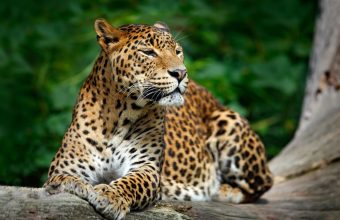
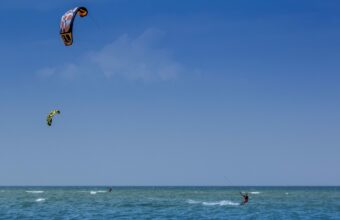
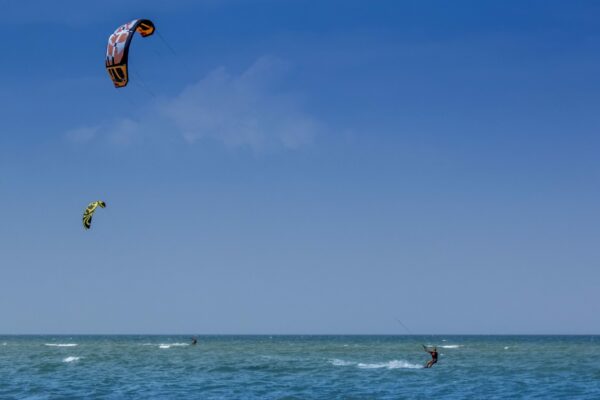
A backwater compared to the more popular tourist spots around the country, Kalpitiya, on the northwestern coast, has slowly built a reputation for its kitesurfing. It is at the tip of a slender finger of land sticking out into the Indian Ocean, with a lagoon on its eastern side. While the relatively gentle winds and calm waters of the lagoon make it a great spot for beginners, more experienced kitesurfers flock to Alankuda beach, which has stronger winds and moderate crowds. A couple of kitesurfing schools in the area provide training, rent out kites and offer basic accommodation. Check out the Sri Lanka Kite School. New kite resorts in Kalpitiya run their own schools and offer special accommodation packages for kitesurfers. Rascals Kite Resort, a rustic hotel with colourfully decorated cabanas, is run by kitesurfing enthusiasts and has direct access to the lagoon. Bar Reef Resort, an eco-conscious hotel at Alankuda beach, also offers kitesurfing lessons and excursions to nearby lagoons. For a different kind of adventure, Kalpitiya has excellent opportunities for snorkelling and dolphin spotting. It is also only a two-hour drive from Wilpattu National Park, one of the country’s premier wildlife sanctuaries, which has the largest population of leopards. It’s well worth planning a day trip to Wilpattu while you are in the area. Spend at least three nights in Kalpitiya, especially if you intend to kitesurf, and an additional day or two for other excursions. The ideal time for kitesurfing here is between May and October. Wind conditions are milder but still favourable between December and March.
-
The waters around Sri Lanka are some of the best for observing blue, sperm, Bryde’s and humpback whales, with plenty of spinner, bottlenose and Risso dolphins to be seen throughout the year too. Sightings are best between November and April off the south coast. Much of the country’s whale watching industry is an unlicensed and poorly regulated free-for-all which causes immense distress and disruption to the whales’ natural behaviour. Boats race far too closely to breaching whales and illegal “swim with whale” tours are sadly prevalent. Touts might try to sell you cheap tickets but from a safety and ethical perspective, opt for a well-established operator and ask about their animal welfare policy before you book. Mirissa is the busiest launchpad for whale watching (between November and April), so you might consider quieter Kalpitiya as an alternative (though whales can be harder to spot). During the summer, whale watching shifts to the Bay of Bengal, off northeast Trincomalee. Even better: Kuchchaveli, a 3km long bay, 30-minutes’ drive north of Trincomalee, is a remote spot where just one hotel – Uga Jungle Beach – hides amidst its scrubby shoreline. The freestanding beach chalets, with outdoor showers, immersed in greenery, make the most of this seclusion. There are daily trips out to sea to spy whales and dolphins, and Trincomalee is a much less congested place to see these giants than south coast Mirissa, which has become oversubscribed and haphazardly regulated in recent years. You could also nip out by boat to Pigeon Island, Sri Lanka’s top snorkelling spot.
-
The beach town of Bentota, on Sri Lanka’s south-western coast and easily reached from Colombo, is a tourism hotspot – the beaches here are crowded and a tad dirty in peak season. But just half an hour’s drive from busy Bentota is one of Sri Lanka’s best-kept secrets: A dense tangle of mangrove forests on the Madu Ganga river. Part of an inland coastal wetland, they are among the last untouched mangrove forests in the country. Local operators offer boat tours that weave through the mangroves and past small river islands. Bentota is a little under two hours’ drive from Colombo so you could easily make it a day trip. Stop for a Sri Lankan rice and curry lunch at Lunuganga, country home and estate of Geoffrey Bawa, the renowned 20th century Sri Lankan architect. (Make a lunch reservation in advance; a tour of Lunuganga’s landscaped gardens is included in the entry fee.) The best time to visit this part of the country is between January and April.
-
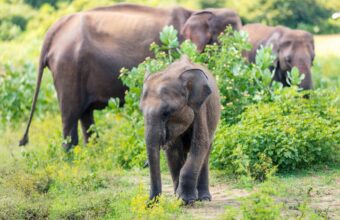
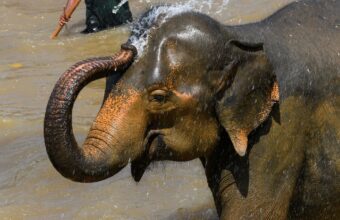
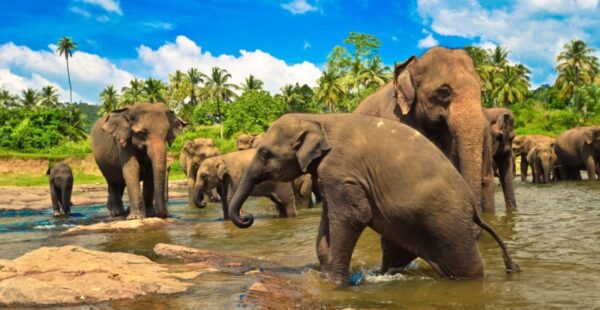
With Sri Lanka’s largest wild elephant population, Udawalawe National Park is a quieter alternative to the frequently overcrowded Yala National Park. (It is also the only national park in the country where an elephant sighting is virtually assured). Just south of the Central Highlands, the park is a four-hour drive from Colombo. Eco-conscious travellers with an appetite for adventure will enjoy staying at Banyan Camp. Just outside Udawalawe’s perimeter, the lodge is built of natural materials, uses recycled furniture and eschews air-conditioning. This isn’t your average resort, so it would be prudent to expect a few surprises. The best time to visit Udawalawe is in the dry season between May and September.
-
Pasikudah, an isolated hamlet on the east coast until the end of the war, has become a popular tourist destination. With a number of shipwrecks in shallow water and a couple of deeper Second World War wrecks not too far from its popular tourist stretch, Pasikudah is emerging as a hotspot for wreck diving. Some of the famous wrecks near the Pasikudah coast include the British Sergeant, a British tanker that was sunk during a Japanese air raid in 1942; the Gladys Moller, a transport ship that was wrecked in very shallow waters, and three so-called boiler wrecks that are an excellent training ground for divers looking to improve their skills. An hour away, off the coast of Batticaloa in deeper waters lies the wreck of HMS Hermes, the first custom-built aircraft carrier that was sunk during a Japanese air raid. At a depth of 42 to 53 metres, this is considered one of the world’s great wreck dives, suitable for trained and experienced divers. A few dive shops in Pasikudah organise both easy and more advanced dives. Some hotels in the area also have their own dive schools with PADI-certified scuba trainers and dive masters to accompany you. If you are a serious diver, ensure that you check beforehand about the facilities before choosing a hotel. Pasikudah is an approximately six or seven-hour drive from Colombo, accounting for traffic along the way and breaks. The diving season on the east coast runs from May to October which is also the high season for this coast, so make your bookings in advance.
-
Despite its growing reputation as a hipster haven, the hill town of Ella has far more mystique than Nuwara Eliya. Surrounded by terraced tea gardens, valleys and waterfalls, this sleepy village is the perfect launching pad for easy and moderately difficult hikes and treks. According to local legend, Ravana, the 10-headed demon king of Hindu mythology, kidnapped the princess Sita and held her captive in this area – which is why many of its natural attractions are named after him. Of these, the Ravana caves, a network of tunnels connected to the nearby Ravana waterfalls, are arguably the most popular. If you’d rather get off the tourist trail entirely, hire a tuk-tuk from Ella and make the 45-minute trip to Wellawaya, a town unremarkable in itself, but one which offers access to many secluded waterfalls. These include Ella Wala, a rock pool hidden from view by jungle, and the Diyaluma Falls, which has the distinction of being Sri Lanka’s third highest waterfall. The most enjoyable – if time-consuming – way of getting to Ella is by train from Colombo. The 10-hour journey offers views of tea gardens and mist-engulfed towns and is considered one of the world’s most scenic train routes. Make sure you reserve seats in advance in the first-class observation cars that have large windows. Although you cannot book tickets online, a quality tour operator can arrange tickets for you. Since getting to Ella takes the better part of a day – and delays are common – spending at least three nights is advisable.
-
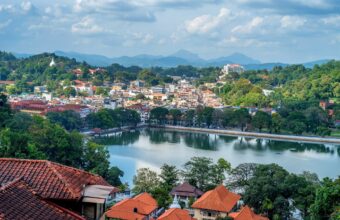
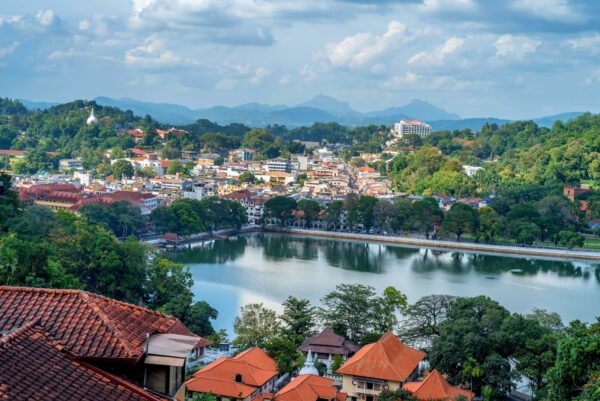
Kandy – the last capital of the Sri Lankan kings – is my stand-out highlight in Sri Lanka’s Cultural Triangle, lying on its southern fringes amidst a rich cloak of emerald green forest. The country’s second-largest city serves as Sri Lanka’s unofficial cultural capital. It’s a charming oasis set in the country’s Hill Country, which reclines around the sculpted Kiri Muhuda lake, and has a spirit and passion quite unlike Colombo. Kandy's main attraction is the golden topped Temple of the Sacred Tooth, home to Buddha’s Tooth, which was brought to Sri Lanka back in the 16th century. It’s very much an active temple so make sure to check ahead in case it is closed for a ceremony or event. The landmark temple lies at the heart of Kandy and is also known as Sri Dalada Maligawa. Architecturally it’s an eye-catching collage of slick marble, stark ivory and solid hardwoods, with plenty of gold woven in too. Buddha's Tooth (Sri Lanka’s most famous Buddhist relic) now stands as the fulcrum of the two-storey high shrine topped by a golden canopy. Today it is a place of pilgrimage for Buddhists from all over the world with daily worship and ceremonies, backed up by lavish special events. Note you’ll be disappointed if you were hoping to actually see the tooth itself as it is hidden safely from public view in a gold casket. The site is well worth visiting, though, for its drama and Buddhist architecture. There are also a sprinkling of further temples dotted around the complex, as well as museums. It’s worth taking on the services of a guide to help you navigate the site efficiently, with guides available on the day. One mistake visitors often make is spending too little time here before heading off to the surrounding sites in the rest of the Cultural Triangle. It’s an enjoyable city for just strolling around, I highly recommend you spend longer here. If you have the time, don’t miss the vast Alut Maligawa shrine hall (built in 1956 to mark the 2,500th anniversary of Buddha’s death), with its array of Thai-style sitting Buddhas, and the Sri Dalada Museum. The latter houses many of the gifts given by various world leaders to the temple and also features information on the damage caused by the 1998 bombing. It also, of course, tells you everything and anything you could want to know about what is surely the world’s most celebrated tooth.Other must-visit sights in Kandy include the Royal Palace. It houses the National Museum of Kandy, which features over 5,000 exhibits, many tying into Buddhism in the country. It was the last Royal Palace to be built on the island. Then there is the green lung of the Royal Palace Park and the even more impressive Royal Botanical Gardens, Peradeniya, which lies a little out of Kandy, but is worth the journey to.It's also worth heading out of Kandy to see a brace of key Buddhist sites – Lankatilaka Temple and the Gadaladeniya Temple. Further Buddhist attractions include the Malwatta Monastery, one of the most heralded in the country. A word of caution on touts and street hassles too. This is arguably the worst place in Sri Lanka for this menace, but it’s not usually threatening. A few local words usually see off touts but employing a guide is even more effective.
-
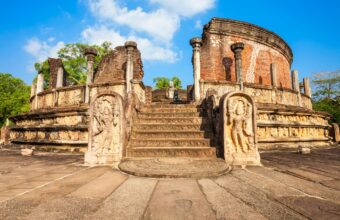
Polonnaruwa superseded Anuradhapura as the island’s capital between the 11th and 13th centuries. Handily, it’s a fairly compact site compared to Anuradhapura and is set around the Parakrama Samudra lake. The highlight of the impressively preserved remains is the Royal Palace complex, which sits within the restored walls of the central Citadel. Look for the well-preserved Audience Hall’s stone-carved elephants and lions guarding the entrance. To the north is Alahana Pirivena (the Monastery of the Cremation Grounds), home to the remarkable Lankatilaka Temple, whose walls soar 17m tall and 4m wide, where you will also find an 18m high statue of Buddha – although time and disrepair has rendered it headless. Look for the Buddha granite rock carvings of Gal Vihara, consisting of four separate images. The standing Buddha is considered the best of the four, with its unusual crossed arms and solemn face leading devotees to suggest it is an image of Buddha’s disciple Ananda, grieving for his master. You can explore the Cultural Triangle city Polonnaruwa by car or noisy, uncomfortable tuk-tuk, but a bike is a more eco-friendly way to get around. Biking also gives you a better feel for the ancient city’s scale and layout. Sigiriya is only an hour’s drive from Polonnaruwa and is much better set up for staying over, so consider it as an alternative base instead. Make sure to look out for the endemic toque macaques.
-
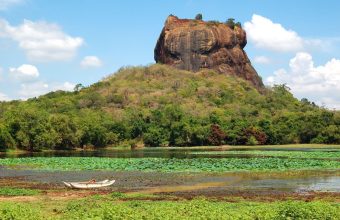
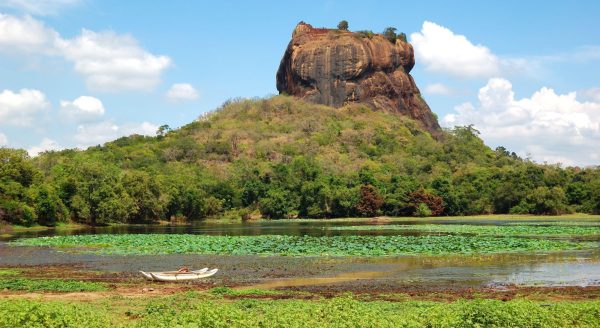
There is nothing quite like Sri Lanka’s Sigiriya, a vaulting citadel atop a hulking granite rock that soars 200m high and spreads itself over three acres. Also known as the ‘Lion Rock’, after the lions that once thrived here, this Royal citadel is unmissable. The effort of ascending Sigiriya (allow at least three hours) is worth it for the views and the ruins on a site first thought to have been populated by Buddhist monks. The main attraction is the footprint of the old Royal Palace. It’s easy to feel the grandeur of the days when King Kashyapa chose to build here back in the 5th century. It’s a steep climb up the narrow staircases and walkways to ascend this precipitous site so bring plenty of water and try to time your visit early in the morning or in the later afternoon. Note there is not really much shade on the top either and avoid visiting on a weekend when it gets even busier. En-route make sure to check out the remarkably well-preserved frescoes (note photos are not allowed) and the ‘graffiti’ - some are thought to date as far back as the 7th century. After the summit you can relax in the impressive ancient complex of pools and gardens that sit below as other less fortunate souls swelter above. Take time to check out the Buddhist ruins down here too. You will also find Buddhist inscriptions in the caves. For an alternative view of Sigiriya Rock and its history, stop in at the often overlooked yet thoughtfully curated Sigiriya Museum, among the finer museums in the country. Designed to reflect the architectural finesse of Sigiriya and its surrounding moats and gardens, the museum has a diorama of the monument and an accurate reproduction of the famous rock-cut frescoes.The museum is near the ticket booth and the main entrance to the monument. A visit to the museum is included in the entrance fee – $30 for people from non-SAARC countries (those belonging to the South Asian Association for Regional Cooperation); $15 for people from SAARC countries). Come before you climb up to Sigiriya.
-
Anuradhapura is not just one of the oldest cities in Sri Lanka, it’s also one of the oldest continually inhabited cities on earth, founded as far back as 380BC. The first Sri Lankan capital is integral to Sinhalese culture and history, a place where they first tamed nature and came together to live in an urban area. With civilisation came religion and Anuradhapura remains one of the most important Buddhist sites in the country – Buddhists believe Anuradhapura grew up around a branch of the Buddha’s bodhi tree where he received enlightenment. As with all sights in the Cultural Triangle, it’s worth having a local guide to fill you in on the details and to smooth logistics. The sheer number and scale of Buddhist and historical sites throughout the Cultural Triangle can be a little daunting, so try to narrow down your focus. Handily, many of the key attractions in Anuradhapura are sprinkled around a trio of sites within the Sacred Precinct to the west of the modern city. Buddha’s sacred bodhi tree is found in Mahavihara, as is the vaulting white Ruvanvelisaya Dagoba (dagoba is the local version of a stupa – dome-shaped Buddhist shrine) and the evocative Lowamahapaya palace ruins. Many visitors don’t even notice Thuparamaya Dagoba, thought to be Sri Lanka’s first dagoba. This is the most ancient part of the old city so it makes sense to start here. Second is Jetavana, whose voluminous red brick dagoba originally soared over 100m, making it the third tallest monument in the world after a brace of Egyptian pyramids. Allow time to explore the ruins of the monastery complex here, as well as the former Royal Palace. Don’t miss the Jetavanarama Museum too, which dates back to British colonial times. Third is Abhayagiri to the north, another ruined monastery complex whose highlight is the Abhayagiri Dagoba. Parts of this site are still charmingly wild so it’s a great place to indulge your inner explorer. Avoid the temptation to rush through Anuradhapura's highlights and onwards to the rest of the Cultural Triangle – add in some time for contemplative walks along the banks of the reservoirs that were built to serve the once-thriving city. Largely secluded and quiet except for the odd passing vehicle, the reservoir embankments provide a great vantage point from which to spot large flocks of water birds at sunrise and sunset. Ulagalla Resort, near the Wannemaduwa Reservoir, offers eco-conscious visitors luxury within easy reach of Anuradhapura. The hotel also offers private birdwatching tours led by naturalists. Consider spending two nights here, which will give you enough time to visit some of the country’s most culturally significant sites.
-
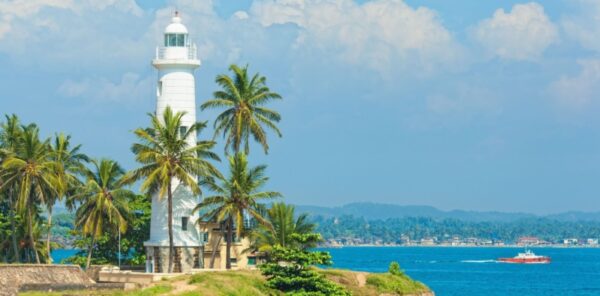
The quaint charm of the 430-year-old Galle Fort – a UNESCO World Heritage Site and one of Sri Lanka’s most-visited destinations – is best experienced on foot. The cobblestone streets and narrow alleys of the fort, first built by the Portuguese and later fortified by Dutch colonisers, are particularly good for unhurried walks. The Fort packs a number of architectural and historical landmarks into a compact space. Some of these include the 17th century Dutch Reformed Church, the Maritime Museum, the courthouse where typewriters are still used, and the Meeran Mosque, a striking structure that is a testament to the Fort’s multi-ethnic social fabric. Most tours will rush you through in an hour or two, I suggest you allow at least three hours for a thorough exploration. A good guidebook and map will help you plan your walk, although it is impossible to get lost inside. I recommend staying at least two nights to fully soak in the laid-back vibe of the Fort. Given its location on the southwestern coast, the best time of year to visit is between December and April.
-
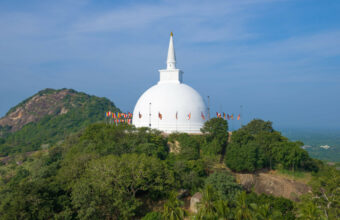
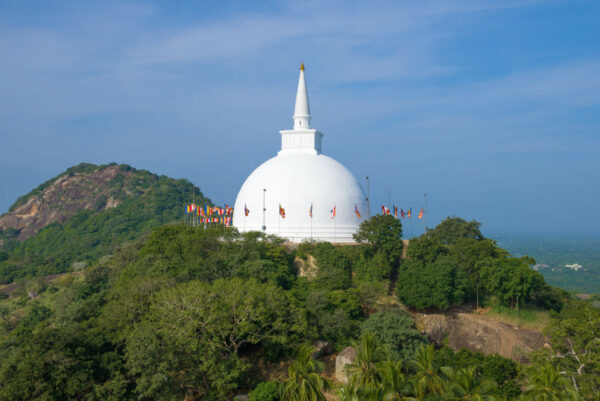
Rising 1,000 feet above the flat terrain of the north-central province, Mihintale has a special significance for Sri Lankans. In 247 BC, it was on the summit of this mountain that the ruling king, Devanampiya Tissa, is believed to have been converted to Buddhism by Mahinda, the son of the Mauryan emperor Ashoka. Ever since, Mihintale has been revered as the birthplace of Buddhism in the country. Mihintale makes for a pleasant and gentle climb – broad stone steps flanked by trees lead to terraces on multiple levels that contain remains of an ancient hospital, an alms hall or refectory, a dagaba or monastery, and the main shrine. On full-moon night in June, called Poson Poya, millions of pilgrims visit the shrine for a colourful festival to commemorate the day that Buddhism was brought to Sri Lanka. Mihintale is 12km east of Anuradhapura (approximately half an hour), and about four hours from Colombo by car. There isn’t much choice in terms of accommodation in the town itself, so it would be advisable to stay in Anuradhapura. The best time of year to visit is between June and September.
-
A hidden gem overlooked by mainstream tours, the Ritigala mountain in the north-central part of the island is a fascinating confluence of natural splendour and historic ruins. The mountain’s higher slopes are designated a “Strict Nature Reserve” and are out of bounds to visitors. But the accessible lower reaches are home to the well-preserved Ritigala ruins, an ancient forest monastery that is believed to have once been occupied by an order of austere ascetics called Pansukulikas. The Pansukulikas are said to have worn robes made of rags to distinguish themselves from the monks in nearby Anuradhapura. The ruins include bathing tanks, raised meditation platforms and even the remains of an ancient Ayurvedic hospital. Even before the ascetics, the mountain is believed to have been home to the Yakkas, a legendary tribe of fearful warriors. It also finds mention in the Ramayana, the Hindu mythological epic, as one of the spots where the monkey-god Hanuman accidentally dropped a chunk of the Himalayas – said to be a reason for the mountain’s exceptional biodiversity. Also in the north-central province, Ritigala is accessible by road from many key cities in the Cultural Triangle, including Anuradhapura and Habarana (both are about four to five hours from Colombo). Since the mountain is in a secluded area, it is best to organise your trip through a reliable tour operator. The roads leading to Ritigala get treacherous in the rainy months. Visit during the dry season from June to September.
-
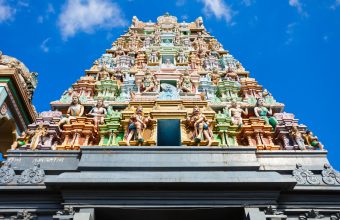
Culturally and visually distinct from the rest of the country, the northern city of Jaffna is a bastion of Hindu culture. The whitewashed stupas and Buddha statues of the rest of the country are notably absent here. Instead, you’ll find a profusion of candy-coloured, vividly decorated Hindu temples sprinkled across the Jaffna peninsula. The largest and most significant of these is the Nallur Kandaswamy Kovil, an imposing temple crowned with a gilded gopuram or tower, which stands out against the squat skyline of Jaffna. In July or August every year, the Nallur temple hosts the 25-day-long Nallur Festival, a riotous celebration of faith in honour of Murugan, the presiding deity of the temple. Thousands of devotees throng the temple during this time to participate in the daily pujas or rituals. The streets surrounding the temple become a colourful bazaar with vendors selling luridly coloured sweets, saris, trinkets and toys. The festival concludes with a chariot procession called therthiruvizha (shortened to ther), during which the deity is paraded through the streets of Jaffna. A visually resplendent spectacle, the ther also features devotees performing acts of self-mutilation as a display of their faith. The timing of the festival varies from year to year, but it usually falls between late July and early August. Hotels in Jaffna are booked to capacity during the festival, so it is best to plan your trip well in advance. I'd recommend staying for three to four days.
-
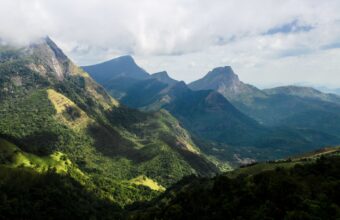
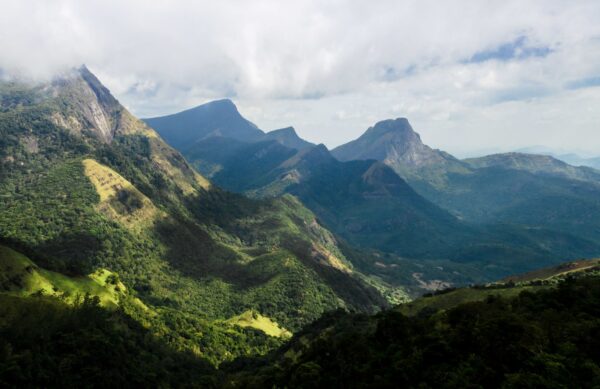
The Knuckles Range gets its name from its distinctive rock formations which resemble the knuckles of a clenched fist. The range was designated a UNESCO World Heritage Site in 2010 for its incredible biodiversity: Its undulating valleys, moss-covered peaks and evergreen cloud forests are home to more than 120 bird species, and more than 50 species of mammals and reptiles. The Knuckles Range is renowned for its birdwatching. Some of its endemic bird species include the small and rare Sri Lanka whistling thrush, the Sri Lanka green pigeon (which has a distinctive green hue), and the dull-blue flycatcher. Kandy, near the foothills of the Knuckles, offers a convenient entry point. The road which meanders through picturesque tea estates is mostly good, and the journey to the heart of the mountains should take roughly an hour and a half. The higher reaches of the Knuckles are challenging to access and require permits, so it is advisable to organise your expedition through a reliable tour operator. For accommodation, the Madulkelle Tea and Eco Lodge is a good choice, with 18 rustic yet luxurious tents that offer spectacular views of low-hanging clouds and mist-covered mountains. The hotel can organise treks, hikes, camping trips and bird watching expeditions. Allow yourself two nights in the Knuckles, plus an additional day if you intend to do any trekking or hiking.
-
Only recently opened up to tourism after decades of civil war, Jaffna in northern Sri Lanka is much less commercial and quieter than the tourist hotspots further south. Culturally and visually distinct from the rest of the country, Jaffna is a bastion of Hindu culture and history. The whitewashed stupas and Buddha statues of the rest of the country are notably absent here. Instead, you’ll find a profusion of candy-coloured, vividly decorated Hindu temples sprinkled across the Jaffna peninsula. The beaches here are also a different league to those further south. The islands to the west of Jaffna are connected by a network of causeways, although some do require transport by boat. Delft is the most remote and known for its wild horses and Dutch Fort, while Kayts is the largest with, with popular strips of sandy beach. Nainativu hosts the Naga Pooshani Ambal Kovil, a vibrant Hindu temple featuring a silver stupa and a seven-headed cobra fountain. In July or August, the Nallur Temple in Jaffna hosts the Nallur Festival, a 25-day celebration of faith in honour of Murugan, the deity of the temple. The streets become a vibrant market with vendors selling trinkets and sweets culminating in a chariot procession, parading the deity through Jaffna.
-
Begin your trip in cultural Colombo, exploring the city’s markets and multi-ethnic history, before travelling to Sri Lanka’s cultural triangle to see the temples of Polonnaruwa and the iconic Sigiriya Rock Fortress. Next, travel onto Kandy and visit the Sacred Tooth Relic Temple before heading into the tea country at Haputale and going elephant watching at Udawalawe National Park. End your trip on the beaches of the deep south in Tangalle, before travelling back to Colombo for your departure.
-
Start your southern Sri Lanka adventure in the historic town of Galle, exploring the city’s walled fort and hiking along its ramparts with views of the ocean. From here, travel by train into tea country. The quaint hillside town of Haputale offers tea tours, treks and the chance to see Diyaluma Waterfall - Sri Lanka’s second-highest. Next, go wildlife watching in Yala National Park, where you can see leopards, elephants and crocodiles. End your trip on the beaches around Tangalle, before travelling to cosmopolitan Colombo for your flight home.
-
Your Sri Lankan adventure begins in capital Colombo, which combines ancient temples and modern malls. Next, travel to Paramakanda Rock Temple and on to the cultural triangle to see ancient temples at Polonnaruwa and the Sigiriya Rock Fortress, before heading to the Knuckles Mountain Range for hiking trails and mountain views. Continue your Sri Lanka adventure with visits to two national parks: Gal Oya NP offers boat safaris to see elephants swimming and crocodiles hunting, while Yala NP is home to the elusive leopard. Head back to civilisation to explore the colonial mansions and quirky side streets of Galle, before ending your trip back in Colombo.
-
Begin your Sri Lankan adventure in cosmopolitan Colombo, before heading north to the Tamil heartland of Jaffna, exploring Hindu temples and hidden islands. Next, travel to the port town of Trincomalee for whale-watching and beaches. Continue your wildlife watching with a visit to lesser-touristed Wilpattu National Park. Its ten lakes attract leopards, elephants, sloth bears and many others. End your trip in Sri Lanka’s cultural triangle, where you can see the ancient city of Polonnaruwa and the Sigiriya Rock Fortress. Fly back out from Colombo.
-
Explore Sri Lanka at a leisurely pace, starting in capital Colombo before travelling to the country’s cultural triangle, where you can visit ancient cities, temples and rock formations at Polonnaruwa and Sigiriya. From here, head into Sri Lanka’s rolling hills to the rural town of Kandy, where you can visit tea plantations, hike in the countryside and take cooking classes. End your trip on the beaches of the south coast, where you can take a trip to the fort town of Galle, complete with colonial buildings and grand mansions. Head back to Colombo for your departure.
-
Fly into Sri Lanka’s capital of Colombo before heading for the historic Cultural Triangle cities of Polonnaruwa and Kandy, where you can see Buddhist temples, ancient capitals and even a relic of Buddha. From here, head into tea country at Haputale, exploring Sri Lanka’s countryside, Diyaluma Waterfalls and a quieter pace of life. Travel back to cosmopolitan Colombo to experience Sri Lanka’s nightlife before embarking on an epic beach adventure on the white sand beaches of the luxurious Maldives.
-
Hike the Pekoe Trail
-
Surfing at Arugam Bay
-

Diving at Pigeon Island
-

Hidden gems of the south
-

Casuarina beach
-

Nainativu island
-

Lesser-known train journeys
-

Hiking in Horton Plans
-
Kitesurfing in Kalpitiya
-

Whale spotting away from the crowds
-

Escape Bentota and explore the mangrove forests of Madu Ganga
-

Wild elephant spotting in Udawalawe National Park
-

Wreck diving in Pasikudah Bay
-

Off the beaten path in tea country
-
See another side to Kandy
-

Polonnaruwa
-

See a little-known side to Sigiriya
-

Anuradhapura
-

Explore Galle Fort on foot
-
Visit Mihintale, cradle of Buddhism in Sri Lanka
-

Explore the Ritigala ruins
-

Witness Hindu festivities at Nallur Kandaswamy Kovil
-
Birdwatching in the Knuckles Mountains
-

Jaffna & the north
-
Complete Sri Lanka
-
Southern Sri Lanka experience
-
Nature and wildlife explorer
-
Undiscovered Sri Lanka
-
Slow travel Sri Lanka
-
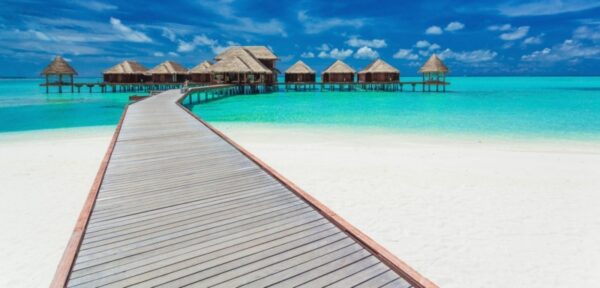
Sri Lanka Cultural Triangle and Maldives beaches




Trusted specialists




Find a Sri Lanka specialist
Tell us about your trip and we'll find your match
We'll connect you directly with the experts.



Connect with Nico, Kate Everitt, Miles and 1 other Sri Lanka specialist.
We'll connect you directly with the experts.
Connect with Nico, Kate Everitt, Miles and 1 other Sri Lanka specialist.
- Hand-picked local specialists
- Honest advice from real experts
- Free to use, no hidden fees