Over one billion people and 23 major languages — India is one of the world's most diverse places. You could visit every year for a lifetime and still not see all of it.
Many come for its colourful history and tongue-tingling food, or to find themselves at the feet of a Yogi. However, the list of adventures in India is never-ending. You can trek in the snow-capped peaks of the Himalayas, hunt for tigers deep in the jungle, head out to watch a desert sunset on camelback or get lost in aeons-old temples — many of which are still used for worship today.
The contrasts in this kaleidoscopic world can be extreme, particularly in the cities where you'll see sleek skyscrapers on one street and people sleeping on pavements on the next. It's the kind of destination that you have to respond to: the intensity of the experiences will challenge and enthral you. Some find it a little overwhelming, but many more get utterly hooked and come back time and again.
We're looking for something on a par with Everest or Annapurna but in India. We're looking for a challenge over 5,000m. We're drawn to Sikkim and Kashmir, but what would you suggest?
Answered by: Shikha Tripathi
Keeping all your criteria in mind, I'd actually suggest Ladakh. It offers grand landscapes, a dose of Buddhist culture, and is somewhat close to travel standards in Nepal and should live up to your expectations. While Kashmir is beautiful as well (more alpine and lush) it's a bit more complex with its permits and other things, especially for foreigners, because of it being slightly politically volatile. The better alternative in that case would be Sikkim, but my first recommendation would be Ladakh.
I've trekked in Nepal but am looking for something quieter but still a challenge. What do you recommend in Kashmir or Sikkim that are comparable?
Answered by: Bachan Rana
Kashmir and Sikkim both offer spectacular treks with cultural dimensions similar to what you experienced in Nepal. For Kashmir, the Kashmir Great Lakes Trek is stunning and offers incredible meadows and views although the altitude peaks around 4,200m. For Sikkim, the Goechala Trek gets you close to Kanchenjunga (8,586m) and offers amazing views and Buddhist cultural sites. This one reaches up to 4,940m.
The increasing coverage of 3G and 4G mobile services and wifi in businesses means the fabled Indian internet cafe is becoming less common. Wifi is widely available in hotels, restaurants and cafes and is almost always offered free.
Tipping in Rajasthan is customary. You should expect to tip between 10-15% in hotels and restaurants. Round-up the fare in taxis, unless you’ve hired by the day, in which case tip 50-100 rupees.
The easiest way to use your cellphone in Rajasthan is to purchase a local SIM card on a pay as you go contract and swap it into your phone. This avoids high roaming charges and also improves you connectivity. However, depending on where you’re travelling from, it should be possible to use your cellphone in India.
Malaria is present in Rajasthan in low levels. It is always best to consult with your doctor on any medical requirements prior to travel. They will have the most up-to-date medical information for travel to Rajasthan.
Taxis are plentiful and easy to hail on the street. If you’re planning on staying in one location for a while — or want to travel long-distance in a taxi — it can be better to book one for the entire trip. Some cities have Uber and also Ola (Indian version of Uber). You can also take local autos to travel within cities.
There are trains, buses and even flights that will take you from one city to another within the state.
Visa and MasterCard credit cards will definitely work in Rajasthan’s major cities, but don’t expect villages or smaller towns to always accept them. Some vendors in bigger destinations accept American Express as well.
Rajasthan is a vast state with many interesting places to visit. Plan to spend at least a week in Rajasthan if you want to see a few different cities and sites of interest. However, you could easily spend several months travelling around.
The best place to exchange money is in airports, city centre currency exchanges and some five star hotels. There are also ATMs everywhere that will accept international debit cards.
You'll receive a reply by email. Questions and replies may be anonymised and reproduced on Horizon Guides.
§ 04
The India atlas
30 picksPlaces & Experiences You Won't Find Elsewhere
Where
What
The Kedarkantha Trek is a beautiful hiking trail in the Garhwal Himalayas of Uttarakhand, located in the Govind Wildlife Sanctuary of the Uttarkashi district.
This trek is one of the most popular winter treks in India and is suitable for beginners and families. The trail is also well-known among nature lovers, birdwatchers, and professional trekkers. It is a really versatile trek, offering the experience of a tough climb to a peak, 360 degree panoramic views of the surrounding mountains, beautiful sunrise views, exploring dense forests, alpine lakes, Garhwali cultures, spiritual places and much more.
The trek starts from the quaint village of Sankri and passes through beautiful dense forests of deodar and rhododendron, the alpine lake of Juda ka Talab, several small streams, vast landscapes of alpine meadows, and a steep climb to the summit of Kedarkantha. After a slightly difficult climb, this beautiful trail offers trekkers breathtaking views of some of the amazing mountains and ranges of the Garhwal Himalayas, including Mount Swargarohini, Black Peak, Mount Bandarpunch, Ranglana, Gangotri and Yamunotri ranges.
I usually recommend taking 4 to 5 days to complete the trek, which covers a distance of about 20 km and a maximum height of about 12,500 ft.
I love doing this trek best in the winter and spring, especially in December and January, as the trail is completely covered with fresh snow, which is a truly breathtaking experience... like walking on the stairs to heaven. However, the trek is accessible throughout the year, except during the monsoon season due to heavy rains and landslides. Whilst there, I recommend taking the opportunity to spend some time at a spiritual place which is believed to be the meditation place of Lord Shiva and hence the peak is named "Shiva Ka Kanth" (Kedar's Kanth) where the "Kanth" means "Throat".
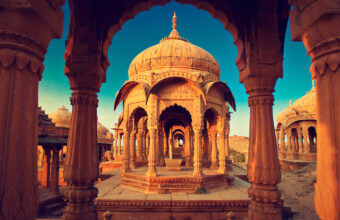
Built in the 17th century by Rao Raja Anirudh for his foster brother Deva as a dome-shaped memorial, this cenotaph is famous for its 84 pillars (although legend says you can’t count them all). The cenotaph has several ornate sculptures and a linga (a form of Shiva) built in the centre.
Stepwells are an architectural feature of Rajasthan and Gujarat. With water being a scarcity, stepwells were designed not only as sources of drinking water, but also places to bathe, pray and relax. Often sculpted as temples with gates, arches and pillars, there are about 50 stepwells in Bundi, but most of them are in ruins. The Raniji Ki Baori is the best known, built in the 17th century by Queen Nathavati, wife of Rao Raja Anirudh Singh. It is 46m (150ft) deep and each level has carvings of deities.
Built along the banks of the Jait Sagar Lake in the 18th century during the reign of Ummed Singh, the Sukh Mahal was home to Kipling and inspired him to write Kim. Meaning the palace of bliss, the Sukh Mahal is home to Mughal art and statues, a marble cenotaph and gardens.
The former capital of the Rathore clan lies in ruins amidst a beautiful garden filled with a fort, cenotaphs, temples, rock terraces and sculptures. Don’t miss the cenotaph of Maharaja Dhiraj Ajit Singh, which combines Jain and Buddhist architecture. This chattri also commemorates the ritual suicide of his 64 queens and concubines, who threw themselves on his funeral pyre in 1724.
Located 9km from Jodhpur, visit for the Hall of Heroes (dedicated to folkloric characters), the Temple of Gods and the many monkeys roaming around.
Located at Gangaur Ghat on the banks of Lake Pichola, this 18th-century palace belonged to the then prime minister of Mewar, Amar Chand Badwa. The Rajput architecture has been preserved and there is a museum dedicated to Mewar culture, including jewellery boxes, royal clothing and mural paintings.
A beautiful park filled with sculptures and statues, Saheliyon Ki Bari (Garden of Maidens) was created by Maharana Sangram Singh for his queen and her 48 female attendants as a refuge from court life. It’s now a popular meeting spot. Look out for the lotus pond and elephant fountains.
Another beautiful royal palace, the Monsoon Palace (Sajjan Garh Palace) sits atop the Aravalli Hills overlooking Fateh Sagar Lake. Built in the 19th century as a refuge from the annual monsoon, the palace was also used as a hunting lodge. Visit the palace in the evening for sunset views, or head here during the monsoon and watch the clouds float over Udaipur.
For a change of pace, visit the Karni Mata temple in Bikaner, which holds more than 20,000 black rats. Each time a rat dies, a statue is built inside the temple complex.
Other notable temples include the Brahma Temple in Pushkar, which is one of the few in India dedicated to Brahma. This Hindu god was said to be cursed with having no places of worship on earth. Take a holy dip in Pushkar Lake before offering your prayers in the temple.
Rajasthan’s temples date back to the 4th century, although more ornate and architecturally interesting temples began to develop from the 9th century. These typically had sculptures and marble carvings, such as the stunning Delwara complex at Mount Abu.
Havelis (mansions) were the homes of rich merchants and traders in Rajasthan’s cities. Decorated with stone carvings and interiors of murals and frescoes, each merchant tried to outdo the next to show their importance and wealth.
Every major city in Rajasthan will have havelis worth visiting, but Jaisalmer is a particular hotspot. Look out for the Patwon Ki haveli and the elephants of Nathmal Ki haveli.
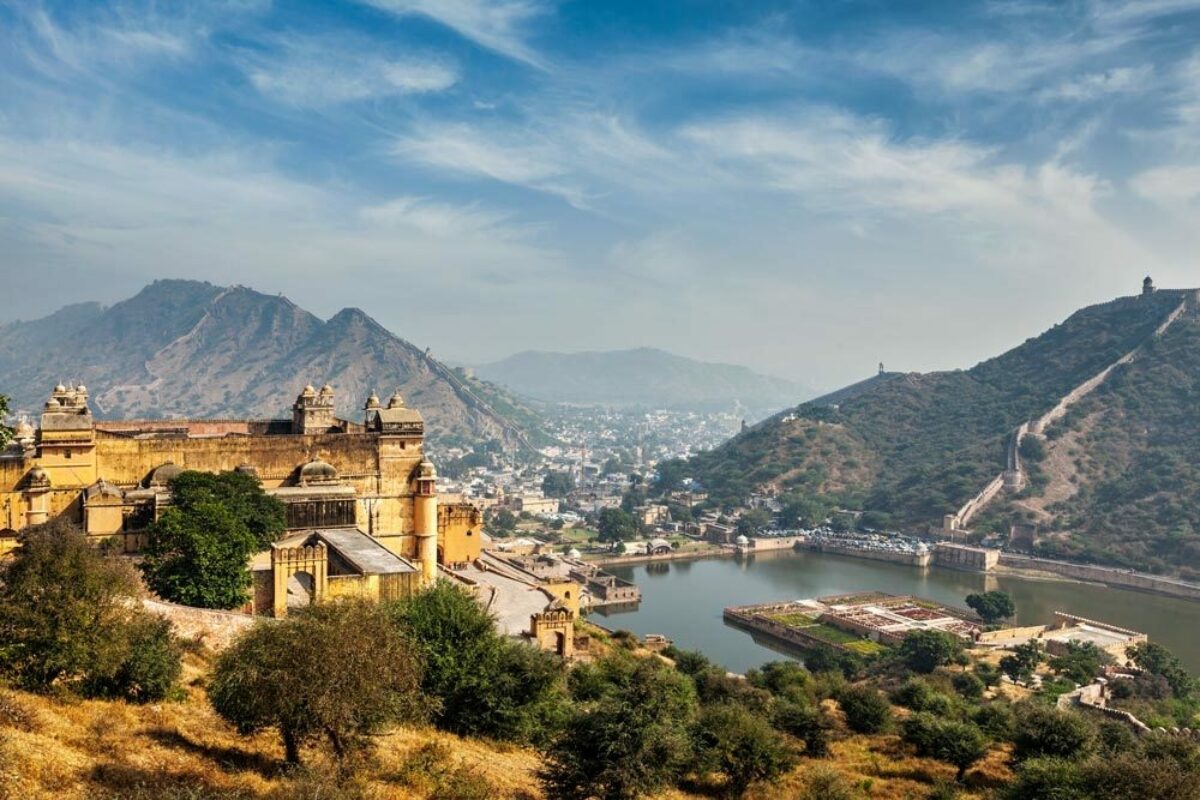
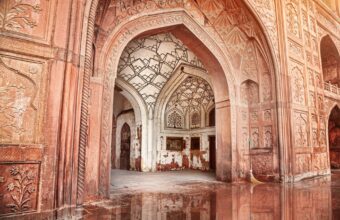
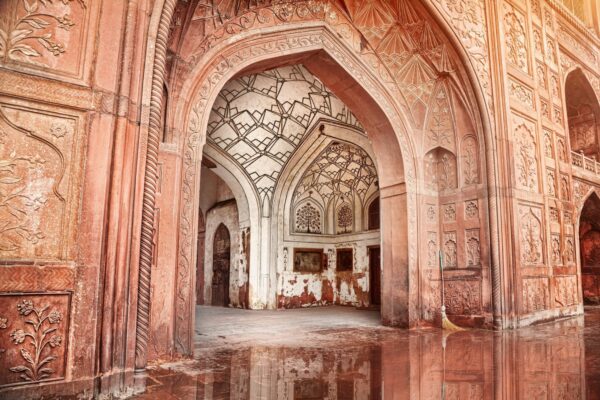
The history of Rajasthan is shown through its many forts, palaces and historical buildings. Almost every major city — and many minor ones — will have some form of architectural wonder to explore
Built to commemorate the region’s maharajas and nobles, chattris (cenotaphs) are a frequent feature of Rajasthan’s architecture. Chattri literally translates as umbrella, which references the dome-like structure that covers the cenotaph. Originally built as a garden complex, the yellow sandstone domes of Jaisalmer's Bada Bagh cenotaphs are an excellent example.
Rajasthan’s desert location means that conserving water has always been a major issue. Baoris are stepwells that were traditionally built to provide drinking water. Over time, they became meeting places and temples, decorated with sculptures and carvings. The 46m deep Ranji Ki Baori in Bundi is a fine example, showcasing carvings of Lord Vishnu.
Towering over the main square of the fort is the seven storey Fort Palace Museum. Formerly the Raj Palace (Palace of Kings), the museum is home to the mirrored Rang Mahal, which is filled with paintings and sculptures from the 15th century. Most of the palace is open to visitors, allowing you to explore the small rooms and stooped walkways designed for spying on the outside world. Head to the top of the palace for views over the city.
Ornate merchant mansions dot Jaisalmer and the most lavish and grand among them is the 19th century Patwon Ki Haveli. Now a museum, Patwon Ki Haveli is worth visiting for its architecture, intricate designs and history. The complex is a combination of five havelis and each is filled with stunning murals, mirror-work and paintings. The haveli belonged to merchant Guman Chand Patwa and his sons, who traded in gold, silver and brocade embroidery.
There are also two other beautiful havelis worth visiting — Nathmal Ki Haveli, which is guarded by two elephants carved in yellow sandstone, and the peacock-like grand roof of Salim Singh Ki Haveli.
This small museum tells the story of Rajasthan’s various princely states and explores the history behind traditional Rajasthani culture, including music and textiles. The centre hosts a nightly puppet show in English.
These sprawling complexes often housed whole cities within them, including palaces, temples and trading centres. Built on hillsides, these forts used natural defences to protect themselves, such as forests, deserts and of course, hills. The views from the forts are spectacular.
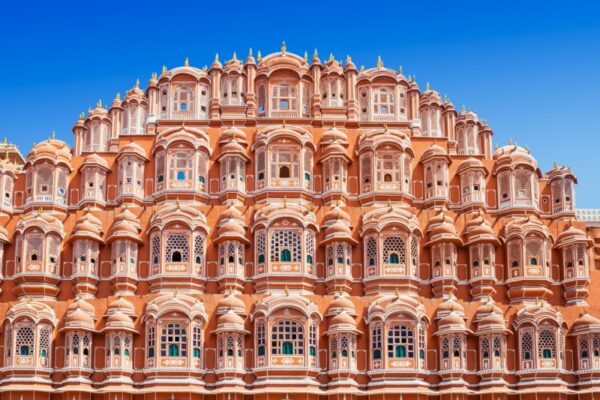
Although initially conceived for protection from invading armies, these forts quickly became more extravagant as royal families settled in. Some of the best examples of Rajput architecture can be found in its palaces. Two of the most striking are the Hawa Mahal in Jaipur and the City Palace in Udaipur. Look out for the sheesh mahal (hall of mirrors).
Visiting these forts is a chance to experience and imagine Rajasthan in its Rajput period, when kingdoms nudged up against each other and courtly culture helped develop the region’s arts, textiles and music.
There are eight main hill forts in Rajasthan, clustered around the Aravalli mountains. Designated as UNESCO World Heritage sites, these forts were built by Rajput kings and date from the 5th century.
Perched on the hills of Cheel Ka Teela (Hill of Eagles), Jaigarh Fort was built in 1726 by Jai Singh II to protect the Amer Fort. The two forts are connected by a series of underground passageways. Jaigarh Fort is famous for a cannon called Jaivana, which was once the world’s largest cannon on wheels. There are small temples inside the fort and several palaces, including Laxmi Vilas, Lalit Mandir, Aram Mandir and Vilas Mandir.
Jaigarh Fort also has a bizarre spot in history. While its water tank might seem ordinary — three levels, enough capacity to store six million gallons of water -— it is also allegedly the place that Man Singh stored his treasure. In 1977, then Indian prime minister Indira Gandhi ordered a search to look for the Fort’s treasure. After three months, the search was called off — but at the same time, the Delhi-Jaipur highway closed for three days, prompting rumours of the loot being whisked away in secret.
Rajasthan’s capital is postcard picture perfect and is the gateway to all the state has to offer. There are palaces, forts, temples, stepwells, gardens and lakes all waiting to be explored. Jaipur’s Old City is painted in shades of terracotta (Jaipur’s nickname is the Pink City) and its crumbling buildings are awash with history.
Founded by Raja Jai Singh II in the 18th century (1727), Jaipur was initially created to supply water to neighbouring Amer Fort. Now a UNESCO World Heritage site, Amer Fort — along with Nahargarh Fort and Jaigarh Fort— remains the main attractions of Jaipur.Why is Jaipur pink?
The city was painted pink during the reign of Raja Ram Singh in the 19th century (1876) to welcome the then Prince of Wales, Albert Edward, who later on became King Edward VII. There is even an Albert Hall named after him in the city.
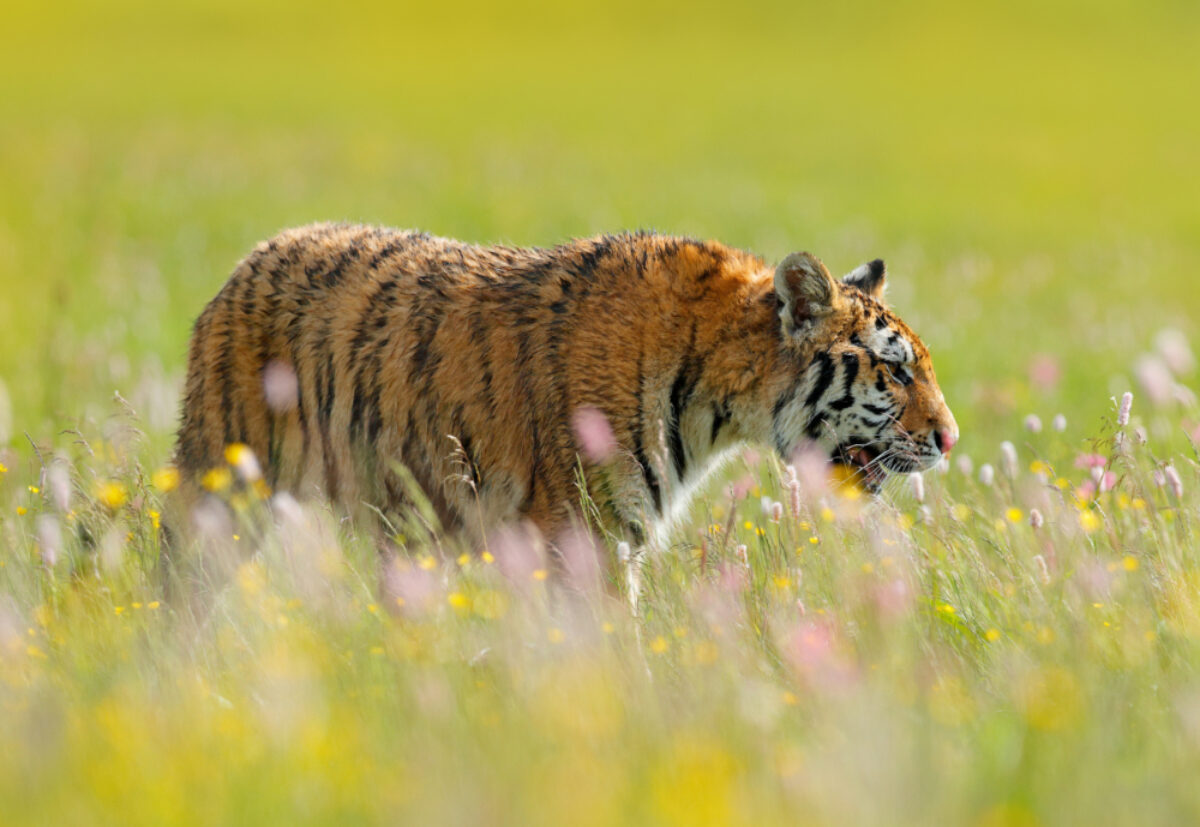
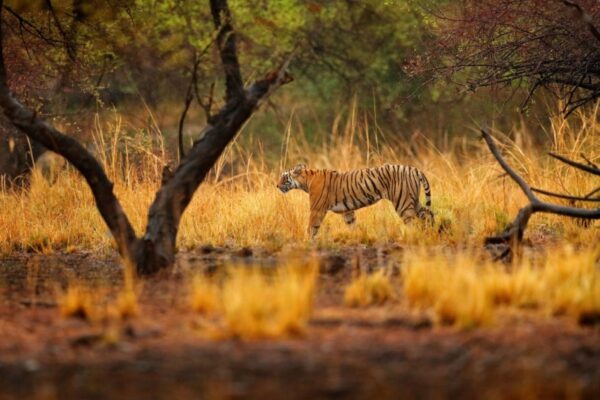
Located in the heart of Sawai Madhopur district, Ranthambore National Park is a tiger reserve and former hunting ground of maharajas. A couple of hours drive from Jaipur, it’s home to just under 100 Bengal tigers, as well as leopards, crocodiles, sloth bears and hyenas.
It also includes the neighbouring Sawai Mansingh and the Keladevi sanctuaries. Spread over 400 square km, the wildlife reserve is a combination of dry deciduous forests and open grasslands with more than 500 species of plants.
Ranthambore is one of the most important tiger sanctuaries in India, but the tiger population has reduced due to poaching. However, this is still the best place to spot tigers in India. Make sure you use a reputable guide and respect the animals if you choose to go on safari. You’ll be able to choose from either a canter truck which sits 20, or a more personalised jeep which sits six.
As well as tigers, the park is home to leopards, wild boars, wild dogs, hyenas, wild cats, sambar and chital deer, sloth bears and crocodiles among other wildlife.
Look out for the giant banyan tree near Jogi Mahal -- this gigantic banyan is thought to be the second largest in India and more than 200 years old.
Ranthambore is named after the towering Ranthambore Fort which was built in the 10th century. It stands 700ft tall, with three temples dedicated to Shiva, Ganesh and Ramlalji. There is a colourful Ganesh Chaturthi Fair which is celebrated in the fort’s temple during August/September every year. Look for the ancient Jain temples built in the 12th-13th centuries, the 32-pillared cenotaph and an old mansion called Sameton Ki Haveli.
Sariska National Park is a tiger reserve nestled in the heart of the Aravalli Mountains. Spread over 866 square km, Sariska’s landscape is a combination of thorny scrub forests and rocky landscapes.
Sariska has lost many tigers to poaching over the years. In the last decade, the park has introduced new cubs to the reserve which have successfully integrated into the environment, giving hope that Sariska’s tiger population can grow again.
Besides tigers, the park is home to leopards, wild boars, wild dogs, hyenas, wild cats and many deer. You can also see crocodiles in Siliserh Lake. The park is also rich in birdlife, with plenty of peacocks, crested serpent eagles, vultures and the Indian eagle owl.
Sariska was a hunting lodge of the Maharajas of Alwar and it became a wildlife reserve in 1955. It was part of Project Tiger (a conservation programme launched by the Government of India in 1973 to protect the Bengal tiger from extinction), becoming a national park in 1990.
In recent years, the park’s tiger population has struggled. In 2004, Sariska was found to have no tigers left, leading Rajasthan’s local government to introduce three tigers from Ranthambore in 2005. Controversially, the government also relocated two villages said to encroach on the habitat of the tigers. As of 2018, there are believed to be 18 tigers resident in Sariska.
Sariska is located close to Jaipur at 122km and Delhi at 200km away, which are the closest airports. You can hire a taxi and drive to Alwar and Sariska. The entry fee for a safari cost R470 per person and R400 for video camera. The best time to visit is October to March if you want to avoid the heat.
Previously known as Bharatpur Bird Sanctuary, the Keoladeo Ghana National Park is located in Bharatpur and is almost equidistant from both Delhi (180km) and Jaipur (178km). A UNESCO World Heritage site, Keoladeo is a birdwatcher’s dream and is home to more than 370 different species of bird. Of these, approximately 230 are resident in the park, with the rest migratory.
Known locally as Ghana, Keoladeo is a man-made wetland spread over 30 square km. Created by Maharaj Suraj Mal more than 250 years ago, the park was previously a hunting ground for kings and was used as a duck shoot during British rule.
Visitors come to see painted storks, cormorants, cranes and several species of eagle. While in the area, visit Lohagarh Fort, which contains palaces, museums and cultural artefacts.
Bundi is known for its miniature paintings and murals and there is a story behind them.
In the 16th century when the Hadoti kings broke away from Mewar and befriended the Mughals, Emperor Akbar of the Mughals sent three artists from Chunar near Varanasi as “gifts” to the royal court. The artists shifted their canvas from palm leaf manuscripts to walls. Armed with a thin brush that had a single hair, they created the minute details of Bundi art that mixes Rajput and Mughal influences.
To see the best of Bundi art, you must head to the Chitrashala, an art gallery tucked away in the Umed Bhavan, a part of the Bundi Palace. The entire gallery is a riot of colours with paintings depicting mythology, deities, temples and some beautiful and bold portraits of Rajasthani women. The colours are in vivid shades of turquoise and teal. There is even an Indian version of Romeo and Juliet.
Combine the culture and architecture of India's famed Golden Triangle with a safari deep into rural Rajasthan to see India's famed tigers in the wild. This classic trip takes in India's extraordinary capital Delhi, the Taj Mahal and fort in Agra, tigers and wildlife in Ranthambore National Park and culture in Jaipur before ending in glitzy Mumbai.
This North India itinerary is India at its finest, most regal and most exciting. Delhi, Jaipur and Jodhpur are treasure troves of fascinating culture, Ranthambore National Park is a land of immense natural diversity with some very famous four-legged residents, and Agra and Udaipur are the ultimate symbols of love, devotion and romance.
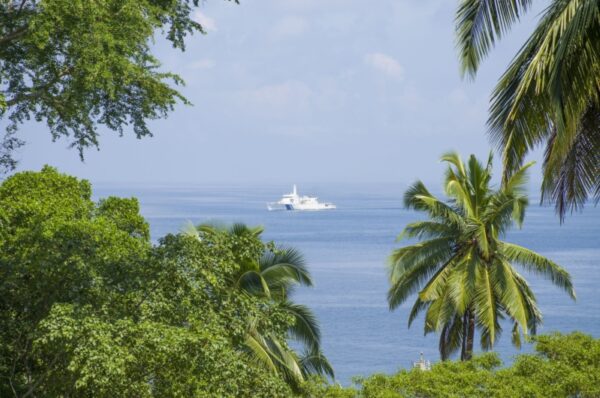
Fly into Tamil Nadu's Chennai before skipping across to a private resort on Andaman and Nicobar Islands, where you can scuba dive, snorkel through coral reef and explore the islands. After overnighting in Chennai, you'll fly to Rajasthan to search for tigers in Ranthambore National Park, before travelling to cultural Jaipur for art and architecture. End your trip in India's giant capital, Delhi.
This is India's classic twin-centre itinerary, calling at the country's two standout experiences: touring the Golden Triangle by railway followed by the Kerala backwaters by houseboat.
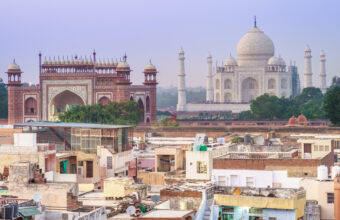
Start your journey in Delhi, exploring the Old Town's historic architecture and trying some street food on Chandni Chowk. Travel by train to Agra to see the famous Taj Mahal. Built by Mughal Emperor Shah Jahan, this monument to love is dedicated to his wife Mumtaz. While in Agra, visit the ghost town of Fatehpur Sikri before heading into Rajasthan and the arty city of Jaipur. Here, you can explore Rajasthan's arts and crafts, alongside its many palaces and mansions.
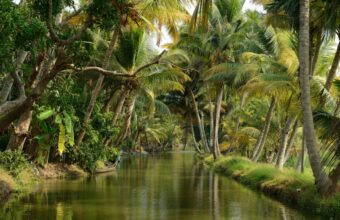
Next, fly – or better, take the train – to Kochi, where to enjoy Keralan cuisine and explore Fort Kochi's many cultural influences. Head into the jungle and Periyar National Park, home to tigers and elephants before ending your trip on a houseboat trip in Kumarakom.
Extend your itinerary with visits to Ranthambore National Park, and linger a while longer in Kerala to enjoy some of the country's best beaches.
Difficulty: ModerateDistance: 49 kmDuration: Six daysStart/end point: Mane Bhanjang to Srikhola, West BengalAccommodation: Homestays
They say that from Sandakphu Top – the highest peak in West Bengal – the Kanchenjunga mountain range resembles the outline of a sleeping Buddha. I couldn’t quite see the resemblance myself but after three days slogging along the India-Nepal border (often unknowingly crossing between one and the other), it really didn’t matter. I would have done anything for the sunrise view that makes this one of the highest-demand treks in this part of the Indian Himalaya.
Sandakphu, meaning "height of the poisonous plant" in the local Lepcha language, got its name from the toxic Indian aconite plant that thrives here. Visiting in March, I was fortunate to see rhododendron trees blooming vibrantly in red, pink, white, and purple. However, I wasn't as lucky spotting the elusive red pandas, which are known to live hidden within the forests of Singalila National Park.
This trek in Himachal Pradesh state was once a traditional route for Gaddi shepherds to relocate their flocks from Lahaul Valley into Kullu Valley, via the 4,277 metre Hampta Pass which connects these two starkly diverse landscapes and gives the trek its name.
As I pressed on through my journey, through steep ascents, fast-flowing river crossings and craggy trails, I got to experience for myself the transition from the pale-green meadows of Kullu to the semi-desert landscape of Lahaul.
A note of caution: unregulated tourism is taking its toll in this area, as with much of the Indian Himalaya. What was once a remote trading route for shepherds to barter barley, potato and wool is now under great pressure from littering and irresponsible camping. If you come here, please ensure you visit respectfully and responsibly.
Your details are safe and will not be used for any other purpose. By using this service you agree for us to share your details with your chosen tour operator according to our Privacy Policy.
1Your trip
2Complete your request
3Meet your specialist
Find a India specialist
Tell us about your trip and we'll find your match
We'll connect you directly with the experts.
Connect with Shikha, Nico and 4 other India specialists.
We'll connect you directly with the experts.
Connect with Shikha, Nico and 4 other India specialists.