





Chachapoyas & Kuelap
The great cloud forest citadel
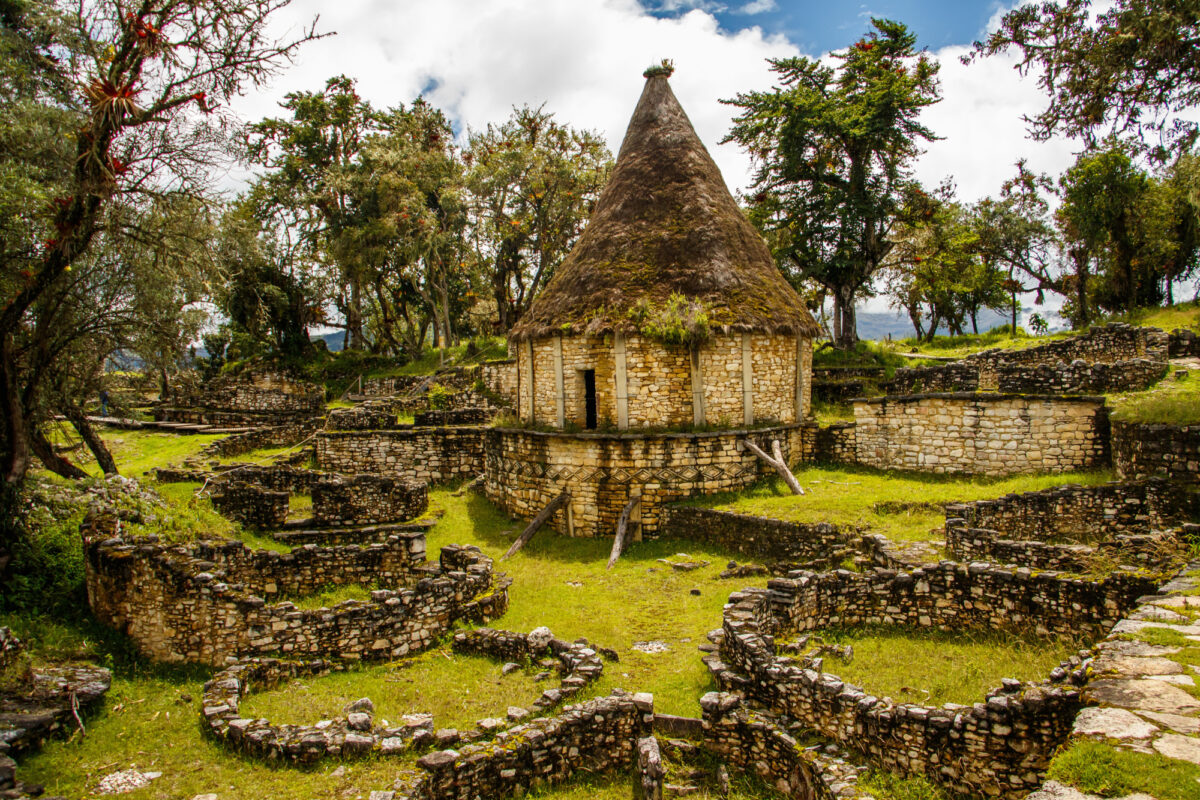
Constructed by the Chachapoyas people, a formidable and mysterious pre-Inca civilisation who referred to themselves as ‘Warriors of the Cloud’, Kuélap was probably first settled sometime in the fifth or sixth century AD and gradually built up over almost a millennium.
Current scholarly opinion posits it took on its present form sometime in the 1000s, remaining inhabited well into the 1500s. But as with all things Chachapoya, these dates are tentative at best.
Hidden gems in Chachapoyas & Kuelap
Chachapoyas & Kuelap
Laguna de los Cóndores trek

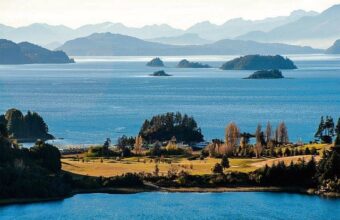
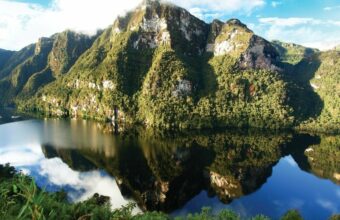
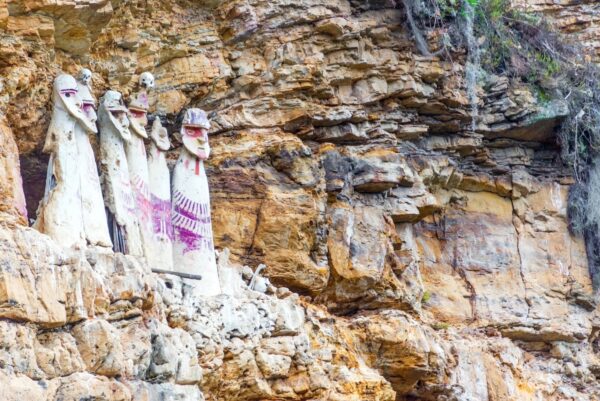
This is a great, lesser-known, multi-day hike in the Chachapoyas area. You'll trek through several ecological zones, as the flora and fauna are different at each level of elevation. Once you reach the lake, you will be treated to a secluded body of water that often has so little wind that it becomes a perfect mirror, reflecting the steep jungle-covered cliffs that surround it. On your second day, you’ll have all day to visit the cliffs where hundreds of mummies were discovered. Most of the artefacts are in the museum in Leymebamba, which is why it’s a good idea to visit the museum before you begin the trek. Some mausoleums in the cliff are intact, so bring binoculars. As the name promises, you’ll often see condors soaring along the cliffs above the lake. Some agencies combine this with hikes to the Gocta waterfalls or other nearby archeological sites to make a four or five day itinerary. You may also spend a day in Leymebamba visiting the museum and spend the night there before you begin the trek. The trek is difficult enough that you will be glad to spend the second day visiting the lake and the cliff where the mummies were found. On the hike in, you’ll ascend 1,400 metres of altitude and descend about 700 metres. You’ll hike back out on the same trail, so it will be only 700 metres up but a knee-aching 1,400 metres of descent. You will camp two nights at the lake. Some agencies have built small cabins nearby, so inquire what kind of accommodation is included. Most agencies don’t include sleeping bags. Trekking agencies always include transportation from Chachapoyas. If you require transportation from the airport in Cajamarca or Jaen be sure to notify the agency when you book.
Read more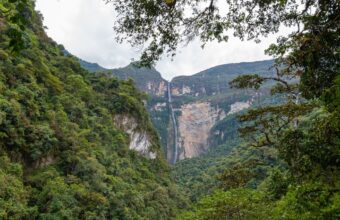
Chachapoyas & Kuelap
Gocta Waterfall hike
The Gocta Waterfall is 771 metres high, making it the third highest waterfall in Peru. The forest you walk through on the way is brimming with birds and you’re likely to see several species of hummingbirds. It’s common to see the Gallito de las Rocas, often translated as Cock of the Rock, though the Spanish word “gallito” means little rooster. Though the Chachapoyas civilisation used the waterfall area, it was unknown to the modern world of tourism until recently. In 2002 the German archeologist Stefan Ziemendorff was researching the Chachapoyas culture in the area and came upon the waterfalls. The exact height wasn’t measured until 2006. The hike is five km each way and the trail has a lot of up and down. The trail is not difficult, but many people opt to rent a horse for the day. It can be muddy and slippery at any time of the year because of the cloud forest. You can book with any agency in Cajamarca or Chachapoyas. If you choose to go without an agency, have cash for the S/20 entrance fee. You can also hire a guide on arrival for about S/50. If you book through an agency, they will include transportation from Chachapoyas to Cocachimba. If you choose to go on your own, ask about public transportation in town. You will take a bus to Puente Cocahuaico and then a moto taxi (tuktuk) to the trailhead in Cocachimba.
Read more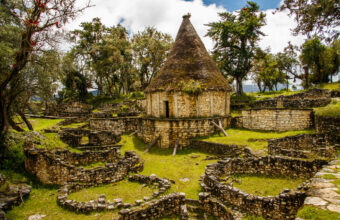
Chachapoyas & Kuelap
Kuelap day hike
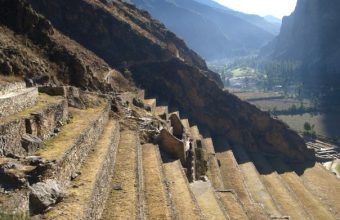
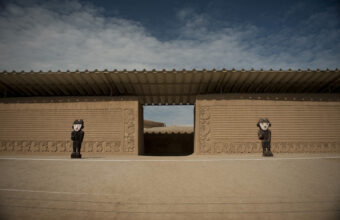
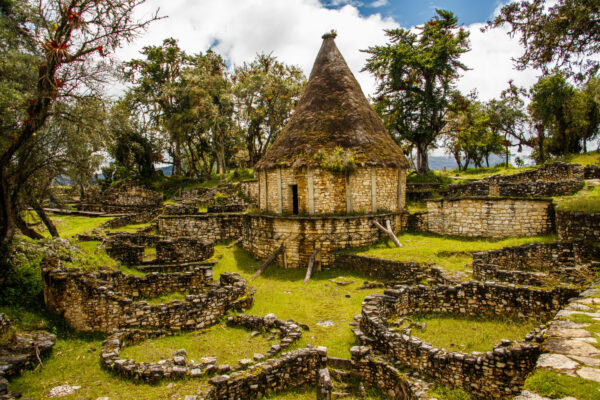
Kuélap is one of the most extensive archeological complexes in South America. There are hundreds of buildings to visit, many of which still contain murals and friezes. Though most guidebooks call it a fortress, it was in fact a citadel. Between 2,500 and 3,000 of the Chachapoyas elite lived here, surrounded by ceremonial centres built between 900-1100 AD. In the second half of the 15th century, the Inca Tupac Yupanqi conquered the area. Evidence of Inca control can be seen in the five rectangular buildings of classic Inca construction. Unlike the Inca division of residential, ceremonial and agricultural areas of their cities, the Chachapoyas built homes mixed in with religious buildings and artisan workshops. Another unique feature of the culture is that families buried their ancestors under their homes, believing that the dead protected them. The elite burned the city, rather than allow it to be captured by the Spanish. It was forgotten for centuries and “re-discovered” in 1843 by the Italian Antonio Raimondi. There are few signs and plaques in the ruins, so a guide is highly recommended. To get to Kuélap you can take the cable car from Nuevo Tingo or hike from Tingo Viejo. If you are going without a guiding service, make sure you go to the right place. If you hike up, the trail is nine km and takes about four hours. If you take the cable car, you’ll be at the top in 20 minutes. The hike up to Kuélap is just that, uphill. The trail is wide and easy to follow but it’s advisable to take it slow for the altitude and steepness. Also, if the sun is out it will be strong so make sure you have a good hat and sunscreen. Most people visit Kuélap from the town of Chachapoyas. Public transportation is available if you decide to not hire a guiding service, which always includes transportation. Every tour agency in Chachapoyas and Cajamarca offers tours of Kuélap. It is easy to book a one day tour with or without the cable car. If you prefer to go on your own to Kuélap, guides are available to hire upon arrival. Expert insight, by Miles Buesst of PeruNorth, a specialist in Peru trekking tours: "The last time I hiked to Kuelap I realised it would have been better to drive or get the cable car up to the ruins, and then hike back down. This would have allowed us to enjoy the ruins when fresh. If hiking up, set off early to avoid the full heat of the day."
Read more
Chachapoyas & Kuelap
Gran Vilaya trek
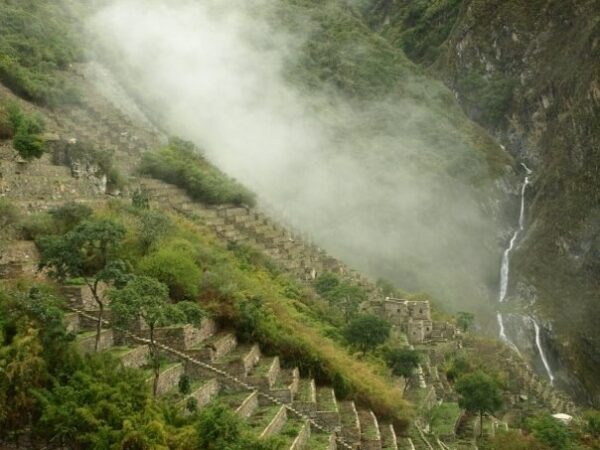
This is the best trek in the north of Peru to see both spectacular jungle and pre-Inca archeological sites. You’ll visit the petroglyphs of Pitaya, the sarcophagi of Karajia, the extensive Gran Vilaya archeological complex, the Lanche archeological site and the immense citadel of Kuélap. You’ll also see Gocta Waterfall, which is an astonishing 771 metres high, and the unique ecosystem that transitions from the high Andes to the Amazon Rainforest. You’ll hike past coffee farms and have the opportunity to try locally grown and roasted coffee. Though most agencies run this as a four day trek, there are also three day and five day options. The distance covered each day varies and it is possible to do most of the trek on horseback. Not all agencies include the nine km return hike to Gocta waterfalls on the first day, so be sure to ask about that when you book. It's a moderately difficult trek, as long as you are comfortable both hiking and on horseback. The third day is planned on horseback because it’s 20 kilometres, which makes for an exhausting day if you're hiking. That day also has the greatest climbs, with an ascent of 1,400 metres of elevation and a descent of 700 metres. You will carry your own picnic lunch every day. You will stay each evening in a town that has electricity and bathrooms with plumbing. Lodging on this trek is usually quite basic and there are no fancy hotels in the area. The first night is in Huaylla Belén, usually in cabins. The second night is in Congón, where you have the opportunity for a homestay with a local family. The third night is usually in a family B&B in Choctamal, just below the Kuélap ruins. If you prefer to stay in tents, make sure to notify the agency when you book the trek. There are a few local tour operators in the town of Chachapoyas. If you book with a tour agency in Cajamarca, Lima or an international agency, ask which local operator they partner with so you can look for reviews of their services. Ask if the cable car is included for the descent from Kuélap on the last day. You will have a muleteer for the pack horses and the horses you ride. Depending on the size of your group, your guide may have an assistant with them. There are sections on the first and fourth day when you will be in a van. Transportation is usually included from the town of Chachapoyas to Cocachimba and from Kuélap back to Chachapoyas. There are daily flights from Lima to Cajamarca, which is 328 km from Chachapoyas. If you need to be picked up in Cajamarca be sure to mention that when you book. You can also fly to Jaen, which is 186 km from Chachapoyas, but smaller than Cajamarca with more limited flights.
Read more-

Laguna de los Cóndores trek
View experience -

Gocta Waterfall hike
View experience -
Gran Vilaya trek
View experience

Chachapoyas & Kuelap itineraries
Chachapoyas & Kuelap travel companies