






Jaisalmer

Welcome to Jaisalmer
The insider's travel guide to JaisalmerAn 800-year old living fort, the never-ending sand dunes of the Thar Desert and haunting tales bring the Golden City of Jaisalmer alive.
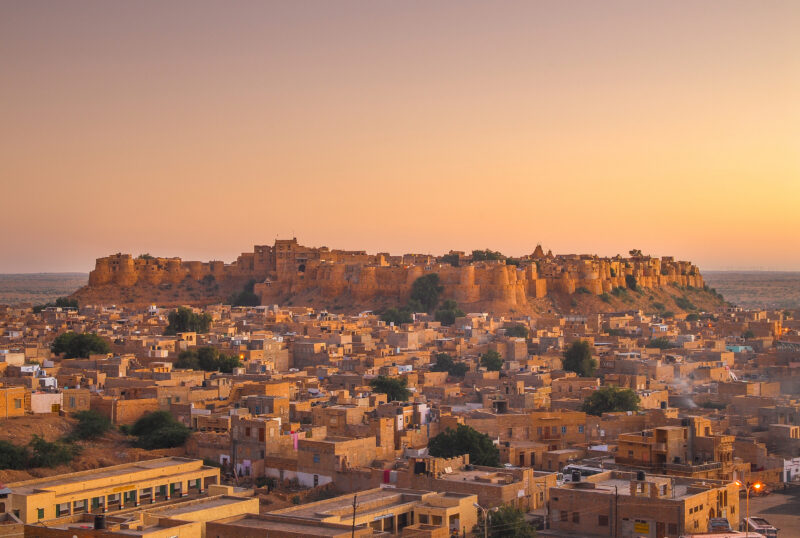
Glowing in shades of yellow, Jaisalmer was founded in the 12th century by Rawal Jaisal of the Bhatti clan and is famous for its fort. It earned the name the Golden City from the yellow sandstone used to build the fort and houses of the Old Town, creating a golden glow over the town. Nearly 4,000 people still live in Jaisalmer Fort — more than a quarter of Jaisalmer’s population.
Other historical sights include the city's Jain temples and Gadisar Lake with its elaborate cenotaphs.
The Jaisalmer atlas
10 picks Places & Experiences You Won't Find Elsewhere-
Havelis (mansions) were the homes of rich merchants and traders in Rajasthan’s cities. Decorated with stone carvings and interiors of murals and frescoes, each merchant tried to outdo the next to show their importance and wealth. Every major city in Rajasthan will have havelis worth visiting, but Jaisalmer is a particular hotspot. Look out for the Patwon Ki haveli and the elephants of Nathmal Ki haveli.
-
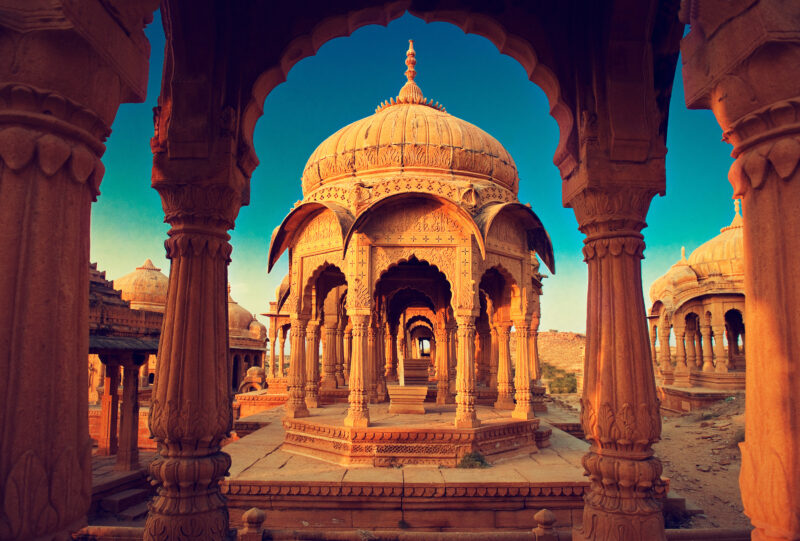
The history of Rajasthan is shown through its many forts, palaces and historical buildings. Almost every major city — and many minor ones — will have some form of architectural wonder to explore Built to commemorate the region’s maharajas and nobles, chattris (cenotaphs) are a frequent feature of Rajasthan’s architecture. Chattri literally translates as umbrella, which references the dome-like structure that covers the cenotaph. Originally built as a garden complex, the yellow sandstone domes of Jaisalmer's Bada Bagh cenotaphs are an excellent example. Rajasthan’s desert location means that conserving water has always been a major issue. Baoris are stepwells that were traditionally built to provide drinking water. Over time, they became meeting places and temples, decorated with sculptures and carvings. The 46m deep Ranji Ki Baori in Bundi is a fine example, showcasing carvings of Lord Vishnu.
-
Towering over the main square of the fort is the seven storey Fort Palace Museum. Formerly the Raj Palace (Palace of Kings), the museum is home to the mirrored Rang Mahal, which is filled with paintings and sculptures from the 15th century. Most of the palace is open to visitors, allowing you to explore the small rooms and stooped walkways designed for spying on the outside world. Head to the top of the palace for views over the city.
-
Ornate merchant mansions dot Jaisalmer and the most lavish and grand among them is the 19th century Patwon Ki Haveli. Now a museum, Patwon Ki Haveli is worth visiting for its architecture, intricate designs and history. The complex is a combination of five havelis and each is filled with stunning murals, mirror-work and paintings. The haveli belonged to merchant Guman Chand Patwa and his sons, who traded in gold, silver and brocade embroidery. There are also two other beautiful havelis worth visiting — Nathmal Ki Haveli, which is guarded by two elephants carved in yellow sandstone, and the peacock-like grand roof of Salim Singh Ki Haveli.
-
This small museum tells the story of Rajasthan’s various princely states and explores the history behind traditional Rajasthani culture, including music and textiles. The centre hosts a nightly puppet show in English.
-
Jaisalmer has a huge legacy of Jainism. Built in the traditional Dilwara architectural style, the fort houses seven Jain temples known for their art and intricate carvings. Remember that no photos are allowed inside the temples. For more on Jainism, visit the town of Lodhruva 15km from Jaisalmer. Here, you’ll find magnificent Jain temples dedicated to the 23rd tirthankar (Jain great teacher). Rebuilt in the 1970s after years of ruin, the temples still bear the scars of past battles. Look out for a pair of cobras who live in the compound — seeing either is said to bring good luck.
-
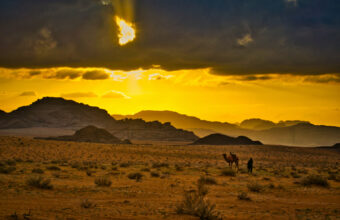
A trip to Jaisalmer is not complete without a camel ride in the sand dunes. Although there are several dunes around the city, the most popular is Sam Dunes, found 40km outside the city. Head there early morning or at sunset for great photographs. Khuri Dunes is another popular destination.
-
A man-made lake created right in the heart of the city, Gadisar Lake is surrounded by chattris (elaborate ornate tombs and cenotaphs), temples and stepwells. First created by Jaisalmer founder Raja Rawal Jaisal and then rebuilt by King Garisisar, the lake is a good spot to see migratory birds stopping for a drink.
-
An 800-year old living fort, the never-ending sand dunes of the Thar Desert and haunting tales bring the Golden City of Jaisalmer alive. Glowing in shades of yellow, Jaisalmer was founded in the 12th century by Rawal Jaisal of the Bhatti clan and is famous for its fort. It earned the name the Golden City from the yellow sandstone used to build the fort and houses of the Old Town, creating a golden glow over the town. Nearly 4,000 people still live in Jaisalmer Fort — more than a quarter of Jaisalmer’s population. Other historical sights include the city's Jain temples and Gadisar Lake with its elaborate cenotaphs.
-
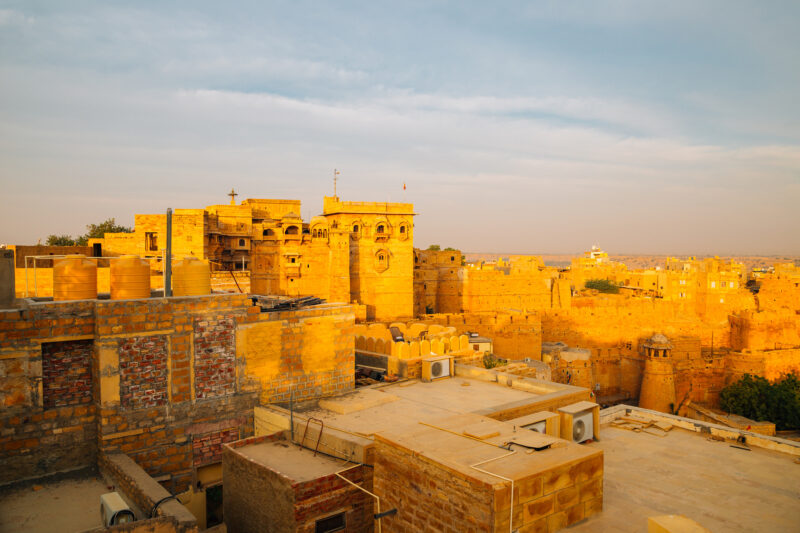
The second oldest fort in Rajasthan, Jaisalmer Fort is a UNESCO World Heritage site and along with seven others (Amer Fort in Jaipur, Chittor Fort in Chittorgarh, Kumbhalgarh Fort in Kumbhalgarh, Ranthambore Fort at Sawai Madhopur, Gagron Fort in Jhalawar, Mehrangarh Fort in Jodhpur and Jaigarh Fort in Jaipur), are collectively known as the Hill Forts of Rajasthan. The earliest settlement in the fort came up in the 17th century. The fort is built of yellow sandstone and the colour changes as the day progresses, from a light gold in the morning to a deep honey at sunset. Standing at the top of the fort, you get a view of the entire old town. There are 99 bastions and four fortified entrances. Inside the fort, you can see the Laxminath temple dedicated to the Hindu god of wealth Lakshmi and her consort Vishnu, ancient Jain temples and the traditional Rajput architecture of the Raj Mahal Palace. However, Jaisalmer is more than just a series of temples and palaces. This is a living fort, which nearly 4,000 people still call home. Its narrow alleyways are lined with shops, restaurants and guesthouses.
-

Explore ornate havelis
-

Rajasthan's chattris and baoris
-

Fort Palace Museum
-

Patwon Ki Haveli
-

Desert Cultural Centre and Museum
-

Visit Jaisalmer's Jain temples
-

Camel rides on Sam Sand Dunes
-

Gadisar Lake
-

Jaisalmer
-

Jaisalmer Fort

Trusted specialists

Find a Jaisalmer specialist
Tell us about your trip and we'll find your match
We'll connect you directly with the experts.

Connect with Krishna.
We'll connect you directly with the experts.
Connect with Krishna.
- Hand-picked local specialists
- Honest advice from real experts
- Free to use, no hidden fees