The insider's travel guide to The Galapagos Islands
For such a tiny smattering of islands flung far into the Pacific Ocean, the Galapagos archipelago has had an outsized impact on humanity and our understanding of ourselves.
Cut off from human contact for millennia and under unique geological conditions, the islands became a petri-dish for mother nature; a place where species could mutate and evolve in isolation, leaving clues for what would become Charles Darwin’s revolutionary theory of natural selection.
The Galapagos today remain an exemplary natural wonder despite centuries of settling, intensive fishing and, more recently, a booming tourism industry. Done right, tourism to the Galapagos can play a key role in their conservation, so plan your trip carefully, tread lightly, and help preserve the Galapagos for generations to come.
Pack light, quick-drying clothes for the Galápagos. Heavier materials such as cotton take longer to dry in the humid weather. Remember that you’ll be travelling on boats (including pangas and rafts with dry and wet landings) and that you’ll need waterproof clothing. It’s also worth packing seasickness tablets to help you cope with the rocky journeys to the islands.
Other essentials include:
Comfortable hiking shoes
Light rain jacket/windbreaker
Fleece for evenings on board
Bathing suit
Sandals for wet landings
Sunscreen (SPF 50 - you’re on the equator!)
Sunhat
Reusable water bottle
Seasickness tablets
Cash for national park fees, tips and extra expenses on board (not all ships accept credit cards)
Visitors on cruises to uninhabited islands are required to be accompanied by a registered guide for their own safety and for the protection of the islands. Since 2024, many visitor sites on inhabited islands now require a certified guide, such as Charles Darwin Station and Las Grietas on Santa Cruz Island.
Most airlines restrict luggage to one checked bag up to a maximum of 40 pounds and one carry-on bag that weighs up to 15 pounds. This is generally recommended for all air travel within South America. Extra baggage can usually be accommodated for a fee.
Not necessarily. Although land-based trips mean spending the night in hotels or lodges you’ll still visit various islands by boat – usually small speedboats, which can be extremely choppy and can cause problems for younger and older travellers.
Cell phones on GSM networks generally work on the inhabited islands, but signal may be intermittent. Check with your provider to find out the specifics of your plan and the roaming charges. Extremely high rates are common, and it’s better to know beforehand to avoid the shock after returning home. It’s always wise to turn off data roaming before heading abroad.
At the airport in both Quito and Guayaquil you can buy travellers’ sim cards for your stay in Ecuador. These use a pay as you go system, and don’t require an Ecuadorian ID to activate.
Since 2024, many boats now offer internet on board through Starlink. Some charge a high extra cost for internet access, but others offer wifi for free.
Visitors from North America and most European countries don’t currently need a visa to enter Ecuador, but please double check before departure. Your passport must be valid for at least six months beyond the date of departure from Ecuador.
In addition to the originals, bring a copy of your passport, a list of identity card numbers and the international phone numbers of their issuing institutions. Store these separately from your original documents in case of an unforeseen problem with emergency contact numbers and medical information.
Valid health insurance is highly recommended and may be required by your cruise operator. Check that you are covered for emergency air transport as there are only basic facilities on the Islands.
To do the Galápagos justice, aim to spend at least five days on the islands, either on a cruise or a land-based tour. Four-day/three-night cruises are available but will feel rushed and might not get beyond the busier inner islands.
A really important thing to know is that cruises depart with lunch on the first day and end after breakfast and a short last excursion on the final day, so the first and last day are very short. It’s better to think in terms of nights rather than days, for example a seven-night cruise rather than an eight-day cruise.
Six night/five-day cruises generally rotate around the main inner islands, plus one or two outer islands. This will give you a balanced view of the islands and a good range of wildlife, without everything feeling too rushed.
For example, the Comorant five-day eastern itinerary starts at Baltra and visits Santa Cruz, Genovesa, South Plaza, Santa Fe and San Cristobal, with morning and afternoon excursions at each stop. Or the five-day Ocean Spray western itinerary, which heads from Baltra to Bartholomew, Genovesa, Santiago and back via Santa Cruz.
Six and seven night cruises tend to be the sweet spot if you have the time and budget. These itineraries will either focus on the western or the eastern islands, and spend plenty of time at all the highlights. Note that you’ll still see just half of the full archipelago, but with plenty of time for a greater range of activities and excursions.
Longer 14-night cruises are formed by combining a ship's eastern and western itinerary into a single trip. The main advantage to this is you get to see the full archipelago from the younger islands to the older islands, observing how the wildlife has evolved differently on each.
The tour programme will be action packed but you may choose to spend some more leisure time on board. Note that some activities may start to feel repetitive, and you’ll need a good guide to keep you engaged.
Unless you’re doing something specialist such as a diving course or a birdwatching cruise, two weeks is probably too much—use your spare time on the mainland instead, the rest of Ecuador is just as fascinating!
Ask a question
Get answers from our independent The Galapagos Islands experts.
Get a free, personalised answer about The Galapagos Islands.
You'll receive a reply by email. Questions and replies may be anonymised and reproduced on Horizon Guides.
§ 04
The The Galapagos Islands atlas
27 picksPlaces & Experiences You Won't Find Elsewhere
Where
What
Tiny Darwin Island, at the remote far north of the archipelago, is one of the world’s premier scuba locations and has the densest biomass of sharks anywhere on earth. Rarely visited by standard cruises, these quiet waters teem with whale, Galápagos and silky sharks, hammerheads and more.
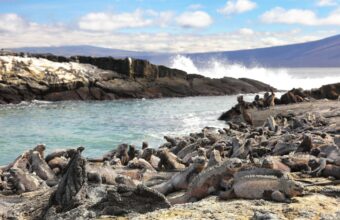
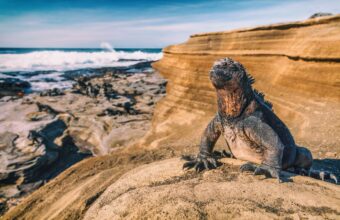
The third largest – and youngest – of the Galápagos Islands, volcanically active Fernandina has a unique environment which makes it a haven for thousands of slowly-moving marine iguanas, Galápagos penguins, flightless cormorants and sea lions. This is also the island where you’re most likely to see a volcanic eruption! There is a good 15km hike to Volcan Sierra Negra which departs from Puerto Villamil.
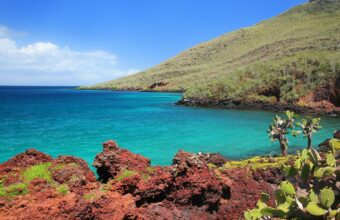
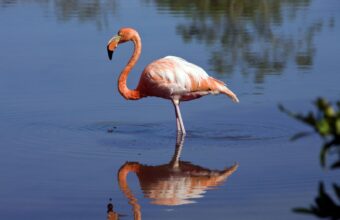
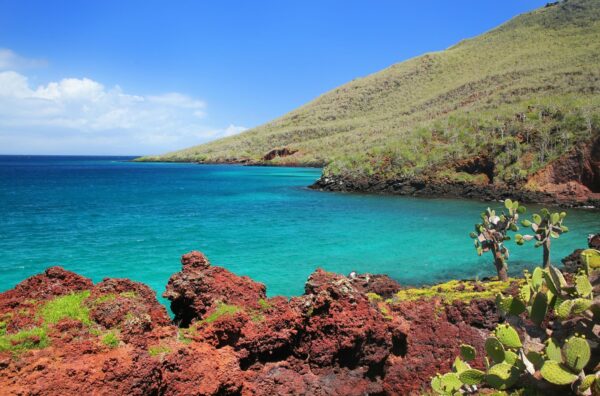
Noted for the unique red colour of its beach and cliffs (from the iron content), Isla Rabida is known for the sizeable population of flamingos that feed on shrimp in its lagoon, snorkelling with sea lions and the large number of bird species that live here.
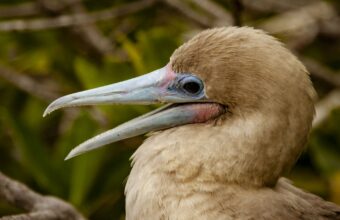
Genovesa, a remote island in the archipelago’s far north, is visited by longer cruise itineraries and is a favourite for birdwatchers. Also known as Booby Island due to the sheer number of goofy-looking Nazca and red-footed boobies that live here, the island is also home to great frigatebirds, short-eared owls, petrels, Galápagos doves, finches, lava gulls, and many more.
Also here you can visit the tidal pools of Darwin Bay where sea birds hover and marine life flourishes, and climb Prince Philip’s Steps, named for the British royal who visited the island. You’ll see red-footed boobies, Nazca boobies and great frigate birds along the way.
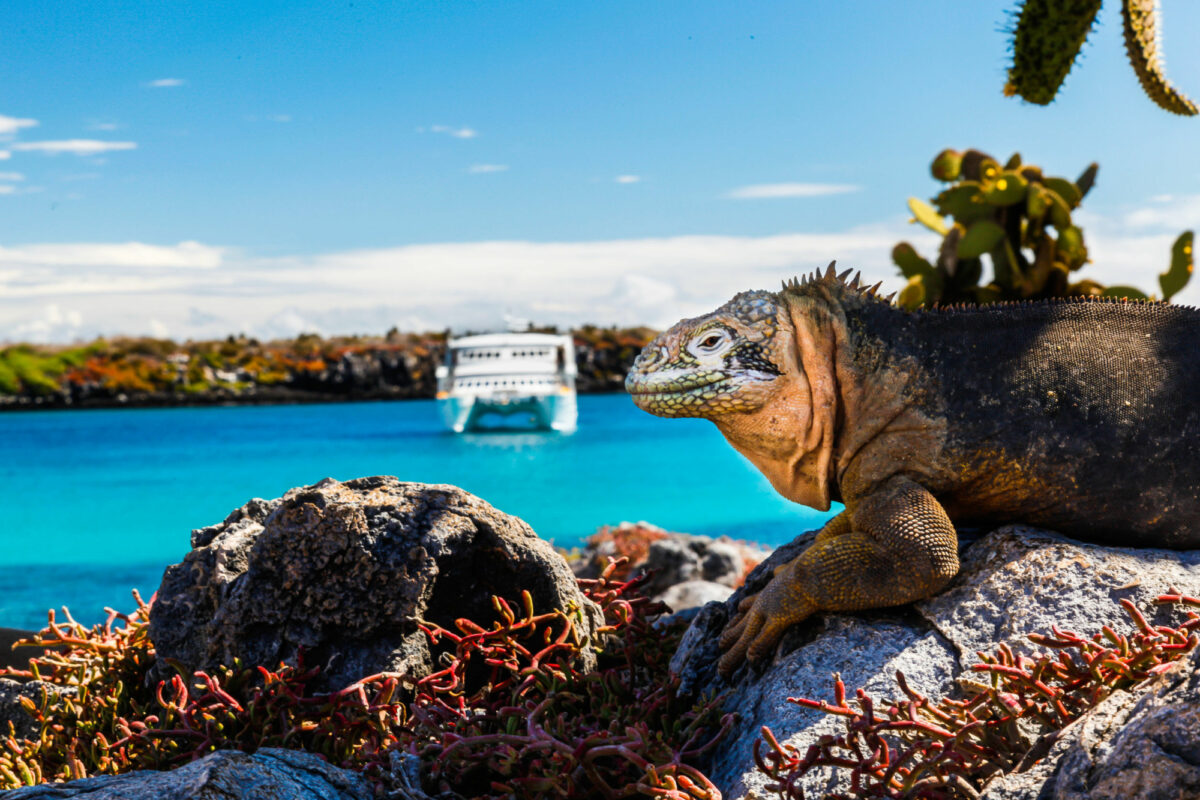
North Seymour is home to one of the island’s first conservation projects. In the 1930s, the crew of Captain Alan Hancock’s ship transferred 72 land iguanas from the nearby Baltra Island to North Seymour in the hopes that the reptiles would fare better without the feral goats competing for food. At last count in 2014, there were 2500 land iguanas on the island.
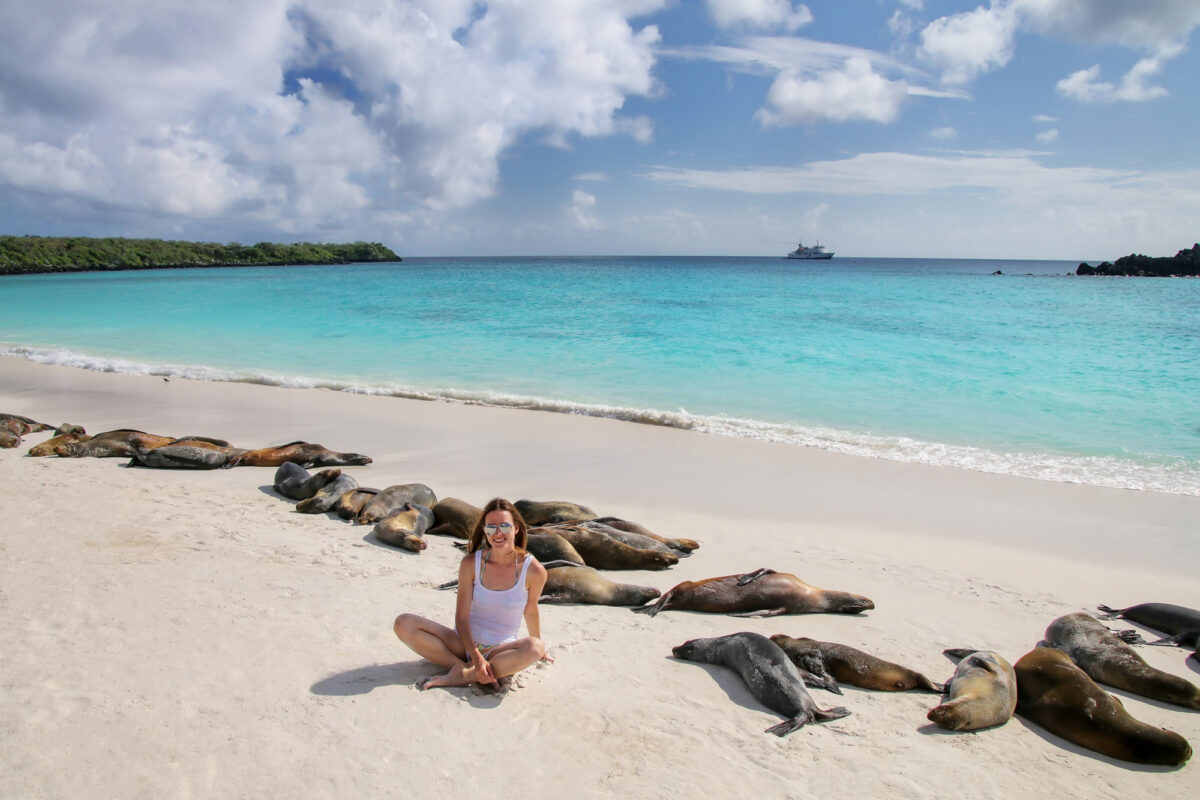
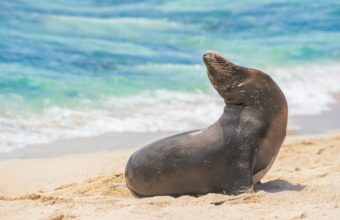
North Seymour and neighbouring Mosquera Islet are home to a large population of sea lions. Snorkelling here puts you up close and personal with these curious creatures and their young pups.
Also here is a flamingo lagoon on the isolated Bachas Beach, and the largest nesting colony of great frigate birds.
One of the sites used in the movie “Master and Commander,” Bartolomé’s Pinnacle Rock is the closest thing to a Galápagos landmark. The volcanic outcrop formed after lava erupted from an underwater volcano and the iconic formation was used for target practice by US airmen during WWII, adding to its unique shape.
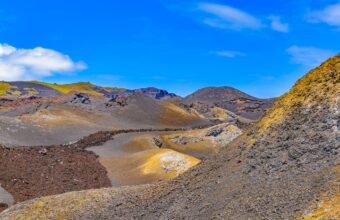
The colourful scenery of the beaches on either side of Pinnacle Rock is contrasted by the barren landscape of Bartolomé’s interior. It’s often compared to the moon or Mars due to the red lava rocks away from the shore.
While here you can climb to the top of the island’s summit, ascending a wooden staircase through the stripped-down landscape. In the shallow waters between the landing point and Pinnacle Rock you can see Galápagos penguins, sea turtles, parrotfish, and small sharks.
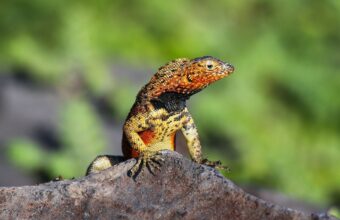
On Española, you’ll be greeted by colonies of sea lions and Española lava lizards lounging freely. It’s also known for its nesting sites of Blue-footed and Nazca boobies.
You can hike the Punta Suarez trail to the edge of a cliff overlooking a natural lava blowhole, visit the waved Albatross breeding colony (the world’s population of the species migrates here during April and December). The white sand beach at Gardner Bay is one of the longest in the islands and sea turtles bury their eggs on the beach during mating season between January and March.
After being marooned on Floreana in 1805, Irishman Patrick Watkins became the first known Galápagos resident. Post Office Bay is also here, an informal mail system started in the 1700s by whalers. Mail was left for ships returning home in a barrel by those headed out to sea. The tradition lives on today: you can leave postcards at Post Office Bay for others to pick up and deliver once home.
Also on Floreana is Cormorant Point with two contrasting beaches; a green sand beach caused by olivine crystals and Flour Beach, made from crushed white coral. You can see pink flamingos at the nearby Flamingo Lagoon, watch for Green sea turtles nesting on the sands of Flour Beach. Another highlight is a panga ride to Gardner Inlet for a view of the large caves and rock formations of the island.
Just off the Floreana coast is the Devil’s Crown – a partially submerged, extinct volcano where wildlife thrives. Sea turtles, sea lions and even sharks are commonly seen in and around the crater, while seabirds crowd the outlying cliffs.
Originally named Albemarle Island by pirate Ambrose Cowley, Isabela is one of the youngest and largest of the Galápagos archipelago. It was formed by six volcanoes: Sierra Negra, Wolf, Alcedo, Cerro Azul, Darwin and Ecuador. All are active except Ecuador; Sierra Negra erupted most recently in 2018.
Isabela's famous Los Túneles ('tunnels') are a series of pools sheltered from the sea’s currents with interlacing volcanic bridges spanning the depths. The crystal waters are home to decades-old sea turtles, large sea horses, white-tipped reef sharks and thriving schools of tropical fish.
Also on Isabela you can take a horseback ride to the top of the Sierra Negra Volcano, spot Humpback Whales off the western coast of the island (June to September), see the Galápagos penguins near Tagus Cove – a favourite of pirates and whalers; names of ships dating back to 1836 are carved into the nearby cliff sides.
San Cristobal is the provincial capital of the Galápagos. One of the oldest islands, it was Darwin’s first stop on his historic journey. It’s the home to government and educational institutions. Puerto Baquerizo Moreno acts as the second tourist centre for the islands. Offices of tour agencies, foundations and branches of banks are open during the week.
Kicker Rock, off the west coast of San Cristobal, is one of the best-known sites in the islands to see hammerhead sharks. Hundreds gather in the depths here, while the lion-shaped shadow of Kicker Rock towers above you. Kicker Rock is two hours from San Cristobal and you must be accompanied by a guide.
Also on Cristobal, Cerro Tijeretas is reached by a short hike past the island’s Interpretation Centre. The view offers an amazing view over the bay below and there are trails down to the water and around the area.
Cristobal is also known for its surf, drawing surfers to Punta Carola beach, Tongo Reef, among a few others. There are a few surf clubs and rental shops on the island.
Puerta Ayora, the main town on Santa Cruz island, is the tourist centre of the islands – tour agencies, airline offices, restaurants, banks and shops line the streets. It’s a stop on most tour itineraries and the place to finalise travel plans, find gifts for friends and family, and sample local cuisine.
While here you can hike to Tortuga Bay – considered one of the best beaches in the world and perfect for snorkelling and sea kayaking, hike to lava tubes in the highlands, watch local fishermen compete with sea lions as they land their daily catch, and – a highlight – visit the Charles Darwin Research Station, the original rallying point for scientific and conservation efforts in the islands.
For diving, off the coast of Santa Cruz Island, Gordon Rocks is a submerged volcano where the depths reveal hammerhead sharks, rays, and sea turtles. Currents can be strong and swells in the shallows mean that divers need to stay below 40 ft.
Your days exploring the Galapagos will be action-packed. If you want to build in some beach time, try any of the following:
Tortuga Bay, Santa Cruz
One of the best beaches in the world, the western end of this long expanse of pristine white sand is tranquil and perfect for swimming, kayaking and snorkelling. (The eastern end has strong currents.)
Puerto Villamil beach, Isabela
The beach in front of the sleepy town of Puerto Villamil on Isabela island overlooks the island’s bay. You can see penguins on outcrops and the water is inviting to those who want a dip after a big day of exploring. Small beachside bars and shaded hammocks make it a great spot to relax and unwind far away from the crowds.
Red beach, Rabida
The red sand of the beach on Rabida Island comes from the high iron content in the volcanic rock of the island. Sea lions greet those visiting from cruises on this strange landscape, framed by green cactus and palo santo trees.
Bachas beach, Santa Cruz
Bachas beach on Santa Cruz Island is often a stop on day trips to neighbouring uninhabited islands. Its protected bay is a great place to swim, and the nearby lagoons are home to flamingos feeding in the shallow water. The beach is named after two barges that were abandoned by the army after WWII.
Post Office Bay, Floreana
The beach at Post Office Bay is one of the few places that is just as interesting for its human history. Whalers who first visited the island set up a barrel for mail. Those returning from their time at sea would take mail home for those heading out on their long voyage. Today, visitors from cruise ships leave a postcard and take another home to deliver.
Stay safe
The wildlife of the Galapagos Islands beaches, though used to human presence, present the most danger in the islands. Male sea lions aggressively protect their harems and young, and sea life such as white-tipped reef sharks can be hard to spot in shallow reefs and can react when disturbed.
Okay you're probably here for the wildlife, but you might be surprised by how many good surfing spots there are around the islands. And of them all, the place to go is San Cristobal. The beaches, their breaks, and the animals found here draw surfers from around the world.
Punta Carola beach
Punta Carola is the number one beach in the Galapagos for world-class surfing. During high tide, waves reach ten feet, but at low tide the surf eases up, making it a great place for beginners to hone their skills.
The beach has two breaks — the left reef break is good for beginners and the right break near the point is better for more experienced surfers.
Tongo Reef
Reached after a 15-minute walk south from town through a military zone, Tongo Reef is the surf spot for those who want an alternative to the ten-foot waves of other beaches but still want a challenge.
Waves here reach six feet at high tide -— providing thrills for all levels of surfers. Three take-off zones access the break. Bajito and Medio are the places for beginners and intermediate riders, while further out, Pico has bigger waves for expert surfers to push themselves to the limit.
El Cañón
A sought after surf spot for intermediate and advanced riders, El Cañón has a southern swell with six foot waves.
El Cañon is a 20-minute walk from Helena's Garden, two blocks before Playa Man. The trail goes through a military base and a passport is required to enter. The biggest waves arrive between November and May.
La Loberia beach
La Loberia beach is within walking distance from town and is a good spot to surf, snorkel, swim and frolic with the friendly sea lion population.
It is a popular place for experienced surfers; the surf can get big at high tide. Waves move at a medium speed – but when the wind kicks up the water can get too rough to navigate.
Sea kayaking takes you where the panga boats cannot, exploring the beaches, coves and islets of the islands close up. Paddling along the coast introduces you to the region’s wildlife. Sea turtles swim alongside kayaks, sea lions follow in your wake and marine iguanas dive into the water to join the fun. Some good places for sea kayaking in the Galapagos include:
Tortuga Bay on Santa Cruz Island is considered one of the best beaches in the world. While the first section has strong currents, the more sheltered part of the beach has opportunities to kayak against a backdrop of mangroves. This is a great route for those looking for fun away from the fray and wildlife that shies away from the beaten path.
Another fun spot on Santa Cruz is El Garrapatero beach, a short taxi ride from Puerto Ayora. After a short hike, the secluded beach opens up and kayaks are available to check out the surrounding waters. There is also a tide pool to snorkel or swim and a lagoon behind the sand where flamingos and finches are often seen.
Tagus Cove on Isabela Island was a hideout for whalers and pirates who used the archipelago as a refuge from the Spanish fleet. Kayak trips go up the coast from Puerto Villamil, stopping in the bay to explore and then hiking up to a lookout and Darwin’s Lake in the nearby highlands.
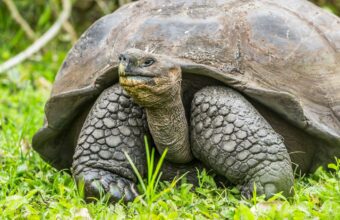
It’s one thing to check out Galápagos tortoises at the islands’ research centres, but it’s another to see them in the wild. Since 97% of the islands are national parkland, you may occasionally catch sight of a tortoise placidly moving near some island road. In the highlands of Isla Santa Cruz, you can visit two ranchos where tortoises graze on tender grass and soak in the ponds but are free to roam through, unimpeded by any barriers. Guides give an informative talk and accompany visitors, who must keep a distance of two metres as with all wildlife in the Galápagos. This respectful distance still allows wonderfully close observation of the many tortoises, some of whom may be over a hundred years old. Simply hearing them exhale is strangely awesome. There’s a small fee to visit either of the two tortoise reserves, Rancho Las Primicias and El Chato Ranch, both down the same road outside the highland village of Santa Rosa.
If you visit Isla Isabela, you can rent a bike in Puerto Villamil and ride up the coastal road west out of town. The dirt road meanders past the island’s cemetery and turnoffs to beaches, lava sinkholes, and lagoons. The ride itself makes for a great day pedalling to lovely detours, but a wild tortoise sighting along the way is the jolt of joy we hope for on any trip.
Probably my top pick for packing the biggest punch of single day experiences, the trip to Isla Bartolomé makes the perfect counterpoint to the tourism bustle of Puerto Ayora on Isla Santa Cruz.
The boat trip to Bartolomé takes around two hours, passing the islands Daphne Minor and Major, after which you’ll disembark on the austere, arid islet of Bartolomé. While hiking to the mirador (viewpoint), your guide will explain the geology of tuff and spatter cones forming this volcanic island. The arresting view of Bartolomé’s peninsula pointing to neighbouring Isla Santiago may already look familiar to you as one of the Galápagos’ more iconic images.
After descending from the summit, you’ll snorkel around Pinnacle Rock, which juts dramatically out of the ocean and where you might see Galápagos penguins speeding around you as you snorkel. You’ll see white-tipped sharks, reef fish, and sea turtles, and your journey to and from Isla Santa Cruz might double as dolphin- and whale-watching trips if any cetaceans make appearances. Bartolomé is a longer day trip from Santa Cruz, but well worth it for the whole experience, especially if you’re short on time.
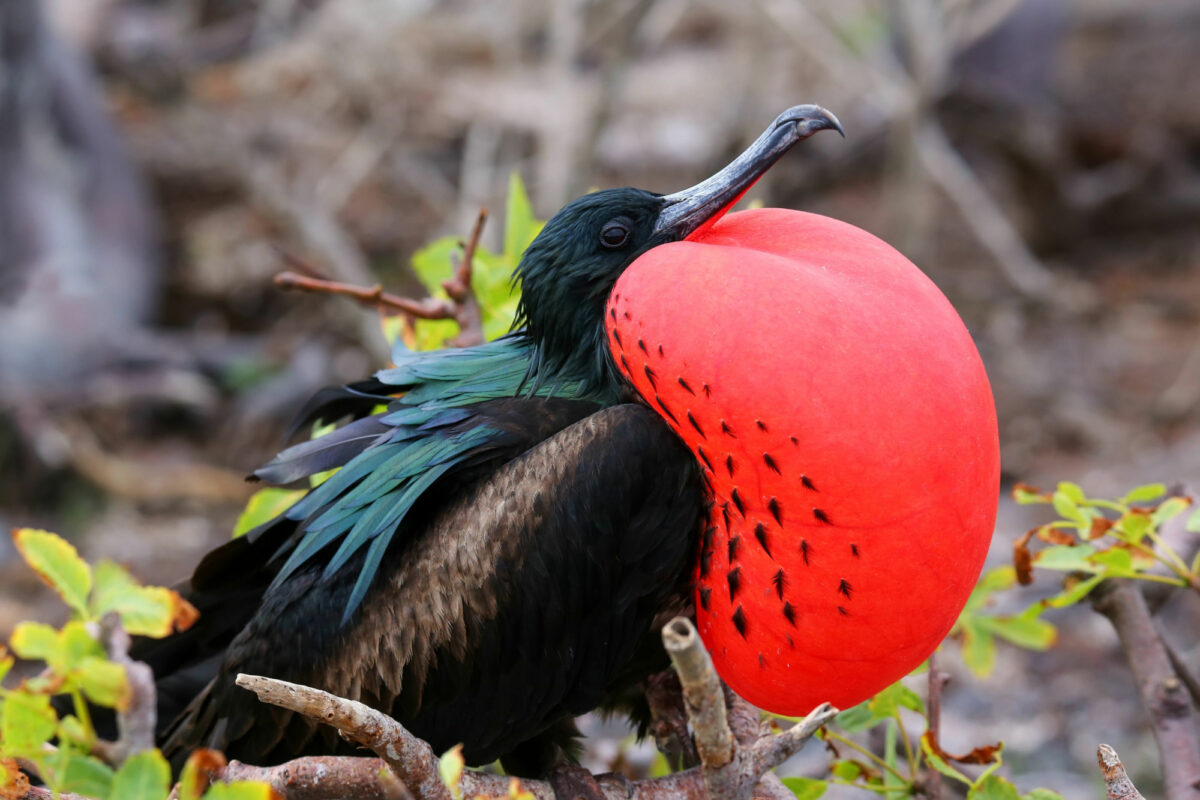
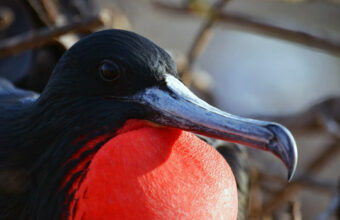
If you're a real birding fanatics, I strongly recommend you consider a specialty cruise, if budget allows, to visit farther-flung islands like Isla Genovesa. This tiny island is packed mightily with avian Galápagos species throughout the year. Large black frigatebirds soar above, the males showing off their red neck pouches during mating season from March to May. Colonies of swallow-tailed gulls breed year-round, and black-and-white Nazca boobies nest here from around August through November.
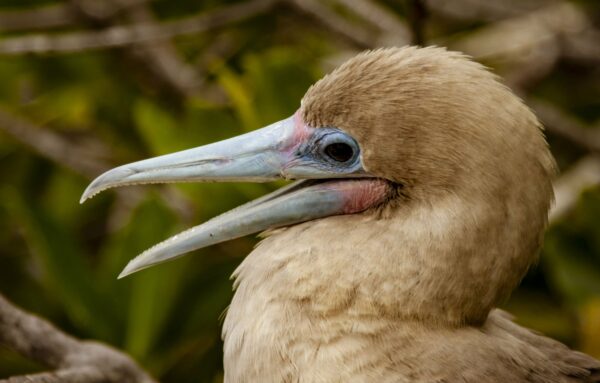
But my favourites are the red-footed boobies who have a huge colony on the island, numbering almost 300,000 birds. Their nesting season lasts from around February through September, and unlike other booby species, they build nests in the shrubbery rather than on the ground. You might also spy the endemic Galápagos short-eared owl, your best chance being around dusk when they become more active.
Don’t despair if you’re not on a cruise – luckily, you can also see nesting red-footed, blue-footed, and Nazca boobies on day trips to Punta Pitt on Isla San Cristóbal. Boat trips depart from Puerto Baquerizo in the morning, heading to the northeastern end of the island, and you’ll hike to the clifftop where boobies abound. And if you visit between June and August, you’ll get to witness the delightful mating dance of the blue-footed booby.
Of the six endemic seabirds in the Galápagos, the waved albatross is a critically endangered species, named for the delicate wavy pattern of its feathers. It is the largest bird species in the Galápagos, with a wingspan of seven to eight feet, on which they glide over the ocean to hunt for the majority of their lives. The albatross nest almost exclusively on Isla Española, returning each spring to reunite with their lifelong mates.
In April, the males arrive at Punta Suarez on Isla Española to await the females, who return a few weeks later. When the pairs reunite, they engage in mating dances involving tapping their beaks together with call-and-response patterns to identify each other after long separations – I find this the most interesting time to visit.
Soon thereafter, the nesting season begins, with each female laying one egg on the ground. During the two-month incubation period, the albatross parents take turns bringing food back to the nest, with chicks hatching around May and June. The chicks moult their baby fuzz and fledge by December, when all the albatross head back to sea until the next breeding season.
Book day trips from Isla San Cristóbal from April to December; serious birders will want to reserve as far in advance as possible to ensure availability for this life-list visit.
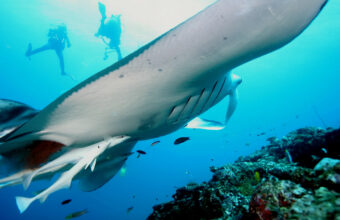
Diving in the Galápagos truly ranks as world-class, with the confluence of major currents and seasonal upwellings supporting a rich ecosystem of marine wildlife. In fact, the area surrounding Islas Darwin and Wolf has the densest biomass of sharks in the world. It’s only possible to visit these islands on a liveaboard cruise, as they’re too far from the inhabited islands for day trips. Starring attractions here are schooling hammerhead sharks (peaking in January) and whale sharks (best from June through November).
Land-based travellers can book day trips in Puerto Ayora (on Isla Santa Cruz) to dive at Gordon Rocks, another superb spot known for hammerheads, as well as Galápagos and black-tipped reef sharks, eagle rays, and colourful reef fish. Off the eastern coast of Santa Cruz, this site is best for divers at an intermediate level due to its strong currents.
You can even spot hammerheads as a snorkeller on a day trip from Isla San Cristóbal. Boats bring divers and snorkellers to Kicker Rock – also known as León Dormido, or Sleeping Lion – an eroded tuff cone rearing out of the ocean. You stand a decent chance of seeing individual hammerheads swimming below, and you’ll certainly see other shark species, sea turtles, rays, and schooling pelagic fish as you drift along the steep wall.
Snorkelling features highly on the itineraries of all cruises and land-based tours. The Galapagos Marine Reserve is home to sea lions, green sea turtles, billowing clouds of tropical fish, penguins and sharks.
One of my favourite snorkelling trips is to Los Túneles (‘the tunnels’) on Isla Isabela. You depart by boat from Puerto Villamil, following the south coast of the island for about an hour before carefully navigating through a lava landscape spiked with cactus. You’ll disembark to pick your way across this maze and, looking down into the interconnected pools and interlacing volcanic bridges, you’ll soon understand the reason behind the name.
After a bit of exploring on land keeping an eye out for Galápagos penguins and blue-footed boobies, you’ll don snorkelling gear and take a guided swim, encountering sea turtles, Galápagos sharks sleeping in caves, reef fish, and maybe some curious sea lions. The diversity of marine life and unique setting make this snorkelling spot especially memorable.
For a more DIY approach that leaves a lot of room for hiking, beach lounging, and independent exploration, Las Tijeretas on Isla San Cristóbal is another good choice. Rent snorkel gear in town, pack water and snacks, and take the well-marked trail north out of town to this popular protected bay with sparkling clear water and gorgeous views. Come early in the morning before the crowds, as it’s easily accessed from town (Puerto Baquerizo Moreno).
Other good Galápagos snorkelling spots include:
The Devil’s Crown, off the shores of Floreana Island: a partially submerged extinct volcano where wildlife thrives. Sea turtles, sea lions and even sharks are commonly seen in and around the crater, while seabirds crowd the outlying cliffs.
Bartolomé Island
Bartolomé Island’s iconic Pinnacle Rock is the place to find penguins. These quick-moving swimmers are frequent companions in the bay especially when the Humboldt Current moves in from Antarctica and cools off the water, attracting them in from the western islands.
North Seymour Island and the neighbouring Mosquera Islet are home to a large population of sea lions. Snorkelling here gets you up close and personal with these curious creatures and their young pups.
Safe snorkelling
The biggest dangers associated with snorkelling in the Galapagos Islands are strong currents and accidentally stepping somewhere you shouldn’t. White-tipped reef sharks rest during the day in shallow waters and can be startled. Currents at outlying sites throughout the archipelago can be strong even for experienced swimmers.
The least populated and least visited of the Galápagos’ four inhabited islands, Isla Floreana makes an ideal timeout from tourism. With no airport, access to the island is by sea only, and ferries run according to demand, two or three times weekly. Life here moves as languidly as the marine iguanas sunning at the pier, which is to say that it may seem not to move at all.
You get a real sense of the solitude and hardscrabble tenacity of the first inhabitants of the Galápagos on Floreana, historically a stopping point for sailors seeking fresh water, an island exile for at least one wayward pirate, and a would-be utopia for intrepid homesteaders.
Floreana has basic accommodations and dining, besides which there’s little in the way of tourism infrastructure or activities. I loved meandering the beachside lava trails, dipping into beautiful snorkelling spots to swim with sea lions, and hopping the twice-daily truck going into the not-very-high highlands to the forested tortoise sanctuary and dripping springs at Asilo de la Paz. Reach out to local accommodations with proposed dates, and they will be able to help make ferry arrangements; you’ll likely have to stay at least two nights before the next boat back to Isla Santa Cruz.
The Galápagos Islands are youngsters in the span of geologic time, and Islas Fernandina and Isabela are among the most active volcanoes on the planet. Both land-based trips and cruises combine time spent discovering uninhabited islands and snorkelling by sea.
If you’re curious to witness real-time volcanic activity, I can recommend a day’s hiking on Isla Isabela’s Volcan Sierra Negra, which last erupted in 2018. From Isabela’s main town of Puerto Villamil, you’ll travel by truck to the volcano and begin the 15km hike to the caldera. While not particularly steep nor strenuous, the conditions range from muddy to gravelly and require a moderate level of fitness for the daylong trek. You’ll climb through the more temperate greenery at the base to the alien-looking lava expanse of the caldera, and onward to the parasitic vent of Volcan Chico, where fumaroles steam. To actually feel and see volcanic activity alters your perspective as you explore the varied geology of the islands. The best time to hike is during the dry season, from June through November.
For a more serene look at the islands’ volcanic history hike an easy ten-minute loop through the highlands of Isla Santa Cruz for a peek at the forested dormant twin craters of Los Gemelos, or climb the short trail to the 650m edge of El Junco, the extinct volcano on Isla San Cristóbal whose crater lake affords excellent views down to the coast.
Other good hikes on the islands include:
From the beach at Bartolomé Island, a path leads up an ascending set of stairs that take you over the volcanic landscape and to a lookout across the bay dominated by Pinnacle Rock. Seen in countless movies and postcard perfect pictures, it’s one of the best views in the archipelago.
Cerro Tijeretas on San Cristobal Island is reached by a short hike past the Interpretation Centre. The vista offers an amazing view over the bay below and there are trails down to the water and around the area.
The Punta Suarez loop trail on Española Island is a short one-mile trail that puts you in the middle of exotic landscapes and beaches. Sea lions, blue-footed boobies and waved albatrosses are found along the trail and towering cliffs frame the landscape and coast.
Most visitors to the Galápagos will pass through Puerto Ayora on Isla Santa Cruz, the largest hub in the islands. At the east end of traveller-friendly downtown, and offering the best primer to Galápagos Island history and context, is Charles Darwin Research Station. As its name suggests, this field station conducts scientific research and monitors Galápagos ecology, with dual aims of conservation and education. Taking the US$10 ranger-led walking tour is an hour-long crash course to the natural and human history of the islands, and well worth the intro.
Tours occur throughout the day between the hours of 8am and 5pm, conducted in Spanish and English. As you walk and birdwatch through the typical opuntia cactus and palo santo ecology, you’ll pause at various interpretive displays to learn about Galápagos geology, the evolution of its wildlife, human history and impact on the islands, and eventually the story of the iconic Galápagos tortoise.
When you finally arrive at the research station, you’ll encounter these animals at all stages of life. These individuals represent conservation efforts to repopulate the islands with these endangered tortoise subspecies, and they’re truly fascinating to see up close. Follow your tour with a visit to the interpretive centre, and you’ll leave with a solid context for the rest of your Galápagos travels.
At the luxury end you're paying top dollar for lots of space, excellent facilities, top-notch service, and the best guides. Two of my top recommended luxury class yachts are the M/V La Pinta and the M/Y Infinity.
The Infinity is a typical Galápagos luxury class motor yacht with all the usual bells and whistles in this category: spacious decks including a sun deck with a jacuzzi and hot tub, and large comfortable cabins with luxury amenities.
There are two bonuses that make me recommend the Infinity over other luxury yachts. Firstly, it has space for 20 passengers and if there are more than 16 passengers on board, you’ll be divided into two groups each with your own guide which gives you a much more intimate and close experience.
Secondly, the Infinity offers a seven night itinerary B which is one of the most diverse itineraries available, including visits to both the younger western islands and some completely different older islands in the east. Not many itineraries combine both in one cruise.
Another option to consider is the luxury class motor yacht, La Pinta. With a capacity for up to 48 guests La Pinta is significantly larger than most Galápagos cruise ships and generally more stable in rough seas.
It's an all-suite ship with 24 beautiful cabins featuring floor-to-ceiling windows and luxury amenities. The many social areas include a fitness room and a large sun deck with a jacuzzi tub.
There is also a small infirmary with an on-board physician. The ship offers alternative activities like glass-bottom boats, kayaks and stand-up paddleboards. They have a special kids programme for 7-12 year olds.
Your other option at the very top end is one of the many luxury class Galapagos catamarans.
Lots of luxury catamarans have joined the market in recent years, and to be honest I find it hard to recommend one above the others because they’re all truly magnificent ships offering unparalleled experiences.
Three of the best are the M/C Hermes, M/C Sirius and M/C Petrel. They all offer luxury amenities, spacious decks with large cabins and social areas, outstanding guides, superb service and food.
Of course, these cruises also come with the price tag of any luxury tour. The official "rack" rate for a 7-night cruise on these luxury catamarans is about $11,000 per person. If you want to cruise the Galapagos Islands on a luxury catamaran, contact a travel agent and check if there are any special deals first. It is also important to check the specific itinerary of the cruise for your travel date. If you’re spending this much on a luxury cruise, make sure that you also get the best of the islands according to your interests.
This is the classic Galapagos cruise and Amazon basin combination itinerary.
Start on the bustling Isla Santa Cruz, where you can see giant tortoises at the El Chato Reserve and snorkel with sea lions on Tortuga Bay. Sail to Isla Santiago for its otherworldly lava fields and colonies of basking marine iguanas and Galapagos seals, before making the short hop to Isla Bartolome to swim with penguins, marine turtles and tropical fish. Next, sail to the northern island of Genovesa – a haven for birdlife. Here, you can see Nazca and red-footed boobies, great frigate birds, storm petrels and many more, as well as the chance to snorkel with hammerhead sharks.
From here, you’ll transfer to Coca to begin your journey up the Rio Napo into the Amazon basin, where you’ll experience the rainforest and jungle. End your trip in Ecuador’s mountainous capital Quito, exploring its colonial architecture.
Start in Ecuador’s mountainous capital of Quito, checking out the UNESCO World Heritage-listed old town, complete with colonial architecture, beautiful churches and busy squares. From here, you’ll fly to the Galapagos Islands and Isla Santa Cruz to stay in a carbon-neutral eco-lodge atop a dormant volcano. From here, you’ll spend several days exploring Santa Cruz’s giant tortoises, sea lions and volcanos, as well as taking day cruises around nearby islands. You’ll snorkel with penguins and tropical fish, explore lava fields and learn more about the archipelago’s wildlife, before returning to your lodge each night. Transfer back to Quito for your departure.
Whenever I talk to people about the Galapagos, their first assumption is that they’ll be on a cruise. But as good as Galapagos cruises can be, there are plenty of options, and for lots of people, I end up recommending an island hopping trip instead.
This is where you go from island to island, in the same way you would on a cruise, except you sleep in comfortable lodges on dry land each night. For lots of people this is the better choice. Firstly it reduces the risk of seasickness spoiling your holiday. Although you travel from island to island on speedboats and conditions can be choppy, you’re not spending the entire trip aboard a small, sometimes rocky, boat.
Secondly you’ll get plenty of space to roam. Budget and even mid-range Galapagos cruise vessels can be small and cramped, and you’ll be living on top of the other passengers for at least five days. It might work for some, for others it sounds like hell! If you want space to stretch your legs or just don’t like the idea of being cooped up with strangers, you’d probably be happier on a land based trip instead.
Thirdly you can get much greater comfort at much more reasonable prices with a land-based trip. Mid-range cruises are fine but fairly basic, with small berths and simple facilities. For the same money you can get seriously looked after in land-based lodges.
The final, and for me the most important, difference is the flexibility of a land-based trip. Cruises follow highly regulated fixed routes with little room for deviation or spontaneity. Maybe you want to repeat an activity or stay longer someplace – all very easy in a lodge, but not really possible on a cruise. This brings a change of pace: cruise itineraries can feel a bit relentless: early morning starts, packed days, constant changes of scenery… with island hopping you can slow down, add rest days and generally take it easy.
There are certainly some big pros to cruising: you can access the more remote islands, you can see more in your trip, you’ll cruise overnight to maximise your time, and so on, but for some people island hopping is much more suitable.
My favourite island hopping route is explained below. What makes this itinerary unusual is the overnight stay on Floreana Island. Floreana is entirely cut off from flights or public boats and there’s only one lodge here, run by local legend Claudio. You have complete tranquility, have leisurely lunches on Claudio’s farm, star gaze with zero light pollution, and kayak straight from the lodge. You don’t get lazy days like these racing around on a cruise boat!
Your details are safe and will not be used for any other purpose. By using this service you agree for us to share your details with your chosen tour operator according to our Privacy Policy.
1Your trip
2Complete your request
3Meet your specialist
Find a The Galapagos Islands specialist
Tell us about your trip and we'll find your match
We'll connect you directly with the experts.
Connect with Martha Cohen and 3 other The Galapagos Islands specialists.
We'll connect you directly with the experts.
Connect with Martha Cohen and 3 other The Galapagos Islands specialists.