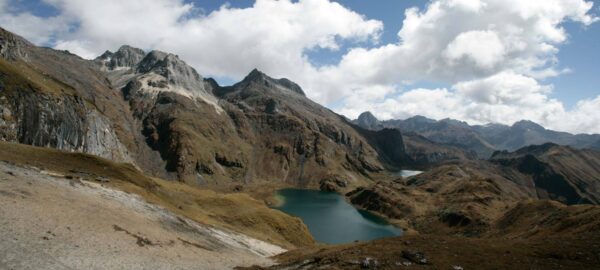
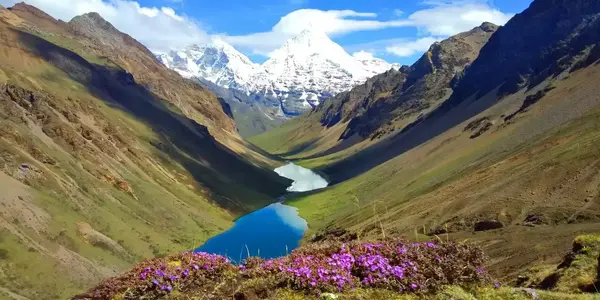
Bhutan offers the kind of Himalayan trekking that few know about. It has all the huge snow-capped peaks you'd expect along the border with Tibet, plus plenty of epic high passes, glittering turquoise glacial lakes and even the occasional snow leopard.
What it doesn't have is Nepal-style crowds or the infrastructure of trekking lodges and tradition of independent trekking. Trekking here is all organised, expedition-style, and costs more than anywhere else in the Himalaya.
§ 02
Ask our Bhutan experts
Real questions, answered by the people who know it
I'm looking for a group tour and trying to decide between the Laya and Gangkar Puensum treks. Can you help me understand the differences? I'm thinking October or November 2026, with 18–23 days total in Bhutan being about ideal.
Answered by: Jude Turner
Both are strenuous camping treks into remote areas. The Lingshi route is better established and therefore sees more trekkers, though you're still not talking big numbers.
The Lingshi Laya trek takes you to the base camp of Bhutan's second-highest mountain, Chomolhari (7,314m), whereas Gangkar Punsum (7,550m) is the highest in Bhutan, and the highest unclimbed peak in the world.
The terrain on the Gangkar Punsum trek is wilder, and other than occasional yak herders there won't be any cultural interaction whilst on trek. On the Lingshi Laya trek you also meet nomadic yak herders, but the main difference is that you pass through traditional villages, including Laya itself, where the Layap residents wear distinctive conical hats and yak-wool robes.
Our October 2026 departure attends the Royal Highland Festival, which takes place in Laya each year and celebrates Layap cultural heritage with yak parades and milking competitions, traditional dancing and singing, five-legged races, and pole climbing. We highly recommend the Lingshi Laya trek for its combination of magnificent scenery and cultural insight.
For a second perspective: I've spent time in Bhutan but haven't done either of these treks myself. My colleague Seraphina has done both, and says that while they're different, the scenery is equally impressive on each. She particularly enjoyed the remote villages on the Lingshi trek.
I'm happy with the overall distances but my knees are rather worn – can we adjust the itineraries to reduce the amount of time climbing and descending at the start and end of the trek?
Answered by: Joni Herison
The campsites for the treks are fixed by Bhutan's tourism authority and the Department of Forestry, so adjusting trekking itineraries is not always easy. On certain days it might be possible to add an extra day or a rest day, but otherwise you'll usually need to spend the night at the designated campsite. I would advise against trekking if you have knee issues – a good alternative is to take a standard tour with lots of day hikes throughout.
Trekking in Bhutan is costlier than Nepal or India for sure, but remember that US$200 per day of your trip fee is going to fund healthcare, education and environmental protection in Bhutan. For me the feeling I get from having a stunning Himalayan valley or view to myself is really priceless. If you are happier with the social nature of teahouse trekking, then maybe it's not worth the cost for you.
Your trekking agency will provide tents, a mattress and a sleeping bag, but I'd advise you to bring your own sleeping bag and mat for comfort and familiarity. There's not much quality gear available to rent in Bhutan.
Apart from the much higher costs, Bhutan sees a fraction of the trekkers who visit Nepal, so there are no crowds, no backpacker scene and no trekking lodges in Bhutan. The environment is much more pristine and the culture more intact, but the peaks are on a slightly smaller scale.
The hardest, that's easy - the Snowman Trek. More people have summited Everest than completed this trek!
The easiest is probably the two-day Saga La Trek, which is really two half-days of walking bookended by some monastery and fortress sightseeing.
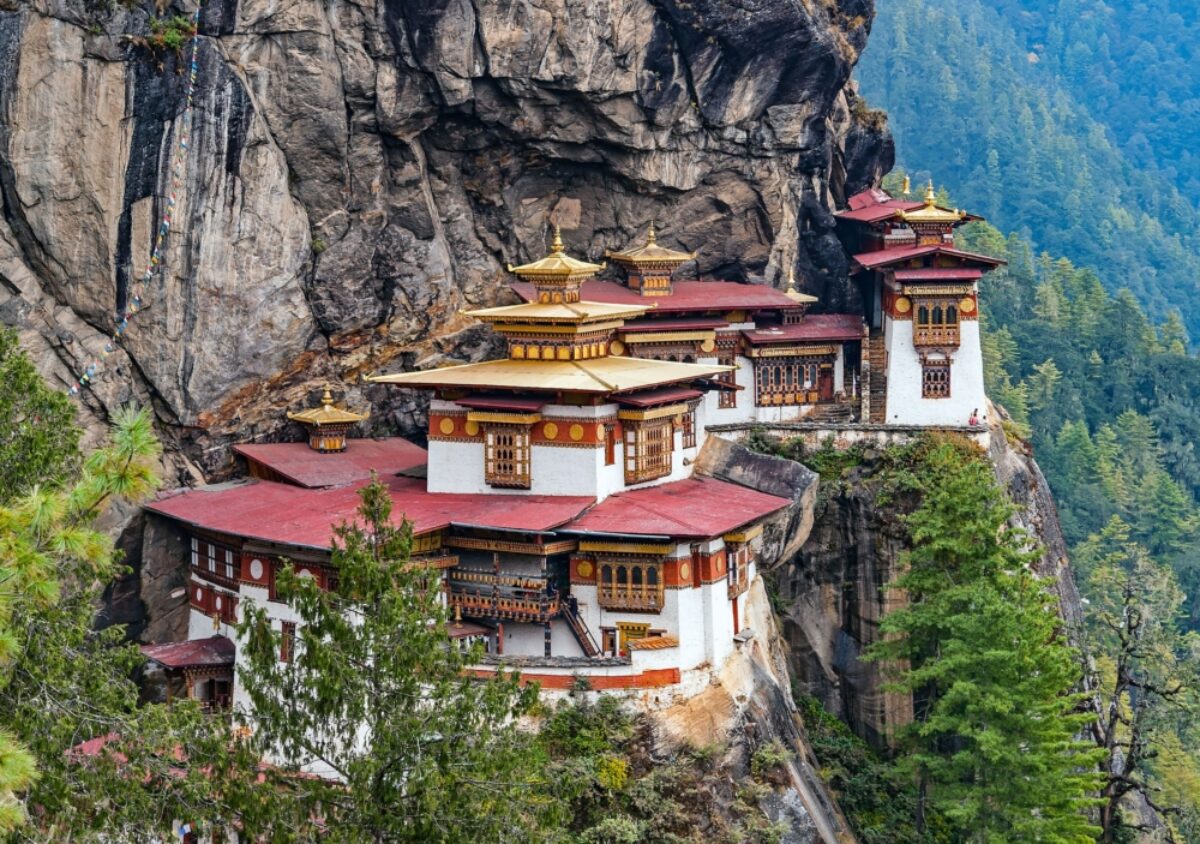
Another easy going trek, and one of my favourites, is the two-day Bumdrak hike. It's a one-nighter, staying in a luxurious fixed camp (real beds!) and the second day is all downhill, winding through lovely forests to temples and views above the famous Tiger's Nest Monastery, the country's single most famous sight.
In order to visit Bhutan you have to pay a Sustainable Development Fee of US$200 per person per day, on top of the cost of your trek (though there are currently some temporary discounts on this). Your trekking agency will then arrange all the national park and trekking permits that you need.
I'd say that Laya is my favourite region, because of the mix of great mountain scenery and rich local culture. The Layap women here wear fabulous woven bamboo hats and the men are mostly yak herders.
Most trekking groups stay in their own double tents. A couple of route options (including the Trans-Bhutan Trail) overnight in village homes and there are good homestays in Laya.
Bhutan is the only place where I've actually gained weight on a trek, thanks to the three meals a day (plus snacks) cooked up by trek staff. Breakfast is toast, cereal, coffee and often eggs. Dinner is a multi-dish feast of rice and vegetable curries; lunch is similar but cooked in the morning and transported in thermos dishes for a hot picnic. You'll even get French fries once or twice.
There's a wide range of treks on offer in Bhutan. The 25-day Snowman Trek is one of the world's toughest treks. Less physically challenging but still adventurous treks include the popular Druk Path, or you can hike a section of the 400 km-long Trans-Bhutan Trail, which sticks to lower altitudes and offers village homestays.
No, all treks (indeed all travel) in Bhutan have to be fully organised and accompanied by a guide and trekking agency staff, who will arrange everything. On my first 'solo' trek here I had a guide, cook, three other staff and nine pack horses - just for me!
Acclimatising properly is absolutely essential to a successful trek in Bhutan. Many passes are over 5,000m, and most are over 4,000m. Most treks have built-in acclimatisation days and it's essential to follow these.
You'll receive a reply by email. Questions and replies may be anonymised and reproduced on Horizon Guides.
§ 03
The Bhutan atlas
15 picksPlaces & Experiences You Won't Find Elsewhere
Where
What
Duration: 7-8 daysDifficulty: Moderate
The Soi Yaksa Trek, also marketed as the Jomolhari Loop, is a more accessible alternative to the more famous, longer (and harder) Jomolhari Trek. The classic Jomolhari Trek is an eleven to twelve day slog that crosses two high passes, Nyile La (≈4,890 m) and Yeli La (≈4,930 m). In comparison, the Soi Yaksa Trek is just seven to eight days with a max. elevation of 4,080 m at Jangothang. Although no walk in the park, it's far more accessible and is the hike I recommend for less ambitious trekkers who want to experience Jomolhari.
That said, you still enjoy all the signature highlights that make the full Jomolhari Trek famous: Sharna Zampa, Soe Thangthangkha, the breathtaking Jangothang base camp, yak pastures, alpine valleys, and views of Jomolhari’s white pyramid.
Difficulty: StrenuousDuration: Eight daysMax. elevation: 4,600 metresAccommodation: CampingStart / end point: Kajina to Haa
Although not far from Paro and Thimpu, the Haa Valley is one of the least-visited areas of western Bhutan. Indeed, its proximity to the Tibet border meant this region was only unrestricted to trekking as recently as 2001. This is another heavy-going trek which crosses several high passes but rewards you with incredible views over Tibet, Sikkim, and as far as Jomolhari to the north. You won’t see many other trekkers, but you might see occasional yak herders or even smugglers heading across the Tibet border.
Difficulty: StrenuousDuration: 13 daysMax. elevation: 5,400 metresAccommodation: CampingStart / end point: Tangbi to Khaktang
This is one of the most demanding treks in Bhutan and one I only recommend for the hardiest hikers. The route leads to ‘base camp’ of Gangkar Puensum – which at 7,570 metres is the world’s highest unclimbed mountain. The mountain is considered sacred and holds deep significance in our culture, and I see this as more of a pilgrimage than a trek. This is a remote and untouched region, but you’ll pass by occasional yak herders’ huts and tiny traditional villages. It’s a magical trek, but the distance, altitude and the often non-existent trail make it suitable only for experienced trekkers who are properly acclimatised.
Difficulty: ModerateDuration: Nine daysMax. elevation: 4,210 metresAccommodation: CampingStart / end point: Paro to Punakha
The Chorten Trail trek is actually a continuation of the more popular Druk Path trek from Paro to Thimphu. On the Chorten Trail, instead of stopping at Thimphu you continue onwards for another five days and head into the Punakha Valley following old trade routes through the mountains. Despite the longer distance and a max elevation of 4,210m at Simkota La, the ascent is gradual and it’s a fairly moderate difficulty hike suitable for most with decent fitness.
The Trans Bhutan Trail (TBT) is a newly-restored trekking route that stretches for 403 km across the country from west to east. The trail follows a 16th century pilgrimage and trading route where travellers would be accommodated in isolated villages barely connected to each other let alone the outside world, establishing a tradition of Bhutanese hospitality that endures to this day.
The trail can be completed as a challenging thru-hike, which takes around 36 days, staying at a mixture of campsites and guesthouses. The whole trail is spectacular, but it can be broken up into sections and my favourite stretch is the 12 km hike between Sherizampa to Drametse in Bhutan's eastern Mongar District.
Most commercial treks focus on the west of Bhutan around the Tiger's Nest Monastery (Paro Taktsang), Jomolhari and the infamous Snowman trek. Very few people venture east and this part of the country is far less developed for tourists.
The village of Drametse has a 16th century temple and is the cultural centre of eastern Bhutan. You'll see herder camps and nomadic communities that are rarely visited by outsiders – if you're lucky you'll be invited in for a steaming cup of tea. You'll pass kids going to school, and farmers or traders making their way from village to village. It's on this section of the trail that you realise how important the original route was to lives and livelihoods in this still highly traditional country.
Distance: Approximately 10 miles (16 km)Duration: One to three daysStart and end points: ParoDifficulty: Moderate
The trail leads to Bumdra Temple and its surroundings, along the trail, you can also see mountain vistas, alpine meadows and glacial lakes. Heading off the main trail, you can also visit the Taktshang Monastery which is perched on the cliffside and holds spiritual and cultural significance.
Distance: Approximately 50kmDuration: Four to five daysStart point: ParoEnd point: ThimphuDifficulty: Moderate
The Druk Path trek is easy-going, varied, and is much of a cultural adventure as a hiking one. For these reasons this is the Bhutan trek I usually recommend for casual hikers or people on a limited schedule but who still want to get a few days’ trekking during their visit to Bhutan.
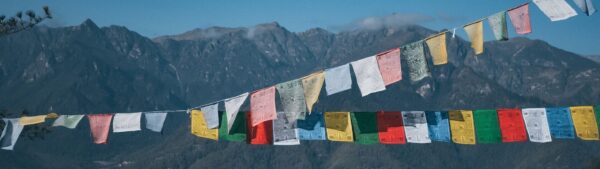
It’s a point-to-point trek between Paro and Thimphu – around 50km in distance, spread over four or five days of actual hiking. On the way you visit several monasteries where young monks still live and study. At Phajoding Monastery, I spent a quiet half hour watching the smoke from a cooking fire drift through the prayer flags. (Most itineraries add on a visit to the famed Taktsang Monastery, or Tiger’s Nest, although this isn’t part of the hike itself.)
Between the monasteries you get to see all of Bhutan’s natural beauty up close. One day you’re climbing through fragrant pine forests; the next, you’re walking along high ridgelines with vast views of the Himalayas. When I did the trek in spring, the rhododendrons were just starting to bloom.
Among Bhutan’s multi-day treks, the Druk Path is probably the most accessible and while it’s a proper hike – expect several hours of walking each day with altitudes rising above 4,000 metres – it’s manageable for most reasonably active travellers. If you enjoy long walks and don’t mind a bit of effort, you’ll be fine. The altitude is the main factor to be aware of; I took it slow and stayed well-hydrated, and had no problems adjusting.
The only downside is it’s one of the few Bhutan treks you could call ‘busy’ (although still nothing like the popularity of neighbouring Nepal treks). If you want more solitude, there’s the Dagala Thousand Lakes trek and if you want more of a challenge you can look at the Jomolhari, Laya or even the daunting Snowman treks.
Distance: 216 miles (347 kilometres) Duration: 25 to 30 daysStart point: ShanaEnd point: Sephu or BumthangDifficulty: Strenuous
If you’re looking for a serious trekking challenge, the Snowman Trek is Bhutan’s big beast. It’s long, high, and remote – a proper expedition through some of the most isolated terrain in the Himalayas. I’ve done it myself, and it’s easily one of the hardest treks I’ve ever been on. But it’s also one of the most rewarding: for the landscapes, the rare cultural encounters, and the sheer sense of scale and solitude.
The trek starts near Paro and winds eastwards along Bhutan’s northern border, with most itineraries ending in either Bumthang or Sephu. I’d recommend the Sephu route for most – it’s slightly shorter and less punishing towards the end, but still includes all the scenic and cultural highlights. Expect to be away for close to a month, with around 20 to 25 days of trekking, depending on your pace and weather conditions.
Each day follows a rhythm: long climbs to high-altitude passes (some over 5,000m), then descents into remote valleys where you camp for the night. Daily distances can reach 16–20km, often at sustained altitude. Nights are spent camping in rugged terrain, along glacial rivers, open alpine meadows, or at the edge of extremely remote villages. Even in the best weather, it’s cold and unpredictable, and the physical and mental demands are constant.
But the rewards more than match the effort. On a clear day at Sinche La or Loju La, you get vast panoramas of the Eastern Himalayas – even the chance to glimpse Gangkar Puensum, Bhutan’s highest and most sacred peak. The alpine scenery is extraordinary, and there are moments of real stillness: watching dawn light catch on the surface of Tshorim Lake, or crossing a silent, snow-covered pass with no sign of human life for miles around.
What sets the Snowman apart from other high-altitude treks, though, is the cultural element. In Laya, you meet the Layap people – easily recognised by their distinctive pointed bamboo hats – who still live in close rhythm with the land. Further east, the village of Lunana is one of the most isolated human settlements on Earth. Reaching it is a challenge, but it’s also a rare privilege. You’ll pass through Thanza, the largest village in Lunana, where you’ll spend two nights recovering and have the opportunity to chat with locals. It’s not a polished experience, it’s authentic, rustic and all the more memorable for it.Need to know
You’ll need to be properly prepared for the Laya-Gasa trek. I’d strongly recommend going in the autumn (late September to mid-October) for stable weather and clearer views. Spring can be beautiful too, but snow lingers longer on the high passes. Having the correct geat matters – expect temperatures well below freezing, so bring insulated clothing, a high-spec sleeping bag, and boots that can handle tough, wet, and icy terrain.
As with all treks in Bhutan, you'll need to be part of a licensed organised tour. They will build in rest days into the itinerary, and will provide all equipment and logistics. For meals expect red rice, vegetables, simple meat stews, and staples like ema datshi (chilli cheese).
If you’re intrigued by this part of Bhutan but not ready for a full month on the trail, the Laya-Gasa Trek offers a shorter, more accessible route that still delivers on scenery and cultural encounters, including time in Laya itself.
Distance: approx. 215kmDuration: 14-17 daysStart: Sharna Zampa, ParoEnd: Koina, GasaDifficulty: Strenuous
If you want a proper Bhutan trek that’s both challenging and culturally rich, but don’t quite have the time (or legs) for the epic Snowman Trek, I usually recommend the Laya-Gasa Trek. It’s a trek that mixes high-altitude adventure with real cultural immersion, and it takes you into some of the most untouched corners of Bhutan.
The trek starts near Paro and heads north into the high Himalayas. As you go the landscapes constantly change from meadows to forests, with incredible peaks around every corner. Almost all treks in Bhutan are quiet, but the sense of isolation on the Laya-Gasa really sets it apart. You're far from any other tourists, and even local villages are few and far between.
One of my favourite parts was walking through Laya, a village where the locals still wear traditional dress – their striking pointed hats make them easy to spot.
You’ll cover around 215 kms (134 miles) over 14–17 days, depending on your pace. Expect long days on tough terrain, with some sections going up to 22 km. The highest point, Sinche La, sits at 5,000m, and the climb to it is a real test, especially when the weather turns cold and the wind picks up. The days start with steep ascents to high passes, then descend into remote valleys where you camp for the night. You’ll be trekking at altitude, and the physical demands are constant. But the reward is worth it: stunning panoramas of the Himalayan peaks, and the sense that you’re truly walking in one of the most unspoiled places on Earth.
There’s something incredibly special about the views here. At one point, just before Laya, I stood atop a ridge and looked down at the Masagang range. The sight was unreal, especially with the early morning sun lighting up the peaks. But the real test of the trek comes at Sinche La. The climb is steep and tough, and the weather can change in an instant – snow, rain, or a biting wind. When you finally make it to the top, the feeling of accomplishment is unmatched. The views of the Gangchhenta range and Table Mountain are some of the best I’ve seen.
Need to know
This trek is for those who want a serious challenge. The terrain is rough, and you’ll be camping in some pretty wild locations – alpine meadows, next to glacial rivers, and sometimes in the shadow of snow-capped peaks. There are no lodges along the way, just simple campsites set up by your trekking team. Meals will be included and you can expect local dishes such as yak meat curry, simple vegetable stews and rice.
Acclimatisation and rest days absolutely must be built into the route, with rest days in places like Lingshi and Chebisa, where you can take things slower and adjust to the altitude. Along the way, you’ll meet the friendly locals who are known for their yak herding and vibrant culture.When to go
While it’s a tough trek, it’s doable with the right preparation. I’d recommend going in the autumn (late September to mid-October) for the best weather – clear skies, stable temperatures, and fewer chances of snow at the higher passes. Spring is doable, though lingering snow can make the high passes more difficult. If you go in late October, you’ll catch the Royal Highland Festival in Laya – a cultural celebration showcasing the unique traditions of the nomadic highland communities and the beauty of the Gasa region.
The right gear is essential too. You’ll need a high-quality sleeping bag, warm layers, and boots that can handle wet, rocky conditions.
When you reach the end of the trek, don’t rush off. Take a dip in the Gasa hot springs if you’re in the mood for some relaxation – it’s the perfect way to unwind after days of tough trekking. Or, if you’re looking to shorten the trek, there’s an option to helicopter out from Laya.
Difficulty: StrenuousDuration: Seven daysStart/end point: Thangthangka to DodinaAccommodation: Camping
I often find myself recommending the Jomolhari trek to visitors as of all the major Bhutan treks, this is probably the best all-rounder. It’s quieter than some of the more accessible routes such as the Druk Path or the Dagala Thousand Lakes, yet is far more manageable than the big beasts like the Snowman of the Trans Bhutan Trail. But for me, its biggest selling point is a heady blend of incredible scenery with close contact cultural interactions along the way.
Oh – and the scenery of course. As with all of Bhutan’s great hikes, the high-altitude, rugged landscapes are simply mesmerising. You start in pine forests, move into wide, open yak pastures, skirt glacial rivers, and then – boom – you’re at Jangothang Base Camp, staring up at the mighty Jomolhari itself. Seeing Jomolhari for the first time is something you cannot forget.
If you’re looking for a good moderate challenge, I’d say Jomolhari is the one for you. You’ll be hiking at high altitudes and covering long distances, but as long as you’re fit and used to hiking, you’ll be fine.
The Druk Path trek is easy-going, varied, and is much of a cultural adventure as a hiking one. For these reasons this is the Bhutan trek I usually recommend for casual hikers or people on a limited schedule but who still want to get a few days’ trekking during their visit to Bhutan.
It’s a point-to-point trek between Paro and Thimphu – around 50km in distance, spread over four or five days of actual hiking. On the way you visit several monasteries where young monks still live and study. At Phajoding Monastery, I spent a quiet half hour watching the smoke from a cooking fire drift through the prayer flags. (Most itineraries add on a visit to the famed Taktsang Monastery, or Tiger’s Nest, although this isn’t part of the hike itself.)
Between the monasteries you get to see all of Bhutan’s natural beauty up close. One day you’re climbing through fragrant pine forests; the next, you’re walking along high ridgelines with vast views of the Himalayas. When I did the trek in spring, the rhododendrons were just starting to bloom.
Among Bhutan’s multi-day treks, the Druk Path is probably the most accessible and while it’s a proper hike – expect several hours of walking each day with altitudes rising above 4,000 metres – it’s manageable for most reasonably active travellers. If you enjoy long walks and don’t mind a bit of effort, you’ll be fine. The altitude is the main factor to be aware of; I took it slow and stayed well-hydrated, and had no problems adjusting.
The only downside is it’s one of the few Bhutan treks you could call ‘busy’ (although still nothing like the popularity of neighbouring Nepal treks). If you want more solitude, there’s the Dagala Thousand Lakes trek and if you want more of a challenge you can look at the Jomolhari, Laya or even the daunting Snowman treks.
Of all the Bhutan treks, the Druk Path is probably the best-known and most popular for casual hikers. It’s just five to six days, moderate intensity, and easily accessible from Paro and Thimphu. But for visitors looking for a trek that is similar in difficulty but less popular, my recommendation is usually the Dagala Thousand Lakes trek. It’s around the same duration and difficulty but far quieter and puts more emphasis on absolute solitude among spectacular landscapes.
As the name implies, the Dagala trek explores a region that is dotted with glorious alpine lakes – okay, perhaps not 1,000 of them, but who’s counting? Along the way you’re treated to panoramic views of the Himalayan range: Mount Jomolhari, and – on a clear day – Everest, Masang Gang, Jichu Drake, and Mount Kanchenjunga.
As well as the incredible scenery, I enjoyed seeing yak herders, who have lived in these mountains for generations. But my favourite moment was on the first night. Our tent was pitched in a quiet valley, and all I could hear was the wind gently blowing through the hills with the sky alive with stars overhead.
I often find myself recommending the Jomolhari trek to visitors as of all the major Bhutan treks, this is probably the best all-rounder. It’s quieter than some of the more accessible routes such as the Druk Path, yet is far more manageable than the big beasts like the Snowman of the Trans Bhutan Trail. But for me, its biggest selling point is a heady blend of incredible scenery with close contact cultural interactions along the way.
Oh – and the scenery of course. As with all of Bhutan’s great hikes, the high-altitude, rugged landscapes are simply mesmerising. You start in pine forests, move into wide, open yak pastures, skirt glacial rivers, and then – boom – you’re at Jangothang Base Camp, staring up at the mighty Jomolhari itself. Seeing Jomolhari for the first time is something you cannot forget.
If you’re looking for a good moderate challenge, I’d say Jomolhari is the one for you. You’ll be hiking at high altitudes and covering long distances, but as long as you’re fit and used to hiking, you’ll be fine.
Of all the major Bhutan treks, the Bumdra Trek is the easiest and is the one I recommend for visitors who want a taste of hiking in Bhutan's mountains without undertaking a major multi-day expedition. It’s short (just two days) but still delivers a proper high-altitude experience, with forest trails, ridge line views and a memorable night camping near 3,800m.
The trek usually starts with a short drive from Paro to the Sang Choekor Buddhist College, perched on the hillside above the valley. From there, it’s a steady uphill hike through pine and rhododendron forest, climbing around 1,000m over the course of eight to nine km. It’s a decent ascent – enough to get the lungs working – but manageable for anyone reasonably active with some hiking experience.
The camp at Bumdra sits just below the ridge, with big views back over the Paro Valley and, on a clear day, distant Himalayan peaks on the horizon. I’ve woken here to mist rising off the valley floor and watched the sun catch the mountain tops at first light. If you’re feeling up to it, there’s a short hike beyond the camp to a higher viewpoint – a small effort for more expansive views.
The second day is longer in distance but easier going. The route descends 13 to 14 km towards Taktsang (Tiger’s Nest) Monastery. Coming in from above gives you a far quieter and more scenic approach than the regular day-hike. With an early start, you can often reach the site before the main crowds arrive, when the courtyards are still calm and the cliffs are catching the first light.
Of the countless Bhutan treks I’ve hiked myself and organised for others, the Sagala Trek stands out as the country’s ideal “starter pack” hike. It takes just three days, and is one of the less physically demanding routes.
At the same time, the Sagala trek is far less marketed than the more famous ‘easy’ Bhutan treks, such as the Bumdra and Druk Path hikes, giving it the rare combination of accessibility and near-total absence of other tourists. On Sagala I’ve had campsites entirely to myself, and the trail is quiet enough that entire days can pass without seeing another trekker.
The hike, sometimes marketed as the “Haa Planter’s Trail,” follows an old trade route that once linked the Haa Valley with Paro. Farmers used to carry rice, chillies and butter over the pass, bringing back salt and textiles. These days, you’re unlikely to meet more than the odd villager using the trail, but you are quite literally walking Bhutan’s old trade path.
Soi Yaksa Trek (Short Jomolhari Loop)
Haa Valley trek
Gangkar Puensum trek
Chorten Trail trek
Trans Bhutan Trail (Sherizampa to Drametse section)
Bumdra monastery hike
Druk Path trek
Snowman (Lunana) trek
Bhutan’s toughest – and most rewarding – trek
Laya Gasa trek
A remote and rewarding trek through Bhutan’s far north
Your details are safe and will not be used for any other purpose. By using this service you agree for us to share your details with your chosen tour operator according to our Privacy Policy.
1Your trip
2Complete your request
3Meet your specialist
Find a Bhutan specialist
Tell us about your trip and we'll find your match
We'll connect you directly with the experts.
Connect with Karma Rigsang, Joni, Sonam and 3 other Bhutan specialists.
We'll connect you directly with the experts.
Connect with Karma Rigsang, Joni, Sonam and 3 other Bhutan specialists.