





Mount Toubkal Circuit trek
Jebel Toubkal the quiet way

The focal point of the Morocco trekking scene, the basic Jebel (Mount) Toubkal trek is typically marketed as a two day itinerary from Imil (or three days if departing from & returning to Marrakech). You’ll do two days of heavy hiking to reach Toubkal Base Camp. On the second morning you’ll make a pre-dawn push to catch sunrise from the summit, then turn around and descend 2,500 metres all the way back down.
It’s rushed, gruelling and busy.
A far more relaxed trek is this Toubkal Circuit itinerary, which is typically done in six days with the final ascent saved for last. If you’ve got the time I’d strongly recommend doing it the slow way.
Good to know
- Best hike for: Toubkal the quiet way
- Difficulty: Strenuous
- Trek duration: Six days
- Max. elevation: 4,167m
- Accommodation: Trekking refuges & homestay
- Start / end point: Imlil
Key information
| Destinations | Toubkal National Park |
|---|---|
| Activity | Adventure, Backpacking, Trekking, Active, Walking, Camping, Nature & Wildlife, Responsible Travel, Slow Travel |
| Physical Level | Strenuous |
 Season Season |
April - November |
Mount Toubkal Circuit trek itinerary

Imlil – Tacheddirt
Day 1 in Imlil
Imlil (1,740m), a busy trekking hub with a small weekly market and a constant movement of pack animals, guides and walkers. From here, the trail leads eastward along a dirt path up the valley. The ascent to the Tizi n’Tamatert pass (2,279m) is gradual but steady, offering wide views of surrounding peaks and valleys. From the pass, the descent leads into the remote village of Ouaneskra, continuing for around half an hour to reach Tacheddirt (2,400m), one of the highest year-round inhabited villages in the Atlas. Overnight camping is typically set up near the river.
Approx. walking time: 5 hours

Tacheddirt to Azib Likemt (via Tizi Likemt)
Day 2 in Tacheddirt
Leaving Tacheddirt, the path climbs steadily through the high valley before reaching steeper ground en route to the Tizi Likemt pass (3,555m). The ascent is long and involves sections of loose scree underfoot, requiring careful footing. From the top, there are panoramic views of the Toubkal massif for the first time. The descent to Azib Likemt is long but straightforward, leading to a seasonal shepherds’ settlement where tents are usually pitched for the night.
Approx. walking time: 6 hours

Azib Likemt to Amsouzert (via Tizi n’Ououraine)
Day 3 in Azib Likemt
This is a varied and scenic day, traversing alpine pastures, rugged slopes and sparsely vegetated valleys. The climb to the Tizi n’Ououraine pass (3,120m) is gradual, and from the top, there are excellent views of Toubkal’s east face and the prominent Ifni Dome (3,876m). The trail then descends into the valley, eventually reaching Amsouzert — one of the more picturesque and traditional Berber villages in the region. Accommodation here is typically in a basic village gîte, with dormitory-style rooms and shared facilities.
Approx. walking time: 7 hours

Amsouzert to Lake Ifni
Day 4 in Amsouzert
The morning begins with a walk through a string of small villages west of Amsouzert. The path gradually climbs through dry, rocky terrain toward Lake Ifni (2,295m), the only permanent lake in the Toubkal region. Set beneath steep scree slopes and dark volcanic rock, the lake is unusually deep and cold, and its vivid turquoise colour can be striking against the barren surroundings. Most trekkers arrive by midday and spend the afternoon resting at the shore. Camping is near the lake.
Approx. walking time: 5 hours
Lake Ifni to Nelter Hut (via Tizi n’Ouanoums)
Day 5 in Lake Ifni
This is one of the more demanding stages of the circuit. The trail climbs steeply from the lake, following a narrow and increasingly loose path up to the Tizi n’Ouanoums pass (3,664m), a high saddle wedged between two sheer rock formations. The descent on the far side is long and zigzagging, eventually leading to the Toubkal base camp at Nelter Hut (3,207m), where trekkers usually stay in the refuge dormitories or camp outside depending on season and availability.
Approx. walking time: 6 hours

Ascent of Jebel Toubkal (4,167m), return to Imlil
Day 6 in Imlil
An early start is essential for the summit day. The path from the refuge is well-worn and initially steep, passing through scree fields and switchbacks before reaching the ridge. Under good weather conditions, the summit can be reached in 3–4 hours. From the top, there are wide-ranging views across the High Atlas and southward toward the Sahara. The descent returns via the same route to base camp, continuing down through the Mizane Valley past the shrine of Sidi Chamharouch and the village of Aremd, eventually reaching Imlil. From here, transport is typically arranged for the return to Marrakech.
Approx. walking time: 9 hours
Need to know
Question
Are permits needed to trek in Morocco?
Answer
No permits are required for major trekking areas in Morocco, though guides are still (officially, at least) required for the Toubkal region.
Question
Can you trek in Morocco solo or without a guide?
Answer
Most of these treks are doable for those with basic navigational and mountain skills. Guides became mandatory in the Toubkal region from 2018 after a grisly incident involving the death of two Western tourists, but post-COVID this requirement appears to have been informally loosened.
Do consider however that beyond the Toubkal trek very little of any foreign language is spoken in rural Morocco – often including at local guesthouses and refuges – so having a guide for cultural and linguistic interpretation will add to the experience beyond just basic navigational and safety considerations.
Question
What sort of accommodations are there?
Answer
Along popular trekking routes through populated areas, family-run guesthouses and basic gîtes d'étape are often available, ranging from comfortable and homelike to barebones simple, while in the busiest areas mountaineering refuges are common.
There may or not be a way to reserve in advance, but independent trekkers will more often show up and knock on the door. In the desert, touristy camps are popular both for accommodation and as places to arrange camels and guides for treks. Where none of these exist, your only option will be independent tent camping.
Question
When is the best time to trek in the Atlas Mountains?
Answer
Overall, I recommend trekking in either spring (April to June) and autumn (September to November). In spring, the weather is generally mild, and the mountains are beautifully adorned with blooming wildflowers. The snow from winter has usually melted at lower altitudes, making the trails more accessible. In autumn, the weather is similarly mild and stable, making for comfortable trekking conditions. The autumn colours can also make the landscapes particularly scenic.
The summer months (July and August) can be very hot, especially in the lower valleys, but it's still a good time for high-altitude treks like Mount Toubkal, where temperatures are cooler.
Winter (December to February) brings snow and cold weather, which can make high-altitude treks more challenging due to the need for winter gear and experience in snowy conditions. However, for experienced winter trekkers, this can provide a different kind of adventure.
Other itineraries you might like
Classic Morocco
Imperial cities, nature and Berber culture
Approx. 11 days
Morocco's imperial cities
Delve into Morocco's history and culture
Approx. 8 days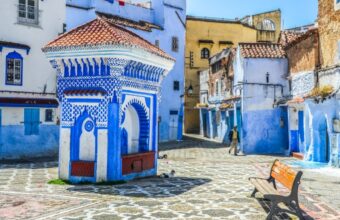
In-depth Morocco
A grand tour of Morocco's highlights
Approx. 14 days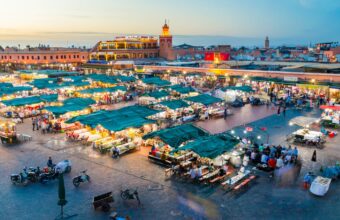
Imperial cities and the Sahara
A journey through Morocco past and present
Approx. 9 daysFind a Toubkal National Park specialist
Tell us about your trip and we'll find your match
We'll connect you directly with the experts.



We'll connect you directly with the experts.
- Hand-picked local specialists
- Honest advice from real experts
- Free to use, no hidden fees