Contrary to popular opinion, the Balkans is so much more than just the countries of the former Yugoslavia. Surrounded by water, the Balkan peninsula is made up of Croatia, Montenegro, Slovenia, Serbia, Albania, North Macedonia, Kosovo, Bosnia and Herzegovina, Bulgaria and Romania. There’s a lot to explore.
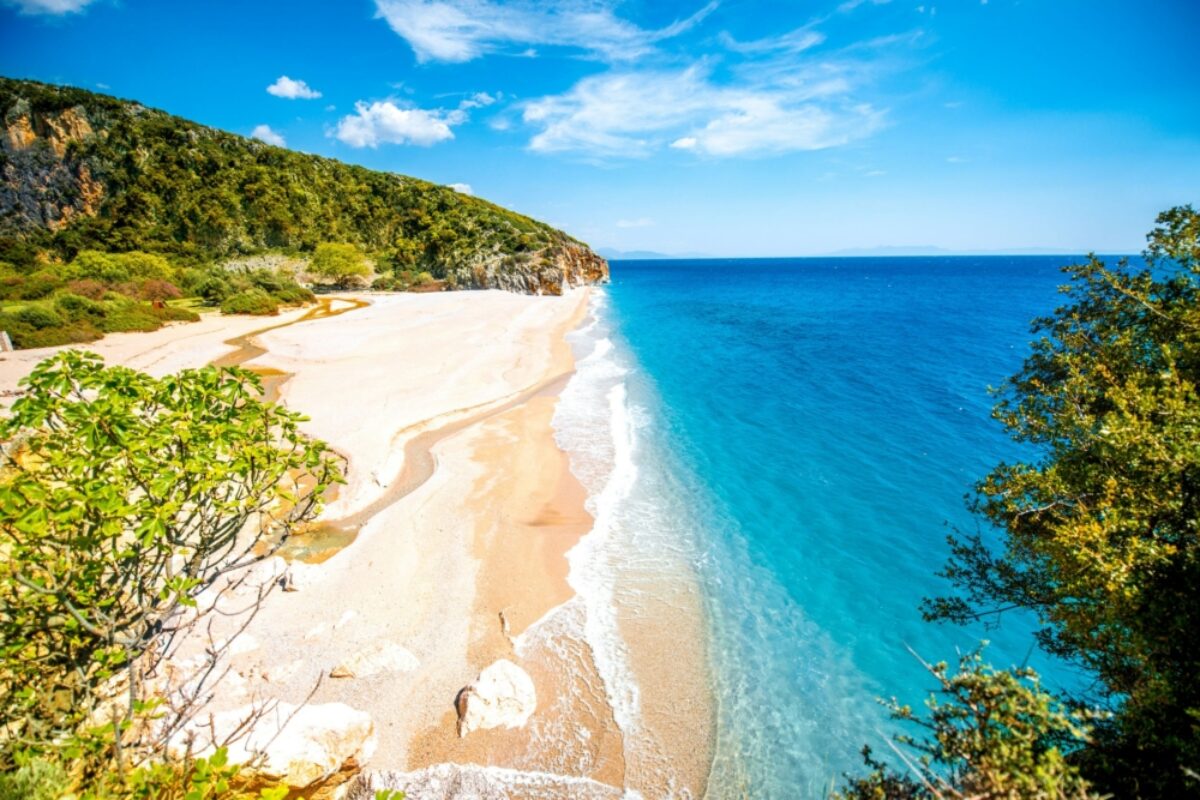
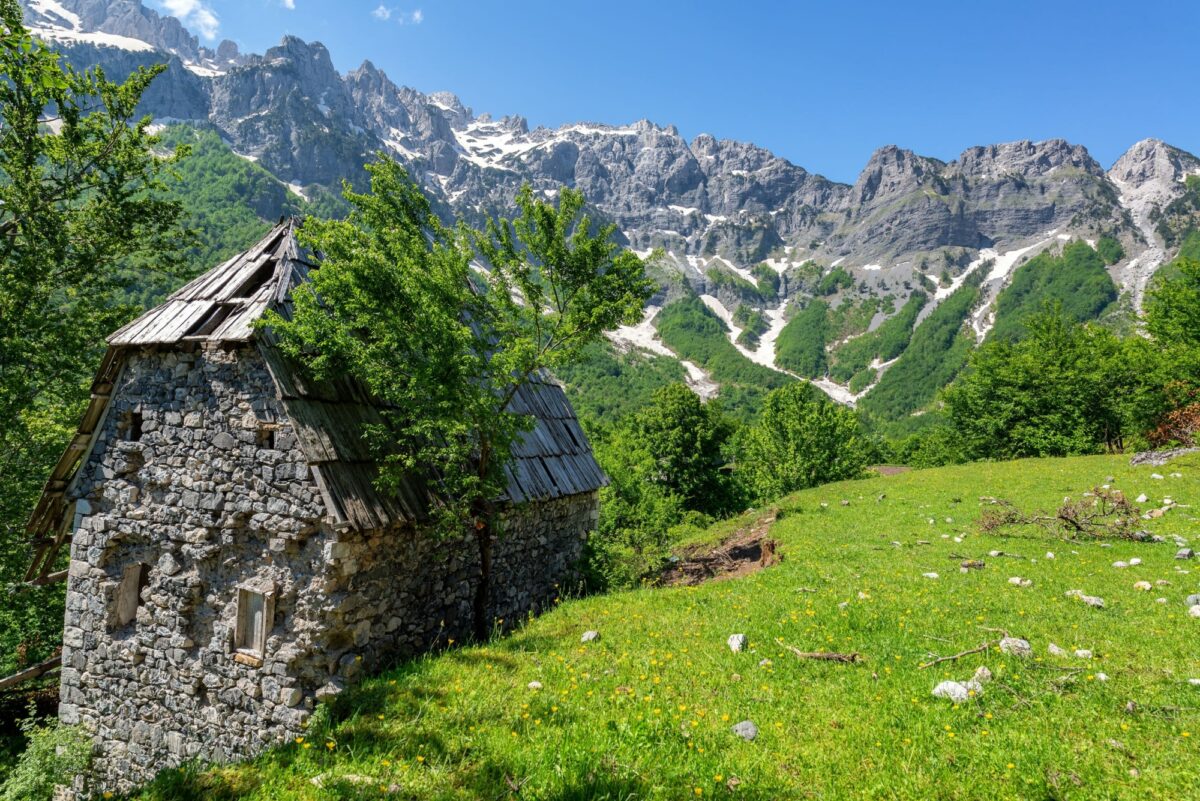
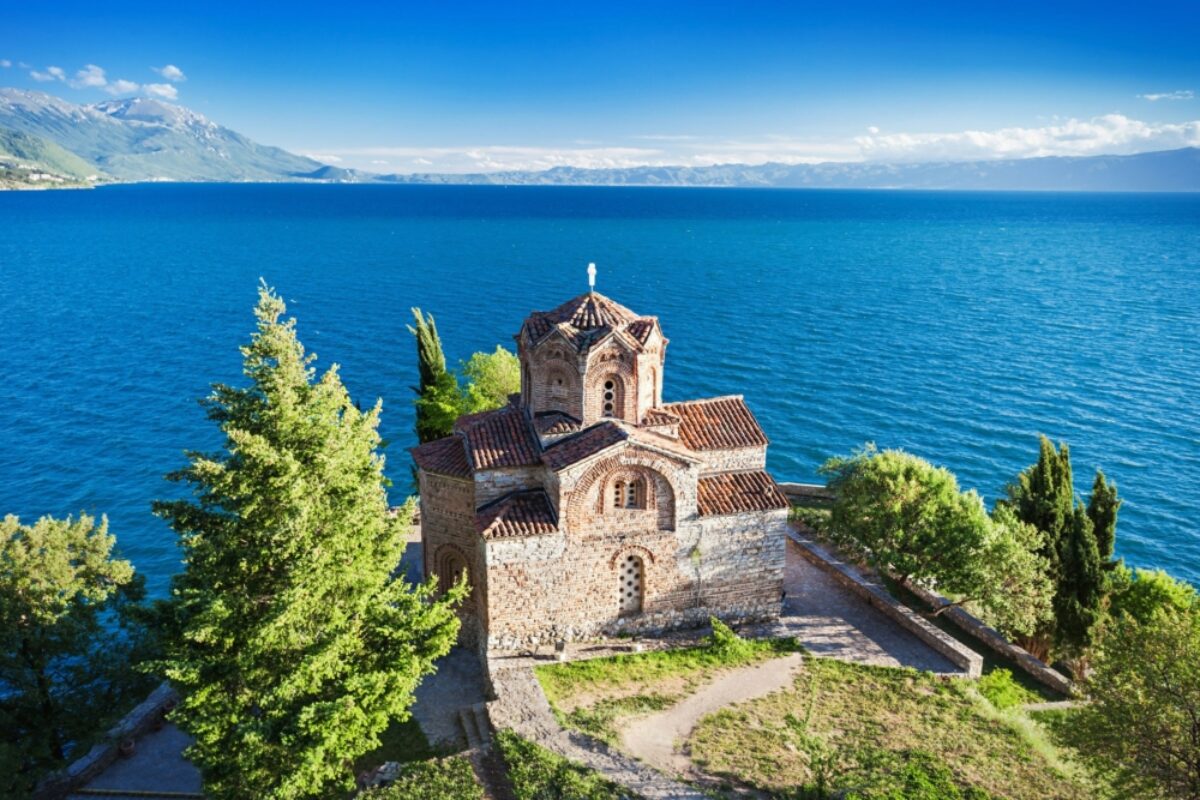
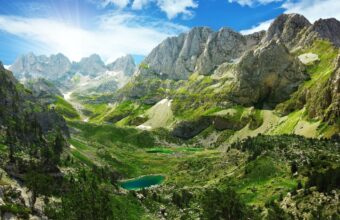
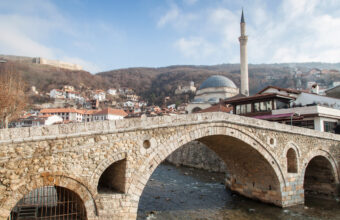
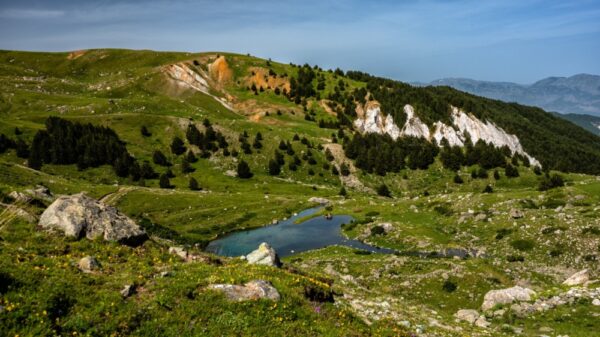
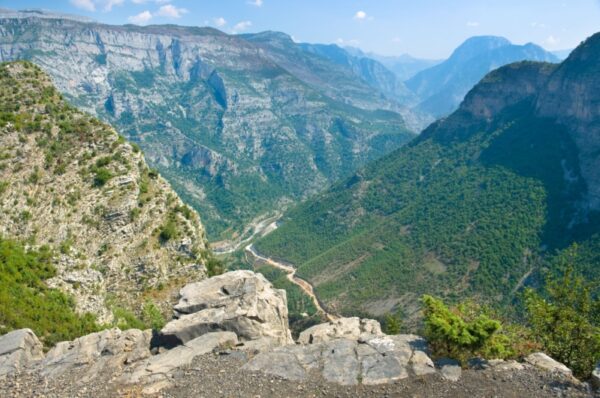
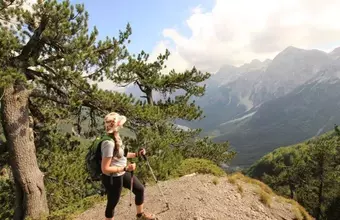
And a lot to see. The Western Balkans are rightly lauded for the beautiful beaches of Croatia and Montenegro, but the region is also worth visiting for the mountains that run down its spine, its mix of historic churches, mosques and monasteries, and for the warm welcome and delicious food of its people.
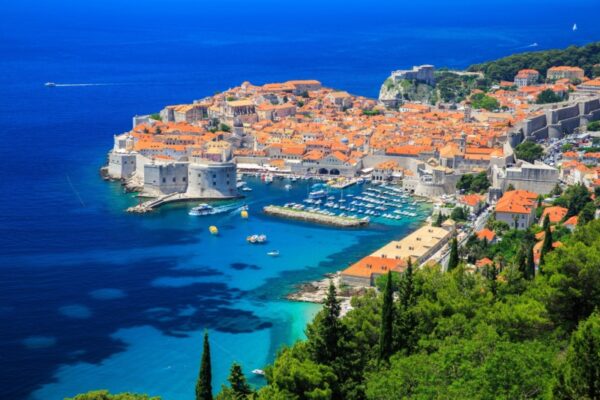
For while Croatia has hogged the international travel limelight, many of the other Balkan countries are still relatively unvisited. Montenegro is home to beaches just as beautiful; Albania has mountain peaks and Ottoman towns, and Slovenia’s Ljubljana can rival anything Dubrovnik can do. The Balkans are beautiful and ready for visitors.
Wild camping is allowed in many mountain areas of the Balkans (there’s no problem camping on the Peaks of the Balkans trail for example), though not in some national parks (for example in Croatia). Just remember, if you’re camping – leave no trace. These special places should remain as beautifully untouched for the next hiker, and no one is going to come and clean up after you.
Many mountain areas in the Balkans are karst, meaning there’s often little or no surface water – this is true for Croatia and Montenegro, and much of the Peaks of the Balkans for example. There are springs, some of which are reliable throughout the hiking season, others less so. In any case I carry a metal flask, as well as one or more collapsible water ‘pouches’ for days when water is more scarce and I need to carry more with me, as well as a water filter. I always carry a small water filter on hikes in the Balkans (and most other places actually) – a Peak Series Collapsible Squeeze Filter from LifeStraw, to be precise. This weighs next to nothing, takes up hardly any space in my pack, and means I can collect water pretty much wherever I find it along the trail. In any case, avoid buying plastic bottled water – many of the plastic bottles will otherwise inevitably end up in landfill.
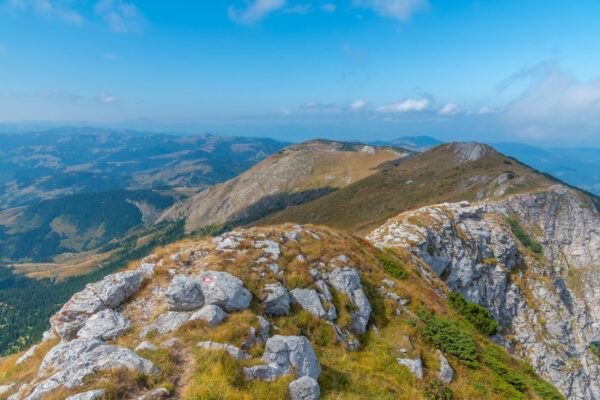
Hiking trails in Albania, Bosnia, Bulgaria, Croatia, Kosovo, Macedonia, Montenegro and Romania – at least those in well-visited areas like national parks – are generally very well marked with trail blazes and signposts. In areas which are less visited, trail markings may well have faded.
For cross-border trails like the Peaks of the Balkans and the High Scardus Trail, yes, you need to apply for cross-border permits before your hike. You can do this yourself, or (easier) there are several local tour operators who will do it for you for a very reasonable fee.
Definitely. You can come slightly earlier or later than the main hiking season but expect lingering snow patches in the early season, and increased chances of rain later in the season. (I’ve hiked in Montenegro in what is generally the wettest month, November, and I can confirm that the potential for getting absolutely soaked is quite high!) Winters in the mountains of the Balkans are bitterly cold with plenty of snow, so you need to come suitably equipped.
Trying to recommend my favourite hike in the Balkans is a bit like asking me to pick my favourite French cheese or bottle of wine – there are just so many hikes in the Balkans for which I have vivid, unforgettable memories. All of the hikes listed above are personal favourites, though it’s the trans-border trails which hold a particularly special place in my hiking hall of fame.
The main hiking season in the Balkans runs from June to October. July and August are hottest, with the potential for afternoon storms. September tends to be more settled. Wildflowers are at their most colourful in June.
You'll receive a reply by email. Questions and replies may be anonymised and reproduced on Horizon Guides.
§ 04
The Balkans atlas
13 picksPlaces & Experiences You Won't Find Elsewhere
Where
What
Montenegro has become increasingly popular for walking holidays, and lots of visitors are drawn to its highest peak, long thought to be the 2,523m Bobotov Kuk, in the Durmitor mountains. We now quite regularly see queues on the steep sides of Bobotov Kuk as hikers wait in line to use the fixed ropes and ascend to the top. It’s not the ‘away from the crowds’ experience that’s sold.
And what's more – it's no longer the highest point in Montenegro! After some re-measuring a few years back, that title now goes to the 2,534m Zla Kolata in the Accursed Mountains (Prokletije), which Montenegro shares with Albania.
If you don't have time for both, my advice is to head for Zla Kolata. The astounding natural beauty of the Prokljetije mountain range will blow you away. And unlike Durmitor, it doesn’t carry the UNESCO label and all the popularity that comes with it.
Distance: Approx. 70 km Duration: Five to seven daysDifficulty: Strenuous
The trek along Romania’s Făgăraș Mountains is a more remote and challenging proposition: to complete the full high-level ridge hike of around 100km, you’ll probably need to camp, though there are some huts and simple refuges at lower levels.
Distance: 750kmDuration: 43 daysStart point: Kaiser-Franz-Josef’s-Höhe (Austria)End points: Muggia (Italy)Difficulty: Moderate
The Alpe Adria Trail is a rewarding long-distance hiking route. It explores the varied landscapes, rich history and regional cuisine of the Austrian state of Carinthia, Slovenia, and Italy’s Friuli-Venezia Giulia region.
The route stretches from the foot of the Grossglockner (the highest mountain in the Eastern Alps) to the shore of the Adriatic near Trieste.
It takes in the mountain scenery of the Hohe Tauern, the Nockberge and the Julian Alps, passing through towns and villages, not to mention two outstanding wine regions.
If you haven’t got a month and a half free to walk the whole thing, the AAT can easily be split into two or three more manageable sections. There is also a one-week loop at the centre of the trail which dips into all three countries.
From Kaiser-Franz-Josef’s-Höhe, with its view of the Grossglockner and the Pasterze Glacier, the Alpe Adria Trail follows the Mölltal for several days. It travels along the valley floor, climbs across rugged tops on its eastern side and plunges through the Rabischschlucht and Groppensteinschlucht gorges.
After around 11 days, getting you suitably warmed up, the route leads across the Nockberge, a rugged group of mountains, a UNESCO Biosphere Reserve and highlight of the route.
The AAT spends several days among the Nockberge, dropping down to villages and guesthouses for overnight stops. It then meanders through the Carinthian lake region, passing Ossiacher See, Wörthersee and Faaker See.
After three weeks, the trail takes a breathtaking ridge walk crossing into Slovenia to arrive in Kranjska Gora, a bustling ski resort which is one of the gateways to Triglav National Park.
After crossing the dramatic Vršič Pass, the AAT descends into the Soča Valley which it follows for several days. This section along the River Soča, with its stunning gorge and the little town of Bovec, is another highlight.
Beyond Tolmin, the trail leaves the Soča and crosses the border into Italy, arriving at the historical, UNESCO-listed, Cividale del Friuli.
After winding through the Collio wine region (Italy) and the Brda wine region (Slovenia), the AAT leads along the Italian coast. Skittering across the edge of the Karst region, it dips back into Slovenia one last time to visit the Lipica horse stud.
The route finishes at Muggia, on the shore of the Adriatic.
Need to know
Accommodation (and baggage transfers, if required) can be booked through the Alpe Adria Trail Booking Centre.
The trail app includes detailed maps, which are best downloaded before you travel, so you can use them offline.
The hiking season is April to October (expect snow on the mountains until June), although the lower parts on the coast can be explored all year.
Distance: 270km extendable to 320kmDuration: 16–20 daysStart/end point: Kranjska Gora (Slovenia)Difficulty: Moderate to easy
The Juliana Trail in Slovenia is a circular route through the Julian Alps, a memorable loop of the country’s highest and most famous mountain, Triglav.
The route was designed to encourage visitors to explore a wider area and reduce visitor numbers on Triglav itself. Although it doesn’t climb Triglav, it includes some less well-known areas and iconic spots like Bled.
There’s also an optional loop through Goriška Brda, one of Slovenia’s premier wine regions.
From Kranjska Gora, the Juliana heads east along the Sava Dolinka, with views of the Martuljek group, to Mojstrana and (less conventionally) the lesser-visited industrial town of Jesenice.
Near Begunje it passes the hilltop church of Sv Peter, then swings through the beautiful town of Radovljica.
Turning west the trail continues to Bled, with its much-photographed lake and island monastery, over the rugged Pokljuka plateau to Stara Fužina. On the shores of Lake Bohinj, Stara Fužina is one of the most beautiful spots in the Julian Alps and the usual trailhead for Triglav climbs.
From Lake Bohinj it heads east again to Bohinjska Bistrica, then south over the Vrh Bače Pass to follow the narrow Bača Valley, again well off the radar of most itineraries. There's a fantastic viewpoint at Senica, above the confluence of the Idrijca and Soča rivers, before the trail descends to Most na Soči.
Following the emerald green River Soča north to Tolmin and Kobarid, the stage between Kobarid and Bovec is particularly beautiful.
From Bovec, the trail heads north along the valley of the River Koritnica, less travelled than the route east along the Soča, to Log pod Mangartom, with stunning views of Mangart and Jalovec towering above the head of the valley.
Climbing to the Predel Pass, the trail drops into Italy, with an overnight stop in Tarvisio.
Finally it turns east, following an old narrow gauge railway line, now a cycling and walking trail, back to Kranjska Gora in Slovenia.
Need to know
Almost all stages are accessible by public transport – one of the main principles behind the trail – so it’s easy to pick off sections as day walks.
The hiking season is May to October (expect snow on the mountains until June).
Difficulty: StrenuousDuration: Three weeks+, or shorter segmentsAccommodation: Guesthouses & mountain hutsStart/end point: Razdrto (Slovenia) / Valbone Valley (Albania)
Newly waymarked – and with sibling Green and Blue Trails on the way – this epic ‘mega trail’ through the Dinaric Alps links northern Albania with Slovenia via Montenegro, Bosnia and Herzegovina, and Croatia. Don’t expect polish; do expect rewarding and sometimes remote trekking.
The trail isn’t generally sold as a commercial thru-hike, but trekking specialists will organise self-guided or guided treks along different segments of the trail.
The Via Dinarica is actually three separate trails, with the main, so-called White Trail, following the spine of the Dinaric Alps as closely as possible. The Blue and Green trails follow lower routes and are less complete.
The White Trail, described here, through Bosnia and Hezegovina is the most developed so far, stretching a more modest 333km and taking around two weeks to complete.
Starting from Prisika on the Croatian border, the trail leads past Lake Buško with a fair amount of road walking. It passes through an area riddled with limestone caves, many that can be visited as detours.
After crossing Mt Vran, the trail leads through the beautiful landscape of Blidinje Nature Park and over Mt Čvrsnica, with its distinctive rock-eye known as Hajdučka vrata.
Next up, the trail crosses Prenj, a fabulous mountain area bristling with limestone peaks that requires at least two days.
Passing beside Lake Boračko, it follows the edge of the Rakitnica Canyon to reach the Ljuta Valley, then skirts the southern slopes of Mt Treskavica.
The final part of the White Trail in Bosnia is a two-stage hike across the beautiful landscape of Sutjeska National Park. Including Maglić, the highest mountain in Bosnia that can be climbed as a detour, the park features primeval forests, lush pastures and rocky peaks.
After some awe-inspiring views from the border ridge, the route drops down to Lake Trnovačko, set amongst the epic sprawl of mountains that is Montenegro.
Need to know
The hiking season for the White Trail through Bosnia and Herzegovina is June to October.
Bosnia and some parts of Croatia near the Bosnian border have areas with landmines. The trails on the Via Dinarica are perfectly safe, but it’s something you need to be aware of. Under no circumstances should you wander into areas where there are warning signs.
Distance: 376kmDuration: 16 daysStart point: Staro Selo (North Macedonia)End point: Gorna Gorica (North Macedonia)Difficulty: Strenuous
The High Scardus Trail (HST) is a new hiking route following the mountainous border between North Macedonia, Kosovo and Albania.
It’s incredibly wild and remote, taking in most of the Šar mountain range and Mt Korab, the fourth highest peak in the Balkans, as well as several national parks. Accommodation comes in the form of small village guesthouses, also offering meals, and mountain huts.
The High Scardus Trail is broken into three sections. The main section, described here, is an 11 day route stretching just under 300km across the Šar mountains and Mt Korab.
Further south there are two shorter sections requiring three days and two days respectively. The latter makes a crossing of Galičica National Park between Lake Ohrid and Lake Prespa.
The HST starts northwest of Skopje and climbs up to the Ljuboten mountain hut, just below the main border ridge.
It follows the ridge southwest before dropping slightly on the Albanian side to Brezovica. The trail continues along the ridge, before dropping back into Albania, with a more significant loss in elevation, to reach Prevala.
Crossing back to the North Macedonian side, it skirts below Vrtop and descends slightly to Veshala. It then heads up the valley to gain the main ridge again and descends to Brod on the Albanian side.
The trail leads south from Brod, keeping to the Albanian side, before crossing the border ridge into North Macedonia again and entering Mavrovo National Park.
Back on the border ridge, the route makes a slight detour to climb Mt Korab, before there’s yet another switch to the Albanian side to reach Radomirë in Korab Koritnik Nature Park.
After following the Albanian side of the border ridge for a few more days, the trail descends to the village of Butushe in North Macedonia.Need to know
The hiking season is from June to early October.
The HST requires two transfers to get between the three separate sections of the trail.
A cross-border permit is mandatory for this route, local agencies can arrange these for a small fee.
The trail is covered by a series of six excellent maps at 1:50,000, which are free to download.
There’s a big annual hike on Korab organised by a local mountaineering club in September.
Distance: 192kmDuration: 10 daysStart/end points: Plav or Vusanje (Montenegro), Theth or Valbona (Albania), Rekë e Allagës (Kosovo)Difficulty: StrenuousSuitable for: Fit hikers with a sense of adventure
The Peaks of the Balkans is an 192km trans-border trek through the Prokletije Mountains, which form the boundary between Montenegro, Kosovo and Albania.
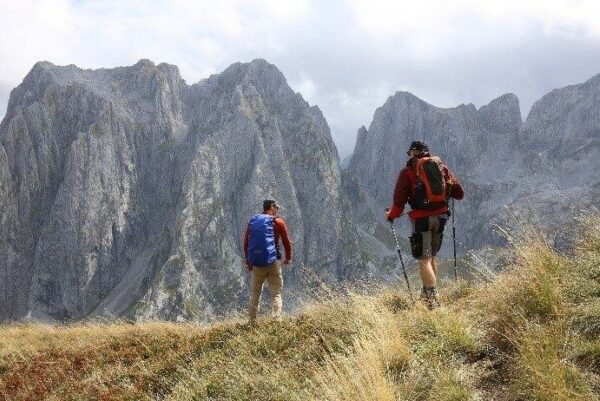
Rugged, wild and remote, the trail covers high mountain passes, secluded lakes and lush valleys. Accommodation and meals are provided by a scattering of village guesthouses, where the genuine warmth and hospitality is just as memorable as the jaw-dropping scenery.
From Vusanje, on the edge of Prokletije National Park in Montenegro, the route follows the Ropojana Valley, passing a seasonal lake and crossing into Albania.
A long, steady climb leads to the Pejë Pass, before dropping steeply to the village of Theth, set among lush orchards. From Theth, the route leads over the Valbona Pass, with stunning views on both sides, descending the Valbona Valley to Valbona.
Designed with a section of road-walking beyond Valbona, which most people skip with a short transfer, it’s more rewarding to ascend to the Prosllopit Pass.
The trail crosses back into Montenegro below the summit of Maja Kolata, the highest peak in Montenegro (by a smidgen), before returning to Albania.
Descending to Çeremi village, a long day leads to the summer settlement of Dobërdol, surrounded by high pastures beneath the tripartite border between Albania, Montenegro and Kosovo.
A steep climb from Dobërdol is followed by more border-hopping and broad, airy ridges, before dropping down to Milishevc in Kosovo.
The trail leads over another pass, following a less well marked route, down to Rugova Gorge. From Rekë e Allages, on the northern side of the gorge, the route leads to Drelaj, sometimes with a short transfer back onto the border ridge.
After a long descent to Babino Polje in Montenegro, the trail heads up to Lake Hrid, then down to Plav, the only place on the route remotely approaching the size of a town.
Following a 4WD track back up into the mountains, the trail crosses Vrh Bora, with spectacular views of the peaks above the Ropojana Valley, before looping back down to Vusanje.
Need to know
Obtaining a cross-border permit is mandatory for this route – you can apply for this yourself, but it’s more straightforward to get a local agency to do it for a small fee.
The trekking season is May to October – outside these months you can expect heavy snowfall, Alpine winter conditions and no visible trail.
See Albania and Kosovo off the beaten path on this 15-day walking holiday itinerary.
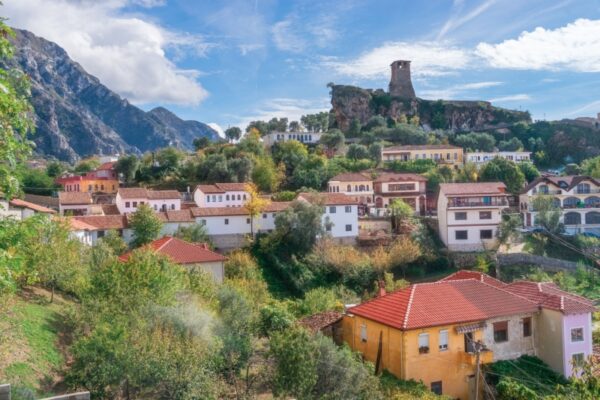
Start in Albania’s capital of Tirana, before starting your walking trip exploring the port city of Durres, complete with its Roman amphitheatre, before heading to the hills of Berat for Ottoman white-washed houses, historic centre and a working castle. Continue into the Albanian Riviera and the Bay of Vlore’s coastline. Take the ferry across the Vivari Channel to the Butrint National Park’s ruins, before exploring the hillside village of Gjirokastra and Kruja, home of Albanian national hero and military commander, Skanderbeg. Head into nature at Lake Shkodra on the border with Montenegro to see the rare Dalmatian pelican. If you’re feeling adventurous, travel into Albania’s Accursed Mountains for fairytale villages and thick forests, before ending across the border in Kosovo’s Prizren, where you can go wine-tasting and explore the food scene.
Begin in Croatia’s iconic Dubrovnik, exploring the city’s old town walls and sailing or swimming in the Adriatic’s deep blue waters. Spend a day exploring Konavle Valley’s vineyards and seafood restaurants before travelling into Montenegro and the villages around Kotor Bay. Head into Albania and bike around the ancient city of Shkodra, taking in lake views before exploring the countryside and villages in the Drin Valley. Continue the nature theme with a day exploring Skadar National Park, where you can travel through fairytale villages and thick forests. Cross back into Montenegro at Lovcen National Park, where you can try ziplining and quad-biking, before ending back in Kotor Bay.
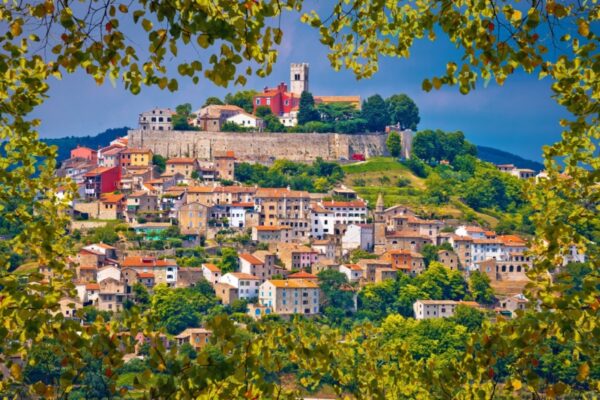
Start by exploring Croatia’s capital of Zagreb, taking in its old town and cafe culture, before travelling to Istria and Pula’s ancient Roman architecture. Take a day trip to Cape Kamenjak to see a nature reserve that’s home to 20 different species of orchid, before travelling to the port town of Rovinj. Head away from Istria’s coastline into its hills, where you can visit the picturesque, medieval villages of Motovun and Grožnjan. Next, travel to the seaside resort of Lovran before ending your trip back in Zagreb to depart.
Albania holds obvious appeal for the adventurous traveller: the wild Albanian Alps, a rich archaeological and Ottoman heritage and an Adriatic coastline as beguiling as Croatia’s, all, intriguingly, hidden for decades by a policy of total isolation. Further investigation adds to the intrigue: 168,000 defensive bunkers strewn in city and country; astonishing mountain flora, thanks to an absence of modern chemicals; the improbable sight of teddy bears placed on all new buildings to ward off the evil eye and an array of virtually unknown UNESCO World Heritage Sites, any one of which would justify the trip.
Over two weeks, we explore this ancient seat of Illyria in depth, walking to isolated churches with Byzantine frescoes, to hilltop castles and ruined cities, and high in the Albanian Alps for flowers and birds. We take a boat trip through the scenic gorge of Lake Komani and cross the border into Kosovo, Europe’s youngest country, to visit Prizren, with its well-preserved Ottoman buildings.
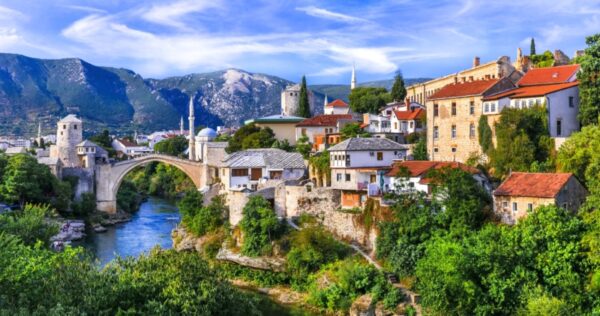
Spend a few days exploring historic Sarajevo, from the Tunnel Museum which provided safe passage during the 1990s civil war, to the city’s ethnically diverse streets full of mosques, churches and synagogues, via the bridge where Gavrilo Princip assassinated Archduke Franz Ferdinand, sparking the first world war. Take a trip to the stunning town of Mostar for cobbled streets and its famous bridge, before exploring the mountain village of Lukomir, home to a small population of shepherds. End back in Sarajevo.
Start in Trebinje, a pretty town similar to Dubrovnik but without the costs and tourists, before beginning your walking trip with the deep gorges of the Tara Canyon. It’s a short jump to Durmitor National Park, home to underground streams and more than 50 peaks – perfect for hiking in summer or skiing in winter. Travel to Biogradska Gora National Park, where you can explore ancient forests full of elm, maple and beech trees, before heading to the Balkans’ biggest lake – Lake Skadar. Here, you can see Albania across the water and look for pelicans on the Montenegrin side. An hour’s drive away is Lovcen National Park, where you can see orchids before climbing to the mountain-top mausoleum to St Peter – Montenegro’s most famous son. Travel down the mountain to the Bay of Kotor to explore its waterfront villages before ending in Dubrovnik.
Zla Kolata: a crowd-free hidden gem
Făgăraș Mountains trek
Alpe Adria Trail
Juliana Trail
Via Dinarica White Trail
High Scardus Trail
Peaks of the Balkans
Albania off-the-beaten track
West Balkans in a week
Istria’s coastlines and hilltop villages
Albania and Kosovo ~ Walking in Illyria and Epirus
Your details are safe and will not be used for any other purpose. By using this service you agree for us to share your details with your chosen tour operator according to our Privacy Policy.
1Your trip
2Complete your request
3Meet your specialist
Find a Balkans specialist
Tell us about your trip and we'll find your match
We'll connect you directly with the experts.
Connect with Tereza Lvova and 1 other Balkans specialist.
We'll connect you directly with the experts.
Connect with Tereza Lvova and 1 other Balkans specialist.