





Uzbekistan
Mosques, mausoleums and madrasahs

Welcome to Uzbekistan
The insider's travel guide to UzbekistanCentral Asia’s showstopper, Uzbekistan is synonymous with the famed Silk Road which weaved its way through much of this historic country. Cities like Bukhara and Samarkand bustled with life as spice and silk traders plied their wares along the route. However, with trade came trouble and Uzbekistan has seen its fair share of problems over the years.
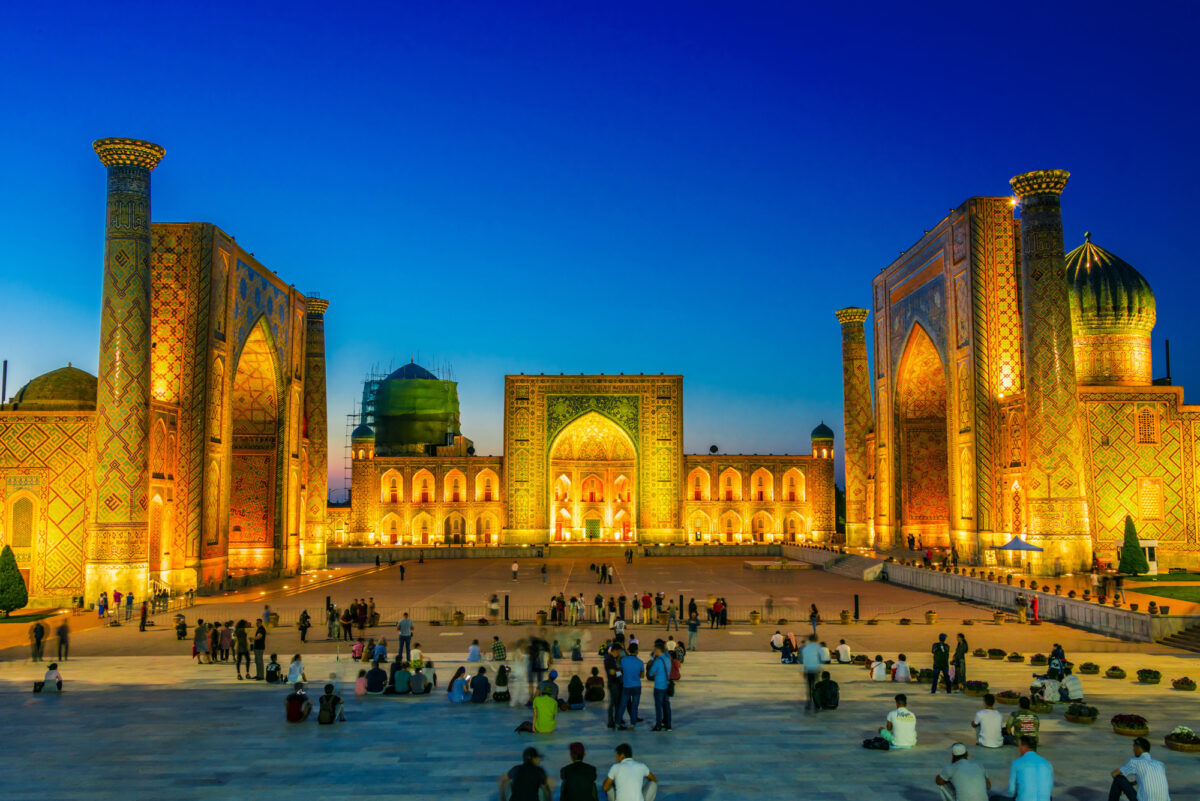
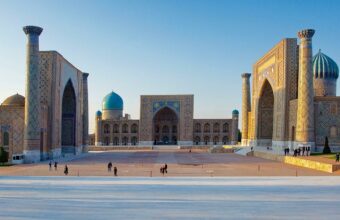
Today, Uzbekistan offers intrepid visitors a mix of Islamic architecture and ancient cities. Look for Samarkand’s Registan - a public square at the heart of the city, crowned by three madrasahs (Islamic schools) all showcasing distinctive architecture. In contrast, capital Tashkent – completely destroyed in 1966 by a merciless earthquake – is a mishmash of restored 12th-century mosques and the brutalist Russian buildings that sprung up during its recovery.
Visiting Uzbekistan isn’t just about its cities. The Kyzyl Kum Desert is the world’s 11th largest and is famous for its red sand, camel treks and yurts offering starlit nights. Remote Karakalpakstan has fortresses, castles and the infamous Aral Sea, which is now a dry, barren but spectacular sight.
It’s impossible to ignore the complexity of Uzbekistan’s authoritarian regime. Homosexuality is illegal and the country’s state has a reputation for corruption. However, most visitors find only friendship, fun and intrigue among Uzbeks. A word of warning – pick your season. November to February can be bleak, with temperatures regularly below freezing, while the intense heat of July can see 50C melt Tashkent’s pavement.
The Uzbekistan atlas
5 picks Places & Experiences You Won't Find Elsewhere-
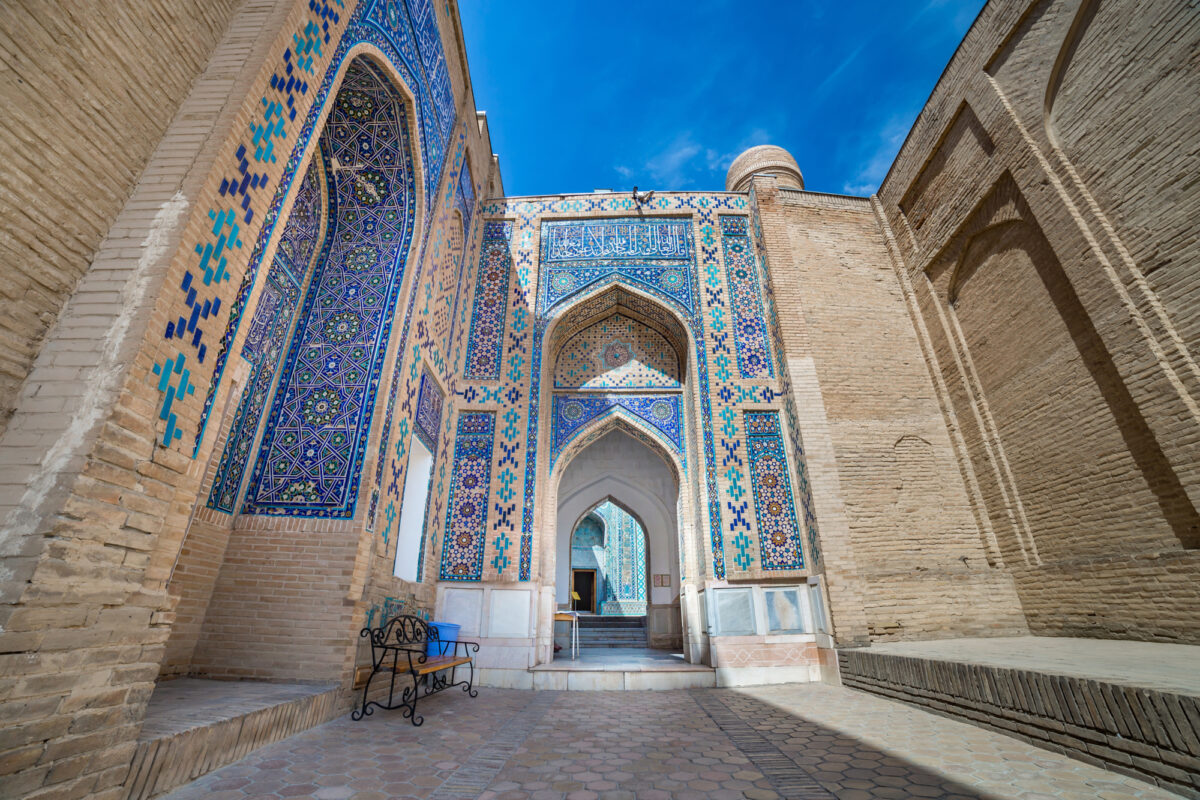
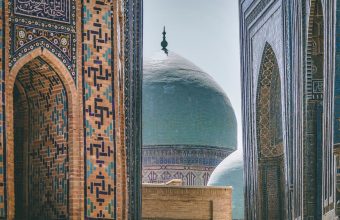
No place on the long and winding Silk Road captures the imagination quite like Uzbekistan's Samarkand, the restored 14th-century city and centre of the mighty Timurid Empire. The dazzle of ceramic tiles lining the monuments is a sight to behold, inviting you to delve into the city’s long and turbulent history. How could Timur, an emperor renowned for his cruelty, be responsible for something as lovely as Samarkand? His conquests clearly paid off: by dragging skilled artisans from around Eurasia to his capital, he created an arresting architectural statement that has stood the test of time. Samarkand represents the core idea of the Silk Road: a place where east met west, mingling to create something new, and heart-stoppingly beautiful. The Registan complex of mosque and madrasahs (Islamic schools), decorated with ceramic tiles and presided over by an obviously un-Islamic lion, are at the heart of Samarkand. From here, you can branch out to the enormous Bibi Khanum mosque, or instead visit the striking Gur Emir mausoleum of Timur himself, which would inspire the Taj Mahal, built by Timur’s descendants of the Mughal dynasty. Overlooking the city sits another monument to the dead: The Shah-i-Zinda necropolis, dating from the 11th century, is an extraordinary collection of mausoleums and shrines – more than 20 buildings of stunning beauty, packed together in a relatively small space. Legend has it that the cousin of the Prophet Muhammad is buried there. And don’t miss the remains of the 15th century observatory on the edge of the city, built by Ulugh Beg. Here is where he mapped the stars and worked out the length of the year, among other things, with astonishing accuracy. The Registan is so huge that it’s worth visiting the site several times. Try to visit at different times of the day. This will allow you to pick out different details and to observe the play of light and shadow in the muqarnas. The site is open between 8am-7pm daily and the entrance fee is 50,000 som ($3.90).
-
While Uzbekistan is well-known for its history, few people realise current-day Turkmenistan also played an important role in the history of the Persian empires that ruled Central Asia for three millennia. This trip explores that history, visiting ruins across The Karakum Desert.Less visited than Antarctica, you can be certain of a warm welcome from the Turkmen people. Key sights include the Darwaza gas crater and the marble extravaganza of Ashgabat making this an exciting once-in-a-lifetime trip.This is a circular route, starting and ending in Tashkent. First, head to Samarkand to visit monuments like the Registan and Shah-i-Zinda.Take the overnight train to Urgench from which it is a short drive to Khiva where you can take in the desert fortresses of Khwarezm.Konye-Urgench is just across the border from Khiva, an ancient town full of ruins to explore. After spending the night at Dashoguz, the next day, camp out in the desert for Turkmenistan’s most famous sight, the Darwaza gas crater, also known as 'the Door to Hell'.After a four hour drive across the desert, reach Ashgabat, one of the most relaxed areas to visit, budget an extra day here to wander unaccompanied and do some souvenir shopping.Fly on to Merv and experience the fantastic echo in the lonely mausoleum of Sultan Sanjar and take a 4WD to visit the surrounding sights. After crossing the desert one last time, you say farewell to Turkmenistan and arrive once more in the hustle and bustle of Uzbekistan. Bukhara possesses the nation’s most atmospheric hammam.To return home, you can take the new fast train to Tashkent or opt to take the slow overnight train.
-
Visiting Uzbekistan is a feast for the senses, from the wonderful tile-work decorating madrassas and mosques to bustling markets and bazaars. Wander through narrow streets along adobe houses and get to know the friendly Uzbeks in one of many tea houses. Spend a night in a desert yurt or in a homestay with a Tajik family, or get spoiled in a boutique hotel instead.Starting in Tashkent, after spending time exploring the city, take the train to Samarkand and take a couple of days to take in the sights.A direct train will take you to Bukhara, or you can opt to make the journey by car, stopping at caravanserais and minarets along the way. If you have an extra two days take the roundabout way to Bukhara through the Nuratau mountains.There is no rail connection between Bukhara and Khiva, so the next part of the journey needs to be done by road-- a seven-hour ride. Its remoteness makes this desert khanate little-visited by the majority of tourists.From Urgench near Khiva, a flight back to Tashkent brings your journey to an end.
-
This is an itinerary of the exotic, a route for those ready to take the road less known, who want to discover a wild and beautiful landscape, meet warm and wonderfully hospitable people, and walk in the steps of the giants of history, from Alexander the Great to Marco Polo. Travel conditions are not up to Western standards, but what you forego in comfort, you get back in lifelong memories.Travel back in time as you move up the Pamir Highway to find people living much the same as centuries ago before spending some time in Dushanbe.You can then follow the Uzbekistan loop, starting in Tashkent. After spending time exploring the city, take the train to Samarkand and take a couple of days to take in the sights.A direct train will take you to Bukhara, or you can opt to make the journey by car, stopping at caravanserais and minarets along the way. If you have an extra two days take the roundabout way to Bukhara through the Nuratau mountains.There is no rail connection between Bukhara and Khiva, so the next part of the journey needs to be done by road-- a seven-hour ride. Its remoteness makes this desert khanate little-visited by the majority of tourists.From Urgench near Khiva, a flight back to Tashkent brings your journey to an end.
-
Four very different nations with a shared past, the Four Stans, Kazakhstan, Uzbekistan, Kyrgyzstan and Turkmenistan, occupy the heart of Eurasia. Turkic nations with similar languages and a mutual history under the Soviet Union, these four countries have taken wildly different paths since independence.This popular route will take you through searing deserts and over high mountain passes. One moment you are horseback riding over mountain meadows in seclusion, the next moment arguing over prices at a bustling city market. You’ll go from catnapping in a nomad’s tent to unwinding in a luxurious B&B.If you are unafraid to cover a lot of ground in a short amount of time and want to experience all that Central Asia has to offer: this is the route for you.
-

See Samarkand in full
-
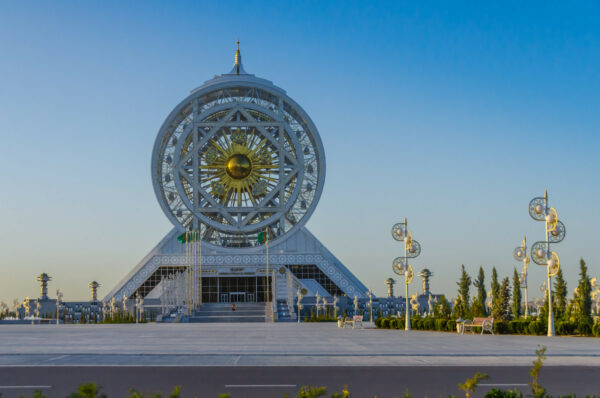
Essential Uzbekistan & Turkmenistan
-
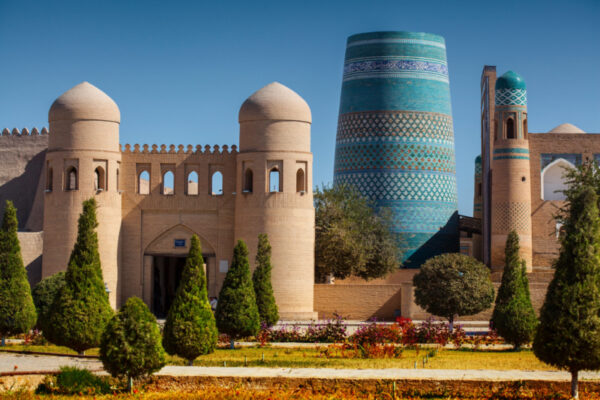
The Uzbekistan Loop
-
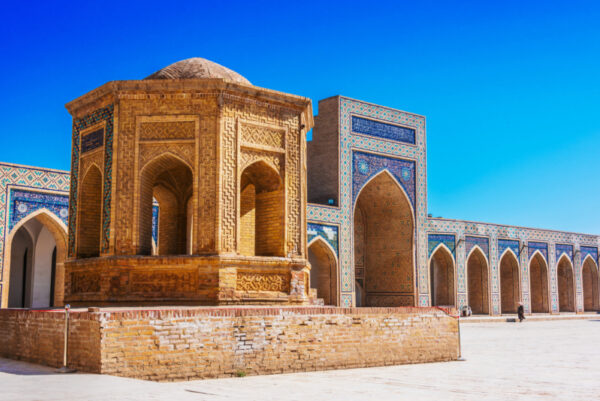
Tajikistan & Uzbekistan itinerary
-
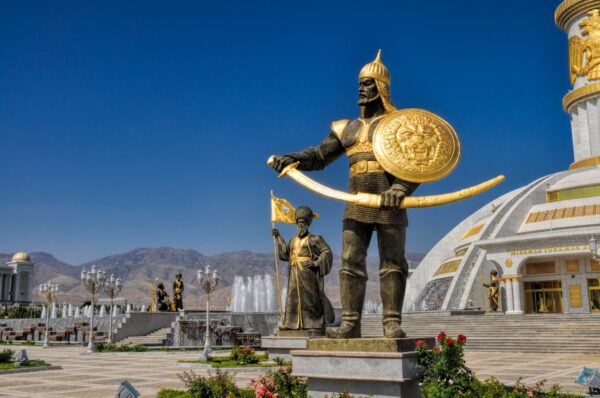
Four Stans itinerary


Trusted specialists

Find a Uzbekistan specialist
Tell us about your trip and we'll find your match
We'll connect you directly with the experts.

Connect with Luca.
We'll connect you directly with the experts.
Connect with Luca.
- Hand-picked local specialists
- Honest advice from real experts
- Free to use, no hidden fees