49 picksPlaces & Experiences You Won't Find Elsewhere
Where
What
Naboisho is a good example of what a community-led conservancy can look like when it is given enough space and time to work. It sits next to the Maasai Mara National Reserve and covers around 50,000 hectares, forming part of the wider Mara ecosystem.
The conservancy was established by local Maasai landowners with the aim of restoring degraded land, protecting wildlife and creating a sustainable income stream for the community. Since its formation, grazing pressure has been reduced and habitats have recovered, which has allowed wildlife numbers to increase across the area. Large mammals including elephants, lions, cheetahs, leopards and buffalo are all present, alongside a strong bird population.
Like all private or community managed conservancies, Naboisho is run very differently to the main national park. Access is controlled, vehicle numbers are limited, and activities are structured to reduce pressure on the land. This creates a different dynamic on game drives, with fewer vehicles and more freedom to spend time observing behaviour rather than moving constantly between sightings.
The conservancy model also shapes how people interact with the landscape. Revenue from tourism supports land leases and local livelihoods, which in turn underpins the long-term viability of wildlife protection here. For visitors, that context matters, because it explains why the experience feels calmer and more deliberate than in more heavily trafficked parts of the Mara.
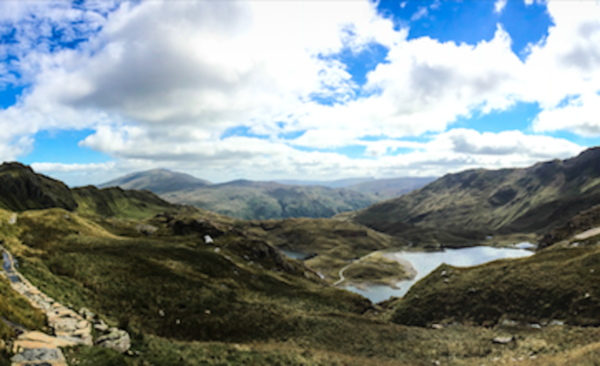
The southern boundary of Eryri National Park includes mountain passes, walking routes and historic villages that can be explored by car or on foot. Travelling towards Beddgelert involves passing through the Aberglaslyn Pass, a narrow gorge popular with walkers. Beddgelert is associated with the legend of Gelert and includes local eateries. From there, the road climbs towards Pen-y-Pass, a common starting point for the Miners’ Track and Pyg Track routes to the summit of Yr Wyddfa.
For visitors who prefer not to climb, Llanberis provides access to the Snowdon Mountain Railway. The round trip takes approximately two and a half hours, including a 30-minute stop at the summit.
In contrast to the mountain landscape, the coast offers beaches and castles. Borth-y-Gest and Morfa Bychan include Black Rock Sands, which can be driven onto. Criccieth Castle is located nearby, subject to tide and weather conditions, and Harlech Castle lies further along the coast.
Together, these locations offer a combination of mountain scenery, coastal access and historic landmarks within a relatively compact area.
I recommend Serengeti Green Camp for visitors who are keen to follow the migration, when mobility is key. It’s a seasonal, mobile camp that shifts location to stay close to the herds rather than expecting the wildlife to come to it. Days are shaped by where the herds are, how they’re moving, and what the conditions allow.
Despite being mobile, the camp is well organised and comfortable enough to spend several nights. It’s a good option for travellers who want to be properly inside the Serengeti system, without the sense of staying in a permanent outpost.
I use Pembazoni Camp to show a different side of the Serengeti, away from the busier central areas. The camp sits in a quiet, little-visited part of the ecosystem, where movement is slower and wildlife encounters feel less orchestrated.
This is a small camp, and that scale matters. It allows for flexibility, particularly when combining vehicle-based exploration with time on foot. Walking here is not about covering distance, but about paying attention to tracks, terrain and behaviour that would be missed from a vehicle.
Accommodation is intentionally low-key. Tents are comfortable and well run, but the camp doesn’t try to compete with the landscape. It works best for travellers who are more interested in how the Serengeti functions than in ticking off familiar scenes.
Rhino Lodge is a practical choice rather than a romantic one, and that’s exactly why I recommend it. It sits right on the rim of the Ngorongoro Crater, which means early access without a long pre-dawn drive.
The lodge is straightforward and unpretentious. Rooms are warm, solid and designed for rest rather than lingering, which makes sense here. This is a short stop focused on a specific objective: getting into the crater efficiently and without complication.
I tend to use Manyara Green Camp when I want people to experience Lake Manyara as more than a drive-through park. The camp is small and lightweight, and that suits the setting. It sits in a quieter part of the park, which allows time to slow down rather than rushing between sightings.
What works well here is the balance between walking, cycling and vehicle-based exploration. Being able to get out on foot or on bikes changes how you read the landscape, especially in a park that’s as varied as Manyara, with forest, groundwater springs and open areas all compressed into a relatively small space.
The camp itself is simple and functional. Tents are comfortable enough without trying to imitate a lodge, and the focus stays firmly on time spent outside. It’s a good place to begin a journey, particularly for travellers who want to ease into safari at a more measured pace.
Borana Lodge is positioned on a hillside above a dam in the centre of Borana Conservancy, and that setting drives much of what happens day to day. Elephants regularly come to drink and bathe below the lodge during the middle of the day, and lion and leopard move through the area at night, often close enough to hear.pau
I value the flexibility here. From the lodge, you can arrange time on foot, on horseback, by vehicle or on mountain bikes, depending on how you want to engage with the landscape. Rhino tracking on foot is a key part of the experience, made possible by Borana’s long-term investment in protection, monitoring and ranger training.
The accommodation is in private cottages rather than a central block, which gives guests space and separation without disconnecting them from what is happening outside. Views stretch across the conservancy towards Mount Kenya, and time in camp tends to revolve around wildlife movement and light rather than a fixed programme.
Borana is a useful place to visit if you want to understand how conservation, livestock and tourism are being managed together in Laikipia. It is a private conservancy of around 32,000 acres on the northern foothills of Mount Kenya, sitting at roughly 6,500 feet above sea level, where the landscape shifts quickly from fertile highlands to more arid ground.
What defines Borana is its role within a much larger conservation picture. In 2013, the fences between Borana and Lewa Wildlife Conservancy were removed, creating the Lewa–Borana Landscape, a combined area of more than 90,000 acres. This has allowed wildlife to move freely across a far broader range than would otherwise be possible, particularly black and white rhino. The area is now recognised as one of Kenya’s Key One rhino populations, supporting a significant proportion of the country’s remaining animals .
Rhino conservation is central here. Borana introduced black rhino in 2013 and has invested heavily in security, veterinary care and ranger training, working closely with Lewa on anti-poaching operations. That work shapes how the conservancy functions day to day and gives real context to time spent on the ground.
What is often overlooked is that Borana still operates as a working landscape. Managed grazing is allowed in partnership with neighbouring communities, generating income for local herders while improving grassland health through livestock movement. It is a pragmatic model rather than a purist one, and it reflects how conservation is being approached in this part of Kenya.
Solio is a useful stop when the aim is to understand how private conservation can work at a very practical level. It is a privately run reserve in Laikipia with a long-standing focus on rhino protection, and that focus shapes the entire experience.
The reserve covers around 17,500 acres between Mount Kenya and the Aberdare range, with a mix of wooded grassland and wetlands. This relatively contained landscape supports one of the highest densities of black rhino in Africa, the result of decades of sustained breeding and protection efforts. As a result, sightings here are frequent and unforced, without the need to range widely or wait for chance encounters.
Solio is also home to a broader spread of wildlife, including lion, leopard, cheetah, buffalo and zebra, but it is the rhino population that defines the reserve and gives it its purpose.
What Solio demonstrates clearly is how conservation priorities influence tourism. The reserve is tightly managed, access is controlled, and the emphasis is on protection rather than spectacle.
Ngare Ndare Forest offers a very different environment from the open landscapes that define the rest of Laikipia. It is an indigenous forest that forms part of the wider Mount Kenya ecosystem, linking the mountain’s upper slopes with surrounding conservancies.
The main draw here is the forest itself. A raised canopy walk runs for several hundred metres above the forest floor, giving a clear sense of scale and structure that you do not get at ground level. From the viewing platform at the end, the transition from dense forest to the slopes of Mount Kenya is easy to see.
Lower down, the forest opens into natural pools and waterfalls fed by the mountain’s water system. These areas allow time to stop and explore on foot, and they are often used for walking and swimming rather than continuous movement.
Olepangi is a working farm owned and run by Elizabeth and Clinton, and their involvement is central to how the place operates. Their backgrounds and extensive travel are reflected in the house itself, which is furnished with objects collected over time rather than designed to follow a particular aesthetic. The result is informal and practical, and it feels lived in rather than styled.
Its location makes it useful. Guests can stay largely on the farm, walking, riding and spending time around the property, or use it as a base to visit nearby conservancies including Ol Pejeta, Solio and Lolldaiga Hills, as well as Ngare Ndare Forest. That choice between staying local and heading out is one of the main reasons I like to include it in itineraries.
Olepangi’s approach to land use is also relevant. What was once dry and unfertile ground has been developed into a productive farm using organic methods and local supply chains. This feeds directly into the guest experience, particularly around meals and day-to-day interactions, without being presented as a formal sustainability programme.
A notable part of a stay here is the opportunity to join community walks led by Mr Kariuki. These are shaped around local history and contemporary life in the area, and tend to be conversational rather than curated. They offer context that is difficult to access through more typical safari experiences.
The Lolldaiga Hills conservancy is a real hidden gem in Laikipia – a little unpolished and unpredictable, but I think destined for the forefront of Kenya's tourism and conservation efforts. Set at the base of Mount Kenya, this is a high-altitude private conservancy where snow-capped peaks give way to arid ground, rocky outcrops and one of the country’s largest remaining cedar forests.
What defines Lolldaiga for me is scale and diversity. At around 49,000 acres, it is large enough for wildlife to move naturally across different habitats rather than concentrating around fixed areas, giving the place an unpredictability that makes it feel real and raw.
The conservancy supports a wide range of wildlife, including four of the Big Five: lions, leopards, elephants and cheetahs. It is also known for species that are increasingly difficult to see elsewhere, such as Grevy’s zebra, reticulated giraffe, striped hyena, gerenuk and aardwolf. The ecological overlap created by altitude and habitat variation means that encounters here are often unexpected.
Lolldaiga is also an important elephant dispersal zone, which gives it real conservation value beyond tourism. Wildlife is not confined or managed for viewing density, and that lack of artificial concentration is exactly what gives the area its character.
As a place to spend time, Lolldaiga suits travellers who are interested in landscape as much as wildlife, and who appreciate that some of the most rewarding safari experiences come from areas that are still finding their rhythm rather than performing to expectation.
I often recommend Safari Series because it reflects the kind of safari experience I believe still has a future in northern Kenya: low volume, owner-led, and closely tied to the land it operates within.
The camp is deliberately small, with just six tents, and is run directly by its owners, Moon and Ed. That scale allows a level of flexibility that larger operations struggle to maintain. The tents are comfortable and well equipped, with proper beds, en-suite bathrooms, hot showers and solar power, but the emphasis is firmly on time spent outside rather than retreating into camp.
What I value most here is the breadth of how you can engage with the conservancy. Privately guided game drives are combined with walking safaris, fly camping and night drives, allowing people to experience the area from different perspectives and at different paces. There is also scope to take part in conservation and community-focused activities, including citizen science initiatives and visits to the Makurian Cultural Centre, which add context to time spent in the field.
Ol Malo sits within a private conservancy on the Laikipia plateau, with the wide open terrain and freely roaming wildlife you’d expect at any conservancy.
But what sets Ol Malo apart for me is that it is genuinely family run. Andrew and Chyulu Francombe are closely involved in day-to-day life at the lodge, and that involvement shapes the experience. Andrew grew up on this land and brings a deep understanding of the local environment and wildlife, while Chyulu’s influence is evident in the way the lodge is designed and lived in.
The accommodation is comfortable and well considered without feeling formal. Rooms are positioned to look out over the surrounding landscape, and the overall feel is relaxed rather than polished.
Activities are deliberately flexible. You can move through the conservancy on foot, on horseback or by vehicle, with time for swimming, river tubing and simply being outdoors. Horseback safaris are a particular strength here and offer a very different way of encountering wildlife, guided by people who know the terrain and the animals well.
I recommend Tumaren Camp as a gateway into Laikipia because it offers an unusually genuine introduction to the region, both in terms of landscape and people. It sits within the wider Tumaren Ranch, an important wildlife conservancy in a part of Kenya that is far less visited than the Mara, yet ecologically just as significant.
One of the main reasons I recommend Tumaren is the guiding. The camp works closely with Samburu guides who have a deep, lived connection to the land. Their knowledge goes beyond wildlife identification; they understand how the landscape works as a system and how people have lived within it for generations. That perspective shapes the entire experience.
The camp itself is deliberately small and discreet, with a modest number of tents designed to sit lightly in the environment. Accommodation is comfortable but restrained, and the emphasis is on being part of the surroundings rather than insulated from them. This is a place where you notice wildlife moving through camp and feel the scale and openness of Laikipia around you.
Tumaren’s approach to tourism is another reason I include it. The camp is rooted in community collaboration and conservation, and that philosophy shows in how it operates, from construction choices to its relationship with local communities.
In practical logistical terms, Tumaren works very well in itineraries. It allows guests to arrive in Laikipia, slow down, and prepare for what comes next, particularly walking safaris.
I recommend Kicheche Mara because it delivers the Mara experience in a way that stays calm, personal and properly grounded in the landscape. It sits within the Mara North Conservancy, which immediately changes the rhythm of a stay: fewer vehicles, more freedom of movement, and the ability to explore beyond standard daytime game drives.
The camp itself is small and deliberately low-key. With just nine tents spaced well apart, it offers privacy and a sense of quiet that matters to me in such a wildlife-rich area. The tents are simple, comfortable and unfussy, with good beds, proper en-suite bathrooms and verandas that look out into the surrounding woodland. It feels like a classic safari camp, without unnecessary ornamentation.
But the chief reason I recommend Kicheche is for its calibre of guiding and excursions. You usually stay with the same guide throughout, and all guides are either Silver-level KPSGA qualified or working towards it. Vehicles are fully open and limited to four guests, which makes a real difference to the quality of sightings and the overall experience. Night drives and guided bush walks are also permitted within the conservancy, adding depth to time spent here.
Changa sits on the shores of Lake Kariba and is reached by boat from Kariba Marina. The setting is quiet and remote, with the camp tucked into a private stretch of shoreline. Accommodation is at the luxury end of the scale, with spacious tents that feel closer to high-end safari suites than standard lodges. Everything is private and well run.
Activities cover game drives, walking safaris and boat outings. All three are strong, though I rate the walking particularly highly for the close wildlife encounters. Fishing is available too if you want to spend more time on the water. One of the highlights is the small pool that looks straight down to the lake. There is almost always something to watch from here.
The camp is expensive, but I think the location and overall experience justify it. It is properly remote. On one visit my wife was delayed getting to breakfast because an elephant had wandered between our tent and the dining area. I always found it useful to speak with the owner about the best way to view wildlife on any given day. Depending on recent sightings and weather he’ll tell you whether a boat, a jeep or a walk would give the best results.
One of the reasons I always recommend a visit to Spurwing Island is the journey there, a one-hour boat journey across Lake Kariba, is an adventure in itself. Once you leave the harbour of Kariba Marina you enter the quiet, open waters of the lake and head towards this small island that sits deep in wildlife country. Once you get here you realise you’re in the thick of the bush. The surrounding lake and shoreline teems with life, with wildlife sightings in every direction.
The accommodations are simple, with around forty rooms in a comfortable lodge layout. Standards are solid, with lake views and a pool for downtime. The atmosphere is relaxed rather than high-end, which I think suits the setting perfectly.
Daily activities centre on boat excursions. You can use these for wildlife viewing along the lakeshore or for fishing, which is a major draw on Kariba. Evenings are easy: a drink at the bar, dinner in the main restaurant, most likely a friendly chat with your fellow guests.
My favourite memory is the fishing: we caught enough bream one afternoon to feed the whole lodge with small breaded pieces before dinner. It gives a good sense of what Spurwing offers: straightforward comfort, good access to the lake, and a quiet base for water-based wildlife experiences.
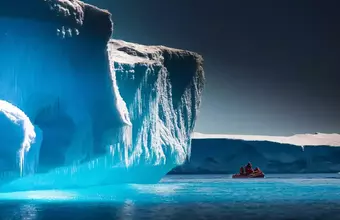
Expedition cruises usually sail from Iceland to east Greenland, or up west Greenland.
West Greenland is milder and has more settlements than the east, making it ideal for Inuit interaction. But hunting practices mean you’re more likely to see wildlife in the east, which explains why I was disappointed with how few whales, seals and walruses I saw in the west. I also didn’t expect so little ice – its shingle landscape often reminded me of a quarry.
However, I sailed through Kangerlussuaq fjord beneath the midnight sun; crawled into Sisimiut’s charming turf house; gazed at the spectacular Unesco-listed Ilulissat Icefjord; and chugged on a fisherman’s boat past icebergs that blew me away. Most itineraries stop at Qeqertarsuaq next, for its sparkling black sand beaches. I called at Niaqornat instead, a hamlet of 25 people. Battling mosquitos, I chatted to locals who I’ve kept in touch with. I also strolled around Upernavik’s gallery, church and cemetery; you can meet Inuit at Kullorsuaq’s fish market and ulu knife artisans in Savissivik, too. Few cruisers make it to Siorapaluk, Greenland’s northernmost native settlement.
If sailing up east Greenland, look out for beluga and bowhead whales. You might explore Nansen Fjord or visit the settlement Ittoqqortoormiit at the mouth of Scoresby Sund, the world’s largest fjord. Gawp at icebergs as tall as department stores, Vikingebugt’s basalt columns and hike the world’s largest national park. Myggbukta’s dilapidated whaling and meteorological station is another highlight, as are King Oskar and Kaiser Franz Josef Fjords.
At under $350 per night, Timbavati is a perfect budget option, however, space is often limited in the busier months for the more affordable lodges. A good alternative would be the Klaserie Private Reserve, which is right next to the Timbavati, and is still part of the Greater Kruger reserves, but will likely have more availability throughout the year for a similar budget.
Kambaku is such a special spot for a safari! I love it because the rooms are just incredible – they feature a lot of glass, so you feel directly connected to the wilderness. It’s perfect for finding some peace. The food is also world-class, with amazing wine tastings. It’s good value too – high season rates here are around USD 745 per person per night.
There are many great lodges in the Sabi Sands reserve, but I can’t think of many with as impressive a location as Dulini, situated in prime position on the Sand River. Its location alone makes it my top choice for Sabi Sands. Rates start at around ZAR 28,990 (USD 1,630) per person per night, which is actually pretty reasonable for Sabi Sands and great value.
My pick for Mala Mala Game Reserve is usually Rattray’s Camp where the game viewing is unrivalled, especially for the awesome populations of all the Big Five. But what I like best is the feeling of exclusivity. You’ll only have four guests per safari vehicle and only eight suites in total, so you’re pretty much on your own with the wildlife. You’ll pay around ZAR 37,200 (USD 2,050) per person per night. For your money you’ll get all the expected amenities of a high-end camp: private plunge pools, his & hers bathrooms, and so on, but for me the solitude is the real cincher.
Game viewing at Leopard Hills feels truly exclusive – the reserve borders Kruger National Park but has no fences, allowing animals to roam freely. I’ve often seen leopards here, sometimes right near the suites or even from my private deck. Rates are punchy: ZAR 24,900 (USD 1,400) per person per night. But for that you get personal, five-star service, world-class rangers and food that is out of this world – my clients rave about the unique dining experiences like traditional doma dinners, or a private meal under the stars.
My top pick in Sabi Sands is Sabi Sabi Earth Lodge. I have been visiting and sending clients to this lodge for over 25 years, and the feedback on the accommodation and food has always been superb. The rangers and trackers are generational, so in essence they are following in their fathers and grandfathers’ footsteps. You’re almost guaranteed the Big Five, but the rangers and trackers offer so much more, as their knowledge goes so deep.
At ZAR 39,000 (USD 2,190) per person per night, it doesn’t come cheap – but if it fits your budget, it’s money well spent.
Kicheche Laikipia, with only six tents, offers an incredibly intimate experience. It’s a great spot if you’re looking for a quieter, more personal safari. The wildlife here is abundant, and what I love about this camp is the chance to see not just the big cats, but also the incredible birdlife and other species unique to the area. The camp’s location allows for both excellent game drives and walking safaris.
Best for: Rhino conservation
With just seven tents, Porini Rhino Camp is wonderfully intimate and it’s situated in a fantastic location for rhino sightings. The fact that it’s within the expansive 90,000-acre Laikipia Conservancy means you're surrounded by incredible wildlife but without the crowds. And their efforts for rhino conservation is especially rewarding: during my stay, I had the privilege of seeing both black and white rhinos up close, and it’s always one of those moments that sticks with you. It’s not just about the rhinos, though; there’s a great variety of wildlife here, and the camp is in the heart of it all.
Best for: Masai Mara walking safaris
Porini Lion Camp, in the Olare Motorogi Conservancy, is small and delightfully intimate. With just ten tents, it feels very personal, and you really get to know the staff and the area. The camp is great for game drives and walking safaris, and I always find the chances of spotting big cats especially high here. It pairs very nicely with Saruni Basecamp during migration river crossing season – I usually recommend three nights in each.
Best for: uncrowded migration viewings
Located in the Mara North Conservancy, the 17-tent Saruni Basecamp Mara has an amazing position right on the edge of the Reserve on the Talek River and is has some stunning views. The camp achieved world fame in 2006 by hosting Barack Obama during his visit to Kenya, two years before he became US president!
I can’t think of many better places to see the wildebeest migration in Kenya, and during my stay, I was blown away by how close we were to the action, with none of the crowds that mar the experience in busier corners of the Masai Mara.
Best for: authentic cultural experiences
In my opinion, Sabache Eco Camp is probably the most interesting and authentic experience in Samburu and beyond. The camp is run by the local Samburu community with a welcoming, down-to-earth atmosphere. The tents are spacious and comfortable with en-suite bathrooms, though if the water’s not working, it’s usually because the monkeys have been tampering with the stopcocks…
I’ve stayed here several times, and I always enjoy the peace. The best rooms are just above the dining area – a bit of a climb but with great views. On one of my visits, I had the incredible experience of seeing a small herd of elephants quietly moving through the camp under the cover of night. It was surreal, catching glimpses of these enormous creatures by the light of our head torches.
For a real adventure, I’d recommend fly camping at the summit of Mount Ololokwe. Watching the sunrise over the Mathews Range and Mount Kenya is unforgettable. Plus, the vultures soaring past on thermal currents are a sight to behold.
If you have time, visit the nearby Reteti Elephant Sanctuary. It’s a short drive from Sabache, and you can watch the Samburu team feed orphaned elephants and see how they prepare the milk formula for them.
Best for: wildlife enthusiasts and unique experiences
I usually recommend the authentic and intimate Elephant Bedroom camp for visitors coming to Samburu.
The camp is set in a perfect location, right on the Ewaso Nyiro River, with sweeping views that are hard to beat. The tented rooms are raised on stilts, which gives you an extra sense of being immersed in nature. It’s one of the few places where you can hear the sounds of elephants right outside your tent, as they often wander through or graze near the camp, and since it’s unfenced, you’re really part of the wilderness.
One of my most memorable moments was when we were having lunch below the main terrace by the river and had to quickly abandon it when an inquisitive elephant came to join us. It's those kinds of moments that make this place special.
Sundowners after the afternoon game drive are always a delight, as you reflect on the day while surrounded by the sounds of the bush.
The Maasai Mara is the most iconic wildlife ecosystem in Kenya, possibly all of Africa. But my biggest tip for visiting the Mara is to stay in one of the conservancies dotted around and adjacent to the Mara. These offer a more exclusive and intimate safari experience, with fewer vehicles and a chance to see wildlife in a more peaceful setting.
The Mara North Conservancy, where Saruni Basecamp is located, offers incredible river views and excellent opportunities to witness the migration.
The Ol Pejeta Conservancy is famous for its black rhinos and as the guardian of the last northern white rhino anywhere on earth. Despite lying on the equator, its 1,900 metre elevation gives it a cooler highland climate that contrasts with the surrounding arid landscapes.
I find it a wonderful complement to places like Samburu, especially if you want to see a different side of Kenya’s diverse ecosystems. The conservancy’s cooler early mornings and evenings mean you’ll want to dress in layers. One of my favourite spots there is Morani’s restaurant, named after a rhino, which offers a unique dining experience within the conservancy itself. The intimate camps Porini Rhino and Kicheche Laikipia offer wonderful opportunities to get close to rhinos and other wildlife, all while avoiding crowds.
I always recommend Mount Ololokwe for visitors looking for something a little different. This sacred mountain of the Samburu people rises out of the arid desert lands in north-eastern Kenya, making it a dramatic and striking feature in the landscape. I’ve always found it fascinating because it’s not just about the views, it holds a lot of spiritual significance to the local Samburu people.
The mountain itself is a basalt formation that’s visible from miles away and forms an iconic landmark over the Samburu National Reserve. Every time I see it, it’s impossible not to be struck by its imposing presence over the plains. I’ve also trekked up the mountain, and while it’s a fairly challenging climb, the reward at the top is worth it. From the summit, you get panoramic views of the surrounding desert landscape, the Matthews Range, and beyond.
The Samburu National Reserve is one of my favourite parts of Northern Kenya, thanks to its extraordinary landscape and unique wildlife. The scenery here is truly special, with doum palms lining the Ewaso Ng’iro river and the majestic Ololokwe mountain rising dramatically in the distance. This mountain is sacred to the Samburu people, adding a deep cultural layer to the natural beauty. Wildlife here is abundant and fascinating, and I love how you can spot the Samburu ‘special five’: the reticulated giraffe and Grevy’s zebra, both endangered species, along with the Beisa oryx, Somali ostrich, and gerenuk. The gerenuk, meaning ‘giraffe-necked’ in Somali, is particularly striking: it stands on its hind legs to browse high in the trees, its long neck perfectly adapted to this unique feeding style.
Located in the heart of Sawai Madhopur district, Ranthambore National Park is a tiger reserve and former hunting ground of maharajas. A couple of hours drive from Jaipur, it’s home to just under 100 Bengal tigers, as well as leopards, crocodiles, sloth bears and hyenas.
It also includes the neighbouring Sawai Mansingh and the Keladevi sanctuaries. Spread over 400 square km, the wildlife reserve is a combination of dry deciduous forests and open grasslands with more than 500 species of plants.
Ranthambore is one of the most important tiger sanctuaries in India, but the tiger population has reduced due to poaching. However, this is still the best place to spot tigers in India. Make sure you use a reputable guide and respect the animals if you choose to go on safari. You’ll be able to choose from either a canter truck which sits 20, or a more personalised jeep which sits six.
As well as tigers, the park is home to leopards, wild boars, wild dogs, hyenas, wild cats, sambar and chital deer, sloth bears and crocodiles among other wildlife.
Look out for the giant banyan tree near Jogi Mahal -- this gigantic banyan is thought to be the second largest in India and more than 200 years old.
Ranthambore is named after the towering Ranthambore Fort which was built in the 10th century. It stands 700ft tall, with three temples dedicated to Shiva, Ganesh and Ramlalji. There is a colourful Ganesh Chaturthi Fair which is celebrated in the fort’s temple during August/September every year. Look for the ancient Jain temples built in the 12th-13th centuries, the 32-pillared cenotaph and an old mansion called Sameton Ki Haveli.
Sariska National Park is a tiger reserve nestled in the heart of the Aravalli Mountains. Spread over 866 square km, Sariska’s landscape is a combination of thorny scrub forests and rocky landscapes.
Sariska has lost many tigers to poaching over the years. In the last decade, the park has introduced new cubs to the reserve which have successfully integrated into the environment, giving hope that Sariska’s tiger population can grow again.
Besides tigers, the park is home to leopards, wild boars, wild dogs, hyenas, wild cats and many deer. You can also see crocodiles in Siliserh Lake. The park is also rich in birdlife, with plenty of peacocks, crested serpent eagles, vultures and the Indian eagle owl.
Sariska was a hunting lodge of the Maharajas of Alwar and it became a wildlife reserve in 1955. It was part of Project Tiger (a conservation programme launched by the Government of India in 1973 to protect the Bengal tiger from extinction), becoming a national park in 1990.
In recent years, the park’s tiger population has struggled. In 2004, Sariska was found to have no tigers left, leading Rajasthan’s local government to introduce three tigers from Ranthambore in 2005. Controversially, the government also relocated two villages said to encroach on the habitat of the tigers. As of 2018, there are believed to be 18 tigers resident in Sariska.
Sariska is located close to Jaipur at 122km and Delhi at 200km away, which are the closest airports. You can hire a taxi and drive to Alwar and Sariska. The entry fee for a safari cost R470 per person and R400 for video camera. The best time to visit is October to March if you want to avoid the heat.
Previously known as Bharatpur Bird Sanctuary, the Keoladeo Ghana National Park is located in Bharatpur and is almost equidistant from both Delhi (180km) and Jaipur (178km). A UNESCO World Heritage site, Keoladeo is a birdwatcher’s dream and is home to more than 370 different species of bird. Of these, approximately 230 are resident in the park, with the rest migratory.
Known locally as Ghana, Keoladeo is a man-made wetland spread over 30 square km. Created by Maharaj Suraj Mal more than 250 years ago, the park was previously a hunting ground for kings and was used as a duck shoot during British rule.
Visitors come to see painted storks, cormorants, cranes and several species of eagle. While in the area, visit Lohagarh Fort, which contains palaces, museums and cultural artefacts.
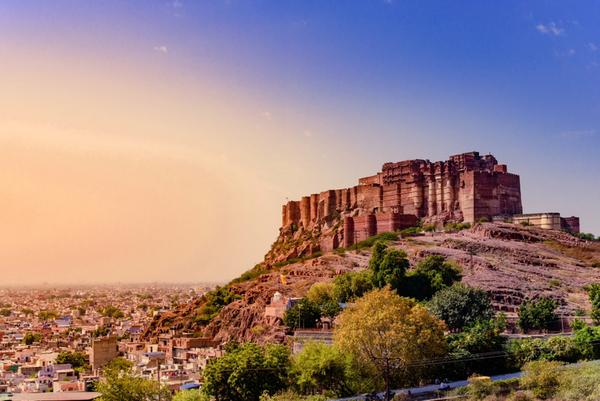
Rajasthan is India’s royal state. Dubbed the ‘Land of Kings’, its rich history can be traced back to the Indus Valley Civilisations of 2000 BCE, with excavations in Bundi showing prehistoric settlements.
However, it is the Rajputs for whom Rajasthan is best known. Beginning in the 9th century, this dynasty gave Rajasthan both its initial name of Rajputana and its most profitable period. The Rajputs were a cluster of different communities and clans who came together to share a common ideology and culture, synonymous with being a warrior clan.
The two Rajput kingdoms that stood out were the Sisodias of Mewar whose capital was Chittorgarh (and later Udaipur), and the Rathores of Marwar with Jodhpur as their capital. Many more existed in the region, often fighting against each other. In Indian history, Rajputs are synonymous with tales of chivalry, romance and flamboyance, as told through folk tales.
But the various Rajput clans who set up small kingdoms slowly emerged as a combined force. They were in almost constant conflict with the Mughals, with things coming to a head in the 16th century with Mughal Emperor Akbar. He had married a Rajput princess and formed alliances with some rulers, but the Sisodias and Rathores refused to countenance an allegiance. A 1526 battle saw Akbar take Chittorgarh, with the town’s women famously self-immolating to preserve their honour.
In the 18th century, The British East India Company convinced many of the Rajput states to join them, forming an independent state with the new name of Rajasthan. Most of the rulers became vassals of the British Raj. There were around 19 states which eventually merged into Rajasthan.
Today, Rajasthan is known for its royal history, filled with colour, valour and courage. Remnants of its past remain in its rich traditions, folklore and crafts. Its imposing palaces and forts remain a trademark of Rajasthani architecture, set in the vast desert and mountains that surround it.
Kicheche Valley Camp sits in a quiet valley above the Moliband stream, surrounded by thick vegetation that draws wildlife in close and keeps vehicle movement subdued.
The camp is deliberately small, with just six tents, and that scale makes a difference. It keeps the atmosphere calm and allows guiding to be consistent throughout a stay. Guests are assigned a single guide, which helps build continuity and avoids the stop-start feel that can come with rotating drivers.
The tents are comfortable without being overworked. Each has proper en-suite facilities with hot water heated by wood burners, filtered drinking water, and enough space to spend time in camp without feeling confined. The layout keeps tents private while still close enough to the central area to retain a sense of shared experience.
Game drives are uncrowded, night drives and guided walks are permitted, and there is enough flexibility to spend longer with sightings rather than moving on quickly. During the migration season, full-day excursions into the Maasai Mara Reserve are possible, but much of the value lies in staying within the conservancy itself.
The Kahayan River, immediately east of Sebangu National Park, is a real hidden gem which doesn't feature highly on most 'mainstream' orangutan-spotting itineraries. The main reason I recommend the Kahayan River to almost anyone who visits Indonesian Borneo is because it's here that you can combine wildlife spotting with real and meaningful cultural interactions with the indigenous Dayak people which is, I believe, key to ensuring the long-term survival of both the orangutans and the people who live here.
You access the Kahayan River from the town of Palangkaraya, which is close to the forested island of Pulau Kaja. This is a pre-release habitat for rescued orangutans managed by the Borneo Orangutan Survival Foundation, and it's possible to spot orangutans from the river. Downstream from Palangkaraya are Dayak villages of Bukit Rawi, Sigi Tumbang Nusa and Pilang, where you can learn about indigenous religion, cultures and traditional livelihoods. At night the captain will simply find a sheltered location on the bank to moor the boat – it's a true expedition!
If you're solely interested in tracking orangutans, the Kahayan River area might not be for you (although it can be easily combined with a visit to nearby Sebangu National Park). However, if you're remotely interested in traditional culture and the interaction of cultural preservation and wildlife conservation, I can't recommend this area highly enough.
“One of the natural wonders of the world”, according to the UK’s Orangutan Foundation, Taman Nasional (National Park) Tanjung Puting is home to the world's largest population of wild orangutans and represents their best hope for survival.
It was at Tanjung Puting in 1971 that leading orangutan authority Dr Biruté Galdikas established the Camp Leakey research station — an instrumental step in bringing the plight of the park’s most famous resident to worldwide attention.
Set amid the largest swathe of coastal tropical heath and peat swamp forest, which used to cover much of southern Borneo, Tanjung Puting started out as a game reserve in 1935 before becoming a National Park in 1982.
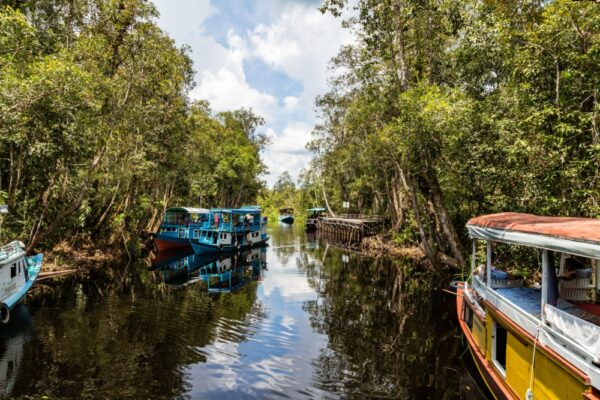
The best way to experience the wonders of Tanjung Puting is on a traditional klotok (houseboat) puttering gently along Sungai Sekonyer as you search for pot-bellied macaques, hornbills and the odd crocodile.
Starting from the Kumai river port in the central Kalimantan city of Pangkalan Bun, your guides will typically stop at three main feeding stations within the park, where you will get to experience semi-wild orangutans during feeding sessions. The best option for this is at Tanjung Harapan, but you’ll also stop at Pondok Tangui. Your final destination will be Camp Leakey, a 4-4 ½ hour journey upriver.
From the docking point, be prepared for a 45-minute walk to the first feeding platform at Camp Leakey, on a flat and well-maintained path. Here, as well as orangutans, you will see Bornean bearded pigs, gibbons and mangrove-loving proboscis. Camp Leakey is your best chance to see orangutans — most were released around here and stay close to the site. In general, orangutans around Camp Leakey are the most relaxed around humans. Look out for Tom, the camp’s alpha male (but if you do see him, be careful not to engage in a staring match).
Once feeding time is over, you can explore the camp’s excellent information centre. Tanjung Puting offers plenty of other activities including birding, hiking and wildlife tours — as well as cultural trips to remote villages.
You'd have a hard time calling anywhere in Zambia "touristy" but if you want to get truly off the beaten path there are some hidden gems to be found.
Of all the country's national parks, Luambe, Lukusuzi, West Lunga, Sioma Ngwezi, and Nyika Plateau have wildlife, but are relatively undeveloped in terms of tourist infrastructure and accommodation.
Isangano, Lavushi Manda, Lusenga Plain and Mweru Wantipa have little management, very few facilities, and limited wildlife populations. If you're very intrepid or a super keen birder and can find a specialist to make your travel arrangements, they may be worth considering.
Lusaka National Park, just outside the capital, opened in 2015 and is the country’s newest park.
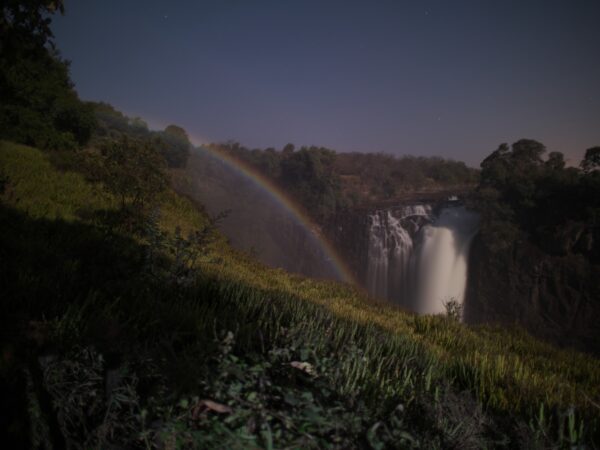
Lunar rainbows are formed by the light of the moon rather than the sun and are much fainter and more elusive than a regular rainbow. Victoria Falls is the only place in Africa, and one of only a handful of places in the world, where this incredible natural phenomenon occurs – and something surprisingly few people know about!
You can see the lunar rainbow between April and July during the full moon. I find there’s something magical sitting at one of the vantage points and waiting for the moon to rise. They’re far less vibrant than a regular rainbow but lunar rainbows show up clearly in photos taken with a long exposure.
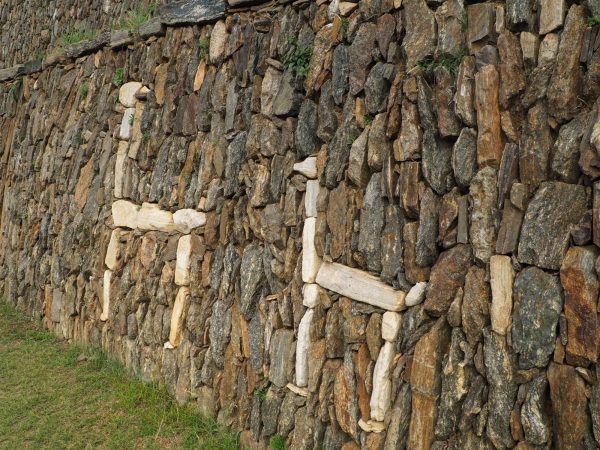
Look along the agricultural terraces, particularly in sector VIII of Choquequirao, and you’ll see white motifs of llamas and human figures built into the masonry. There are at least 25 such images, mainly of adult llamas with their young. The human figures may represent shepherds.
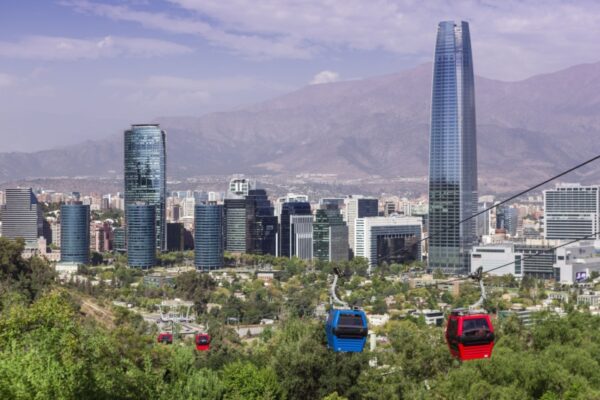
Take the cable car or walk up to San Cristobal Hill for a stunning panorama of the city. It’s a great way to see the city before going on to explore its vibrant street art, galleries, beautiful parks and colonial architecture up close, perhaps via a bike tour. Look out for Plaza de Armas and La Moneda Presidential Palace.
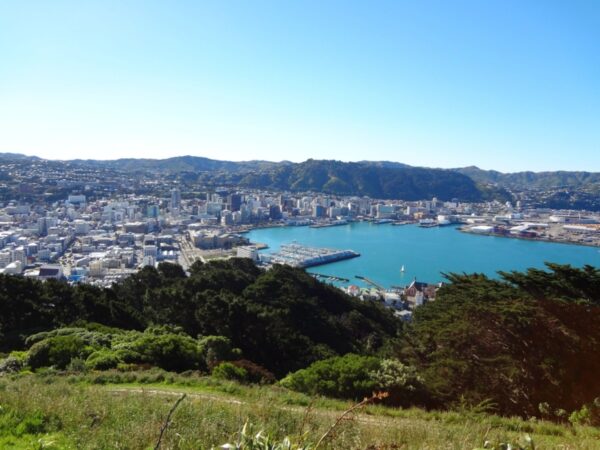
Venture to the top of Mount Victoria and you’ll be rewarded with sweeping views of New Zealand’s capital, Wellington. The Mount Victoria Lookout is a relatively easy walk from the city centre, along woodland trails that were used in The Lord of the Rings.
Just how good a birdwatching site is the Manú region? According to the British birding expert Dominic Couzens, it’s one of the best in the world. Couzens, a highly-praised author and regular contributor to the BBC in London, includes Manú in his book The Top 100 Birding Sites of the World, ranking it alongside such places as the Florida Everglades, the sub-Antarctic islands of South Georgia, the Rift Valley in Kenya, and the Serengeti in Tanzania.
The reason why is the sheer number of species that make their home in this remote but still accessible part of the Peruvian Amazon. It’s an area of amazing biodiversity. The national park is teeming with parakeets, parrots, macaws, toucans, egrets, hummingbirds, and eagles, including the harpy eagle. Waiting for you are quails, grebes, cormorants, storks, and vultures, including the king vulture. There are ospreys, hawks, falcons, cuckoos, owls, and woodpeckers... the list goes on and on. Suffice to say there is enough here to keep the most dedicated birdwatcher enthralled for a lifetime.
Unfortunately, most visitors to Manú have only a few short days or weeks to appreciate what’s on offer. And what makes this region extra special is that birdwatching is so easy here. The area is relatively easily reached, but it is still a remote and wonderful wilderness. Because humans have had so little impact on the surroundings, the birds are confident, less shy than they might be in other parts of the world, and that makes them readily observable.
When to go
There are really only two seasons in Amazonia: rainy and dry. In the rainy season, from January to June, torrential downpours flood the rivers and cover the forest floor in muddy water. There will be periods of sunshine, but showers occur almost every day. The average temperature is about 80°F. Animals and birds tend to shelter from the rain just as we do, but there are advantages to coming at this time of year. High water levels mean that boats can easily navigate flooded tributaries and forests, getting tourists to otherwise unreachable destinations. Just remember to pack your rain gear!
The dry season is from July through December, when the heat is steaming and the humidity is smothering. It can be uncomfortable for tourists. There may still be showers, but the generally lower rainfall means that water levels will be lower. That, in turn, means that trails will be clearer to follow and mosquitoes less troublesome. The dry season is ideal for hiking and fishing. However, remember that the Amazonian climate is variable. There can be very nice days in the rainy season and wet days in the dry season. Overall, the best option is probably between mid-April and mid-December.
Naboisho Conservancy
Eryri National Park and the Surrounding Coast
Serengeti Green Camp
Pembazoni Camp
Rhino Lodge
Manyara Green Camp
Borana Lodge
Borana Conservancy
Solio Game Reserve
Ngare Ndare Forest
Olepangi Farm
Lolldaiga Hills Conservancy
Safari Series Camp
Ol Malo Lodge
Tumaren Camp
Kicheche Mara Camp
Changa Safari Camp
Spurwing Island
Greenland
The best budget options around Kruger
Kambaku River Sands
Dulini River Lodge
MalaMala Rattray’s Camp
Leopard Hills
Sabi Sabi Earth Lodge
Kicheche Laikipia
Porini Rhino Camp
Porini Lion Camp
Saruni Basecamp Mara
Sabache Eco Camp
Elephant Bedroom Camp
Mara North Conservancy
Ol Pejeta Conservancy
Mount Ololokwe
Samburu National Reserve
Safari in Ranthambore National Park
Explore Ranthambore Fort
Spot tigers in Sariska National Park
Birdwatching in Keoladeo National Park
Rajasthan
Kicheche Valley Camp
Naboisho Conservancy
Indigenous cultures & conservation on the Kahayan River
Lakshmi is a writer and travel journalist with 20 years' experience writing on travel within India and beyond, with bylines for the Lonely Planet, the Times of India, The Hindu, and many more.
Lucy is a co-founder of Kenya Treks, a niche tour operator specialising in trekking and hiking trips to some of Kenya's offbeat hidden gems. She is a fellow of the Royal Geographical Society and has been organising adventurous travel to Kenya since 2009.
Born and raised in Sydney, Australia, before moving to Africa at the age of 21, Sarah Kingdom is a mountain climber and guide, traveller, yoga teacher, trail runner, and mother of two. When she is not climbing or traveling she lives on a cattle ranch in central Zambia. She guides climbing and trekking trips worldwide, including taking climbers up Mount Kilimanjaro numerous times a year.
Sarah is an expedition cruise expert who has written for Condé Nast Traveller,National Geographic Traveller, Adventure.com, the FT and The Independent. She is also the former editor of World of Cruising and Wanderlust Magazine, deputy of Time Out Abu Dhabi and Where London and author of London Almanac (2010) and Culture Smart! The Essential Guide to British Customs & Culture (2024).
Journalist-travel writer and photographer, Tamara Thiessen is an expert on Borneo with her 4th edition Bradt Travel Guide to the island due in 2020. France-Australia based, she works for newspapers, travel & leisure publications and in-flight magazines worldwide and is the author of several books
I'm a photographer, so I need a full seat in the safari vehicle, and my husband is a birder. What are the likely costs and best locations for birding and safari?
Answered by: Rory Sheldon
Off the bat, the Okavango Delta is the must-see destination, especially for a photographer. Prices range across the board: in low season you're looking at an entry point of about USD 400 per person per day, with high season coming in around USD 900.
For photographers and birders, I'd suggest 3 nights in the Linyanti region and 3 nights in the Okavango Delta with Kwando Safaris. They have an excellent discount in the low season, and their camps are the best set up for photographers. They also have indigenous guides on all game vehicles, which makes a huge difference.
You'll read online that the best time for safari is the peak dry season, June to September. That's right for classic big-game viewing, but for photography and birding I'd recommend the green season, January to April: bird life is more active, the scenery is spectacular, and prices are much more affordable in low season. If you visit towards the end of March or in April, you could also add Nxai Pan to see the zebra migration, which is great for photography.
Your details are safe and will not be used for any other purpose. By using this service you agree for us to share your details with your chosen tour operator according to our Privacy Policy.
1Your trip
2Complete your request
3Meet your specialist
Find a Photography specialist
Tell us about your trip and we'll find your match
We'll connect you directly with the experts.
Connect with Gaye, Emily, Susan and 3 other Photography specialists.
We'll connect you directly with the experts.
Connect with Gaye, Emily, Susan and 3 other Photography specialists.