The insider's travel guide to Torres del Paine National Park
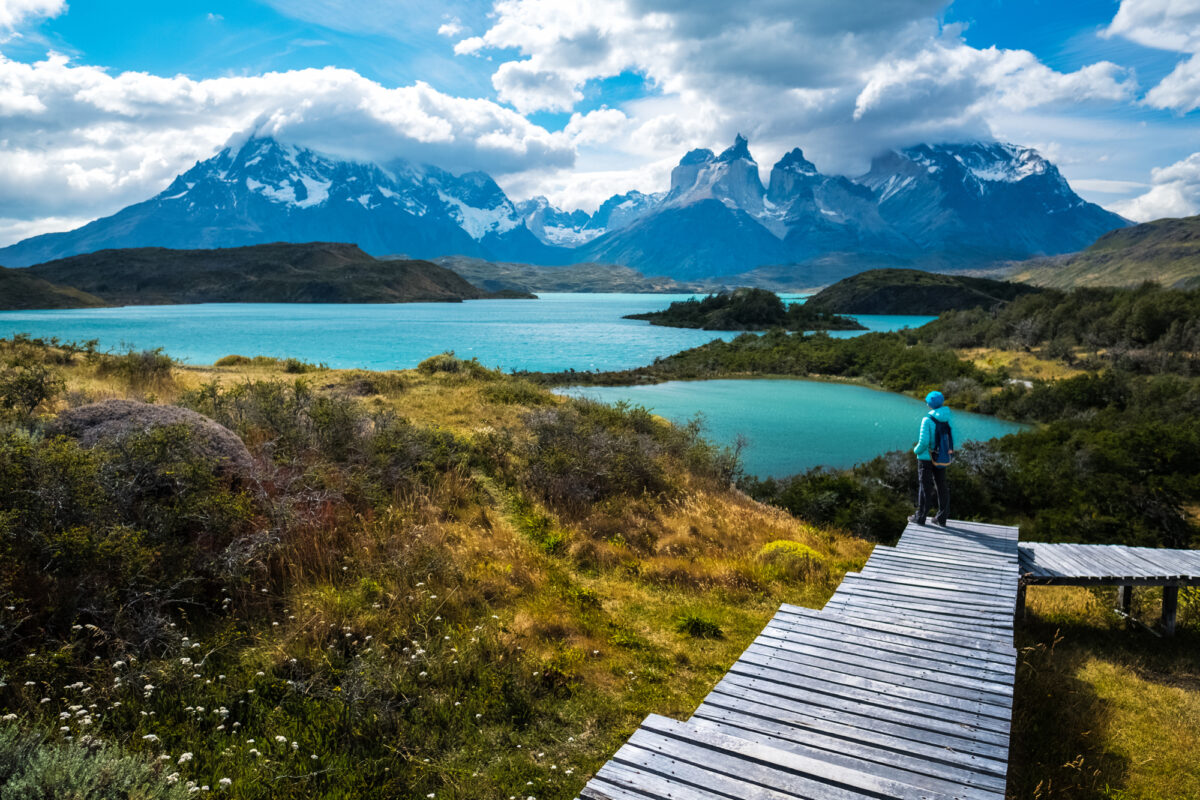
Tucked away in the southernmost corner of Chilean Patagonia, Torres del Paine National Park is a once-in-a-lifetime kind of place.
The national park merits its reputation as a world-renowned hiking destination. It brims with classic routes with postcard vistas and lesser-known trails for solitude seekers. The hiking here ranges from easy to challenging, from short day hikes to long circuits of up to ten days.
There are many ways to experience Torres del Paine. Shoestring-budget backpackers rough it at campsites or in simple dorm-style refugios, packing in all their own food and gear. Mid-range travellers seek the convenience of a guided and fully supported adventure, as well as the company of a small group. Luxury travellers indulge in upscale resorts that offer private, tailored excursions into nature. There’s really something for everyone in the park.
§ 02
Ask our Torres del Paine National Park experts
Real questions, answered by the people who know it
Booking is mandatory for Torres del Paine. You can only hike the W or the Circuit of you have all accommodation booked in advance (and it gets booked out fast, so get this done as far ahead of your planned visit as possible), as well as paying the entrance fee for the national park. This is the case whether you’re camping or staying at lodges, and you will need to show proof of accommodation bookings and having paid the entrance fee in order to enter the national park.
The Circuit can only be walked in an anticlockwise direction. The W can be hiked in either direction, and which you chose will dictate whether you’re hiking against or with a lot of the other hiking traffic. I prefer east to west for the W, which means in the opposite direction from those on the Circuit, and because Glacier Grey arguably makes the best finale.
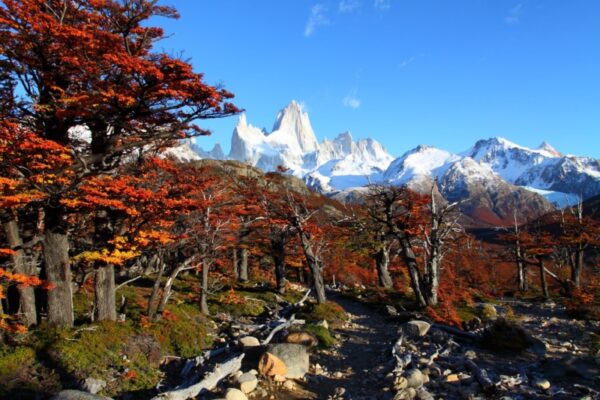
For me it’s the Circuit which eclipses pretty much anything else in Torres del Paine National Park – it’s more remote, less crowded than the W, with views that are even more epic in scale. Not for nothing is it often described as one of the world’s truly great treks. However I also really love the Fitzroy area in Argentina, where the scenery is every bit as amazing, and where unlike Torres del Paine the national park has not allowed the construction of lodges (let alone luxury hotels), meaning overnights are restricted to well maintained campsites. For my money, that gives the place a much more unspoilt and untouched feel.
Torres del Paine National Park has big lodges as well as campsites – not to mention some very upmarket hotels. I prefer using a mixture of lodges and campsites, which keeps costs down a little (and on the northern part of the circuit you’ll have to camp on some of the stages regardless), and having meals at some of the lodges means you can carry a bit less food.
The W and the Circuit as well as the shorter walks in Torres del Paine National Park are well-known and well-used, the routes are well marked, and you’ll find plenty of other hikers on the trail – so yes, hiking independently is fine. I’ve hiked independently on the treks listed above. Whether you go solo or with one or more hikers is up to you and depends on your level of confidence – the northern part of the Circuit is quite remote, for example. If you’re camping, hiking with one or more other people allows you to share the weight of a tent, food and other camping equipment.
Ask a question
Get answers from our independent Torres del Paine National Park experts.
Get a free, personalised answer about Torres del Paine National Park.
You'll receive a reply by email. Questions and replies may be anonymised and reproduced on Horizon Guides.
§ 03
The Torres del Paine National Park atlas
11 picksPlaces & Experiences You Won't Find Elsewhere
Where
What
Distance: 11 miles (17 km)Duration: Six to ten hoursStart/end point: Pehoé LakeDifficulty: Moderate
Torres del Paine’s splendid French Valley (Valle del Francés) is a naturally-formed amphitheatre encircled by sheer cliffs, hanging glaciers and dramatic rock formations. The valley rewards hikers for their efforts with a 360-degree view of the park where the elements and scenery play off each other as if competing for your attention. As you stand surrounded by the valley, the peaks, cliffs and glaciers will make you feel humble and small, and yet energised and intimately connected to your surroundings.
To reach French Valley you’ll first take a catamaran journey across Pehoé Lake, followed by a 1.5 hour hike up glacial moraines towards the valley’s entry point. Some operators also include an easy detour to the Salto Grande waterfalls on the way.
Once in the valley you’ll be bowled over by the 360 degree view that envelopes you as you venture further into the valley until you’re fully encircled. The valley’s geology amplifies the groan and roar of glacial calving as ice breaks off the constantly flowing French Glacier.
You’ll get stunning views of the park’s most impressive formations: the Hoja (Blade), Máscara (Mask), Espada (Sword), Catedral (Cathedral), Aleta de Tiburón (Shark’s Fin) and Fortaleza (Fortress), plus views of Paine Grande, the highest mountain in Torres del Paine at 2,884m (9,462ft).
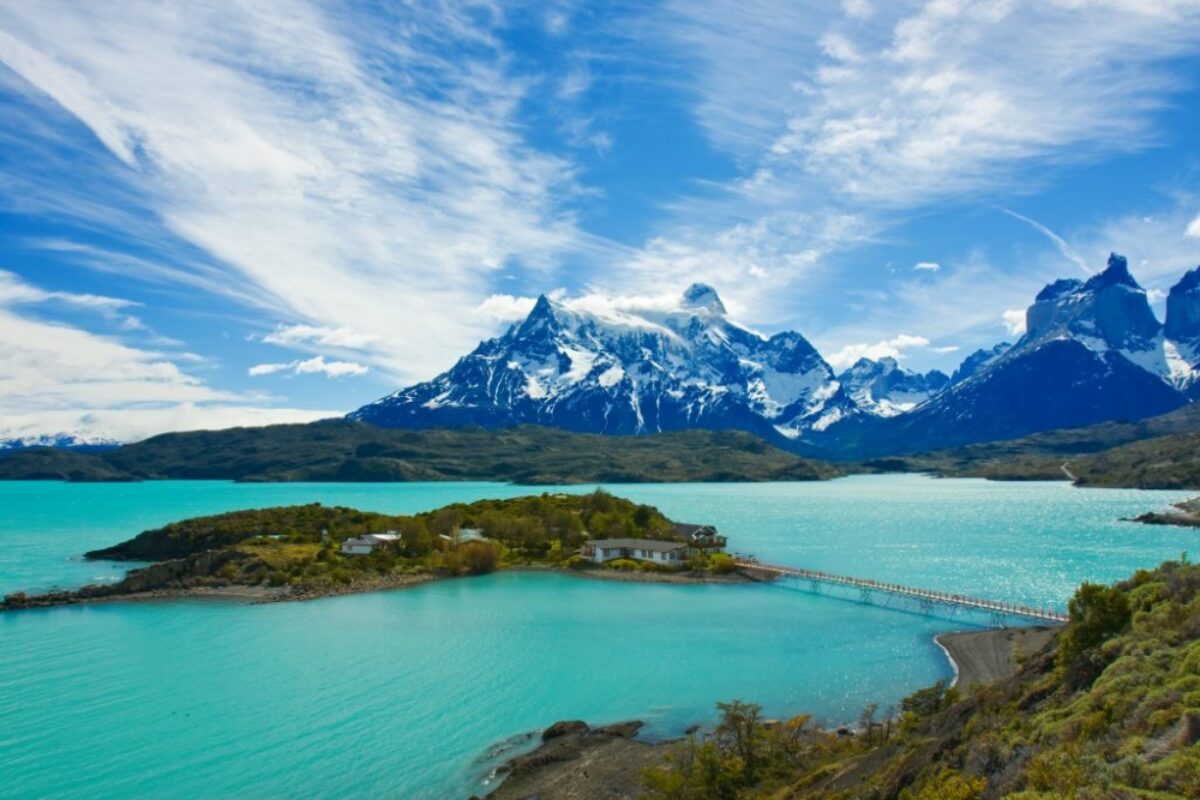
The lakes of Torres del Paine get their otherworldly, milky-blue hues from particles of "rock flour”, caused by the steady grinding of rock and ice under the region’s vast glaciers and ice sheets.
Like most of Torres del Paine’s main sights, the French Valley is best accessed during the warmer months. As it gets cold, severe weather can come without warning and completely blanket the views of the valley.
Distance: 7.5 miles (11km)Duration: Six hoursStart / end point: Park entrance or Puerto NatalesDifficulty: Moderate
Seen from afar or studied up close, the exquisite Glacier Grey is a true Torres del Paine highlight. Take in the ice monolith from its lookout point, then come up close and personal on a boat trip that brings you within metres of the intricate puzzle of blue, white, glass and turquoise ice.
Most day hikes follow a trail that leads to a lookout point that affords stunning views of the glacier and offers a sense of its immense size. Trips may or may not complete the entire walk, as the trail involves several ascents and descents that not everyone will be prepared for. Check with your operator.
Afterwards you’ll board a small boat on Lake Grey to sail among the icebergs right up to the glacier’s ice wall. From up close you’ll see countless hues of blue and impossibly complex ice structures. If you’re lucky you’ll see a glacial calving, where ice breaks off from the constantly moving glacier.
As with the rest of Patagonia, the weather here is changeable and boat trips may sometimes be cancelled depending on conditions. Trips with fewer than the minimum 10 passengers may also be called off. Check with your operator on their contingency plans.
Distance: 3.7 miles (6 km)Duration: Four to six hoursStart/end point: Park entrance or Puerto NatalesDifficulty: Moderate
I think this short hike packs more of a punch than any other short walk in Torres del Paine National Park, and is a must whether or not you’re doing either the W or the Circuit. This is the view of the famous ‘horns’ of Paine, with a mighty waterfall thrown in for good measure.
The trail follows the northern shore of Lake Nordenskjöld between two accompanying and juxtaposing sights. On the one hand, the multi-shaded drama of the Cuernos (horns), jutting up into the sky; and on the other, the arresting blue of the lake.
This fairly flat hike holds a lot of appeal as it fringes Lake Nordenskjöld with its startling shades of blue.
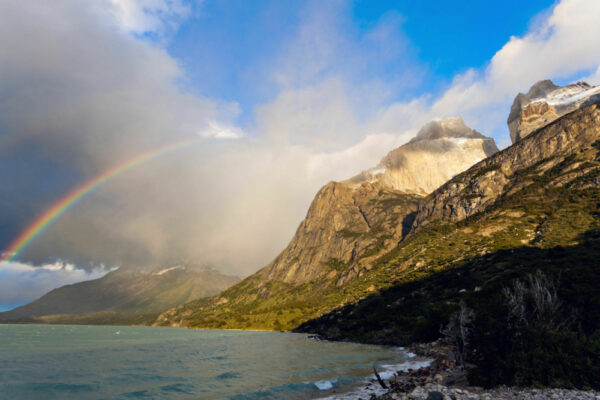
If you’re looking for one of the best photo ops of Torres del Paine’s iconic peaks, look no further. This hike has it. Paso Los Cuernos hiking route holds some of the best views of the iconic Los Cuernos. The picturesque cuernos are made of black slate sitting atop a grey granite base. This layered combination of colours, along with their twisted horn shape, win them their fame.
It’s common for hikers to complete this trek between Refugio Los Cuernos and one of the park’s hotels. It’s also part of the W and Paine Circuit trails, so you’ll see regular traffic during spring and summer.
Distance: 11 miles (17 km)Duration: Seven to ten hoursStart/end point: Park entrance or Puerto NatalesDifficulty: Moderate
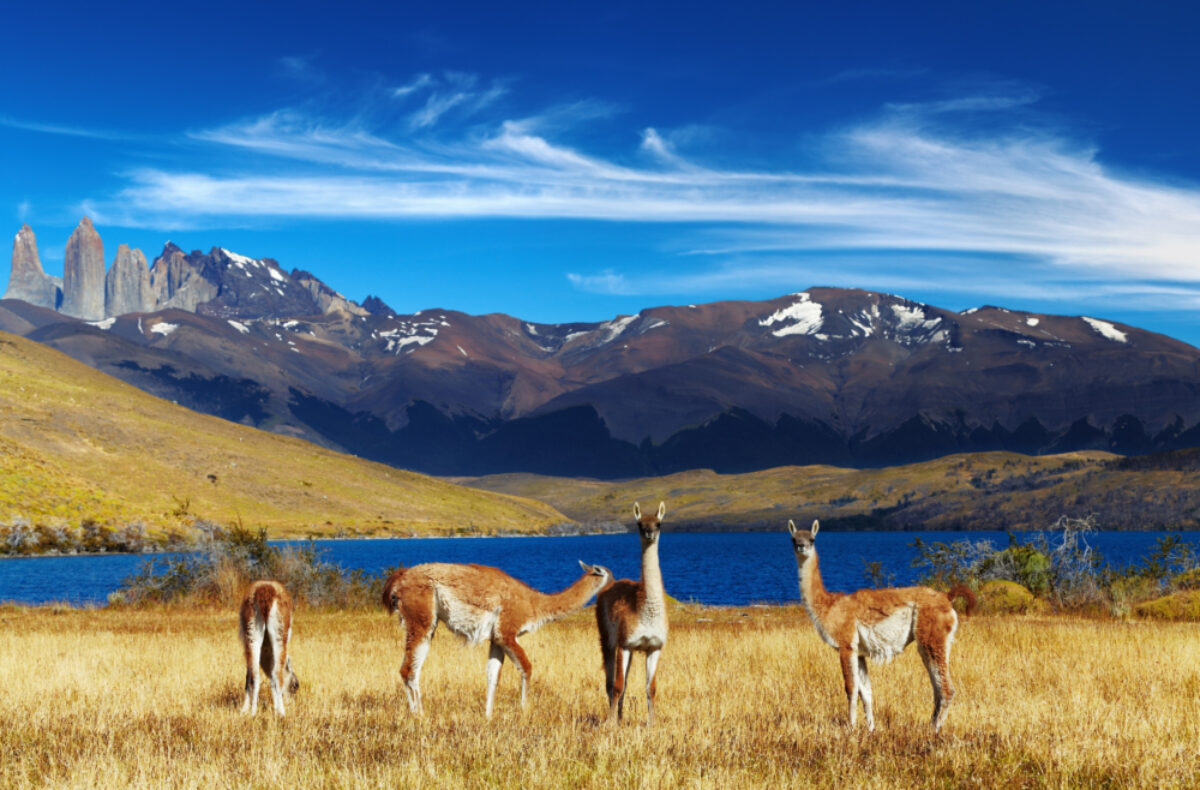
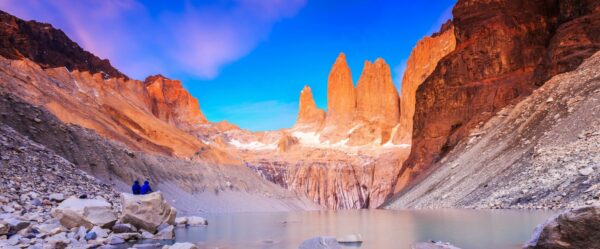
If you don’t have time for the W or the Circuit but want a glimpse of that amazing view of the granite towers which give the area its name at dawn, this one might be for you. However it’s a long ascent, and frankly if you’re going to Torres del Paine National Park and hiking this which forms part of the W anyway, I think it would be an enormous shame not to do the whole thing!
Distance: 47 miles (75 km)Trek duration: Four to five daysStart / end point: Park entranceDifficulty: Moderate to strenuous
Torres del Paine is Chile's big-hitter, pulling more trekkers than the rest of the country combined. The views are unparalleled, trekking infrastructure and services are world-class, the only downside is the park’s seemingly unlimited appeal which means you’ll be sharing the views with plenty of other hikers.
This shorter version of the Full Circuit includes many – but definitely not all – of its highlights, and is the busiest section of the national park. Despite preferring the Circuit because of the wonderfully remote northern half of the trail, the W is still an incredible hike, and given the chance I’d do it again in a heartbeat.
Distance: Approx. 75 miles (120 km)Duration: Eight to ten daysStart/end point: Amarga Lagoon ranger stationDifficulty: Strenuous
Despite the huge number of visitors, and Chile’s insistence on building a large number of lodges as well as luxury hotels within the national park, I still consider this one of the most breathtakingly beautiful hikes on the planet.
If your hiking boots demand more, this is the trek for you. You’ll spend days with rivers, glaciers, mountains, and take in wild, rugged views which stretch out as far as you can see. The Full Circuit makes its way around the entire Paine Massif, taking in the same highlights as the W Trek – plus so much more.
This route brings together some of Patagonia’s world-renowned ecosystems whilst also giving a good dose of city life. Start with a tour of Buenos Aires, the home of Tango, before flying down to the scenic Patagonian town of El Calafate. From here you will visit the monumental Perito Moreno glacier and Glaciers National Park, where you can hike amidst glacial lakes, forests and the towering granite monoliths of El Chaltén, Cerro Torre and Fitzroy. Stay at a traditional estancia before travelling over to Torres del Paine National Park in Chile. Here you can enjoy hiking, cycling and nature watching before flying from Puerto Natales to Santiago to end your journey.
This suggested 19-day cruise from Chile to Antarctica is a great route for seeing the highlights of Chilean Patagonia and Antarctica in one expedition.
The journey begins in Chile's capital, Santiago, before heading south to Punta Arenas in Patagonia, across the Drake Passage towards the Antarctic Peninsula. After exploring the White Continent the trip heads back north back through Patagonia to explore the incredible fjords of Cape Horn and Torres del Paine national park.
Explore the highlights of Chile with an additional cruise of the spectacular Patagonian fjords. From Santiago fly north to experience the otherworldly Atacama, the driest desert on earth. Then head south to the Lakes District, a landscape of glacial lakes and mountains. From here head even further south into Patagonia itself where you can spend several days hiking, biking and enjoying the remote beauty. Finally board a small-ship cruise to sail around the southern edge of Tierra del Fuego to legendary Cape Horn.
A two-week route that somehow manages to pack all of Chile's top highlights into one manageable trip. After a couple of nights in Santiago head south to Torres del Paine National Park for several days of easy-going adventures in wild Patagonia. From here wind your way back north, calling in at Puerto Natales, the stunning Lakes District and Chiloé Island. From here bunny hop to the far north and explore the strange landscapes of the Atacama Desert before heading back to Santiago and on to Colchagua Valley for a cycling tour of the region's wineries.
If your hiking boots demand more, the Torres Full Circuit, or “O Route” trek is the one for you. This is the pinnacle of the Chile trekking world. You’ll spend days with rivers, glaciers, mountains, and take in wild, rugged views which stretch out as far as you can see. The route makes its way around the entire Torres del Paine Massif, taking in the same highlights as the W Trek – plus so much more.
This version of the Full Circuit, which goes via the Oggioni Pass, is the most interesting – and challenging – version of the trek. This is a strenuous and semi-technical route. Expect unstable terrain, strong winds, and variable weather, including possible snow even in summer.
As you might expect, the terrain is diverse and because of the length of the trek and the fact that the number of hikers is (relatively) low, there’s more chance to enjoy some solitude along the way.
You will see all the W Trek highlights, plus the John Gardner Pass, the Dickson and Los Perros Glacier, and the Los Perros River Trail.
Your details are safe and will not be used for any other purpose. By using this service you agree for us to share your details with your chosen tour operator according to our Privacy Policy.
1Your trip
2Complete your request
3Meet your specialist
Find a Torres del Paine National Park specialist
Tell us about your trip and we'll find your match
We'll connect you directly with the experts.
Connect with Martha Cohen, Maria Abud Campomar, Marie-Lou Goullieux and 3 other Torres del Paine National Park specialists.
We'll connect you directly with the experts.
Connect with Martha Cohen, Maria Abud Campomar, Marie-Lou Goullieux and 3 other Torres del Paine National Park specialists.