


Mt. Kilimanjaro
Stand on top of Africa

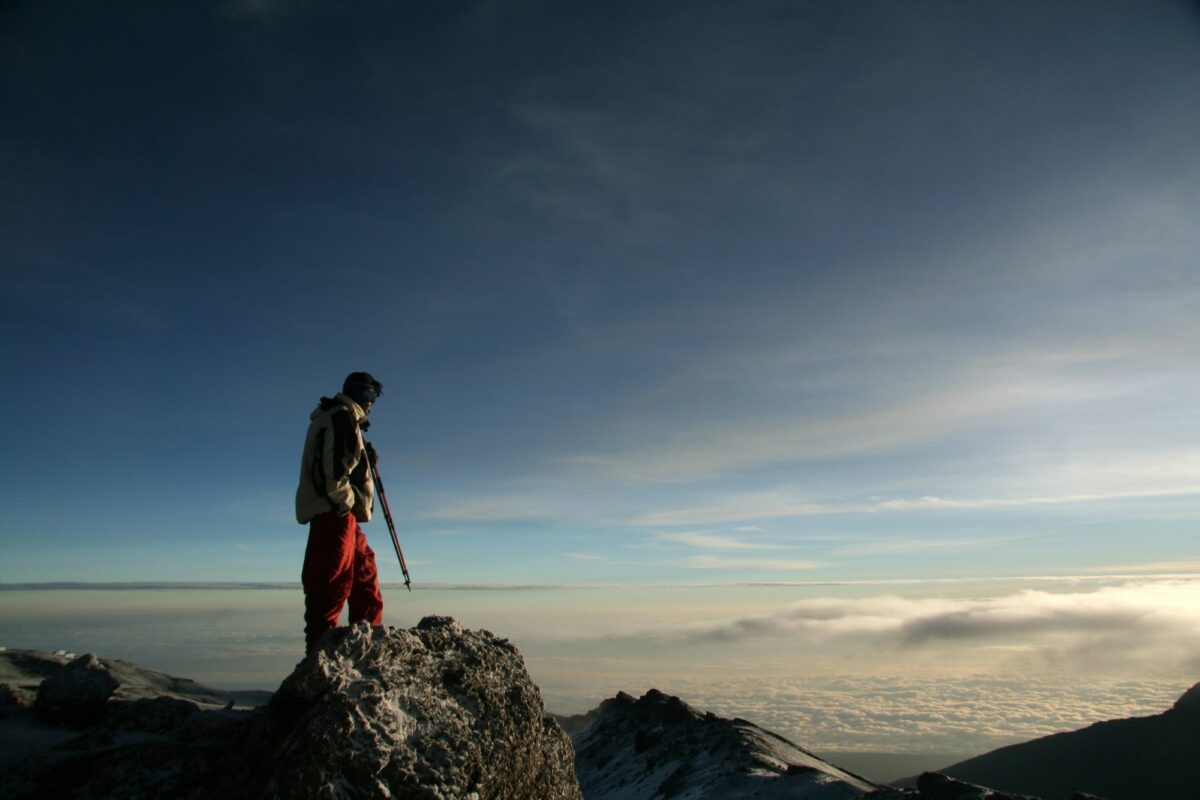
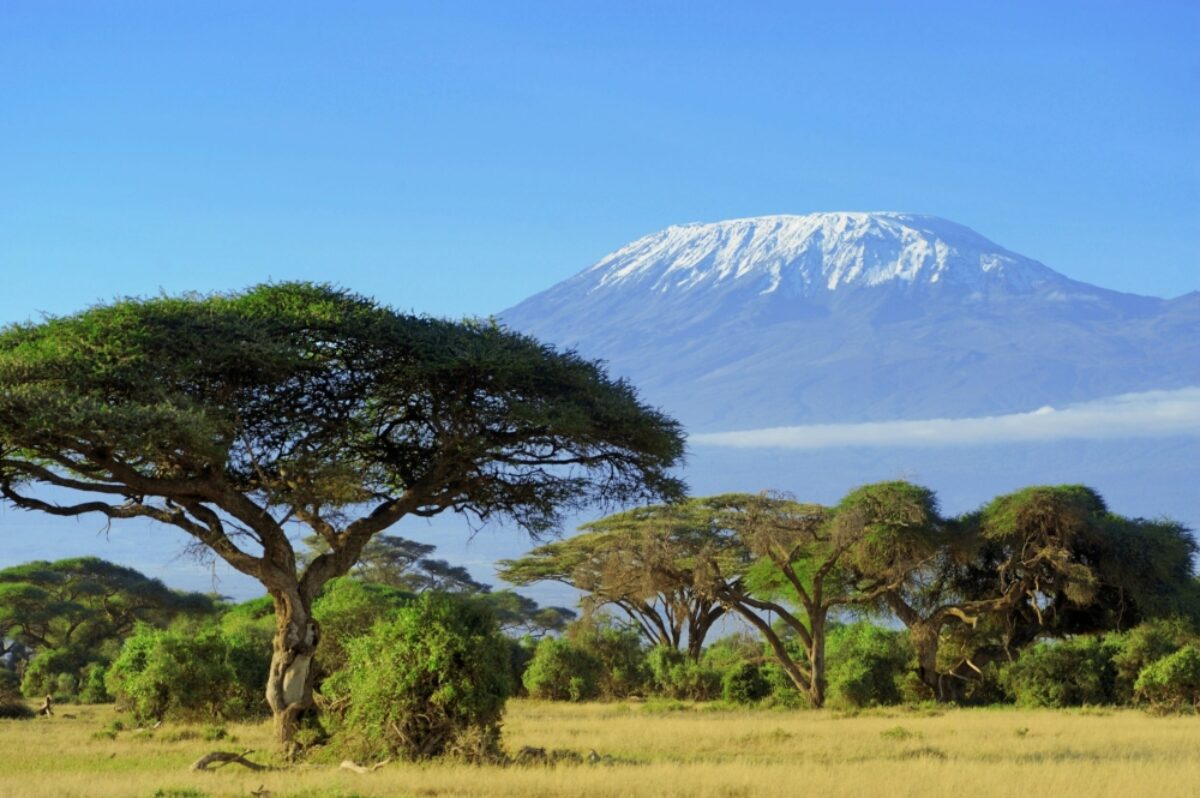
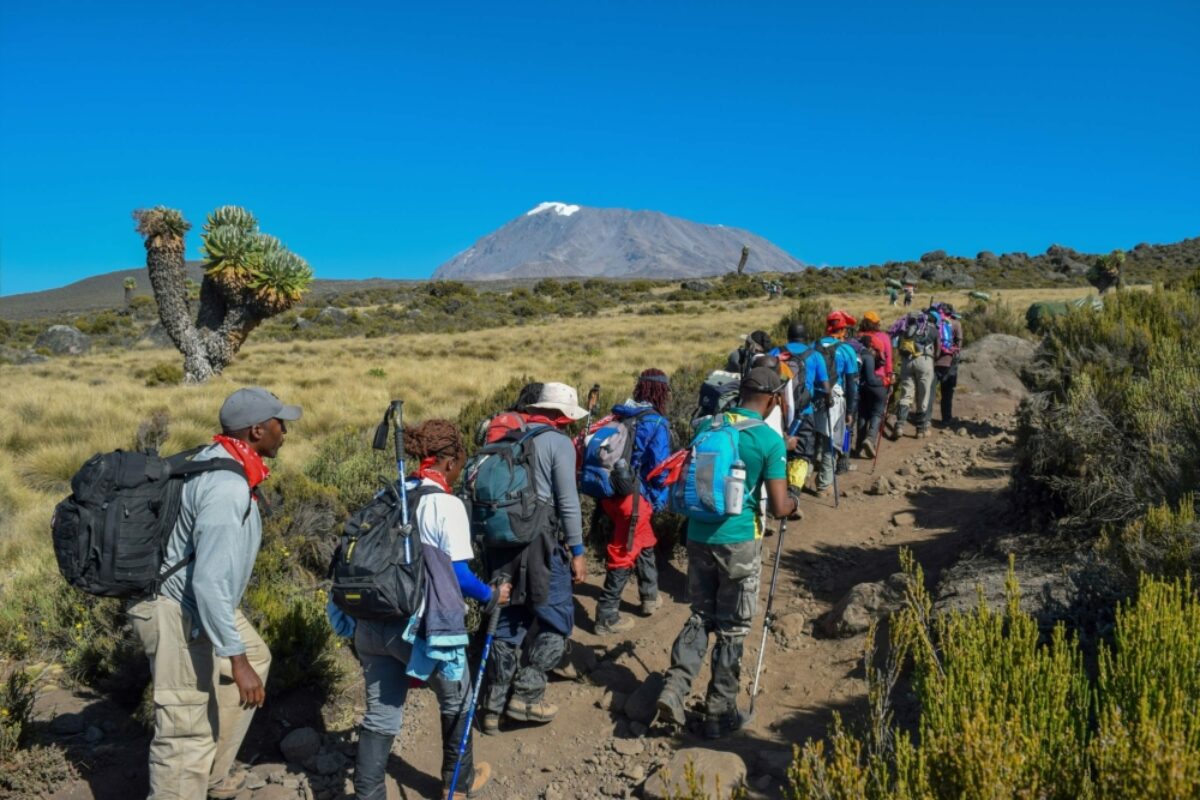
Standing 5,895m high, Kilimanjaro is Africa's highest peak and one of the continent's most impressive sights.
Superlatives swirl around the iconic peak and it’s by far the most popular trekking route in Africa with up to a hundred people a day setting out to stand on the fast-shrinking glaciers atop Africa. Fortunately, there are seven separate routes to the summit which helps keep crowds down.
Along the way, you'll see volcanoes, plenty of birds and experience stunning views.
Hidden gems in Mt. Kilimanjaro

Mt. Kilimanjaro
Kilimanjaro Shira Route

The Shira route, starting on the western edge of Kilimanjaro, is one of the quieter trails up the mountain. It is typically organised as a seven or eight day itinerary. Shira has been largely superseded by the Lemosho Route, and in fact merges with Lemosho on the second day. The defining feature of Shira is that it starts higher than any other Kilimanjaro route, skipping the lower altitude rainforest zone that the other routes all traverse. Personally, I think Lemosho is superior. The only reason you'd do Shira is if you've already climbed Kilimanjaro and you're looking for a different experience, or if you want to skip hiking through the lower altitude zones. The high starting point is what sets the tone for the whole trek. You begin at around 3,400–3,600 metres. It is a tough introduction to altitude because there is less oxygen straight away, yet the body gets a quick reminder of how to acclimatise. If you take it slowly, that initial shock settles and the curve becomes manageable. From Londorosi Gate you drive past the bush and into moorland until you reach Morum Point. In the first two to three hours on foot, some trekkers feel dizziness or a headache. These symptoms are not universal and usually ease with short breaks, water, and steady breathing. If you walk slowly and avoid any rush, the body adjusts. That gentle start makes a big difference. Most travellers spend a pre-trek night in a nearby Maasai village. It adds a cultural encounter, but more importantly it makes the next day shorter and allows an early arrival at Morum Point without time pressure. It is not suitable for anyone with asthma or other breathing complications. I also do not recommend it for people who are physically unfit or for older trekkers who are not at their best fitness level. If you follow the Shira–Lemosho–Machame corridor, you should plan for busy camps like Shira 2 and Barranco. The drive up to Morum Point is part of the experience, and starting early helps you settle into the day before the altitude feels overwhelming.
Read more
Mt. Kilimanjaro
Hike to Horombo huts

Not every hike in or around Kilimanjaro has to be a summit attempt – if you'd like to hike on Kili but don't fancy going for the top there are various other trails you can follow. My favourite is this two-day hike to the Horombo escarpment. The trail begins by following the first part of the Marangu route, and you spend the night at the Mandara Huts. On day two you can hike as high as the Horombo escarpment, and then go back down. Along the way, you encounter narrow trails through the rainforest, amazing views of for example Mawenzi Peak and open moorlands with giant lobelias and groundsels. The ridged trail is narrow as you wander through the rainforest. It’s lush and misty, with the trees adorned with moss. The canopy overhead is alive with birdsongs and a colobus monkey or two. The hike to the Mandara Hut takes four to six hours at a good walking pace, and it's possible to add a one-hour walk to the Maundi Crater to that. If you are lucky, you see tree hyraxes on the way and on a clear day, the views to the east over Taveta and to the northwest of Mawenzi Peak are stunning. On day two you will see the glades of the rainforest and follow an ascending path on the open moorlands towards the Horombo escarpment. Views of Mawenzi and the summit of Kibo are amazing. Look for giant lobelias and groundsels. This hike up takes you three to four hours, then you go five to six hours back down again. You stop at the Mandara Huts for lunch, then hike back to the Marangu Gate where the walk ends and you drive back to the hotel.
Read more
Mt. Kilimanjaro
Kilimanjaro Umbwe Route

I guide a lot of people up Kilimanjaro, and Umbwe is the one route I always describe as the most raw. It is steep from the very first step and stays that way. The ascent is direct, the altitude gain is quick and the terrain keeps you on edge. All these things combine to make it tough. There is little time for your body to adjust, so the physical and mental strain builds early. The real test comes on day two. Many trekkers get their first shock as we leave Umbwe Cave and push up towards Barranco. The ridge is narrow, the trail is rugged and the gradient is unforgiving. You often need to pull yourself up by roots and branches. Weather can switch fast, which adds to the pressure. This section exposes any weakness in fitness and pacing. If someone has pushed too hard on day one or arrived without a good base level, it shows here. There's a danger of arriving with misunderstandings about Umbwe. People hear that it is a short, direct line and think that means a fast, efficient climb. What they meet instead is a route that gives you almost no gentle ground to settle into a rhythm. The acclimatisation profile is brutal. The terrain feels raw and the weather can swing quickly. Many underestimate how relentless it feels. Umbwe suits a certain type of trekker. I recommend it only to experienced climbers or those who want a hard, quiet trail. Good physical and mental endurance is essential and you need to train well in advance. By choosing Umbwe, you give up the easier acclimatisation and scenic variety of Machame or Lemosho. Those routes offer more time to adjust and better odds of reaching Uhuru Peak. For the trekkers who prepare properly, a few tactical choices make a big difference. I always encourage a seven-day plan so we can add more time for acclimatisation. We start walking at 08:00 each day. On the forest ridge the pace must stay slow and steady. I set the rhythm and everyone follows it. An extra night at Barafu helps a lot before the summit push. Hydration, food and listening to your guide all matter more on this route because the strain builds quickly.
Read more
Mt. Kilimanjaro
Kilimanjaro Rongai Route
Most travellers hear a lot about Machame and Marangu, yet very little about Rongai. It is a quieter, more scenic ascent on the northern side of Kilimanjaro near the Kenya border, and for many people it offers a better overall experience. The route has fewer crowds, a more peaceful atmosphere, chances to see wildlife at lower elevations, and a gradual approach that avoids the busy southern slopes. Accommodation is always in tents, which adds to the sense of being out on a true mountain trek. Kilimanjaro can be climbed year-round, and Rongai is no exception. The strongest seasons are January to mid March and June to October when conditions are generally dry. The northern side sits in the mountain’s rain shadow, so even in the wetter months it receives less rainfall than Machame and Marangu. Rainfall tends to come in heavy but short storms rather than day-long downpours and usually does not prevent a climb. Rongai is often described as an “easier” route, but don't let that fool you. The path is steep and rugged in parts and demands steady pacing. We enforce a slow rhythm, pole pole, to manage both the gradient and the altitude gain. The long summit push from Kibo can be challenging in cold, windy conditions, and the dry, dusty air on the northern flanks can catch people out. The most common difficulties are exhaustion, altitude symptoms like nausea or headaches, and discomfort in the colder sections of the climb. I always recommend the 7 day itinerary. The extra day at Mawenzi Tarn Hut, around 4,330 metres, gives climbers time to climb high and sleep low and dramatically improves the chances of reaching Uhuru Peak at 5,895 metres. There are two variations on the route. One runs from Second Cave to Third Cave; the other, more common variation runs from Second Cave to Kikelelwa Camp and then up to Mawenzi Tarn. Both offer strong acclimatisation and panoramic views across the mountain. Rongai suits anyone who comes prepared for a proper mountain expedition. It requires physical endurance, mental and psychological readiness, and an adventurous mindset. For travellers who prefer more comfort or who are not confident about camping or cold summit nights, Marangu can be a better fit since it provides hut accommodation. The northern side receives a fraction of the traffic seen on Machame or Marangu. On most days you see only a handful of groups and often walk for long stretches without encountering anyone. The solitude continues on the summit push from Kibo, where the calm atmosphere is very different from the busier southern routes. There are no special trade offs to plan for. As long as climbers follow their guide’s instructions, the experience is straightforward. Rongai in the rainy season Even during the rains, Rongai remains much drier than the southern routes. Showers tend to come as short, heavy bursts rather than continuous all day rain. This pattern affects the whole mountain, but the northern side is noticeably less affected, which is one reason many climbers choose it outside the main dry months. One tip every first timer should follow Listen to your guide and follow every instruction. It sounds simple, yet it is the most reliable factor in a successful summit. Seasoned guides know when to slow the pace, when to hydrate, when to adjust layers, and how to manage altitude changes. Attentive climbers almost always reach the top.
Read more
Mt. Kilimanjaro
Kilimanjaro Marangu Route
The Marangu Route is the cheapest and most popular route up Kilimanjaro, and is widely seen as the easiest, despite the fact it has the highest failure rate. Many travellers know it as the Coca-Cola route, and that fun sounding nickname is the start of the problem. It throws people off balance. They arrive thinking it will be a walk in the park – it’s the shortest and most straightforward route, you sleep in warm huts rather than camping out in the cold, refreshing cokes (hence the name) on demand each night… But this complacency is a big mistake. Ironically, it’s the Marangu route’s short duration and reputation for being “easy” that sets people back and far too often I see people arriving unprepared both physically and mentally. The classic five day itinerary doesn’t give you long enough to acclimatise, but the six day itinerary is more realistic. In August 2025 I guided a group of eighteen. Four climbers failed to make the summit because they did not follow the instructions. The main undoing was ignoring the cardinal rule of pole, pole – slowly, slowly in Swahili. Once a climber drops that pace, failure starts looking down on them. The toughest section is the final climb from the base camp at Kibo Hut to Uhuru Peak. That is where climbers face high altitude sickness, very cold conditions and deep exhaustion. This is no joke – only about 60% of trekkers on this route make it to the top. Imagine coming all this way and not reaching the summit! Please don’t repeat their mistakes! But I don’t want to put you off. The Marangu route does have some big plus sides. It has a great history: Hans Meyer used this same route on 6 October 1889 when he became the first European to reach the summit, guided by Yohani Kinyala Lauwo. There are also the modern facilities. We sleep in huts with dormitory beds instead of tents, which no other route has. On the lower part you pass through the cultivation zone where the Chagga grow bananas, corn, coffee and fruits using an intercropping system. That mix of history, comfort and local life gives the route its character. I’ll accept that it’s the busiest and most “touristy” route, so it’s important to make reservations in advance to secure the hut accommodation. You’ll be sharing the trail with lots of other hikers. Some people are looking for this social vibe, but if you want something more solitary I’d recommend one of the other routes. The main reason you’d choose this route is if you’re short on time – in which case treat acclimatisation very seriously – or if you absolutely refuse to camp in tents. In this case it’s a great option, provided it’s taken seriously.
Read more
Mt. Kilimanjaro
Kilimanjaro Northern Circuit Route
I guide climbers on all the Kilimanjaro routes, but the Northern Circuit is the one I wish more people understood. It starts on the western side, either from Lemosho Gate or Londorossi Gate. If we go from Lemosho, the first night is in the forest at Big Tree Camp. If we use Londorossi, we sleep at Moram Camp in the heath and moorland. From the start you feel it is a different kind of experience to the more popular routes. The big thing with this route is its relaxed pace. We get at least nine days and that gives the body a more natural pace of acclimatisation. Each evening we walk a bit higher, then drop back to camp to sleep lower. Climbing high and sleeping lower helps avoid altitude sickness. Once you get into the rhythm you see why the success rate is much better than the other Kili routes. Most people struggle from day one to three. They have not adapted yet and everything feels stressful. By day four you see the change. Bodies settle, stress comes down and you start to feel ready for the summit. From Moir Hut View Point you get a proper moment. When the weather is kind you'll see Mount Meru, Mount Longido, Ol Doinyo Le Ngai and the sunset. On the way to Buffalo Camp you can look across to Amboseli National Park in Kenya. At night you sometimes see the Nairobi skyline. The northern side is quiet and exposed, so you need to be careful with your pace. The biggest issue I see is false confidence. When people feel good they think the hard part is over. They start breaking the basic rules and push the pace. The trouble always shows after base camp, around 5,400 metres. That stretch from Hans Meyer Cave up to Gilman’s Point is where it happens. In August 2024 we had a group of twelve. One climber suddenly surged ahead for less than a minute. He became weak and started sweating a lot. We had to step him aside, give first aid and take him down to a lower altitude. He recovered well but it shows why discipline matters. At that height the air is thin and you can get headache, nausea, stomach upset, cerebral oedema, pulmonary oedema and general weakness. If it comes, the only solution is to descend. Season also matters on this route. The best months are December to mid-March and late June to October. It is clear and dry then. April and May are the hard months with heavy rains and cold conditions. From January to mid-March and from June to October you get clear skies but very cold nights. From June to September the trails stay dry but the winds around Buffalo Camp can be strong. From December to mid-March the nights are warmer but there can be cloud. This route suits people with fine health, good fitness, an adventurous mind and enough vacation time. Middle-class travellers who want to take it slow usually do well. The ones who struggle are budget climbers, anyone in poor health and elderly climbers above 65. It is a long and remote route and you need the time, the energy and the right expectations.
Read more
Mt. Kilimanjaro
Hike Kilimanjaro’s Shira Plateau

One of Africa’s most iconic sights, Kilimanjaro is the world's tallest freestanding mountain, and its 19,341ft Uhuru Peak Is the highest point anywhere on the continent. It's an alluring goal for hikers, but the full ascent – which takes at least five days, better six or seven – is a serious commitment in terms of time, money and physical endeavor. I recommend as an excellent and little publicized quick-fix alternative the guided Shira Plateau Day Trail, which leads for about 5 miles through a relatively flat tract of moorland perched at 11,000-12,000ft on the mountain’s western slopes. You’re bound to feel the altitude, but in clear weather (most likely if you set off before 9am) you’ll also enjoy magnificent frame-filling views of Kilimanjaro’s distinctive snow-capped peak rising from the Afroalpine moorland.
Read more
Mt. Kilimanjaro
Mount Kilimanjaro Lemosho route
Start point: Lemosho GladesEnd point: Mweka Gate Mount Kilimanjaro, also known as Kili, stands at a towering height of almost six vertical kilometres (equivalent to four miles) above the plains of northern Tanzania. Not only is it Africa's highest peak, but it also holds the distinction of being the largest standalone mountain in the world. As one of the Seven Summits, which represent the highest mountains on each traditional continent, Kilimanjaro attracts adventurers and avid hikers from around the globe, making it a highly sought-after destination for those looking for the ultimate trekking challenge. Need to know According to Tanzania National Parks, around 50,000 trekkers set out to climb Kilimanjaro each year. This makes Kili one of the worlds most crowded mountain treks. Personally I’d recommend avoiding the well established hut to hut route of Marangu and go for the camping only trails such as Machame or Lemosho instead. Around 15,000 trekkers fail to complete the ascent due to altitude sickness, other illnesses or injury. If you don’t like these odds or fancy a quieter alternative, I’d suggest East Africa’s other major peak, Mount Kenya.
Read more-

Kilimanjaro Shira Route
View experience -

Hike to Horombo huts
View experience -

Kilimanjaro Umbwe Route
View experience -

Kilimanjaro Rongai Route
View experience -

Kilimanjaro Marangu Route
View experience -

Kilimanjaro Northern Circuit Route
View experience -

Hike Kilimanjaro’s Shira Plateau
View experience






Mt. Kilimanjaro travel companies




 East Africa
Natural World Kenya Safaris
The leader in customized and budget-friendly East Africa safaris