Menu
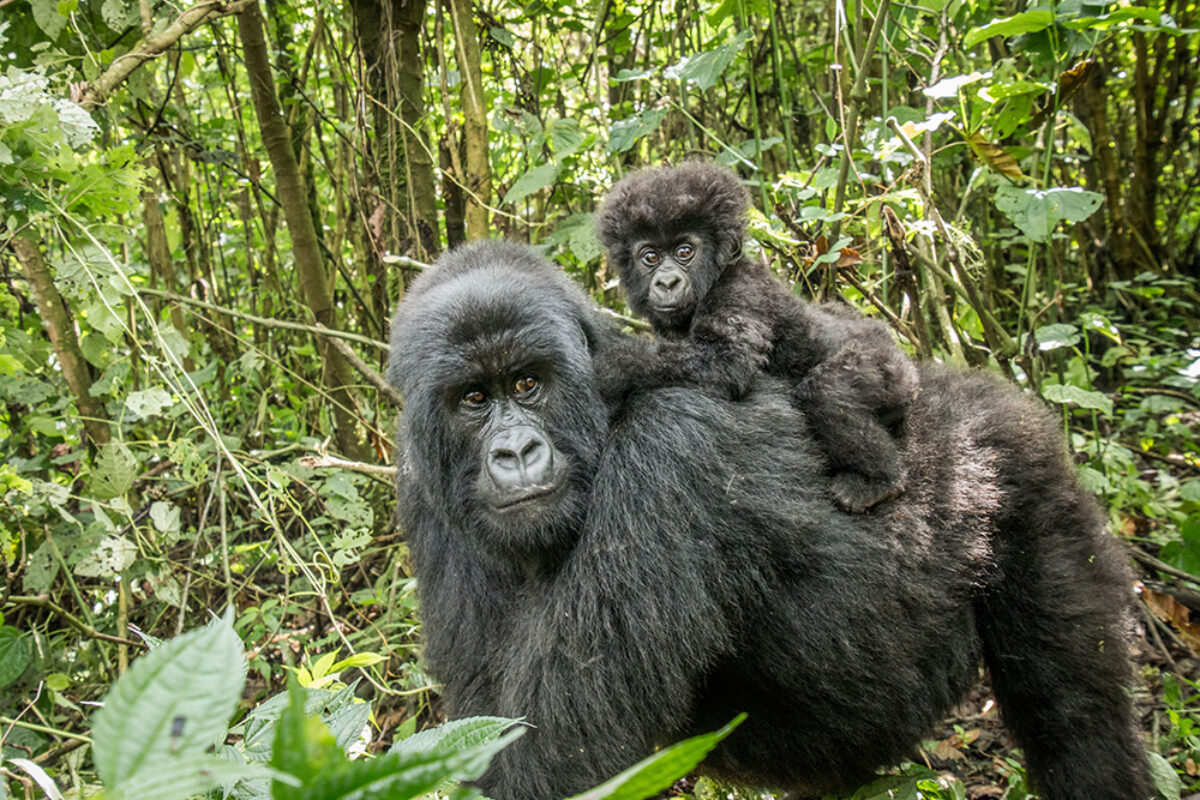
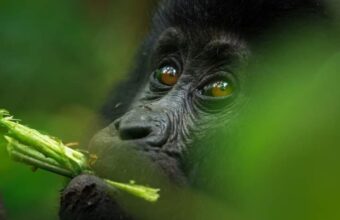
Uganda Mountaingorillababy lowres
§ 01

Welcome to Bwindi Impenetrable National Park

The insider's travel guide to Bwindi Impenetrable National Park

The dense forests of Bwindi in the south-west corner of Uganda are home to over half of the world’s small population of the endangered mountain gorilla.

Bwindi Impenetrable Forest is 331 km² and supports almost half the world’s population of mountain gorillas. It is one of Africa’s richest rainforests and is a UNESCO World Heritage site. Bwindi is more than 25,000 years old and ranges in altitude from 1,160m to 2,607m above sea level.

The forest’s age and altitude give Bwindi abundant biodiversity. More than 320 tree species have been recorded here, which are home to 310 butterflies, 88 moth, 51 reptile and 120 mammal species, including a further nine primates, such as chimpanzees, olive baboons, black and white colobus monkeys, grey-cheeked mangabey and blue, red-tailed and L'Hoest monkeys. The forest is alive with birdsong (Bwindi Impenetrable Forest has been named as one of Africa’s top 10 birding destinations by the African Birding Club).

§ 02

Ask our Bwindi Impenetrable National Park experts

Real questions, answered by the people who know it

20 Jul 2023

East Africa
?
Asked by: A traveller

Charlotte Beauvoisin
Answered by: Charlotte Beauvoisin

Regulations state that you must stay 10 metres from the gorillas at all times and only spend one hour with them. In practice, inquisitive gorillas may come closer to you on your trek. If they do, stay calm and quiet, follow your guide’s advice and never touch the gorillas. Keep your voice low and avoid eye contact.

The gorillas will normally be more relaxed the further back you are. Your guide may ask your group to move to a different location to calm the gorillas or to get a better view.

20 Jul 2023

East Africa
?
Asked by: A traveller

Charlotte Beauvoisin
Answered by: Charlotte Beauvoisin

Your day of gorilla tracking will be long, active and may be fairly arduous. You’ll be hiking in thick forest in a changeable climate. Evenings can be cold; mornings are cool, and the days are hot—especially when you’re clambering up a muddy mountainside. Having the right gear makes all the difference:

  • A small backpack to carry water, packed lunch and rain jacket.

  • Walking boots or hiking shoes. Boots are ideal for the extra ankle support on rocky and muddy terrain. Another option (that is particularly popular with locals) is plastic gumboots. Not only do they keep your feet dry, but they keep insects—particular ants—at bay.

  • Long socks will allow you to tuck in your hiking trousers and protect your ankles from scratches and biting insects. Higher-end lodges may loan gaiters to guests.

  • Lightweight waterproof jacket.

  • Hiking pants or waterproof trousers (handy when sliding down muddy slopes!) Do not wear jeans or shorts: hiking in wet jeans can be miserable and shorts will leave you exposed to hungry insects and scratches from thorns.

  • A long-sleeved shirt offers much needed protection from the sun and insects.

  • A fleece or light-wool sweater for cold mornings.

  • Cheap gardening gloves will protect your hands but aren’t essential.

  • Sunglasses, sunscreen and sunhat.

  • Camera (and associated paraphernalia). Although some people take binoculars, you aren’t very likely to use them. You will spend most of your time in the forest where trees will obscure most things.

  • Many visitors—regardless of age or fitness—find walking poles useful and many upmarket lodges provide wooden poles. In VNP your guide can cut you a custom-made pole from bamboo!

  • At least one litre of drinking water and your packed lunch.

  • A basic first aid kit may come in handy: antiseptic wipes, antihistamine cream, insect repellent, plasters, painkillers, and rehydration sachets.


20 Jul 2023

East Africa
?
Asked by: A traveller

Charlotte Beauvoisin
Answered by: Charlotte Beauvoisin

Seeing mountain gorillas in either country isn’t cheap. The combined cost of permits, accommodation, guides and a tour can bring overall trip costs upwards of $2,000 per person. So why are gorilla treks so expensive?

The main reason is that mountain gorillas are endangered and vulnerable to uncontrolled human interaction. One of the biggest threats to the gorillas’ survival is disease. Gorillas share 98% of their DNA with humans, making them highly susceptible to infection from human diseases. Therefore the authorities (wisely, in my opinion) tightly restrict and control the number of interactions the gorillas have with people.

And it takes money to protect the gorillas’ natural habitat. A significant percentage of gorilla permit fees goes into conserving the gorillas’ mountain forest habitat. Finally, some of the money you pay will go into research and monitoring of the gorillas, as well as paying your guides and encouraging sustainable tourism. The authorities point to the growth in gorilla numbers as evidence of their success.

On balance the price might not be low, but in my opinion it’s still pretty good value considering the importance of protecting this endangered primate.

20 Jul 2023

East Africa
?
Asked by: A traveller

Charlotte Beauvoisin
Answered by: Charlotte Beauvoisin

The minimum age to visit gorillas in both countries is 15. You will need to provide your passport when you book your permits and park authorities will use your passport to verify your birthday matches the date given on your gorilla tracking permit.

20 Jul 2023

East Africa
G
Asked by: Geena C

Charlotte Beauvoisin
Answered by: Charlotte Beauvoisin

This isn’t medical advice but it sounds to me like you'd be fine. I always recommend hiring a porter regardless of age; it's a huge help to have someone carry your stuff and leave your hands free for taking photos.

If you think you need some extra support you can hire a group to carry you on a rather unglamorously-named "stretcher" (it's better than it sounds!) You generally pay $10-$15 per person for the porter, and you might consider adding a tip of a similar amount. The "stretchers" cost around $100. These services are community-run initiatives and are a big boost to a family's income. All this can be arranged on the morning of your trek, during your briefing.

Also consider the location of your lodge and the gorilla family that you're assigned to track. Don't be shy in stating your tracking preferences during the morning briefing. The rangers want everyone to have a good – and safe – time so they will do their best to make sure that people with similar fitness levels are grouped together and assigned to track a more accessible gorilla family.

The Habinyanja family in Buhoma (Uganda) is well-known for being quite close to a number of the lodges. I tracked this same family a few years ago and had a lovely hour in search of them, before spending an hour with them. It took a little less than an hour to get back to the lodge, so about a three-hour round trip. Your tour operator should be able to identify a gorilla family and lodge combination that suits your fitness and ability levels.

Good preparation is also important. Local people love wearing gumboots (they keep out the ants as well as the mud) but walking boots with ankle support are the best option I'd say. I'd suggest bringing walking pole(s) or a stick. Sticks can also be bought or borrowed from your lodge.


20 Jul 2023

East Africa
?
Asked by: A traveller

Charlotte Beauvoisin
Answered by: Charlotte Beauvoisin

Despite their size and unfair reputation, gorillas are not remotely dangerous provided they’re treated with appropriate respect. All gorilla treks are accompanied by expert ranger guides who spend most of their time with the mountain gorillas. You’re only allowed to visit gorilla groups who have been habituated to the presence of humans, meaning they are used to having people near them and understand that you’re not a threat.

Gorillas are normally shy and reserved, spending the majority of their time feeding and looking after their young. However, they—like any wild animal—can exhibit defensive behaviour if they feel uneasy, particularly around their young. Your guide will recognise the signs; they may include ‘mock charging’, aggressive beating of their chests and grunting. Always follow your guide’s lead, but if faced with an aggressive gorilla, crouch down, look away and try to act relaxed. Your guide will advise you further during the pre-trek briefing.

20 Jul 2023

East Africa
?
Asked by: A traveller

Charlotte Beauvoisin
Answered by: Charlotte Beauvoisin

If you do a search for this question you'll find hundreds of pages – mostly from companies selling gorilla treks – saying yes it's definitely worth the money. My reply is more qualified: if you have to ask, the answer might actually be no!

For many, seeing the gorillas is a once-in-a-lifetime experience. Personally I love it so much I’ve been four times!

But whether it is quite so life-changing for you depends on how passionate you are about wildlife encounters, hiking, (and early morning starts!) I actually think you’re most likely to be disappointed if your entire trip revolves around just seeing the gorillas – after your 60 minutes, the rest of the trip might feel anticlimactic. It should be regarded as a whole day’s activity in a pristine natural environment, not just the single hour with the great apes.

To get maximum value from the experience, make sure you’re prepared. Be as fit as possible, wear the right gear, rest well and don’t try to pack too many activities into your itinerary. These are both fascinating countries with much more than ‘just’ gorilla tracking; slow down and round out your experience by getting to know the rest of the country.

Charlotte Beauvoisin

Ask a question

Get answers from our independent Bwindi Impenetrable National Park experts.

Ask a question →
§ 03

The Bwindi Impenetrable National Park atlas

1 picks Places & Experiences You Won't Find Elsewhere
Where
What

  • Bwindi vies with Volcanoes National Park as Africa's best all-round gorilla tracking destination. Its densely forested slopes are home to 45% of the world’s mountain gorilla population, and a total of 23 habituated groups means that 180-plus permits are available daily. True, tracking conditions are generally less predictable than they are in Rwanda, and the denser foliage can sometimes make it more difficult to obtain clear views. But this is mitigated by the fact that permits are less than half the price (in other words, you could track here on two successive days and pay less than you would for a single excursion in Rwanda) and by the park’s relative accessibility to independent travellers. Be aware that there are four discrete tracking hubs in Bwindi. Each hub is serviced by its own cluster of lodges, so it is important you coordinate your permit and accommodation booking around the same place. The oldest hub is Buhoma, which usually offers the easiest hiking conditions, is accessible on public transport, and has the widest range of accommodation (from luxury lodges to simple local guesthouses) but is also the most likely for permits to be booked solid months in advance. Nkuringo hub offers the most challenging tracking (almost always bookended by a steep one-hour descent and two-hour ascent). Rushaga has the most permits, with 9 habituated groups resident, so it is good for last minute bookings. Ruhija is the only tracking hub set deep within the park, rather than on the periphery, which makes it highly alluring for other wildlife and birding.

  • Best all-round gorilla trekking in Bwindi

    Best all-round gorilla trekking in Bwindi

Find a travel specialist
Plan my trip →
Independent experts to plan your trip

Trusted specialists

East Africa

Natural World Kenya Safaris

The leader in customized and budget-friendly East Africa safaris
East Africa

Beyond Travel

Uganda-based safari specialist

Loading...